
How Horror Production Uses Planning to Make Fear Feel Real
Fear depends on practical production choices
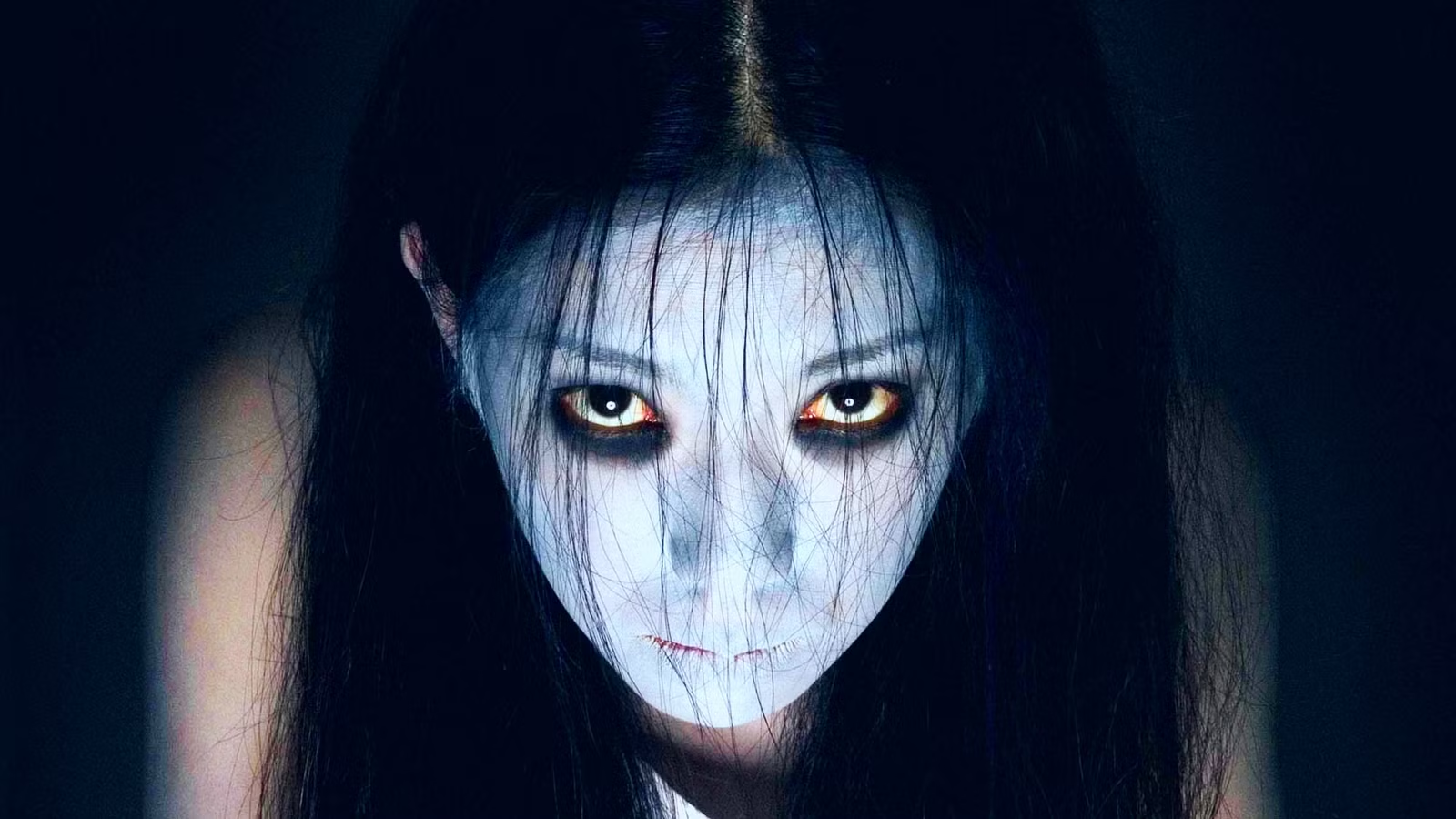
Horror is often discussed as a matter of monsters, blood, shadows, and shock. Those things matter, but fear usually becomes convincing through practical production choices. The camera waits a little longer than expected. The room sounds wrong. The actor has enough space to react before the cut moves on. The location looks ordinary enough that the impossible event feels closer to real life.
GNoFHorror is a strong fit for this topic because its readers care about horror as a craft, not only as a genre label. The site covers horror reviews, essays, interviews, features, books, and film culture. That audience is likely to notice when a scary scene feels earned and when it feels manufactured. Production planning is one of the main reasons for that difference.
A frightening scene is rarely created by one department. Direction, performance, camera, lighting, production design, location, sound, makeup, scheduling, and editing all have to work together. When the plan is loose, the scene may still contain horror imagery, but it can feel thin. When the plan is precise, even a quiet hallway can carry dread.
Start with the kind of fear the story needs
Not all horror asks for the same production language. A ghost story may need patience, silence, and a camera that gives the viewer time to search the frame. A creature film may need clean geography, practical texture, and enough light to understand what is being revealed. A psychological horror piece may depend on performance details, lens choice, and spaces that seem normal until they begin to feel unstable.
The production brief should name the kind of fear before the crew arrives. Is the scene about surprise, dread, disgust, grief, paranoia, or helplessness. Each answer changes the shoot. Surprise may need sharper timing and controlled blocking. Dread may need longer takes and quieter sound. Disgust may need makeup, texture, and lighting that holds long enough for the viewer to register the detail.
This sounds simple, but it prevents a common problem: every department working from a different horror reference. One person imagines a polished thriller. Another imagines raw handheld chaos. Another imagines gothic restraint. Clear production language helps the team build the same film.
Locations should feel usable before they feel cinematic
A horror location can look perfect in a photograph and still fail on set. It may be too noisy for dialogue. It may not allow enough time for night work. It may have no place for makeup, gear, crew holding, or safe stunt movement. It may look atmospheric from one angle and flat from every other angle. A good location scout checks mood and practicality together.
The best horror spaces give the director options. A staircase can create vertical threat. A kitchen can make domestic safety feel fragile. A hotel corridor can create repetition and distance. A warehouse can feel empty in a way that makes every sound more important. The location should support the blocking, not only the poster image.
Local knowledge matters here. A crew that understands permits, traffic, weather, neighborhood limits, power access, and working hours can protect the tone of a scene. If a production loses time because the location was not planned properly, the first thing to suffer is usually atmosphere.
Sound turns space into threat
Many horror scenes are remembered because of what the audience hears before they see anything. A floorboard shifts. A room tone changes. A distant machine stops. A character breathes too loudly because the rest of the house has gone quiet. Sound tells the viewer that the space is alive, even when the frame looks still.
This is why horror production needs disciplined sound planning. The crew should capture clean dialogue, room tone, wild tracks, practical noises, and any location sounds that may become part of the final design. A production that treats sound as a post production rescue job gives the editor fewer honest materials. A production that gathers sound deliberately can make the final mix feel physical.
Music also needs restraint. Horror music can easily explain too much. If every scare arrives with the same rise, the viewer learns the pattern. Silence, low texture, and natural sound can sometimes create more fear than a loud cue. The decision should come from the scene, not from habit.
Performance needs time to make fear believable
Actors sell fear through small changes before they sell it through panic. A delayed answer, a forced smile, a glance toward a door, or a voice that becomes too controlled can do more than a scream if the camera and edit allow it. This means the production schedule must protect performance time.
Rushing a horror scene often leads to broad acting because the performer has no room to build pressure. Strong horror direction gives the actor clear physical circumstances. What did the character hear. What can they see. What are they trying not to admit. Where is the exit. What would make them stay. These questions make fear specific.
For productions with international or branded requirements, World Production Service can help align the practical plan through international production support while the project is filmed with local crew, tight schedules, and multiple approvals.
Practical details make the unreal feel close
Horror accepts the impossible, but it often works because the world around the impossible feels practical. A door has weight. A phone screen lights a face in a believable way. Rain affects costume and continuity. A character’s wound changes how they move. The audience may not list these details, but they feel when they are missing.
Production design, makeup, props, wardrobe, and continuity all carry that realism. A cheap prop can break a serious scene. A clean costume can make a survival moment feel staged. A location that does not react to the events of the story can make violence feel weightless. The closer the world feels, the more permission the audience gives the film to become strange.
The same principle applies to camera movement. A handheld shot should feel motivated by the scene, not used as a shortcut for intensity. A locked frame should be composed so the viewer worries about the right part of the room. A slow push should earn its pressure. Horror is precise even when it looks chaotic.
Plan practical effects and safety together
Horror often uses practical effects, physical action, sharp props, smoke, water, low light, tight spaces, and repeated emotional strain. These elements can make a scene feel alive, but they need careful planning. Safety should not be treated as the opposite of creativity. A safer set gives the director more chances to repeat, adjust, and improve the moment.
The production team should decide which effects need rehearsal, which props need duplicates, which surfaces may become slippery, and which actions require a stunt or safety specialist. Makeup and wardrobe should be given enough time to reset between takes. Camera and lighting teams should know where an actor can move without breaking the effect or stepping into a hazard. These details protect people and protect the scene.
Practical effects also need continuity. Blood, dirt, torn clothing, broken objects, candles, fog, and creature details have to match across angles. If continuity is loose, the audience may not consciously notice the error, but the scene can lose credibility. A strong production plan records these details so the horror remains physical from one shot to the next.
Give post production the materials it needs
Post production can deepen horror, but it cannot replace everything that was missed on set. Editors need reaction shots, clean exits, inserts, empty frames, room tone, and alternate pacing choices. Sound designers need real textures to build from. Colorists need images that hold enough detail to shape darkness without crushing the scene into a flat block.
A horror shoot should include coverage that may not seem dramatic in the moment. A door before anyone touches it. A silent room after the character leaves. A close shot of a hand hesitating. A wide frame that shows how far the exit really is. These pieces give post production the power to stretch time and control what the audience expects.
The team should also collect clean plates and reference frames when visual effects or removals may be needed. Even a modest genre piece benefits from disciplined post materials. They keep the final cut flexible and prevent the edit from becoming trapped by one version of a scare.
Post production should preserve the original intention
The edit decides how long fear lasts. Cut too early and the moment has no weight. Cut too late and the scene may become obvious. Color can make a location feel colder, older, safer, or sicklier, but it should not erase the work done by lighting and production design. Sound can deepen dread, but it should not cover every gap with noise.
This is where the production brief returns. If the team defined the kind of fear at the beginning, post production has a standard to follow. The editor can choose takes that protect that fear. The sound designer can build a world that supports it. The colorist can shape tone without making every scene look like the same generic darkness.
For episodic horror, anthology work, and genre segments, World Production Service can also connect teams with episodic TV production support because consistency matters across multiple shoots, locations, and delivery formats. A repeatable production system helps keep the tone intact even when the story changes.
Common mistakes that weaken horror production
One mistake is overlighting scenes because the team fears losing detail. Darkness works only when it is shaped, but horror does not need every corner explained. The viewer should understand the important action while still feeling that something could be hidden.
A second mistake is using sound only to signal scares. If every loud sound means danger, the audience begins to wait for volume instead of watching the scene. Better sound design creates uncertainty before it creates impact.
A third mistake is designing the scare without designing the setup. Horror needs geography, stakes, and timing. The viewer must understand what the character wants, where the threat may come from, and why leaving is not simple. Without that structure, even a strong image can pass too quickly.
Conclusion
Horror production is careful work. The best scares often come from ordinary decisions made with unusual precision: where to place the camera, how long to hold the shot, what sound to record, how the room should feel, and how much the audience should understand. Planning does not make horror less alive. It gives fear a place to live.
For filmmakers and producers, the lesson is to treat atmosphere as a production responsibility from the start. When location, sound, performance, design, camera, and post production share the same idea of fear, the final story has a better chance of staying with the viewer.
Frequently Asked Questions
What makes a horror location effective
An effective horror location supports mood and practical filming. It should offer useful angles, controllable sound, safe movement, enough room for crew, and details that make the story world feel believable.
Why is sound so important in horror
Sound makes the audience feel the space beyond the frame. Room tone, footsteps, breathing, silence, music, and small practical noises can all create tension before the threat appears.
How can a crew protect atmosphere on a tight schedule
The team should define the kind of fear early, scout locations for both mood and logistics, prepare essential sound and coverage lists, and protect enough time for performance. A clear plan prevents atmosphere from being sacrificed to speed.
Does horror always need dark lighting
No. Horror needs controlled visibility, not automatic darkness. Some of the strongest fear comes from ordinary rooms, daylight, or clean spaces when the blocking, sound, and story make the audience uneasy.
Ginger Nuts of Horror: The Heart and Soul of Horror Reviews

Every feature is built to sell your work. We include backlinks to your website or Amazon author page, a full synopsis, and a universal purchasing link that sends readers straight to their local store. Add a large, engaged social following and an 18-year archive of trusted horror coverage, and you have a platform genuinely built to grow your readership.
Whether you’re an established author, an indie filmmaker, or a debut voice in indie horror, there’s a way for us to help you reach more fans. Explore our horror book reviews and horror movie reviews, then get your horror book or film featured today.