
Withered Hill always gets the final shot.
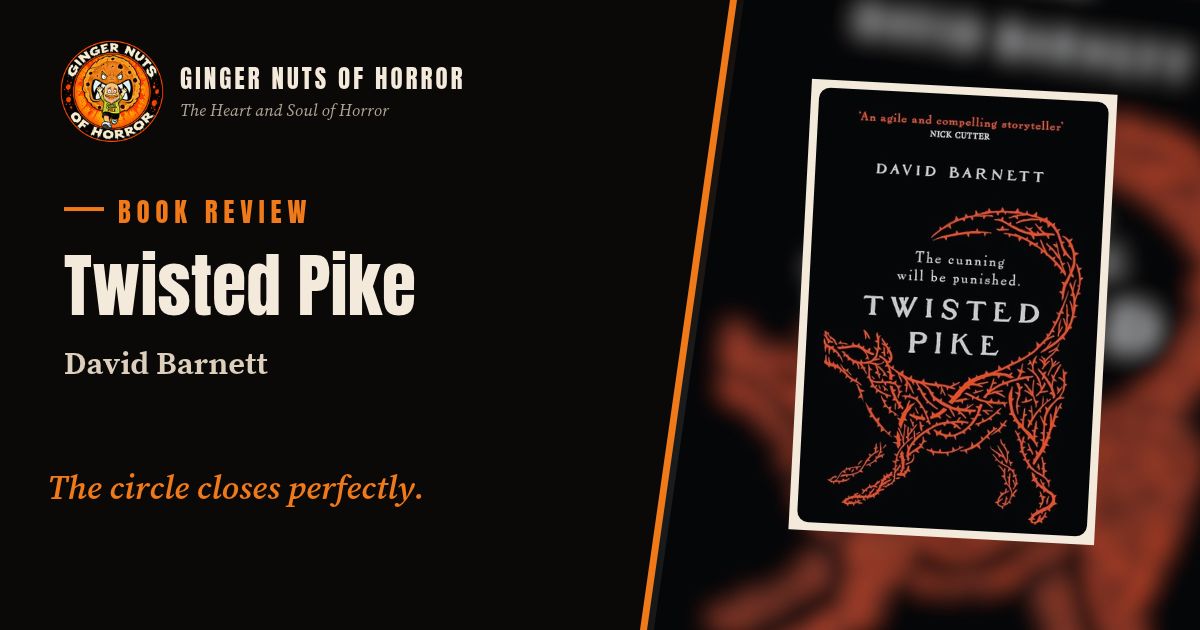
Twisted Pike Review | David Barnett | Canelo | 1 October 2026 |
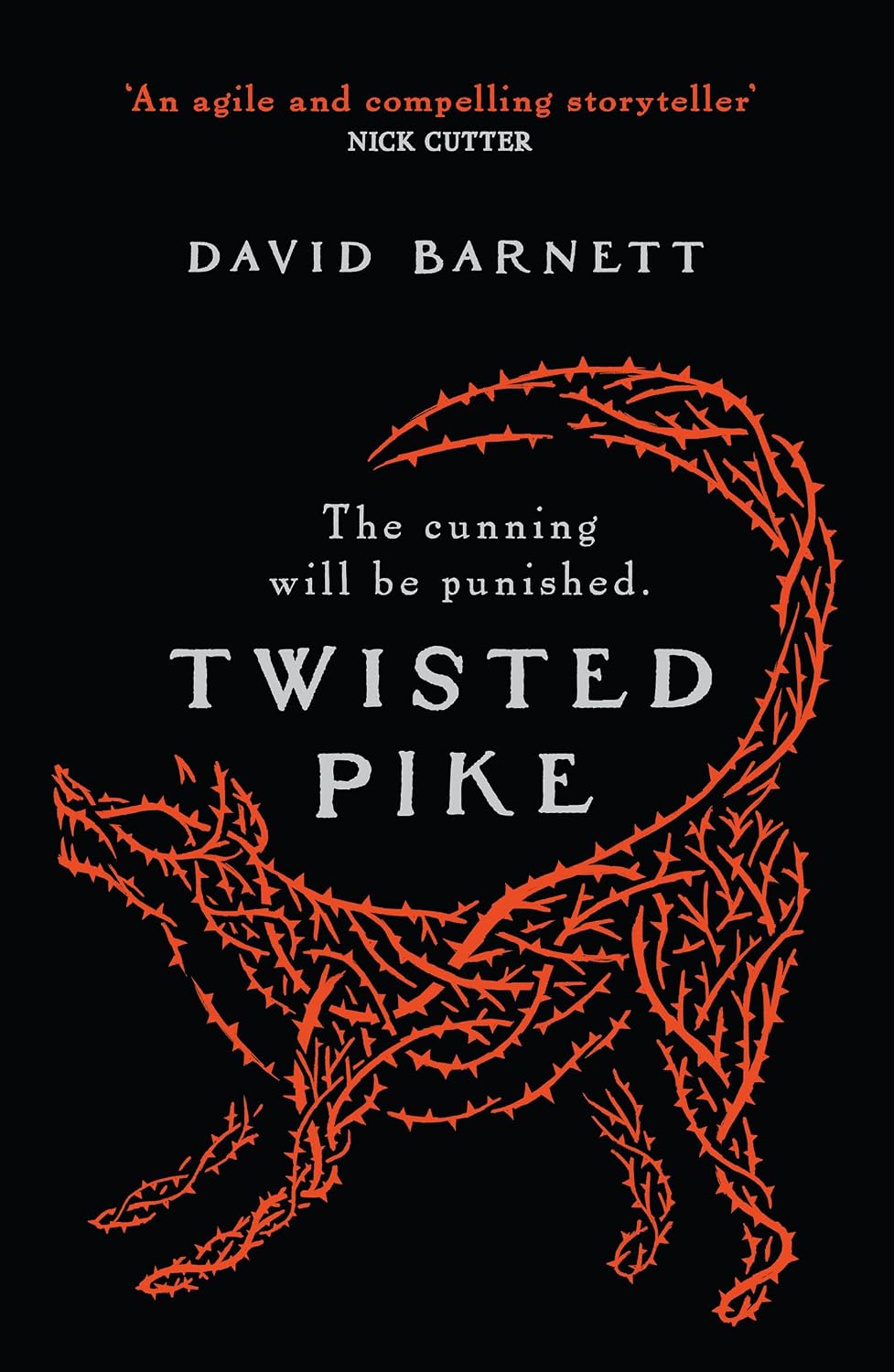
- Author David Barnett
- Publisher Canelo
- Published 1 October 2026
- Pages 384
- Format Paperback, ebook, audiobook
- ISBN 9781835983164
- Series Withered Hill, book 4
- Subgenre Folk horror
- Reviewed by Jim McLeod
A small film crew turns up in a Lancashire village that does not like strangers, claiming to shoot a cheap horror movie. Their director has other plans, and so does the village.
Twisted Pike by David Barnett takes us back to where it all began. This is my Twisted Pike review, and I will say it plainly up front: it is a five-star book. A film crew drives into Withered Hill, the Lancashire village that gave the first novel its name, to make a low-budget horror film. The village is not keen on visitors, and the man behind the camera is not there for the reasons he gives. After Withered Hill, Scuttler’s Cove and Scratch Moss, Barnett pulls every thread together. Here is why it works so well.
Twisted Pike is the book the Withered Hill novels were walking towards. Barnett turns a film shoot into a slow trap, gives three grieving outsiders a village that wants them, and ties his folk horror world into one tight knot. It is cruel, clever and sharp about the menace hiding in English good manners. A perfect close.
Twisted Pike Review: The Camera Comes to Withered Hill
Up north, we call a hill a pike. Rivington Pike sits above the moors near Bolton with its squat stone tower, and every Good Friday people walk up it because their parents did and their parents before them. Nobody quite knows why. That is folk custom in a nutshell. You do the thing because the thing is done, and the reason went missing a long time ago.
Folk horror lives in that gap. It asks what happens when the reason comes back.
Film crews have a habit of stumbling into that gap. Point a camera at a village and the village points something back. It is an old idea, older than found footage, and it rests on a simple fear: that the people you came to look at are looking at you, and they have been doing it for longer. David Barnett knows this. He also knows that the best way to use an old idea is to load it with new grief.
Twisted Pike sends three people to Withered Hill. Rob writes and directs. Oli works the camera. Maddie is the actress they hope will carry the film. They say they are making a cheap horror movie, and the title of that movie gives the novel its name. The village, which has never liked outsiders, first meets them with a cold shoulder. Then, oddly, it lets them stay. Then it makes them welcome. And that welcome is where the dread begins.
Barnett gives each of the three a wound. Oli lost his wife and his daughter in childbirth, and he carries the camera like a man who needs something to hold. Maddie is watching her father die by inches back home. Rob is the strangest of the lot. His mother vanished when he was young, and he seems to have a link to Withered Hill that runs deeper than a location scout. The blurb tells you he has come for revenge. The book makes you wait to learn why, and the waiting is the pleasure.
None of this grief is decoration. It is the bait. Withered Hill does not need to drag anyone in. It simply offers a lost person a place to belong, and lets them do the rest.
Is Twisted Pike Scary?
Yes, though not in the way a jump-scare film is. The fear here is social first. The locals are a gallery of small-town types turned slightly wrong: a farmer, a publican, a librarian who makes your skin creep, and a woman who says she comes from the line of the witch at the heart of the village’s oldest story. They are friendly. They pour the drinks. They remember your name. Every kind word lands like a hand on the back of the neck.
Under the friendliness sits faith. The village gives its devotion to a god in the trees, and Barnett lets that devotion grow from quaint to troubling to frankly alarming in small, patient steps. You see the turn coming. You cannot stop it. That is the oldest trick in the folk horror book, and it still works when the writer has the nerve to hold back.
Barnett has that nerve for most of the book. Then, in the final quarter, he lets go. The last stretch is big, loud and cinematic in the best sense, which is fitting for a novel about people trying to make a film. Stakes that felt local turn out to be anything but. The blurb hints at old gods sleeping under the soil, and I will say no more than that.
How Twisted Pike Brings the Withered Hill Books Together
The four books are standalones, and you could start here and follow every step. But they were never quite separate. Withered Hill set the village and its strange gravity. Scuttler’s Cove took the same hunger to the Cornish coast and pointed it at second homes and the slow theft of a place from the people who live there. Scratch Moss went underground, into coal and five generations of a mining village paying for what was taken from the earth. Twisted Pike runs alongside the events of Scratch Moss and reaches back to all three.
Barnett has called this fourth book the one that brings everything together, and that is exactly what it does. Threads you had filed away as local colour turn out to be load-bearing. A name you half remember turns up again and suddenly means something. If you have read the earlier books, the closing chapters land with real weight. If you have not, you will still follow the story, but you will feel it less. My advice is simple. Start with Withered Hill and take the long walk.
It is worth stepping back to see how far Barnett has come to get here. He spent years in newsrooms in Lancashire and Yorkshire before the novels. He wrote the Gideon Smith books for Tor, a steampunk trilogy full of brass and bluster. He wrote The Handover, a thriller, and a novel in the Alien universe. He writes comics, including work for 2000 AD. None of that suggested a folk horror writer in waiting. Then Withered Hill arrived and was shortlisted for Best Horror Novel at the British Fantasy Awards, and it was clear he had found his ground.
What the newsroom gave him, I think, is an ear for how ordinary people talk and a nose for what a town is hiding. What the comics gave him is pace and a sense of the big panel. Twisted Pike uses both. It is the work of a writer who has stopped proving he belongs in the genre and started bending it to his will.
Here is the choice in Twisted Pike that I keep coming back to. Barnett hands several chapters to animals. Not talking animals, nothing cute. Creatures of the woods and fields around the village, seeing what the humans miss.
I will not quote these passages, because I want you to meet them cold, so take this as a description rather than a transcript. The trick is in the distance. When we are with Rob, Oli or Maddie, we are trapped inside their grief and their guesswork. When we drop into an animal, the human drama shrinks to a far noise. The village becomes a landscape again. The god in the trees stops being a story people tell and becomes a fact of the place, as plain as weather.
That shift does two jobs. It lets Barnett show us key moments that no human character could see. And it tells us, without a word of lecture, that the people are the least important thing in Withered Hill. The land was here first. The land will be here after. The film crew thinks it is making a picture of the village. The animal chapters suggest the village has been making a picture of them.
Some readers will feel these chapters slow things down. I think that is the point. They are the held breath before the next scene, and the book needs them.
Barnett’s prose throughout works like a dry-stone wall. No mortar, nothing fancy, every stone picked and placed by hand, and somehow it keeps the weather out. He writes plain, fast sentences that sound like people from the north talking, then drops in an image that makes you stop. It reads quickly. It does not read thin.
Barnett wears his love of the classic films openly. The Wicker Man is here in the shape of the trap: an outsider, a welcome, a slow closing of the doors. Blood on Satan’s Claw is here in the sense that the land itself is sick with something old. But Twisted Pike is not a homage. It knows these films, and it knows that we know them, and it plays with that.
A novel about people making a folk horror film inside a folk horror story could have been too clever by half. It is not, because Barnett never lets the meta game get in the way of the people. Rob, Oli and Maddie are not winks at the reader. They are three hurt people a long way from home.
On the shelf it sits next to Andrew Michael Hurley’s The Loney and Starve Acre, and Adam Nevill’s Cunning Folk, books where the landscape of England is both beautiful and hungry. Where Hurley is hushed and Nevill is ferocious, Barnett is something else. He is sly. He finds the menace in English manners, the pint pulled for a stranger, the polite question that is really a threat, and he lets the warmth curdle.
Strip away the gods and the cameras and Twisted Pike is a book about what we do with loss. Oli wants to keep his. Maddie wants to stop hers. Rob wants to make someone pay for his. Withered Hill offers each of them a deal, and the deal is always the same: stay, and the pain can mean something.
That is a horribly tempting offer. Barnett makes you feel the pull of it. He also makes you see the price.
There is a quieter thread too, about who gets to tell a place’s story. The crew arrive to make their film about Withered Hill. The village has been telling its own story for centuries, in custom and rite and the names of its fields. Twisted Pike is a contest between the two, and you can guess which one has the longer memory.
And then there is the matter of endings. This book closes a circle that began with Withered Hill, and it does so with the kind of control you rarely see. Every one of the four books has been good. This one makes the other three better.
The camera always thinks it is the one doing the looking. In Withered Hill, it never was.
The Verdict: Is Twisted Pike Worth Reading?
The verdict
A flawless return to Withered Hill that ties four books into one dark knot and makes every earlier chapter count for more.
Read it if: you loved Withered Hill, Scuttler’s Cove or Scratch Moss, or you like folk horror with slow dread, unsettling hospitality and a big final act.
Skip it if: you want your horror fast from the first page, or you would rather not start a linked series at its closing chapter.

Keep reading on Ginger Nuts of Horror
 Dare to venture into the fictional village of Withered Hill
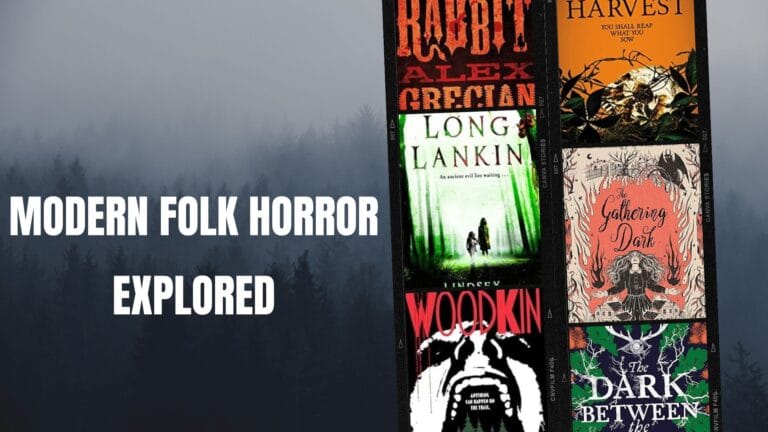 Modern Folk Horror Explored: Tony’s Top Tips
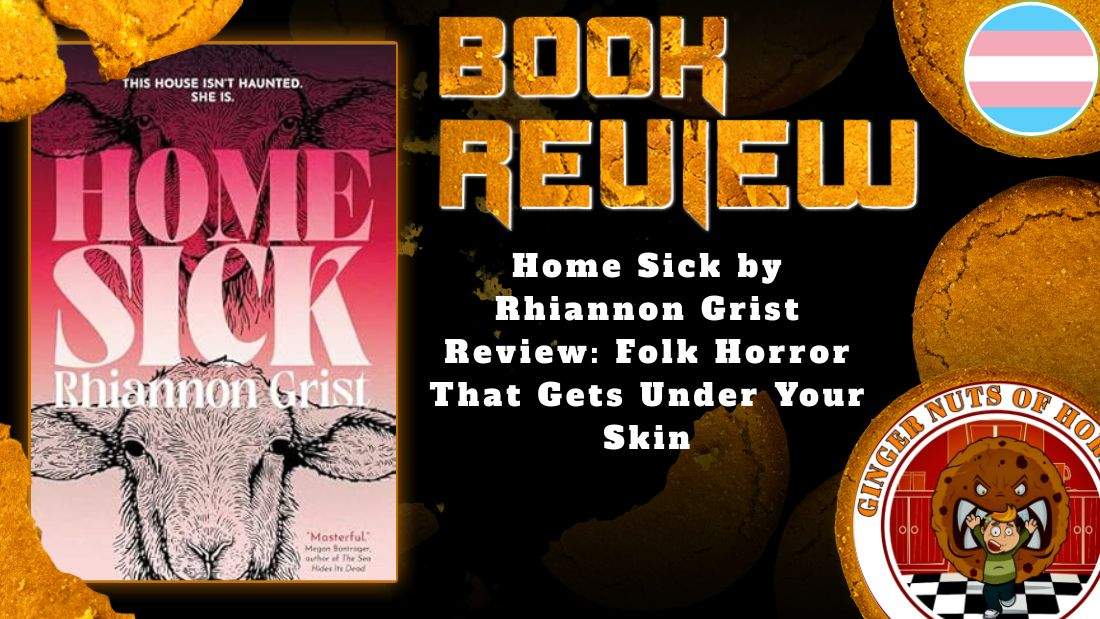 Home Sick by Rhiannon Grist Review: Folk Horror That Gets Under Your Skin
About Ginger Nuts of Horror
Ginger Nuts of Horror is an independent horror review and culture site based in Edinburgh, Scotland. Edited by British Fantasy Award nominee Jim McLeod, it publishes horror book reviews, film reviews, author interviews, features and cover reveals. Ginger Nuts of Horror won Best Inclusive Film & Book Review Platform at the SME News UK Enterprise Awards 2026.