
Mothersucker Review | Kim Bohyun | Dead Ink Books | 22 October 2026 |
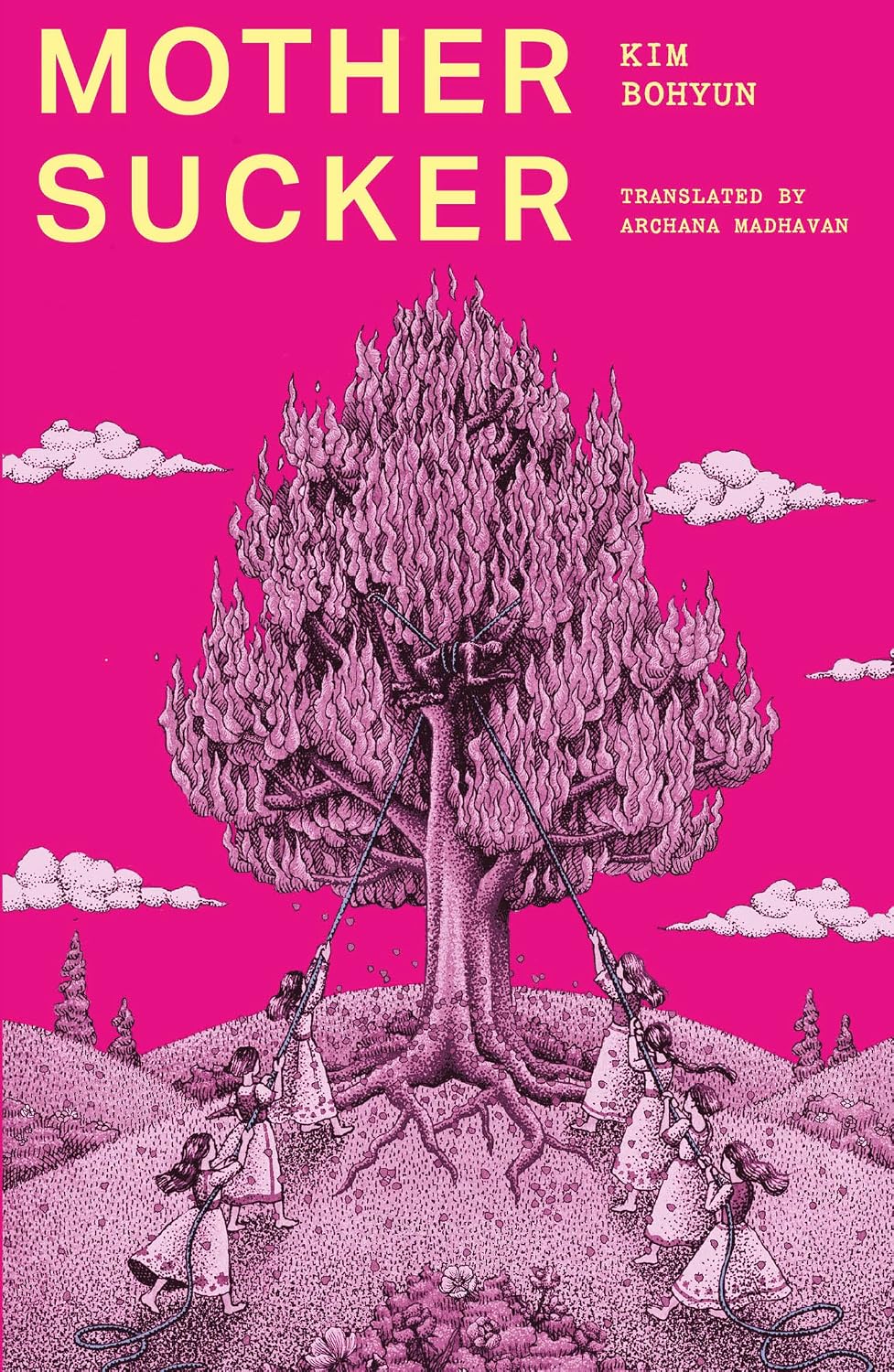
- Author Kim Bohyun
- Publisher Dead Ink Books
- Published 22 October 2026
- Pages 192
- Format Paperback
- ISBN 9781917792417
- Subgenre Vampire horror, crime
- Reviewed by Natalie Wall
When men with histories of violence against women start turning up burned and drained of blood near Seoul, Detective Noh Jin-seon finds herself hunting a killer that no evidence can explain.
Mothersucker by Kim Bohyun, translated from the Korean by Archana Madhavan, comes from Dead Ink Books with a title that does not whisper. In this Mothersucker review, Natalie Wall follows a grieving mother turned vampire across decades of violence against women, and the detectives trying to explain bodies that make no sense. It sits alongside other translated Korean horror we have covered, such as A Plagued Sea by Kim Bo-young. Bohyun’s novel is police procedural, revenge fantasy and vampire story at once. Natalie argues that its real monster was never the one with the fangs, and here is why.
Mothersucker wears its vampire lore lightly, using the monster less as a set of rules than as a way into grief, misogyny and justice. Its procedural spine turns the hunt for a killer into a harder question: whether anyone actually wants the killings to stop.
Mothersucker Review: A Vampire Unstuck in Time
One of the most striking things about Mothersucker is that, despite its title and premise, the vampire is the least disturbing thing in the novel. Kim Bohyun takes one of horror’s most enduring monsters and strips away much of the familiar mythology that normally surrounds it. There is blood, supernatural strength, and an insatiable drive for vengeance, but Mothersucker wears vampire lore lightly, treating it less as a rigid set of rules than as a vehicle for exploring grief, misogyny, and justice. The result is a novel that feels less interested in vampires themselves than in asking why a society might need one.
At the heart of the novel is Geum-hong, a grieving mother transformed into an avenging force after the murder of her daughter at the hands of an abusive ex-boyfriend. Drawn backwards and forwards across decades, Geum-hong becomes a kind of supernatural guardian for women, appearing at moments when violence threatens to go unanswered.
This inventive move to make the vampire unstuck in time means that the vampire is not merely hunting individual men; she is haunting a recurring pattern of misogyny that stretches across generations. Rather than becoming bogged down in lore, Bohyun allows the figure of the vampire to mutate into something politically charged and Mothersucker joins a growing tradition of feminist horror that reimagines monstrosity as a response to society’s injustices.
What makes this especially effective is the novel’s procedural structure. Much of Mothersucker unfolds like a police thriller, following Detective Noh Jin-seon and her colleagues as they investigate a series of impossible murders. Men are found burned, mutilated and drained of blood, with no obvious suspect and no clear explanation. The procedural framework creates a pleasing tension between rationality and the supernatural as the detectives search for motives, patterns, and evidence, while the reader gradually realises that conventional investigative methods are inadequate to explain what is happening.
As the victims accumulate, a pattern emerges and the dead men are linked by histories of violence against women. Stalkers, abusers, and murderers become the targets of Geum-hong’s wrath. The mystery therefore shifts from who is killing these men to the more uncomfortable question of whether anyone wants the killings to stop. The procedural becomes a moral inquiry into justice itself and reveals a parallel between the limitations of the justice system for investigating both supernatural forces and obtaining justice for crimes against women.
This question resonates particularly strongly because of the novel’s South Korean setting. Bohyun situates the story against a backdrop of entrenched sexism and gender-based violence, drawing attention to the ways women are disbelieved, endangered and failed by institutions that should protect them. The supernatural murders may be extreme, but they emerge from recognisable social realities as the novel repeatedly suggests that the real horror lies in the everyday persistence of misogyny.
In Mothersucker, Kim Bohyun delivers a work that is at once police procedural, feminist revenge fantasy, and vampire novel with a striking central figure wandering through time, pursuing the men society has failed to punish.
The Verdict: Is Mothersucker Worth Reading?
4out of 5
The verdict
An inventive mix of police procedural, feminist revenge fantasy and vampire novel, built round a striking avenger who stalks misogyny across generations.
Read it if: you want vampire fiction that cares more about justice than lore, or crime procedurals with a supernatural sting.
Skip it if: you want traditional vampire mythology with every rule intact.

If this Mothersucker review proves anything, it is that garlic and crucifixes are now optional, but a clean record of treating women decently has become essential protection.
Keep reading on Ginger Nuts of Horror
 Beyond the Final Girl: 16 New Horror Books by Women Who Refuse to Look Away
 Reign of Terror: How Brian Lumley and Keith Rosson Reforged Modern Vampire Mythology

About Ginger Nuts of Horror
Ginger Nuts of Horror is an independent horror review and culture site based in Edinburgh, Scotland. Edited by British Fantasy Award nominee Jim McLeod, it publishes horror book reviews, film reviews, author interviews, features and cover reveals. Ginger Nuts of Horror won Best Inclusive Film & Book Review Platform at the SME News UK Enterprise Awards 2026.