- Our Top 5 Mark Morris Novels: Blood, Floods, Folk Legends, and Whatever’s Standing Outside
- Mark Morris: Bad Things Happen Here and a Life in Horror
- Bad Things Happen Here by Mark Morris: Horror That Never Left Room 55
The funniest example was when the marketing team at Hodder & Stoughton proposed a campaign describing my very good mate Stephen Laws as “a Herbert for the 90s.” Steve had to point out to them that in 90s slang, ‘herbert’ basically meant idiot or moron. Cue multiple expressions of horrified realization and much forehead slapping among the H&S editorial staff.
Mark Morris published his debut novel, Toady, in 1989, during a horror boom that rewarded ambition and punished nothing. Nearly forty years later, he is still here, fifty-plus books deep, still calling himself a horror writer without apology, and still producing fiction that earns that description. His new novel, Bad Things Happen Here, is a study in compounded dread: five survivors of a supernatural event at university, dragged back together two decades on, forced to confront something they never properly understood the first time.
What sets it apart from a crowded field of trauma-and-reunion horror is the deliberateness of its emotional architecture. Morris spent months mapping each character’s domestic fears, ageing parents, sick children, failing marriages, before introducing the supernatural not as an escape from those concerns but as one more unbearable weight on top of them.
This interview covers the full arc of his career: the Clive Barker comparisons he never took too seriously, the Spartacus novel written in four weeks from a standing start, the Nordic folklore that unlocked That Which Stands Outside, and why he still believes the human imagination will outlast any AI. Mark Morris on British horror fiction at its most hard-won.
Mark Morris: Bad Things Happen Here and a Life in Horror
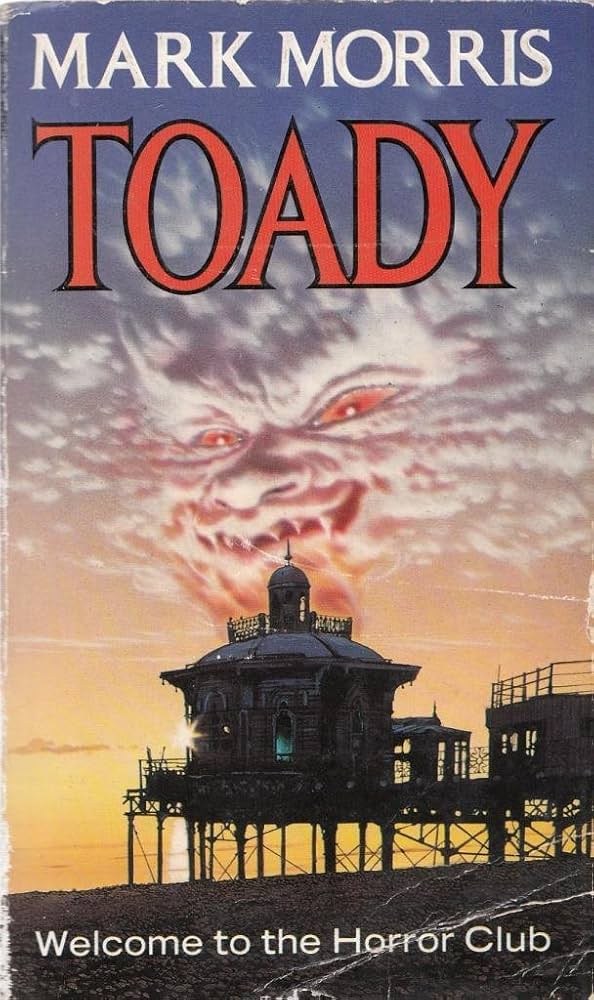
Your first novel, Toady (1989), launched your career during a boom period for horror. Looking back, what did that version of you understand about horror that you’ve since had to unlearn, and what did he get completely right?
Wow, that’s quite a question to kick off with! I’m not so sure it’s a question of understanding horror, and of having to unlearn certain things about it, I think it’s simply a case of gradually gaining the knowledge, over many years, that in order to survive and flourish in this genre, you have not only to immerse yourself in it, but also to move with the times, to adapt and evolve, rather than just stubbornly sticking in your own little furrow.
To expand on that further, when I started out, horror, as you say, was enjoying a boom period, and big, chunky, 500-plus page horror epics were the in thing. I’d grown up watching Hammer and Amicus movies, and reading lots of horror and ghost story anthologies – primarily the Pan and Fontana books, which contained a selection of classic tales and modern, schlocky, gore-led stories – novels by James Herbert and Stephen King, and post-Jaws animal attack potboilers with titles like Croc and Spiders.
Until I read King’s Danse Macabre in, I guess, the mid-80s when I was 21 or 22, my horror reading was fairly scattershot, and had lots of gaps in it. It was Danse Macabre that honed my reading, and introduced me properly to pre-70s writers like Ray Bradbury, Robert Bloch and Richard Matheson, to modern masters like Ramsey Campbell, Peter Straub, Thomas Tessier and T.E.D. Klein, and even to individual novels such as The Haunting of Hill House, Burnt Offerings, The Cement Garden and Harriet Said.
For three or four years after reading Danse Macabre, I gorged myself on the good stuff, and also on new horror fiction I discovered via that good stuff, by the likes of Clive Barker, Dennis Etchison etc.
And it was in that environment, and in that state of mind, that I started writing Toady, which is a novel very much of its time, and which contains all the energy and naivete and pretentiousness of a writer in his early 20s who wanted to splurge all those wonderful influences out on the page.
Looking back, the fact that Toady received massive amounts of publicity and became an instant bestseller was both a curse and a blessing. A curse because it meant I had a lot to live up to with subsequent books, and because as a naïve young writer I was lulled into thinking that it would always be this good, and a blessing because I burst onto the genre and became an immediate ‘name’, rather than having to toil for years to make some kind of impact.
However, by my third novel, The Immaculate,horror was on the wane, and my paperback publisher Corgi, who had put so much oomph behind Toady, told me that the book would ‘have to find its own audience’, which basically meant they had no publicity budget to spend on it. I quickly realised, therefore, that as a writer of a particular genre, my success or failure was dependent not only on what I produced, but on many outside factors, and that my career was likely to be a rocky ride.
And so it’s proved. I’ve had many ups and downs over the years, and have had to change and adapt an awful lot to continue earning a crust – and there have been times when those crusts were very few and far between. But somehow, almost 40 years on, I’m still here, with 50-plus published books to my name, and still earning an okay living as a writer.
The late 1980s and early 1990s were a fertile period for British horror writers (e.g., Barker, Herbert, Campbell). Who among your contemporaries did you feel the most kinship with, and did you ever experience a conscious or unconscious rivalry?
Definitely no rivalries. In my experience the UK horror field has always been one of great camaraderie and mutual support. I’ll always be incredibly grateful to Ramsey Campbell for his early encouragement and championing of my work. I was a starry-eyed fan of his in my early 20s, and even now I sometimes can’t quite believe that since then he and I have become good friends of long standing. I’ve stayed at Ramsey and Jenny’s house, and Ramsey has even dedicated one of his novels to me and my wife.
In terms of writers of my own age, in my 20s, through attending conventions, I quickly formed what have now become life-long friendships with Nicholas Royle, Mike Marshall Smith and Conrad Williams. You can add Joel Lane and Graham Joyce to that early list too, though sadly the two of them are no longer with us.
You’ve said that reading Stephen King’s ‘Salem’s Lot at a formative age changed you. Was there a single scene or sentence that first cracked open the door to writing horror yourself, or was it a slower, cumulative infection?
That’s interesting. I can’t remember saying that, though Salem’s Lot was certainly one of the earliest modern horror novels I read. I’m pretty sure my first Stephen King book, though, was The Shining. I remember reading that voraciously one summer, being unable to put it down. I was gripped by the claustrophobic location and atmosphere of the book, though the two scenes that genuinely scared me, in a way I can’t remember ever being scared by written fiction before, were the hedge animals pursuing Danny and the rotting woman in the bathtub in Room 217.
Along with The Shining, I’d say James Herbert’s The Fog had a similar effect. Both those books, and others like them, were hugely inspirational, not because of individual scenes or images as such, but because I found them utterly thrilling and captivating, and loved the idea of my own fiction gripping other people in a similar way.
You were once labelled “the new Clive Barker.” How did that early comparison sit with you? Did it feel like a burden of expectation, or a source of motivation?
It never felt like a burden, and to be honest, although it was flattering to be compared to someone as amazing as Clive, I don’t think I ever really took it that seriously. There was a tendency at that time for pretty much every new writer to be compared to a successful predecessor, with a whole roster of US writers invariably being described as the new Stephen King.
The funniest example was when the marketing team at Hodder & Stoughton proposed a campaign describing my very good mate Stephen Laws as “a Herbert for the 90s.” Steve had to point out to them that in 90s slang, ‘herbert’ basically meant idiot or moron. Cue multiple expressions of horrified realization and much forehead slapping among the H&S editorial staff.
You’ve mentioned being “terrified” by Doctor Who as a child, and even writing two full-length original Who novels by age twelve. How did that youthful fear shape your understanding of horror and suspense before you ever put pen to paper professionally?
Doctor Who was the first piece of fiction, read or viewed, that ever scared me – and between the ages of 4 and 7, it didn’t just scare me, it traumatized me. The Cybermen in the sewers of London, the Yeti in the underground, the hissing Ice Warriors, the blank-faced, plastic Autons who killed without emotion… for me, it was ultimate nightmare fuel. But the thing was, I loved it. My wife has told me that if a movie or TV show scared her as a child, she switched it off and never revisited it, but for me, it was the opposite.
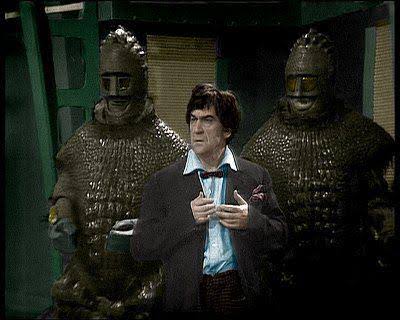
The scary stuff, distressing and anxiety-inducing though it was, held a fascination; I felt compelled to keep going back to it, to poking the hornet’s nest, as it were. And I think, from watching Doctor Who, and Brian Clemens’ Thriller, and various other things, and also obviously from reading novels and short stories, I learned about tension and how to build atmosphere, and how to pace a story to get the best possible effect.
Certainly I remember striving to build that atmosphere even in the stories that I was writing when I was 11, 12, 13 years old. And to go back to Ramsey Campbell again, I recall a letter he wrote to me about some stories I sent to him in my early 20s, where he said that some of my scenes of terror (and I quote) were ‘very effective, helped by your sense of timing and your ability to slow down at these points – writers often rush them and spoil them.’
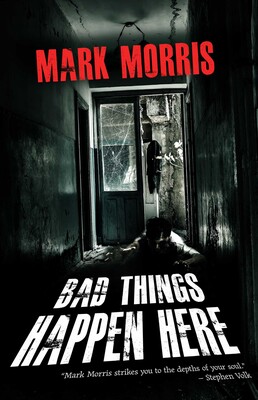
In Bad Things Happen Here, the characters are driven apart by a traumatic supernatural event as students, only to be forcibly reunited two decades later when the horror begins to affect their children. What drew you to the idea of “intergenerational horror” and exploring the ways trauma can echo through time and family?
The idea of the past impacting on the present, and particularly of long-buried events rising from the murk in a detrimental way, is one of the most common themes in my work. It comes, I think, from my love of history and folklore – the idea of the UK as an ancient realm layered with secrets and myths thrills me – and also from my fascination with nostalgia. I admit, I’m a very nostalgic person. Because I was born in the early 60s, the 70s, when I was growing up, remains for me a magical time, brimming with creativity and possibility. Even today, anything 70s related still gives me a real thrill of nostalgic warmth.
I mean, looking back, yes, it was a drab, brown decade of sexism and homophobia and institutionalized racism, where the news headlines were dominated by strikes, power cuts, police corruption, IRA bombs, and the Yorkshire Ripper. But as kids, me and my friends were mostly cushioned from all that. Our 70s was all about Jon Pertwee and then Tom Baker as the Doctor; it was about Jaws and Star Wars; it was about an endless string of spooky kids’ TV serials like Children of the Stones, Ace of Wands, Raven, Sky and The Changes; and then, as we got a bit older, it was about punk rock, which invigorated us like no music ever had before.
The thing about adolescents and teenagers is that they experience life so keenly that often, what you love in those years, in terms of books, movies, TV shows, music etc, never leaves you. And that feeling is very profound and very evocative, and it’s something I not only try to hold on to, but that I also often try to reproduce in my work – although obviously, being a horror writer, the influence of the past often takes on a dark and sinister aspect. And intertwined with all of that is another obsession of mine, which is the sense of time passing, and of the melancholy and yearning for the past that is often associated with that.
The novel features a terrifying “5th floor room,” a classic confined space. Yet you also explore the alienation of dementia, the isolating nature of addiction, and the horrors of a parent watching their child suffer. How do you balance the visceral supernatural elements of the story against these more relatable, grounded fears?
In this book I specifically wanted to explore different kinds of fear, and to make the point that each are equally valid and equally terrifying to those that are suffering from them. Experiencing something ‘supernatural’ is terrifying and destabilizing because it means that what we thought was real is no longer the case. But losing your mind, slipping into dementia, is just as terrifying for similar reasons: if you can’t trust your own mind, your own perceptions, what can you trust? It struck me that the more we go through life, the more fears we pick up along the way.
They latch on to us like parasites. We fear for our children on the one hand and our aged parents on the other; we fear for our health; we fear that we might not be able to provide for our family, or that we will eventually lose everything that we hold dear. What I wanted to do with Bad Things Happen Here was take a group of people who had accumulated many of these ‘domestic’ fears, these ‘life’ fears, and then introduce the element of the supernatural not as something that usurps and negates those fears, but as just another exhausting, soul-draining, anxiety-inducing problem to deal with.
After two decades of silence, you bring five very different, broken survivors back together to confront the mystery in Room 55. When constructing a plot with a large ensemble cast, what is your primary guiding principle for ensuring each character’s personal journey remains unique and compelling to the reader?
With Bad Things Happen Here,I simply sat down and thought hard about every single character before writing a word of the book. I thought about their relationships, their lives, their likes and dislikes, their drives and motivations, and I knew I wouldn’t be ready to begin until I knew each of those characters inside out. I wanted them all to be equally vivid, and equally convincing, in my head, and I wanted to get to a point where I was equally excited about writing each of their stories.
In the past I’ve written books where I’ve found that I’ve come to favour certain characters over others. Some would be a joy to write, whereas others would feel like a bit of a slog. I didn’t want that with this novel, and I figured that if I found each and every character interesting and compelling, then hopefully readers would too.
The key here, I guess, is patience. Sometimes, as a writer, you’re so excited about a story idea that you can’t restrain yourself from just launching into the writing of it. And sometimes that’s fine; you can change things and add things as you go. But with this book, the characters and their domestic situations are so important to how the story develops that I didn’t want to go off half-cocked.
The novel’s central traumatic event occurs during the characters’ university years. Why is that specific life stage, just before full adulthood, still steeped in friendship and vulnerability, so fertile ground for horror, and how did you avoid the clichés of “campus horror”?
It’s fertile because it’s a time of great uncertainty and, as you say, vulnerability, and characters going through any kind of peril or stress are far more interesting to write about than characters who are stable and secure. I still vividly remember that time myself, and that very real sense of being ejected from a warm, cosy, secure nest into a disorientating, unknown environment where, for the first time ever, I had to fend for myself on a day-to-day basis. For adults, that maybe doesn’t sound like such a big deal, but eighteen-year-olds are still very much on the cusp between childhood and adulthood, and as such are riven with uncertainty.
They’re obsessed with how they look, and how they come across, and they crave acceptance, particularly from their peers, and all of that is cripplingly debilitating. Imagine being burdened with all of that – with negotiating a new environment and new friends – and then having that extra terrifying element of the supernatural thrown into the mix. It’s a nightmare situation for the protagonists – but it’s great to write about.
As for avoiding the cliches of campus horror, I’m not entirely sure what those cliches are. I guess in US school/college based fiction, you often have certain cliched characters – the rich/bitchy girls; the jocks; the nerds; the edgy ‘Goth’ kids etc – but I don’t think that applies quite so much in UK based fiction. Plus the students in my book are a bit older, so maybe they don’t have that level of immaturity. I guess the simple answer is that I didn’t really think about it, and just tried to make my characters as real and rounded as I could.
Without spoiling the resolution, Bad Things Happen Here ultimately posits something about the nature of evil: is it external, internal, inherited, or invited? Would you say the novel lands on a definitive answer, or is the ambiguity itself the point?
I’m really glad you picked up on that aspect of the book, and yes, I kept it deliberately ambiguous and open to each individual reader’s interpretation. When it comes to opinions, or questions of morality, I’m very suspicious of so-called definitive answers.
You’ve set many of your books in recognisably contemporary UK settings. Is the location of Bad Things Happen Here inspired by a real place, and if so, did you ever return to that place during the writing to re-experience its atmosphere, or deliberately avoid it?
No, it’s not based on a real place. The locations are bits and pieces of places I’ve known, or amalgamations of places I’ve known. The student halls of accommodation, for instance, are based partly on my student halls from my university days in Leeds, and partly on my son’s student accommodation when he was in Liverpool. Similarly the various characters’ houses and flats are based on bits and pieces of places that either I or my friends have lived in over the years.
The Obsidian Heart trilogy and novels like The Deluge showcase your skill at building expansive, series-spanning narratives. What’s the biggest creative challenge in maintaining a consistent mythology across multiple books, and how does that process differ from conceiving a standalone chiller like Bad Things Happen Here?
Although the Obsidian Heart trilogy is three books, it’s still only one story, so I’ve never really attempted a multiple-book series such as Games of Thrones, where an entire fictionalized world and culture and political system has been created and expanded upon from scratch. Having said that, I’ve written books, or parts of books, set in various ‘exotic’ or unfamiliar locations: Victorian London, Ancient Rome, a remote Nordic island, a drowned, post-apocalyptic Britain etc.
In those books, it’s simply a case of doing more research than I would do for something like Bad Things Happen Here, which is set largely in contemporary UK suburbia. Often, too, it’s a case of thinking of practical problems your characters might encounter in certain locations, and how you might deal with them if you were in that situation yourself.
Again, the key here is patience. Ignore the voice yammering at you to forge ahead with writing the story and take the time to think things out thoroughly beforehand. Sometimes it’s hard to resist the urge to start writing, but there’s nothing more frustrating than continuously getting bogged down by details during the writing process because you haven’t researched something well enough.
Across your work, characters often face a choice between isolation and community, and neither option is entirely safe. Do you see horror as fundamentally a genre about failed connection, or about the terrifying cost of connection itself?
Both of those options can lead to horror depending on the situation, but I don’t see either of them as being fundamentally what horror is all about. For me, horror is about our fears and phobias as human beings, and the multiple forms that can take. Fear of death, pain, illness, isolation, confinement, loss of identity, loss of self-worth… the list is almost endless. Whatever frightens people, be that globally or personally, can serve as the basis for a horror story.
Your trilogy, The Obsidian Heart, share a kind of mythic, urban-fantasy horror. How do you decide whether an idea belongs under your own name or a pseudonym, and does that decision change how you write it?
I’ve only ever written one book under a pseudonym and that was my 2002 novel Fiddleback, which was published under the name J.M. Morris.
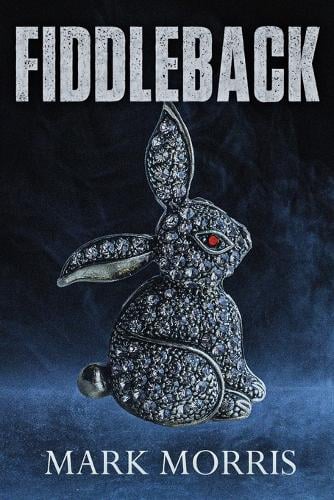
The reason for the pseudonym there was two-fold. Pan Macmillan, who bought the book, saw it as a psychological thriller rather than a horror novel, and as I was known as a horror writer they thought a name-change might be needed so as not to confuse readers. And secondly, the book is written in first person from a female point of view, and the publisher thought a female pov novel written by a man might alienate female readers – hence the more ambiguous J.M. Morris.
Folk horror has seen a major renaissance. Your novel, That Which Stands Outside, engages with Nordic folklore rather than British traditions. What did that cultural distance allow you to do that a British folk horror setting might have restricted?
Some of the most unsettling horror stories in my opinion are ones where the protagonist is isolated in an environment where they don’t really understand the local customs, and sometimes even the local language. Examples from my youth, though these are both films, are The Wicker Man, which I imagine everyone knows,and And Soon the Darkness, where one of two female friends goes missing on a cycling holiday in France, and the remaining friend then has to contend with sinister locals and a language barrier while trying to find out what’s happened to her.
I’d long felt the urge to write my own ‘fish out of water’ story, but the story and setting were eluding me. Then I was commissioned to write an audio drama, a horror story utilizing Nordic folklore. I did my research and wrote a synopsis, but then, for one reason and another, the audio drama never happened. Immediately, though, it struck me that here were the elements of the ‘fish out of water’ story I’d been wanting to write. So, using the research I’d done, and a few bits and pieces from the synopsis, I came up with a new story and new characters.
Just as an aside, the title of the book came about through my research. I discovered that one particular ancient Nordic tribe had very different ideas about the afterlife, one in which, upon death, a person’s spirit immediately moves on to a separate realm and has no interaction whatsoever with the living. The idea of ghosts, therefore, was a completely unknown concept to them, and subsequently they had no word for ‘ghost’ in their language. The closest approximation was a word which literally translated as ‘that which stands outside’, a phrase which struck me as incredibly creepy and evocative.
Many horror writers keep a “nightmare journal” or deliberately tap into their own anxieties. Is there a personal fear you’ve never been able to use in fiction because it remains too raw, or conversely, one you’ve exorcised entirely through writing it?
No, I don’t think so. There’s nothing I can think of that I’ve deliberately veered away from. Sadly, writing about my fears has never helped me to exorcise or even alleviate them, though. If only it were that easy!
How do you know when a scene is horrifying rather than merely tense or gross? Is there a litmus test you apply, a physical reaction you look for in yourself, or a structural rule (e.g., withholding vs revealing)?
It’s all instinct really. I usually know what kind of emotion or atmosphere I’m trying to convey or evoke in a scene, and then I just work at it until I get as close to it as I can. You can never second guess how a reader will react, though, and you’ll never react to your own work how a reader would react anyway, because for them it’s a surprise and part of a flowing narrative, whereas for you, not only do you know what’s coming, but it’s a slow, meticulous process – in some ways a nuts and bolts process, like setting up a magic trick.
Your stories have explored the Gothic, the folkloric (as in the “Nordic folklore-inspired” That Which Stands Outside), and the psychological. Is there a type of fear or a setting that you keep returning to because you feel it has been underexplored in contemporary horror, and how does Bad Things Happen Here fit into that?
I’m not sure there’s a type of fear or setting that I keep returning to, but there’s certainly a theme, which is that of something rising from the past and impacting on the present. Bad Things Happen Here is an example of that, though I don’t think there’s much else I can add to that observation that I haven’t already discussed elsewhere.
You’ve worked as a full-time writer since 1988. To survive and thrive for as long as you have, you must have a strong internal compass. How has your fundamental understanding of “what makes a good horror story” evolved from the early days of Toady to the author you are today?
The genre is constantly evolving, and the key, I think, is simply to immerse yourself in it, and to embrace those changes, and to keep abreast of modern fears and concerns. Another point to make is that as you get older, your own concerns and fears change and evolve naturally, so there is always something new to write about. When I started out, I was writing mostly about young people – Toady is about a bunch of teenagers who are worried about school bullies, and whether their parents are getting on, and who feel helpless because they’re ‘just kids’ and have no real knowledge or experience of how to cope with certain situations.
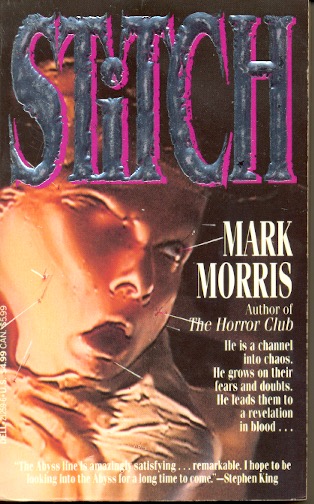
Stitch, my second novel, is about students at a university – which is something I return to in Bad Things Happen Here, but only in brief flashbacks; the main impetus of the novel lies in what happens to their adult selves. In my twenties, I wouldn’t have written with any depth or authority about middle-aged concerns, about worrying about your kids or your aged parents. In terms of surviving and thriving as a writer, I don’t know if I’d have been able to keep going if I’d simply stuck doggedly to writing horror.
I’ve managed to keep making a living by supplementing my income with audio work, with tie-in work, and with delivering writing workshops for the Royal Literary Fund. In short, you have to be adaptable and to keep on top of modern trends within the genre.
You’ve described yourself as “one of the UK’s most stubborn horror writers.” Why that specific word? And what’s the most rewarding thing that your stubbornness has allowed you to achieve, or protect, in your work?
I used the word ‘stubborn’ because even when horror was in the doldrums, I kept writing it, and I kept describing myself as a ‘horror’ writer. I’m very proud of this genre and so to describe myself as anything but a horror writer seemed disingenuous to me. As I said, I’ve written plenty of tie-in books, for TV and movie franchises like Doctor Who and Spartacus, which are not strictly horror, but which I still regard as containing dark, horrory elements.
The most rewarding thing about sticking with the genre, apart from the many friends I’ve made through it, is that within the last seven or eight years, thanks to Flame Tree Press, I’ve managed to achieve my long-held ambition of editing an annual series of all-original horror anthologies under the unofficial umbrella title ‘The ABC of Horror’.
Your work spans original horror, movie novelisations (including The Predator and The Great Wall), and audio dramas for major properties. After writing in your own wholly created world, what’s the distinctive thrill, and unique constraint, of being given the keys to a massive franchise like Predator?
The thrill of it is that it’s a challenge and it gives you a chance to flex new muscles. It also gives you an excuse to immerse yourself in that world – in the case of Predator,to watch Predator movies and read Predator books or comics and legitimately be able to call it ‘work’. Also you know that that franchise has a ready-made fanbase, who will not only snap up your work, but who would give their eye-teeth to be in your position. All of that is a huge privilege, and it can often lead to exciting things like visiting TV and movie studios, and being privy to information that, again, fans would give their eye-teeth for.
The constraints, of course, are that you have to stay within the established boundaries of that franchise – you can’t, for instance, have someone stabbing someone to death in a Doctor Who story – though that’s not usually a problem. Perhaps the toughest constraint is that, with tie-in work, you invariably sign an NDA, which means you can’t talk about what you know or what you’ve seen.
I’ve watched Doctor Who episodes, for example – often rough copies without music or CGI effects – which I know won’t be broadcast for another year or so, and which I haven’t been able to talk about. Reading fan speculation and not being able to comment on it has been agonizing at times, as has not being able to tell people what you’re working on, but over the years I’ve got used to it.
What’s the strangest constraint you’ve had to work around, and did it accidentally produce a better creative choice?
This was not so much a constraint you would necessarily describe as ‘strange’, but certainly the toughest writing job I’ve ever taken on was writing a novel in just four weeks, based on season one of the Starz TV series Spartacus. Another writer – who, unlike me, was known for his historical fiction – had originally been commissioned to write the book, but dropped out through illness a month before the deadline, having done no work except come up with a title – Morituri – and a one-line story idea.
My agent called me on a Friday afternoon and asked me if I was prepared to take the job on. I told him I was, but confessed that I’d never seen the series and knew very little about Ancient Rome. The next morning a courier arrived with a stack of DVDs and I spent the weekend watching all 13 episodes of season one and making copious notes. On the Monday I came up with a story synopsis, which the publisher Titan approved, and on the Tuesday I started writing the book. I worked to a schedule of 10,000 words every three days for four weeks, researching on the hoof as and when I hit problems.
The hardest part of the job was getting the dialogue right, because the characters speak in a very stylized way, which is apparently designed to emulate a Latin syntax by removing articles like ‘the’ and ‘a’ and also pronouns. So, for instance, instead of saying it would take his wife too long to train a slave girl unused to Roman ways, Batiatus, owner of the gladiatorial training school featured in the series, says, “My wife lacks time to impart instruction, to see one so raw shaped to proper form.”
As you can imagine, given the time pressure, having to think about and shape pretty much every line of dialogue so that it fit in with the style of the show was bloody hard work.
Your audio adaptation of Blood on Satan’s Claw won a New York Festival Radio Award. How does writing a script for audio differ from writing prose? What new possibilities for suspense or horror does the purely aural medium unlock for you?
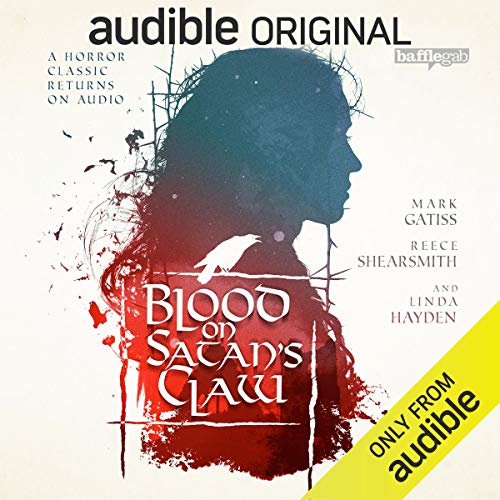
I had never even attempted to write a script until Big Finish approached me one day and asked if I’d liked to write one for their Doctor Who range. So I did, and the guest star in my story ended up being Benedict Cumberbatch! Looking back now, that first script seems a bit awkward and clunky to me, which I guess means that I’ve got better at them over the years. The obvious way audio scripts differ from prose is that your devices for telling a story are more limited.
In audio drama, you’re not privy to what a character is thinking, and the only way you know what something looks like – a person, a planet, a monster – is if another character describes it, which invariably can sound a bit too obvious and expositionary, and can slow the story down. So basically, the dialogue has to be succinct and snappy and as natural as you can make it, whilst also telling the listener what’s going on.
Certain ways you might create tension in prose – such as isolating a character in a creepy location – you can’t do as effectively in audio drama, because characters creeping around on their own don’t tend to talk. So, yeah, audio drama is restricting in some ways, but as a medium it’s also very immersive and intimate, and if you’re blessed with great actors, a great director and a great sound engineer, you can really hype up the tension and the urgency through performances and sound effects.
You’ve written for the Doctor Who audio range from Big Finish. How does writing for an established Doctor (say, Tom Baker’s Fourth) differ from writing for a current screen Doctor? Do you feel more pressure to satisfy nostalgic fans or to surprise them?
There’s not much difference. In each instance you simply have to get inside the skin of that particular incarnation of the Doctor and give them dialogue that you can imagine them speaking. If you can’t picture the particular Doctor you’re writing for speaking the words you’ve written, then work at it until it feels right. It helps, of course, being a Doctor Who fan, who has seen every single episode of the show at least three or four times.
As for satisfying the fans, that’s something you have to put out of your head. Different fans like different things, and a story that may be a classic for one fan may be a real stinker for another. There’s no way you’re going to please all of the people all of the time, so your priority should simply be to please yourself and do the best job that you can.
With an extensive and acclaimed body of work behind you, what creative ambition still feels elusive? Is there a story so ambitious, a genre so challenging, or a format so new that you’re actively working towards it?
I’ve always fancied writing a series of creepy books for the 10-15 age range, simply because that’s the kind of age in which, if you’re into a book or a series of books, you can become so completely and utterly immersed in the fictional world that for a while the real world can cease to exist.
That kind of immersion is hard to rediscover as you become an adult, where reading time inevitably becomes more limited and everyday concerns and obligations constantly niggle away at the back of your mind. To undertake such a project, though, I’d have to do it on spec, and at the moment I simply don’t have time. Writing is not an easy way to make a living, so I have to chase the sure earners in order to keep paying the bills. One day maybe…
Looking ahead ten years, what one trend in horror (publishing, film, or culture) do you hope fades away, and what one trend do you hope emerges or strengthens?
In terms of trends, there’s honestly nothing I can think of here. In horror there’s room for all – the schlocky and the cerebral, the pulpy and the highbrow. I wouldn’t want to expunge one aspect of the genre just because I’m not a particular fan of it. What I guess I would like to see, though not in terms of writing trends, is the return of the mass market paperback format.
That would be great. And one thing I sincerely hope doesn’t happen is the realization of the prediction that AI will eventually become so sophisticated that human writers will become redundant. Personally, I don’t think that will happen, because I don’t think even the most sophisticated AI will ever be able to match the human imagination. But maybe I’m being naively optimistic. I guess time will tell.
And finally, stretching that imagination to the cosmos: if you could step into the Doctor Who writers’ room to pen a single episode, which Doctor would you choose to write for, what companions would you bring along, and which terrifying villain would you have them face? Your answer will likely draw on your deep knowledge of the series. How would you tailor their personalities and the plot to serve your unique brand of horror?
Much as I love old returning monsters – especially ones who haven’t appeared on the show for many years – and incredibly excited though I was in 2006 when, after 43 years, the Daleks and the Cybermen did battle onscreen for the first time ever, I actually prefer it when Doctor Who is less continuity-heavy. On the whole I prefer to see new monsters, new enemies, new threats.
My favourite two seasons of Doctor Who are Tom Baker’s second and third, where, in twelve stories, the only returning villain was the Master – but reimagined as a rotting corpse nearing the end of his final regeneration rather than the dapper, bearded, silky-voiced chap he’d been previously.
So if I was to be asked to write a Doctor Who story for the telly, I’d actually prefer to do something completely new, and yes, it would have to be something dark and creepy, rather than something shiny and science-fictiony. In 2007 and 2008 I wrote a couple of novels featuring David Tennant’s 10th Doctor – Forever Autumn set in a small US town over the Halloween period, and Ghosts of India, a ‘celebrity historical’ featuring Mahatma Gandhi,set during the partition of India in 1947.
Given the chance, I’d actually love to adapt either of those for the screen, though I’d be happy to do it for the incumbent Doctor, whoever he or she may be, and their current companion or companions.
Bad Things Happen Here by Mark Morris
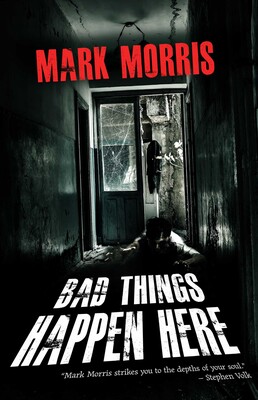
Hardcover with sprayed edges. A new chiller from multi award winning author of over 50 novels, winner of the New York Festival Radio Award for Best Drama Special and Festival Radio Awards.
In 2004 a group of six students, who have newly arrived at university and quickly become friends, are beset by supernatural forces, which seem to centre around a 5th floor room in an otherwise innocuous student hall of residence. So insidious and terrifying is their ordeal that one of the six commits suicide, an act which drives an irreparable wedge between the rest.
Twenty years later, the remaining five friends are all living very different lives. Hannah Prentice is a divorcee with two children, the youngest of whom is being badly bullied at school, and a mother who is showing the first signs of dementia; Jess Maple is a professional artist, who is just about to break into the big time; Steve Lazenby is a successful architect, whose eight-year-old daughter is suffering from delusions and nightmares; Max Bradshaw is a self-employed plumber, happily married with three children, whose fourteen-year-old son has fallen in with the wrong crowd; and Michael Vance, bohemian and charismatic at university, is now a drug-addicted vagrant, who harbours a terrible secret…
Although the five friends have not been in contact for almost two decades, they are gradually drawn back together when their lives begin to fall apart. What happened to them twenty years ago seems to be seeping back into the present, affecting not just them this time, but their children, their partners, their loved ones.
As the terrifying visions, the violence and the madness escalate, they must mobilise forces and once again confront the horror in Room 55.
Mark Morris
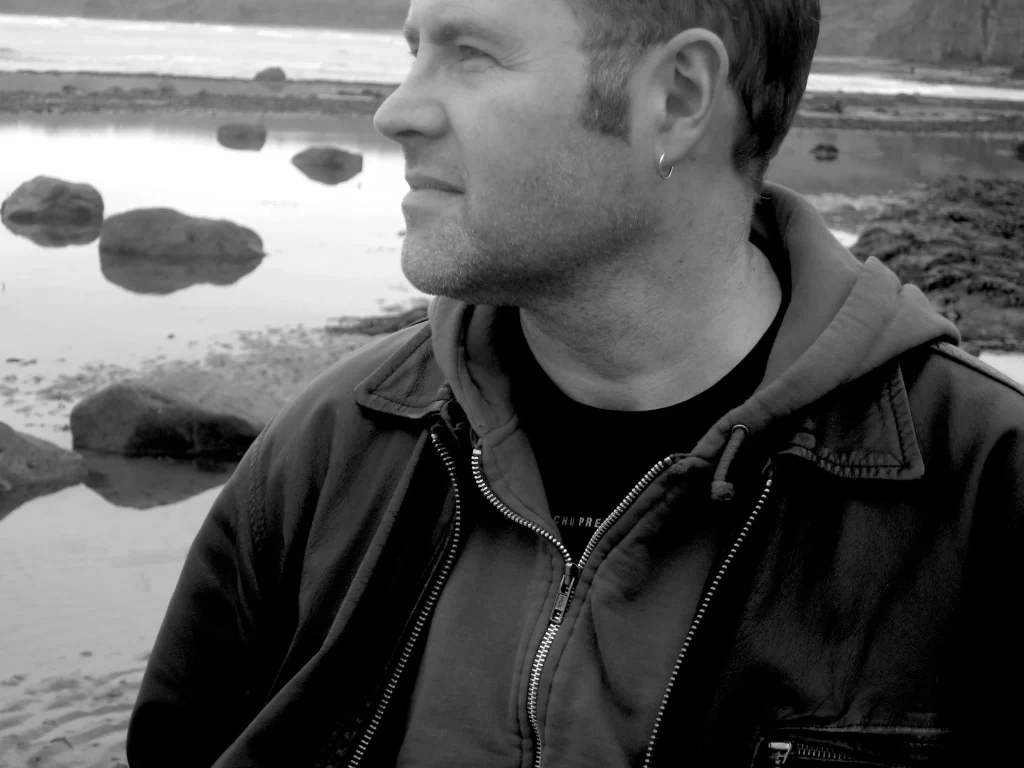
Mark Morris has written and edited almost forty novels, novellas, short story collections and anthologies. His recent work includes the official movie tie-in novelizations of The Great Wall and (co-written with Christopher Golden) The Predator, the Obsidian Heart trilogy (The Wolves of London, The Society of Blood and The Wraiths of War), the anthologies New Fears (winner of the British Fantasy Award for Best Anthology) and New Fears 2 and many more.