On Not Explaining
A.J. Vane
There is a moment in a great many horror films where the thing is finally shown to you, clearly, in reasonable light, and you feel a small and unwelcome sensation which you would rather not admit to. Relief.
The thing now has form. It has a size. It has, presumably, a weakness, and if it has a weakness then someone in the third act is going to find it. The moment the creature steps into the light, the story stops being about your dread and starts being about its defeat, and you can settle back into your seat, because you have been handed the exit.
I have come to believe that the exit is the enemy. And that the refusal to provide one is not a failure of nerve, or a trick, or the mark of a writer who could not think of an ending, but the most difficult and most honest thing the genre can do.
This is not a popular position. It is worth saying plainly that readers who feel cheated by an unexplained ending are not fools, and the complaint deserves a better answer than a shrug about art. So let me try to give one.
Ambiguity is not vagueness
The first thing to establish is that these two words describe opposite conditions, and almost everyone who dislikes ambiguous horror has actually encountered vagueness and reasonably concluded that it was a con.
Vagueness is an absence. It is a story that has not decided what happened, that trails off because the writer ran out of road, that withholds because withholding felt atmospheric. Vagueness is cheap, and readers can smell it, and they are right to be angry, because they have been asked to do work that the author declined to do first.
Ambiguity is the opposite. Ambiguity is a surplus. It is a story that has decided precisely what happened, several times over, and has built each of those readings to completion, and has laid them one on top of another so that every detail is load-bearing in more than one direction at once. Nothing in it is accidental. Every ambiguous story worth the name is more determined than an explained one, not less, because it has to survive being read three different ways without a single seam showing.
Consider The Turn of the Screw. Either the ghosts are real, or the governess is mad. Both readings are complete. Both are fully supported by the text. Neither can be dismissed, and James built it that way on purpose, sentence by sentence, for a hundred pages. That is not a writer who could not decide. That is a writer doing something far harder than deciding.
The distinction matters because it tells you what an ambiguous story owes its reader. It does not owe them an answer. It absolutely owes them a structure in which every element pays for itself. The contract is not broken by the absence of explanation. It is broken by the absence of care.
The economy of the unresolved
Here is the practical argument, the one I would make to a sceptic who does not care about literary theory and simply wants to be frightened.
An explained fear is a fear you have finished with. You close the book and the monster stays inside it, in its cage of rules, where it was captured on page three hundred. It cannot follow you.
An unexplained one is still working. It is working in the kitchen at two in the morning. It is working in the fortnight afterward when you find yourself constructing, without meaning to, a theory about what the house was, and then discarding it, and then building another. The story has enlisted you. You have become an unpaid member of its staff, and you will keep at it for years, because there is nothing in the text to make you stop.
This is why Shirley Jackson never tells us what is wrong with Hill House. The house is not sane, she says, and then she declines, for the entire length of the novel, to elaborate. The reader supplies the wrongness, and the reader’s own wrongness is always more precisely calibrated to the reader than anything an author could have invented for them. It is the oldest trick in the genre and it remains undefeated, and it is the same reason Picnic at Hanging Rock is unbearable and its explanation, when someone eventually supplied one, was not.
Robert Aickman, who understood all this better than anyone, did not even call his pieces horror stories. He called them strange stories, and he was right to, because horror implies a thing that can be identified and therefore, eventually, escaped. Aickman offers no such courtesy. You finish one of his stories and you cannot say what happened. You can only say that something did, and that it is not finished with you.
The objection, taken seriously
The honest objection runs like this: I gave you eight hours of my life and you did not tell me what happened, and that is not mysterious, that is rude.
I have some sympathy. And I think the answer is that an ambiguous story has to earn its silence, and most do not.
It earns it by being ruthlessly specific everywhere else. If the ending is going to withhold, then the prose cannot. The rooms have to be exact. The dialogue has to be exact. The small physical facts of the world have to be so solid that the reader never once suspects the author of hiding behind fog. Ambiguity survives only inside a story that is otherwise scrupulously clear, because the reader must be able to trust that the withholding is deliberate rather than evasive. Every vague sentence elsewhere in the book is a withdrawal from the account you will need to draw on at the end.
It earns it, too, by giving the reader enough to build with. Not an answer, but the materials for several. A story that refuses to explain and also refuses to furnish is not ambiguous. It is empty, and the reader is right to say so.
And it earns it by being honest about what it is, in advance. I would rather a reader knew, before page one, that this is a book which does not resolve. Some of them will put it down, and they should, and no one is harmed. The rest have agreed to the terms.
Why it is true
Underneath the craft argument there is a smaller and more stubborn one, which is simply that this is the honest form.
We do not get explanations for the things that actually frighten us: the shape at the edge of a dream we cannot recall on waking, the way a childhood house feels when you return to it as an adult and find the rooms the wrong size, the sensation, standing in a crowded and cheerful room, that everyone present knows something you do not.
There is no third act for any of that. There is no revelation coming, no rule to learn, no weakness to exploit. There is only the thing itself, unaccounted for, running quietly underneath the day.
A story that ends by explaining itself has told you a comforting lie about the shape of experience. A story that ends without explaining has told you the truth, and made you carry it home.
That is the whole of the argument, and I will not be making it twice.
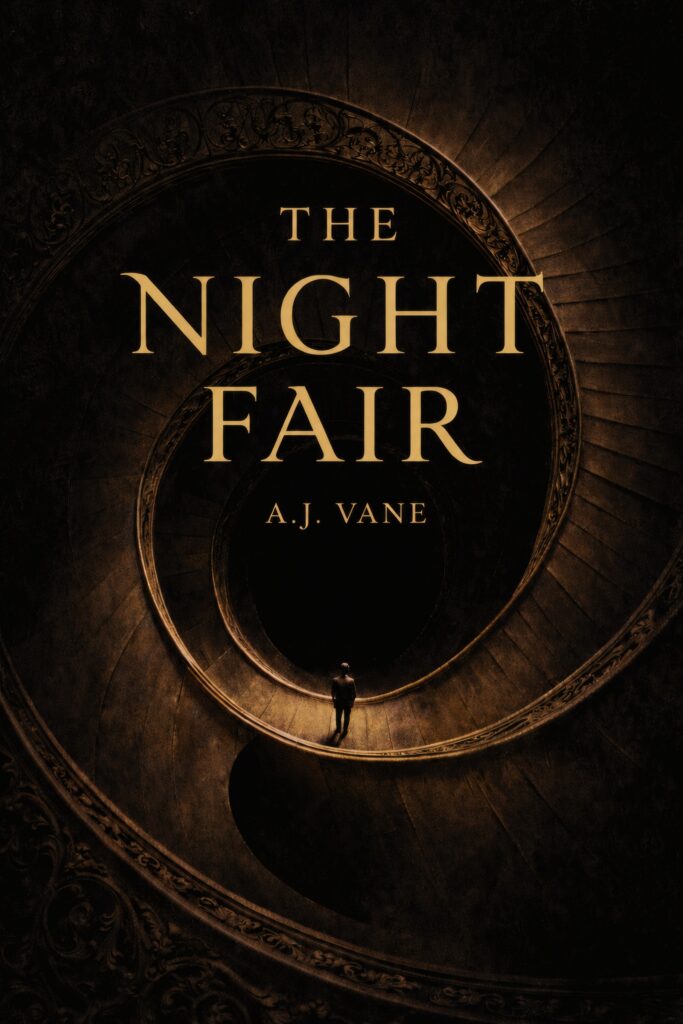
A.J. Vane writes horror in a lower register: the kind that hums rather than shouts. His fiction lives in the tradition of Robert Aickman and Shirley Jackson, where the frightening thing is rarely the monster and almost always the moment something ordinary declines to behave. The Night Fair is his first novel, and the first book of a series. He publishes through Hollow Lantern Books.
The Night Fair: a private exhibition, held once a year on a private estate. Two documentary filmmakers accept the invitation. It reads more like a summons.
Amazon: https://www.amazon.com/dp/B0H8MGVX3Z
Substack: https://ajvane.substack.com
Amazon Author Page: https://www.amazon.com/author/ajvane
Instagram: @ajvane_author
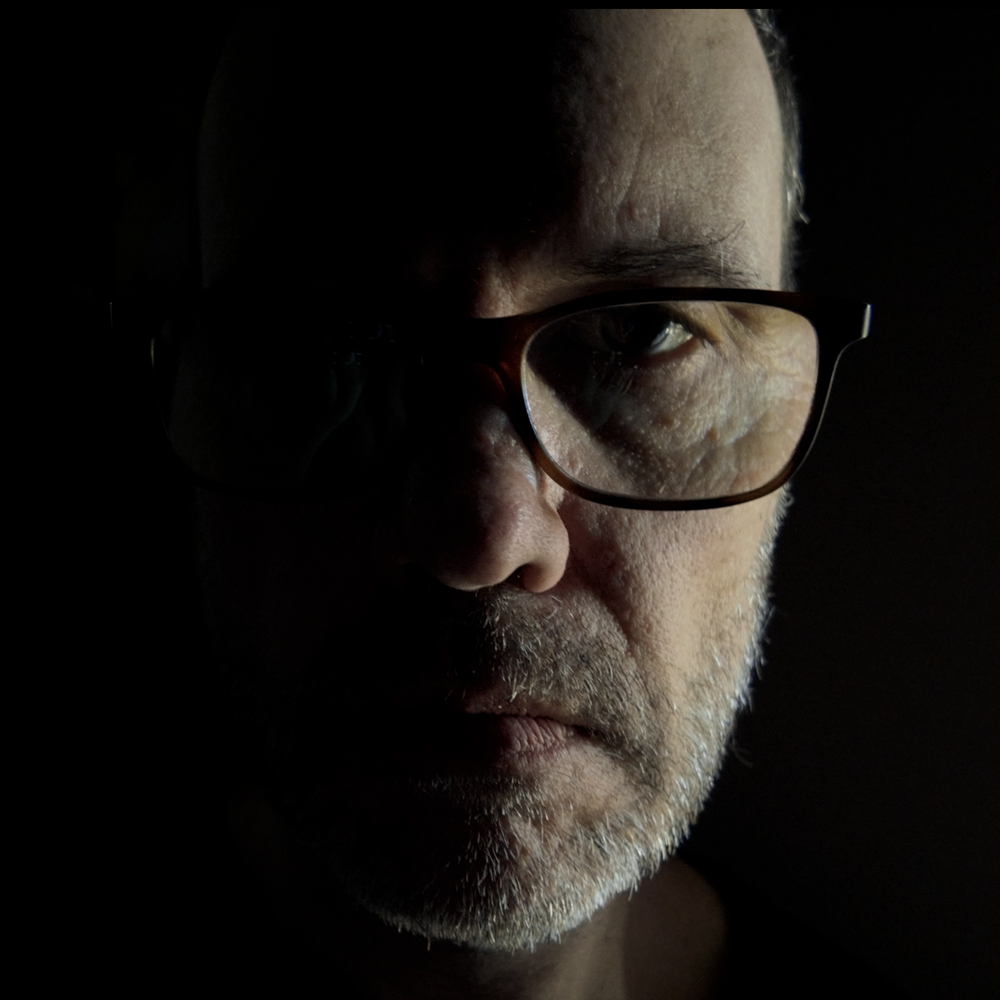
Author photo and cover image attached separately.