A haunted house novel that makes you notice who is holding the camera.
Buy a cheap house, the story goes, and you inherit its secrets. In The House on Blood Street, Josh Hanson hands Jack and Avery a fixer-upper with a basement collage, a ritual circle under the carpet, and a dead poet’s obsession still ticking in the walls. This is literary haunted house horror shot through Italian giallo, a slow, warm, pitiless novel about grief, obsession, and the price of making art from someone else’s pain. If you came up on Burnt Offerings, Shirley Jackson, and Argento, this Black Crow Books release belongs on your 2026 shelf. Here is why it got under my skin.
Josh Hanson runs the haunted house through Italian giallo and comes out with something new: a novel that makes the house yours before it takes it away, then dares you to notice who is holding the camera. Slow, warm, and pitiless. Put your eye to the hole.
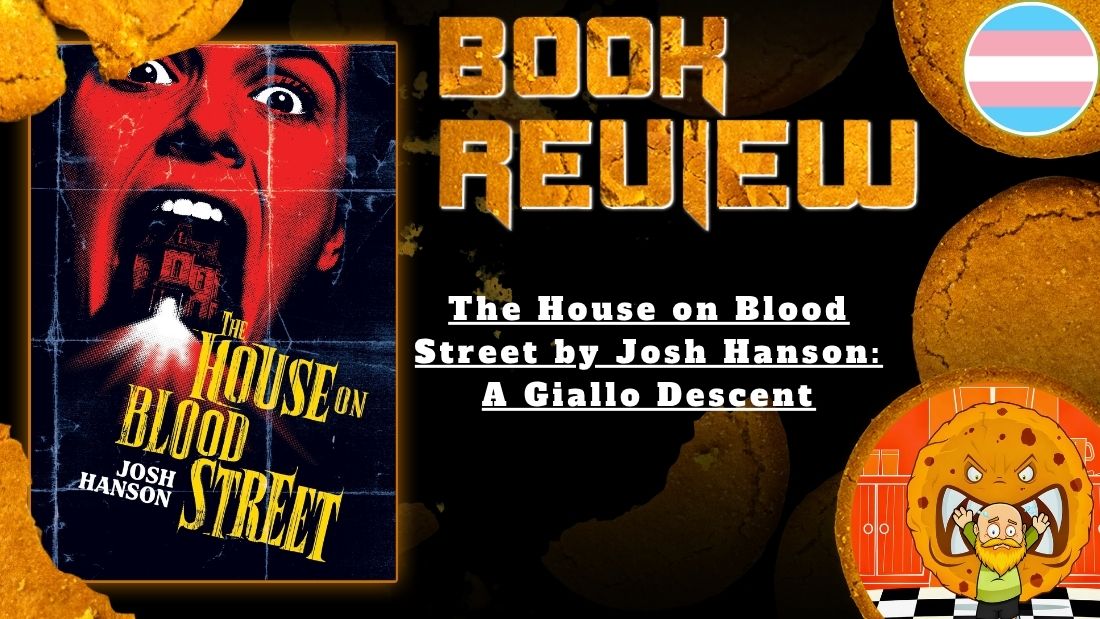
The House on Blood Street by Josh Hanson: A Giallo Descent
The House on Blood Street | Josh Hanson | Black Crow Books | 29 July 2026 |
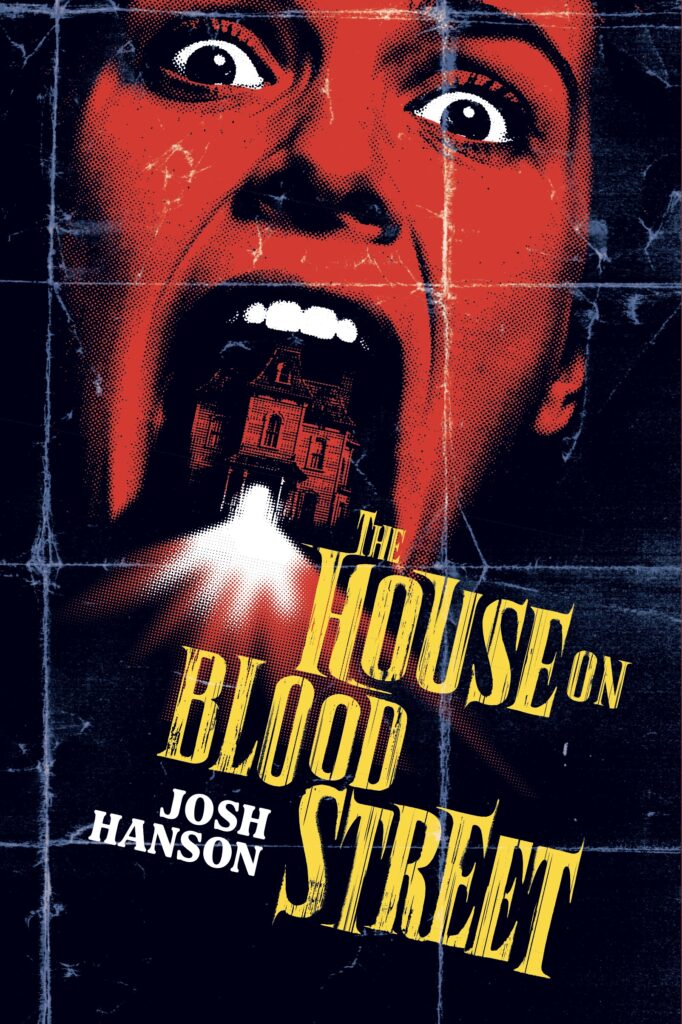
The hole in the basement wall is small, just wide enough for a finger, and Josh Hanson spends the whole of The House on Blood Street daring you to put your eye to it.
Jack and Avery buy a fixer-upper near the university. The price is low because the last owner died and the family wants the place gone. Down in the basement they find a collage. Someone cut hundreds of women out of old magazines and pasted them into a great flesh-colored sun. At its center sits a ragged hole. It looks like a pupil. Later it looks like a mouth. Avery calls it art. Jack wants it torn out. The house has other ideas.
That is the setup, and on paper it sounds like a dozen haunted house books you have already read. It is not one of them.
Here is what reading it actually does to you. The dread comes in slow, and it comes in sideways. Hanson builds the first act almost entirely out of home repair. Jack pulls up filthy carpet. He fights a tripping breaker. He drops a hundred bucks at the hardware store every time he walks in.
It is funny and it is warm and it is very ordinary, and that is the trap. By the time the floor gives up a chalked ritual circle under the dining room rug, you are already living in the house. You know its smells. You know where the light switch is. So when the place begins to breathe, the fear lands somewhere deep and personal, because the book has made the house yours first.
The pacing works like a tide. It pulls back, it lets you laugh, and then it drags you a little further out than before. There are long calm stretches where Jack and Avery just love each other, tease each other, watch bad movies in bed. Then a single line will drop through the floor of the scene and leave you cold. I kept catching myself reading faster and then making myself slow down, because I did not want to miss the small stuff. The small stuff is where the horror lives.
Avery’s night walk into the basement is the moment the book showed me its full hand. She moves through the dark like smoke. She puts her eye to the hole. What she sees on the other side is a fire, and an old woman, and a word she should not say out loud. Then she climbs back into bed, means to whisper I love you to her sleeping husband, and says the other word instead. I read that page three times. It is a perfect little engine of fear, and it runs on almost nothing.
Now the craft, because this is where Hanson earns real respect.
He writes in close third person, and he moves between Jack and Avery so we get both halves of the marriage from the inside. That choice matters more than it looks. We watch Jack talk himself out of every scary thing he sees. His brain names the noise, files it, calms him down. We watch Avery do the opposite. She trusts what her body tells her. So the reader sits in the gap between them, knowing more than either one, which is its own slow torture. Dramatic irony, used like a scalpel.
The sentences stay lean when the scene is calm and go strange when the house wakes up. Hanson can do plain and funny. He can also do a birth scene for a thing that is not born, all wet sound and spindly legs, that made the back of my neck go tight. He uses one very precise word, visceral, only when the giallo murder plays out on the laptop screen, and he is right to save it, because that scene is meant to feel like a wound. The blood is too red. The synth pulses. The camera becomes the killer. He knows exactly what he is quoting and why.
The structure is its own argument. Three parts. The first is the house on Calliope Street, the domestic setup. The second, In the Locust Tree, drops us into a grey afterworld, a washed out copy of the house where a dead poet waits at a card table and calls Avery by a stranger’s name.
The third, Camera Obscura, is Jack alone, trying to film his wife back into being. Each part changes the rules. Each part is lit differently, the way the movie inside the book is lit in pinks and reds. The chapters are short, some only a page, and they click forward like frames through a projector. That is not an accident. This is a book about cameras, and it is built like one.
So what is it about, under the floorboards?
Obsession, first. Arthur Boorman, the poet who owned the house, won a big prize young and then stopped writing. What he did instead was fix his whole self onto Becca Mays, a B-movie actress murdered in the house in the seventies. He built a movie out of her death.
He built the collage. He turned grief and want into a machine, and the machine kept running after he died. Hanson is asking a hard question about art and loss. When you make a thing out of someone else’s tragedy, are you honoring them or feeding on them? The book calls Boorman a ghoul more than once. It does not let him off the hook. It does not fully let Jack off the hook either.
Because Jack does the same thing. When the house takes Avery, he does not mourn. He makes a film. He tells himself the film is a rescue. He rewrites a dead man’s script and shoots it with a strange rural commune, and the closer the movie gets to done, the more the truth leaks in.
Finishing it means admitting she is gone. So he never quite finishes. The book is sharp and sad about creative people who cannot follow through, who love the plan more than the work, who use the endless project as a place to hide from feeling. I have known that person. I have been that person. Hanson sees him clearly and writes him with love anyway.
Then there is the male gaze, made concrete in that basement of cutout women. Avery, a trans woman, stands in front of it and reads it exactly right. It is tits and a hole. It is women reduced to a surface and an opening. In her dream she becomes both the one watching and the one watched, subject and object at once, and the book keeps turning that idea over. Who gets to hold the camera. Who ends up pinned in front of it. Avery spends the novel refusing to be only a thing to look at, even in a world built by a man to look at her. That thread gives the horror a real spine.
And under all of it runs the myth of Orpheus and Eurydice. Jack goes down after his wife. Art is his only torch. The cover copy names the myth outright, and the book keeps its promise. There is even a Berryman line at the front, that we must travel in the direction of our fear, and every main character does exactly that, straight down the basement stairs.
This is the fourth novel Hanson has published, and it reads like a writer arriving somewhere he has been walking toward for years. King’s Hill put a woman in a prison classroom across from a killer who tells his story in pieces. The Woodcutters marched a period western into supernatural dark, out past a frontier fort where men were never meant to go. Fortress put children in a school with a monster and said hard things about how this country fails its young. Look at the pattern. Storytelling as a trap.
A door you should not walk through. The vulnerable pushed toward the dark. The House on Blood Street gathers all of it and turns the lens on the artist himself, on the very act of making horror out of pain. Hanson works as a high school English teacher, and he writes Jack, a high school English teacher who loves poetry and stupid gore in equal measure, without a shred of vanity. He is a self-declared pantser who drafts by discovery, and you can feel that method here in the best way. The story keeps surprising itself, keeps becoming stranger than its own opening promised.
Where does it sit in horror right now? It is literary haunted house work, and it belongs on the shelf with Marasco’s Burnt Offerings, the book about a house that heals itself by eating its family. It talks to Shirley Jackson, to the way a house can press on a mind. It shares blood with Danielewski, with a hole and a labyrinth that should not fit inside an ordinary home.
It rhymes with Catriona Ward and Paul Tremblay, writers who let story and screen and reality bleed into one another until you stop trusting the frame. But Hanson brings something of his own to that company. He runs the whole thing through Italian giallo, through Argento and Fulci, so the scares arrive soaked in color and film grain. Most haunted house novels want you to believe the house. This one wants you to notice the camera, and then wonder who is holding it, and then wonder if it is you.
That is the move I keep coming back to. The book renovates you the way Jack renovates the house. One small job opens onto two more, and the expenses grow, until the whole structure of your calm has been pulled up like old carpet and you are standing on bare, stained wood, looking at a circle you do not remember drawing.
Put your eye to the hole. Hanson is on the other side, holding a candle, and he has been waiting for you a long time.
A psychedelic horror novel reminiscent of Burnt Offerings by Robert Marasco, T. Kingfisher’s A House with Good Bones, and Dario Argento’s surreal horror film Suspiria.
Jack and Avery’s new home on Calliope Street is a fixer-upper’s dream. The lurid collage of pornographic clippings on the basement wall seems like a quirky (and campy) feature.
But once the house awakens, what seemed harmless becomes as horrifying as the blood seeping from the carpet. The house is alive. It is intelligent. And it demands homage. Inspired by the surreal and graphic films of the Italian maestros as well as a meditation on obsession and the relationship between tragedy and art, The House on Blood Street evokes the myth of Orpheus and Euridice, mixing art, love, and death into a modern take on the haunted house.
Ginger Nuts of Horror: The Heart and Soul of Horror Reviews

Looking to get your horror book or film in front of the genre’s most dedicated audience? Ginger Nuts of Horror is one of Europe’s largest independent horror review websites, with over 30 contributors publishing horror book reviews and horror movie reviews almost every single day.
We offer far more than reviews. Authors, filmmakers and publishers can promote their work through in-depth horror book reviews, horror film reviews, comic and video game coverage, news features, and our popular author and director interviews like Five Minutes With. Our guest feature series, The Horror of My Life, Childhood Fears, The ? That Made Me and more, let creators tell their story while promoting their latest release.
Every feature is built to sell your work. We include backlinks to your website or Amazon author page, a full synopsis, and a universal purchasing link that sends readers straight to their local store. Add a large, engaged social following and an 18-year archive of trusted horror coverage, and you have a platform genuinely built to grow your readership.
Whether you’re an established author, an indie filmmaker, or a debut voice in indie horror, there’s a way for us to help you reach more fans. Explore our horror book reviews and horror movie reviews, then get your horror book or film featured today.


Jim "The Don" McLeod has been reading horror for over 35 years and reviewing it for more than 16. He's the editor of Ginger Nuts of Horror, Europe's largest independent horror review and culture site, and a British Fantasy Award nominee for his work in the genre. When he's not busy inflicting his opinions on the horror community, he can be found annoying his family or getting thoroughly outwitted by his two dogs, Casper and Molly.