
Horror author photos perform menace, by people who cry at dog adverts.
The leather jacket. The brick wall. The half-smile that hints the author has thought about your death. Horror author headshots have quietly hardened into their own genre, with a fixed kit of clichés that recur on book jacket after book jacket. This field guide takes the horror author photo apart pose by pose, from the all-black wardrobe to the obligatory cat, then asks why the biggest horror publishing boom in forty years has turned author branding into a second job for every writer’s face. It ends with the one author who beat the whole ritual without showing his.
Horror performs a feeling no other genre needs to. The crime writer wants to look like they could solve it. The romance writer wants to look like a hug. The horror writer has to look like they know something, and that they might tell you, and that you might not enjoy it.
A Brutally Honest Field Guide to Horror Author Headshots
The leather jacket is doing a lot of work. So is the brick wall behind it, and the half-smile that says the author has thought, in some detail, about your death.
I have looked at thousands of these photos. Review horror for long enough and you build up a mental archive of writer faces. After a while the faces start to rhyme. The same poses. The same backdrops. The same studied refusal to look like someone who pays council tax. The horror author headshot has become its own genre. It has its own tropes. Somebody needs to write the field guide.
So here we are.
Let me be clear before I start the roasting. I love these people. This is a love letter wearing a rubber mask. The horror community is the warmest, most generous corner of publishing I have ever stood in. Which makes it all the funnier that we pose for our author photos as though we are about to be charged.
If you click on the author photos below you can check out all of their fabulous books.
The Brick Wall
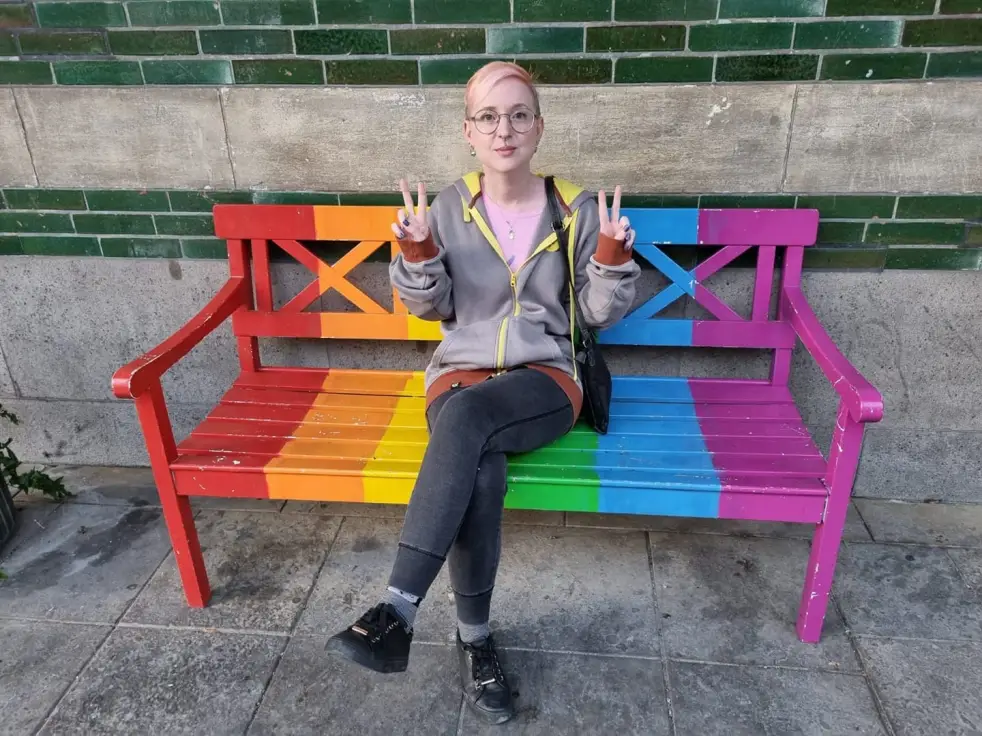
Everyone starts with the brick wall. It is the gateway drug.
Nobody teaches you this. You just find a wall, cross your arms, and let the camera do the rest. The pose arrives fully formed, like a folk memory. One day you are a person. The next you are leaning on Victorian masonry with your chin dropped and your eyes doing something you hope reads as depth.
The funny part is that the professionals beg writers not to do it. Headshot photographers list the bare brick wall as a cliché to avoid. It sits right up there with the prop you do not need. And the full-body shot where you lurk in shadow so deep nobody can find your face. The advice is everywhere. The writers ignore it everywhere, because the brick says something we want said.
It says urban decay. It says I am rough around the edges. It says I once read a Cormac McCarthy novel near a railway line. It says I have suffered, mostly indoors, but the wall is doing the suffering for me now.
There are upgrades, of course. The exposed pipe. The bit of graffiti left just out of focus. The leather jacket, which turns the wall from a backdrop into a whole personality. But the wall is always the star. Everything else is set dressing.
Horror loves a brick wall because horror loves a threshold. A wall is a thing you get backed against. It is the last thing you touch before the thing in the dark reaches you. Whether the author meant that or not, the genre reads it in. Put a horror writer in front of brick and the readers do half the work themselves.
To be fair to Laura, they are never far away from a brick, usually housed in a sock and ready to swing at members of The Coffee Cream Chocolate Liberation Front.
The All-Black Build

Then comes the wardrobe, and the wardrobe is black.
Black jacket, black jumper, black shirt, sometimes a black scarf doing the heavy lifting of a personality. The leather jacket is the deluxe edition of this look. It carries an unspoken promise that the author has a motorbike. Or at least has stood near one. Nobody in this photo is cold. Nobody in this photo is warm. They have transcended temperature.
Here is the secret nobody admits. It is never one black. It is four or five blacks, and none of them match. There is the jet-black jacket. There is the tired charcoal jumper that used to be black. And there is the t-shirt washed so many times it is now the colour of a storm cloud with regrets. Up close it is a riot. From a distance it reads as one sombre statement of intent. Distance does a lot of work.
Layering is where the ambition shows. One black item is a choice. Five black items, worn indoors, in June, is a personality. The apex look is a t-shirt under a shirt under a jumper under the jacket, with a scarf on top. In a heated room. Sweating quietly for the art.
There is usually a band t-shirt in there too, half-glimpsed under the jacket. It is chosen so a certain kind of reader leans in and goes, no way. If you clock it, we are friends now. If you do not, it stays our secret, and that is fine as well.
Then the hardware. A silver ring on a finger that has never thrown a punch. A small skull on a chain, or a Victorian mourning locket with nobody’s hair in it. Chunky boots that have walked to one bookshop and back. Every piece says danger. All of it came from a high street you could name.
The look holds right up until a horror convention, where the whole genre turns up dressed the same and the spell breaks. A hundred authors in black, milling by a hotel buffet, look less like a coven and more like the staff of a very sad nightclub. The one brave soul in a yellow cardigan becomes the most frightening person in the room. You cannot teach nerve like that.
The Unsettling Half-Smile

The half-smile deserves its own seminar.
A full smile is for crime writers and people selling conservatories. A blank stare is for literary fiction. The horror author needs the precise muscle control of the half-smile. The one that hints at warmth, and a working knowledge of where the bodies go. Think of a doorbell ringing in an empty house. Now put it on a face. You should not find it reassuring, and you cannot quite say why.
The trouble lives in the eyes. A real smile crinkles them. The muscles fire on their own, without asking permission, which is why a fake one never quite lands. The half-smile keeps the eyes out of it on purpose. The mouth says hello. The eyes say I have read your search history. That mismatch is the entire effect, and the reader clocks it a beat before they can name it.
There are sub-species, naturally. There is the Slow Curl, one corner of the mouth lifting like a drawbridge nobody asked to lower. There is the Closed-Mouth Withholder, lips pressed flat, as though a full smile would give away information the author is not ready to share. There is the Selfie Casualty, shot at arm’s length in bad light, landing somewhere between menace and a man who has just remembered he left the oven on. And there is the rare, alarming Full Beam, used by the horror author who has decided that nothing frightens a reader like genuine delight. They are correct, by the way. Nothing does.
Get it slightly wrong and you look like you are passing a kidney stone. Get it right and the reader feels watched. Most writers land somewhere in between, which is its own quiet tragedy.
I have tried it myself. I have stood in front of a lens and gone for the knowing half-smile of a man who reviews horror for a living. What came back looked less like a threat and more like someone mildly amused by a passing bin lorry. So I get it. This is the hardest pose in the whole guide, and the one most likely to end up cropped out and quietly replaced with the photo where you are just holding a mug.
The Stare Into Middle Distance

This one looks past the camera, off to the left. At something we cannot see, and probably do not want to.
The pose is sold as mystery. In practice it is a person being told by a photographer to “look at that tree like it owes you money.” It works more often than it should. There is something about a writer refusing to meet your eye that makes you assume they know something. They usually do not. They are thinking about lunch.
The direction matters more than you would think. Off to the left reads as contemplation. Off to the right reads as regret. Up and away is reserved for authors communing with mortality, or, more often, with a pigeon on the roof. Down and away is grief, or a discreet check of the phone. Nobody looks straight up, because straight up is just nostrils, and nostrils are not frightening. They are a warning.
Then there is the chin. Too high and you are a Bond villain. Too low and you are apologising to your own collarbone. There is exactly one correct chin, and finding it takes forty minutes and a great many tiny adjustments while a photographer says “lovely, and again, but sadder.”
The whole thing is a claim. It says I have looked into the abyss. Maybe you have. But we both know the abyss, on the day, was a garden centre car park, and you were mostly wondering whether you had left the hair straighteners on.
The Black-and-White Treatment

Strip the colour out and you have bought yourself instant gravitas.
Black and white is the global signal for take me seriously. Some literary presses shoot every author that way as a house rule. The average release is chasing a prize, and grey skin photographs as depth. Horror borrows the trick constantly. A bit of contrast. A shadow across half the face. Suddenly a writer of perfectly readable paperback chillers looks like they translate medieval grimoires for fun.
The real genius of monochrome is what it hides. In colour, we can see that the jumper came from a supermarket, the wall is magnolia, and the whole thing happened in a kitchen at eleven on a Sunday. In black and white, none of that survives. The magnolia becomes brooding shadow. The supermarket jumper becomes a considered choice. You become a person who owns a fountain pen.
The deluxe version puts half the face in darkness. One eye lit, one eye plotting. It is meant to suggest duality, the light and the dark in all of us. It usually suggests the lamp was on the wrong side of the room.
Add grain and you have travelled back to a more serious decade. One that respected horror and did not have Wi-Fi. Nobody in a grainy black-and-white photo has ever posted a picture of their Sunday roast. That is the promise. That is the lie.
The Location Shoot
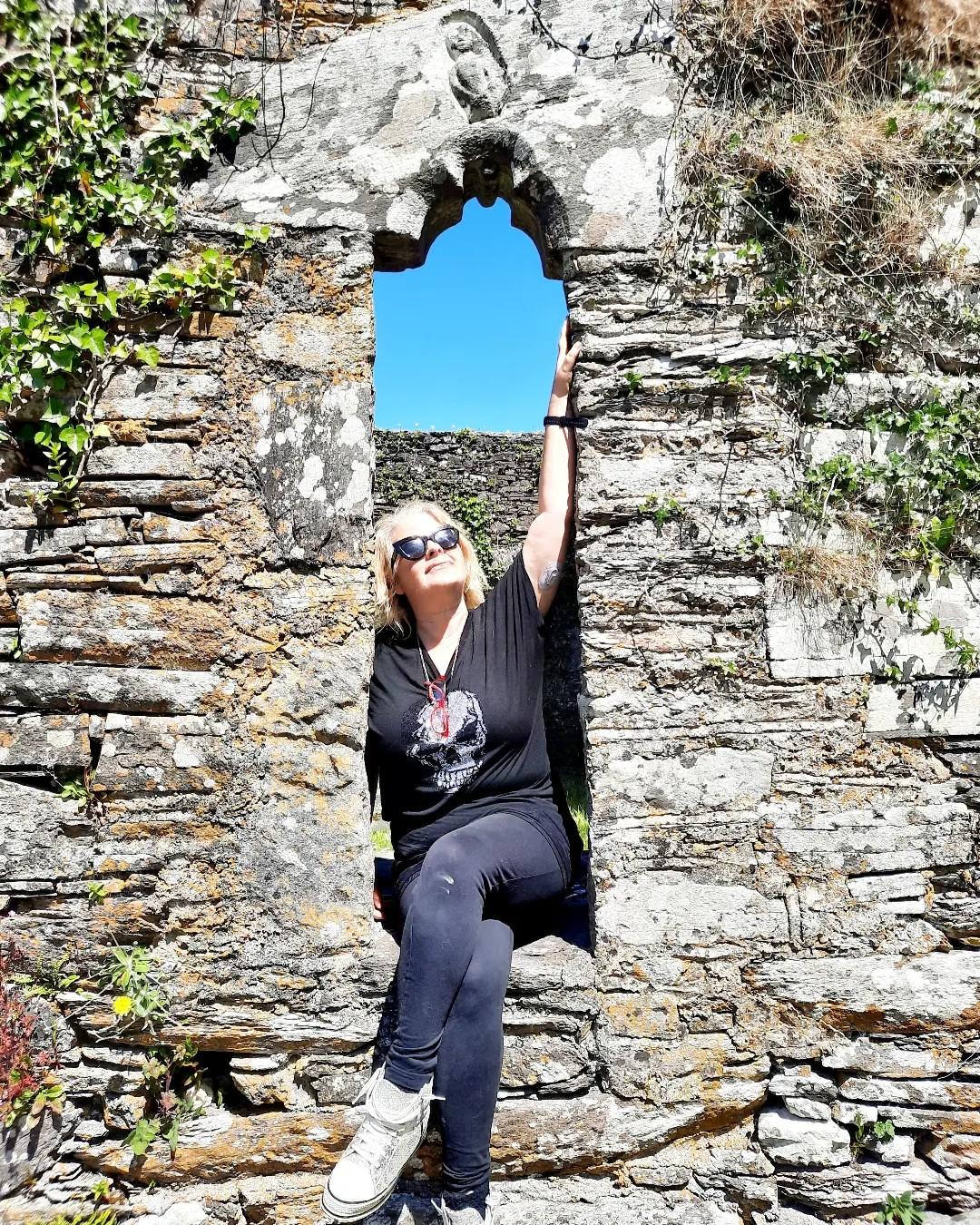
The ambitious go on location.
The woods. The graveyard. The derelict mill with the broken windows. The point is to put the writer inside the genre, surrounded by the set dressing of the work itself. Sometimes it sings. More often it looks like the author got lost on a dog walk and decided to make it a brand.
The trouble with location is that locations have neighbours. That atmospheric wood is a country park. Forty feet behind the photographer there is a car park, an ice cream van, and a man called Keith letting his spaniel off the lead. The derelict mill is on private land, and someone is already walking over to have words. The dread you are projecting is real. So is the trespass.
The weather does the heavy lifting when it turns up. Mist, bare branches, a low grey sky, and you look like the last person left alive. Blazing sunshine, and you look like you are on a team-building away day that has taken a strange turn. You cannot book the fog. Believe me, we have all tried.
The graveyard shoot especially has been done to death. The dead must be sick of the foot traffic. And there is an etiquette nobody warns you about, which is that the moody headstone you are leaning on belongs to a real person. Somewhere out there is a horror author, mid-brood, standing squarely on Doris.
The Prop

And then there is the prop, which is almost always the cat.
Photographers warn against props for the same reason they warn against the brick wall. The prop steals the frame, and the frame is meant to be you. Authors do it anyway. The cat says I am cosy and slightly sinister, the ideal horror writer brand. The skull says I bought this skull. The stack of old books says please believe I have read them.
The skull deserves a closer look, because we all know where it came from. It came from a garden centre, or a Halloween aisle, or the internet. It is plastic. It has a faint seam down one side. You are cradling it like Hamlet, and it is a novelty candle holder called Kevin.
The typewriter is worse. It sits there, beautiful and dead, a machine the author has never once fed a sheet of paper. The quill is worse again. Nobody has written a horror novel with a quill since the horror was cholera. And do not get me started on the lone raven, which turns out, on closer inspection, to be a soft toy with a wire up the back.
The cat, though. The cat is the only prop with a survival instinct, which is why the cat keeps winning. It did not agree to any of this. It is already halfway out of shot, tail up, dignity intact, off to knock a full glass of water onto the manuscript. The author wanted to look sinister. The cat looked sinister for free, then left. The cat has an agent. You do not.
The Marenghi Problem
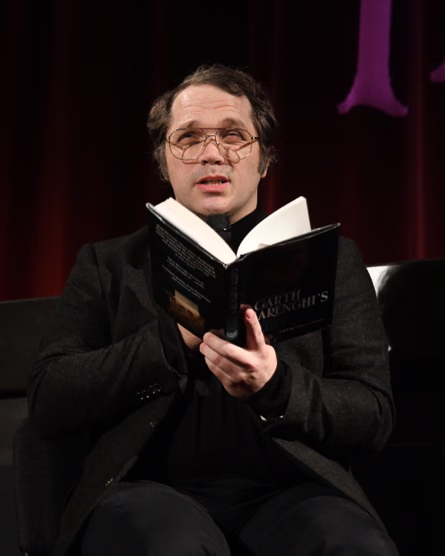
There is a reason the brooding horror author photo curdled, and his name is Garth Marenghi. I mean look, he hits all of the above headshot ideas, all in black, prop, a stare into the middle distance, and a half smile. All he needs is a brick or two.
Matthew Holness built him as a parody. The hack genius who calls himself “author, dreamweaver, visionary, plus actor” and means every syllable. Darkplace aired on Channel 4 in 2004, sank without trace, and then refused to die. The character never left. He came back as a real author too, which is the part that still makes my head hurt.
TerrorTome hit the Sunday Times bestseller list in 2022. Incarcerat followed on Halloween 2023. This Bursted Earth closed the trilogy in 2025, published the day before Halloween, because of course it was. The tours sold out. More than fifty thousand tickets across two of them, with Holness reading in character, jaw set, eyes full of borrowed depth. People paid real money to watch a made-up man take himself seriously.
Here is the damage he did. Marenghi nailed the pose so completely that he wrecked it for everyone. The leather. The unearned intensity. The stare that says I have seen things, mate. He did not soften the brooding-author image. He set it in amber. He turned the whole thing into a punchline, and once a thing is a punchline, you cannot pose for it straight.
Try the moody horror headshot now and a good chunk of your readers hear “dreamweaver, plus actor” in their head. They see the jaw before they see you. The man did not just spoof the genre. He spoofed the genre’s face, and he did it so well that the face now belongs to him.
Why Horror Is Different
Here is the actual argument, now that I have had my fun.
Every genre performs itself in its author photos, but horror performs a feeling no other genre needs to. The crime writer wants to look like they could solve it. The romance writer wants to look like a hug. The literary novelist wants to look like they are above wanting anything. The horror writer has to look like they know something. That they might tell you. And that you might not enjoy it. The whole kit, the jacket, the wall, the half-smile, exists to project menace. And it comes from people who are, in real life, almost always lovely. The kind who cry at animal charity adverts.
That gap between the photo and the person is the joke at the centre of the genre. We write the worst things you can think of, then queue politely for coffee.
The Double Standard Nobody Posed For
The performance is not handed out evenly, and this is where the field guide stops being funny.
Writers have gone public about the quiet rules. One described sending in a photo where she had started to smile. She was told it would not work. Then she noticed that every woman on the publisher’s site was smiling, and not one of the men was. Women in particular get told to look approachable. Capable, but not too clever. Present, but not too present. You are expected to write about disembowelment and then reassure everyone you are nice about it. Men get to scowl into the brick wall for free.
Horror likes to think of itself as the genre that says the quiet part loud. Worth saying that the author photo has its own quiet part. And it is not always said by the author.
The Boom Made It Worse
None of this used to matter as much, and now it matters hugely.
Horror is in the middle of a boom it has not seen since the 1980s. New imprints keep launching, Tor Nightfire and Orbit’s Run For It among them. The genre just posted its best sales years on record. NielsenIQ BookData clocked just over eight million pounds of UK spending in 2024. BookTok pushes new names up the charts every week. Agents report a surge of submissions from younger writers and queer writers. And, music to my ears, a wave of Scottish, Welsh and northern voices. More authors means more author photos. And more author photos means more pressure on each one to do the branding the back cover used to do alone.
The headshot is now a marketing asset working a double shift. No wonder everyone looks slightly tense.
The Man Who Solved It

Which brings me to the only horror author who beat the system completely.
Chuck Tingle appears in public with a pink bag over his head. Sunglasses on top of the bag, because a man has to protect his eyes. “Love is real” is written across the front in marker. That is the whole look. That is the brand.
The one photo ever passed off as his portrait turned out to be a stock image, which is the funniest possible outcome. He looked at the entire author-photo economy and opted out of it, then let a random stock model take the fall.
And here is the thing. It worked. He won the Locus Award for Best Horror Novel in 2025 for Bury Your Gays. He picked up a Bram Stoker nomination for Camp Damascus. He put Lucky Day on the bestseller lists. All without showing his face once. No brick. No black leather jacket. No half-smile. No cat asleep on a pile of his own hardbacks.
He looked at the whole anxious ritual, the wall, the leather, the borrowed depth, and he simply left the room. Every other one of us is still standing against the brickwork, arms crossed, trying to look like we know where the bodies are buried. Tingle refused to be found at all. Somehow that pink bag is the most horror author headshot of them all.
Ginger Nuts of Horror: The Heart and Soul of Horror Reviews
Looking to get your horror book or film in front of the genre’s most dedicated audience? Ginger Nuts of Horror is one of Europe’s largest independent horror review websites, with over 30 contributors publishing horror book reviews and horror movie reviews almost every single day.
We offer far more than reviews. Authors, filmmakers and publishers can promote their work through in-depth horror book reviews, horror film reviews, comic and video game coverage, news features, and our popular author and director interviews like Five Minutes With. Our guest feature series, The Horror of My Life, Childhood Fears, The ? That Made Me and more, let creators tell their story while promoting their latest release.
Every feature is built to sell your work. We include backlinks to your website or Amazon author page, a full synopsis, and a universal purchasing link that sends readers straight to their local store. Add a large, engaged social following and an 18-year archive of trusted horror coverage, and you have a platform genuinely built to grow your readership.
Whether you’re an established author, an indie filmmaker, or a debut voice in indie horror, there’s a way for us to help you reach more fans. Explore our horror book reviews and horror movie reviews, then get your horror book or film featured today.
Jim "The Don" McLeod has been reading horror for over 35 years and reviewing it for more than 16. He's the editor of Ginger Nuts of Horror, Europe's largest independent horror review and culture site, and a British Fantasy Award nominee for his work in the genre. When he's not busy inflicting his opinions on the horror community, he can be found annoying his family or getting thoroughly outwitted by his two dogs, Casper and Molly.


