
Art, ambition and New Orleans rot beneath J.R. Blanes’s Southern Gothic horror.
J.R. Blanes builds horror from the places, art and stray details that refuse to leave him alone. In this interview, the author of Portraits of Decay talks about the New Orleans setting that shaped the novel, the art community at its centre, and his attempt to write Southern Gothic horror without leaning on tired ideas about voodoo and zombies. He also gets into the less tidy parts of writing: following characters when they take the story somewhere unexpected, trusting an editor to spot what research missed, and accepting that readers may find horror in moments the writer never expected to hit hardest.
Blanes traces his creative fuel through architecture, museums, paintings, travel, music and the physical feel of a place, from Chicago streets to Belize and New Orleans. He explains why setting does not simply serve his horror fiction, but changes the way he writes it. Portraits of Decay emerges here as a story driven by ambition, revenge, love, control and damaged relationships, with J.R. Blanes treating Southern Gothic horror as much as tragedy as fright.
J.R. Blanes does not treat setting as wallpaper. New Orleans, Chicago, Belize, paintings, music and the physical feel of a place all feed the work, while Portraits of Decay turns that instinct towards art, ambition, control and the kind of horror readers recognise in themselves.
J.R. Blanes on Portraits of Decay and Southern Gothic Horror
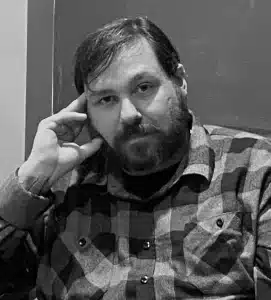
Let’s start at the very beginning. For our readers, please introduce yourself. Beyond the author bio, tell us a little about who you are when you’re not writing, what you love doing, what fascinates you, and what fuels your creativity.
My name is J.R. Blanes. I’m from Indiana but have lived in Chicago, IL for almost 30 years. I consider myself a creator, or as Clive Barker puts it, an imaginer. That means that I’m always creating. When I’m not writing novels or short stories, I’m always somehow being involved in the creation of things.
I’m the co-founder of the Chicago reading series, The Genre Society, which hosts authors who write in the genres of horror, sci-fi, fantasy, romance, mystery, and their sub-genres. I play guitar and bass and I’m currently working on a dark metal project I’m calling Sinister Steel. I make funny videos for my social pages. A way of showing my more comedic side as most of the time the things I write are rather bleak in tone.
I enjoy spending time with my wife traveling and visiting different cities. We’re both huge fans of architecture and museums. We’re also foodies. One of our goals when visiting another place is to find the restaurants, cafés, bars, bookstores, etc. that the locals frequent. Nothing better than stumbling upon a favorite greasy spoon or watering hole. It’s going somewhere new for the first time that often fuels my creativity.
I love taking pictures and later incorporating that scenery in a story. The same can be said of seeing something in Chicago I’ve never seen before. Once I happened across the gothic vampiric-like building of the Anti-Aging Society accidentally while walking around the neighborhood of Lincoln Park. I immediately went home afterwards and began drafting a new story.
In the early stages of a new project, what tends to come to you first: a compelling character voice, a central thematic question, or a vivid image/scenario? How does that initial spark then guide you in building the rest of the story?
Normally it’s an idea of something that could happen. To use the above example, I didn’t know that the intriguing building I found was the anti-aging society until I looked it up. I just knew I wanted to use the structure in a unique way that had nothing to do with vampires.
It was only after I discovered its actual ownership that a nugget of an idea began to form. That’s usually how it happens for me. I come across something—an annoying colleague, crocodile infested waters in Belize, a documentary about Incan mummies—that sparks a concept in my mind. Not always, but often, I tend to let that percolate for a while until I have pretty good plot with characters and a scene or two begins to take shape.
Every book has its own unique set of problems to solve. What was the most difficult ‘puzzle’ you had to crack while writing this book? Was it a plot hole, a character’s motivation, the structure, or something else entirely?
While writing Portraits of Decay, I really struggled with the magic system of the potions and how they work in “raising” the dead. I’d done a ton of research on the voodoo zombie powder, coup de padre, but not everything about how it supposedly works fit within what I was trying to accomplish with the potion I present in my narrative.
It’s close, but I still had to fictional quite a few things, and I’m not sure I ever got it completely right. If there is any hole in the novel, that may be the one. But the more I tried to solve every plot discrepancy around it the further I was from solving the actual problem. I hope that readers don’t have an issue with it or it doesn’t ruin their enjoyment of the story. I did the best I could for it to make sense.
The journey from a finished manuscript to a book in a reader’s hands can be a surprising one. What was the most significant way your book evolved during the editing and publishing process, something you didn’t anticipate when you typed ‘The End’?
I’m blessed to have an amazing editor in Anna Koon. Portraits is a book about artists, specifically a painter, which I am not. I have friends who are painters and I went to them for research, so that the character of Jefferson Fontenot would read like an actual painter. Anna, who happens to be a painter, when through the manuscript with a fine brush and colored in all the parts that weren’t exactly correct or needed a little more flair.
The book would not be the same without her knowledge and insight. She brought the art worlds to life in ways it wasn’t before. Everything from sketching a model to being interviewed by an art magazine to how to put on an exhibit. She added these touches that really captured the reality of that community.
Once a book is published, it no longer entirely belongs to the author; it belongs to the readers and their interpretations. Has a reader’s reaction or analysis ever revealed something about your own work that surprised you?
I’m always shocked by what is going to frighten a reader. It’s never the creepy scene or the grotesque that sticks with them. Often, it’s how a character reacts to a situation or how they develop as a person. Perhaps because it’s more relatable than the supernatural or the monster crawling out of the swamp. With Portraits, I was really surprised that many readers had this visceral response to Jefferson no longer having willpower or agency over his own decisions. For many of them, that was the real horror. Some who had experienced being controlled in a relationship.
Writing is a demanding, often solitary pursuit. Beyond the apparent goal of ‘telling a story,’ what is the specific, personal fuel that keeps you going through the difficult stretches? Is it the joy of discovery, the need to understand something yourself, the connection with a future reader, or something else?
I’m a pantser, so it’s definitely the joy of discovery. At some point in the writing the characters begin to speak to me and tell me where their story is going. I’m just the tour guide in some ways. Yet, I’m also the tourist. There are times I know what is coming next, there are times I don’t. My favorite parts are usually the happy mistakes. When something happens on the page that you didn’t expect at all.
There is a character that dies in Portraits that I had no idea their story was going to end that way. I was completely shocked when I got to that part, but looking back it was inevitable. There was no other way for their arc to finish. I’ll admit I was very sad because it was a character I came to love. A few readers have had that same reaction. One was even a little upset that I did it. But I didn’t do it, I told them. That’s just what happened. They probably thought I was crazy.
We often hear about authors being influenced by other books. What are some non-literary influences on your work, such as a specific piece of music, a historical event, a scientific theory, or even a landscape, that have profoundly shaped your storytelling?
Art definitely has an influence on my work. Painters like Basquiat, Magritte, and Beksiński, to name a few. I see all types of stories in their pieces. It why I love having prints of their work on my walls. Whenever I’m struggling for an idea, I can spend some time zoning out in their worlds and something always pops in my head.
Another is settings. Portraits would’ve never come to life if I hadn’t spent significant time in New Orleans. It’s my love letter to that city. Just being part of the culture and folklore there presented me with so many different ideas. But as I said before, the same can be said about a creepy abandoned building or a church graveyard or an empty field. Walking around and soaking up the smells and sounds and sights. Tasting the food. Feeling the breeze or a chill on my skin. It’s very much the world around that I’d say is the biggest influence in my work. Every day I experience something I want to somehow incorporate into my writing.
Who was the first person to see your early drafts, and why did you trust them with your unpolished work? What is the most valuable piece of feedback they gave you?
My mentor, editor, and good friend, Gareth Jones. We met in a class he taught called Nightmare Fuel and quickly developed a friendship. Right after it ended, he took me on as a student. We’ve now been working together for five years. He is the only person that sees very early drafts.
Pieces I’d be embarrassed to show anyone else. It’s our conversations over projects that allows me to think them through. I can email him any day to talk about a struggle, and he’ll get back to me as soon as possible so we can talk about the issue. It’s this constant dialogue that motivates me to continue working even when I’m not feeling I’m doing my best work. He’s my biggest cheerleader and I’m forever grateful that he’s on my side. I don’t know if I’d be where I am as a writer if we’d never met.
Setting in horror is often described as a character in its own right. How do you approach transforming a location, whether a house, a town, or a landscape, into a source of active dread?
As I was saying before, Portraits would not be a novel if I hadn’t spent extensive time in New Orleans. For me, it’s about emerging myself in that place. I guess that’s why I prefer to write about real places instead of imaginary. I like to visit them and take photos and experience what it’s like to exist within that location. A story I wrote called, “Mouth of the Cave” stems from a vacation I took with my wife to Belize.
I couldn’t get the sounds of the waves crashing against the shore on the beach or the rains hitting the aluminum roofs of the huts or the fishy scent of the swamps until I wrote about it. Using the senses to capture these places in my memory. Then during writing scenes, trying to recapture those sounds or tastes or smells. Whether that’s listening to zydeco music or eating a papaya or breathing in the waters of Lake Michigan while strolling along the beach. So, I wouldn’t say that I transform the setting as much as it transforms me. I become part of the scenery, and it becomes a part of me. It’s truly one of my favorite parts of writing.
The horror genre is rich with established tropes and archetypes. How do you engage with these familiar elements, the haunted house, the ancient curse, the final girl, in a way that feels fresh and surprising? Do you consciously seek to subvert a trope, or do you focus on executing it with such depth and authenticity that it becomes new again?
Both. I guess it matters on what the trope is. In Portraits, I wanted to get away from how Hollywood and literature have portrayed voodoo while still writing a zombie story. One of the things I decided to do was to have a character talk about voodoo as a religion and what it really means to be a practitioner compared to someone who uses dark magic and calls it voodoo. I spent a lot of time researching and going to different temples and shops.
There was definitely a difference between the tourist places selling gris-gris and voodoo dolls and those that use herbs and rituals to connect with the Lwa (Loa). By doing this, I was purposely subverting the trope while executing it with depth and authenticity so that I’d present an original version of the voodoo, witchcraft, zombie tropes.
“Mouth of the Cave” which appears in my upcoming collection, The Skeleton Closet, my attempt at writing a 20th century adventure story that turned the outdated colonialism trope on its head. I wanted to show the island locals as something other than savages. It’s the white men that are ignorant of the dangers and because they view the locals as such they find themselves in a dangerous situation.
You have precisely two minutes in a crowded bookstore to hook a reader who is skeptical of the entire horror genre. They look at your book’s cover and ask, ‘Convince me. Why should I read this? I don’t even like being scared.‘
Portraits of Decay is a Southern Gothic Tragedy or, what I might call, a modern Shakespearean play written as a horror novel. It explores common Shakespearean themes such as love, ambition, revenge within the art community of modern day New Orleans. The cast is a diverse group from various backgrounds, cultures, and social statuses that have shaped their views and personalities. The characters are realistic in they are not as black-and-white as being good and evil. They are flawed and struggle with deep emotional scars that complicate their relationships with each other and the world around them.
The city of New Orleans is also a diverse character which is as beautiful as it is dark. You will travel from the bright lights and colors of its various neighborhoods. Enter the dark, unknown of its bayous. Sleep beneath the twisted branches of its oaks or inside a cold stone tomb. Hang out in fancy restaurants and classy galleries then grab a drink at a seedy bar. Dance to its music and listen to tales of folklore. You will be whisked away by its magic. A walking tour through one of the most fascinating cities in the Unites States—if not the world.
I promise this is a trip that is as enlightening as it is frightening. An experience you’ll never forget.
Portraits of Decay by J.R. Blanes
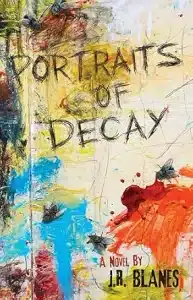
Reveling in occult rituals gone wrong, body horror, and the creeping dread of the Southern Gothic, Portraits of Decay paints an enthralling tableau of obsession, revenge, and a thirst for control that asks the question: why ruin a painting when you can ruin a soul?
Up-and-coming young artist Jefferson Fontenot has everything going for him: The hot New Orleans art scene has noticed him, and he’s finally found his true love, Nevaeh Parker.
But Fontenot’s bright future hides a darkness known as Gemma Landry—the artist’s lover and art scene influencer. Gemma believes Jefferson’s talent holds the key to her seizing control of the popular Carondelet Street Gallery. But when Gemma discovers Jefferson’s infidelity, she enslaves the artist with a poison she acquired from swamp-dwelling witch Mirlande St. Pierre.
Now trapped in a rotting body and plagued by hellish visions, Jefferson finds himself reduced to a zombie-like servant for his unhinged ex, while Nevaeh is forced to embrace her past, hoping to save the man she loves. As the dark curse courses through Jefferson’s veins, everyone involved soon discovers—in the most brutal of fashions—the terror that awaits when you cross Gemma Landry.
J.R. Blanes
J.R. Blanes is the author of the Southern Gothic Horror Tragedy Portraits of Decay (published in 2025 from Ruadán Books), the short story collection The Skeleton Closet (publishing by Dark Nest Publishing in October 2026), and the upcoming New England Witchcraft Dark Academia Novel Acascreamia (coming from Crystal Lake Publishing in 2027.) His short fiction has appeared in Allegory, Tales to Terrify, The No Sleep Podcast, The Haunted Mailbox, among others. He lives in Chicago with his wife and their neurotic dog, where he is the co-creator of the reading series, The Genre Society.
Website: https://jrblanes.com/
Amazon Author Page:
Facebook: https://www.facebook.com/jrblanes76/
Instagram: https://www.instagram.com/jrblanes76/
TikTok: https://www.tiktok.com/@jrblanes7
YouTube: https://www.youtube.com/@jrblanes5115/sho
Ginger Nuts of Horror: The Heart and Soul of Horror Reviews
Every feature is built to sell your work. We include backlinks to your website or Amazon author page, a full synopsis, and a universal purchasing link that sends readers straight to their local store. Add a large, engaged social following and an 18-year archive of trusted horror coverage, and you have a platform genuinely built to grow your readership.
Whether you’re an established author, an indie filmmaker, or a debut voice in indie horror, there’s a way for us to help you reach more fans. Explore our horror book reviews and horror movie reviews, then get your horror book or film featured today.