
A 1978 murder, a crash that was not a plane, and something that stays.
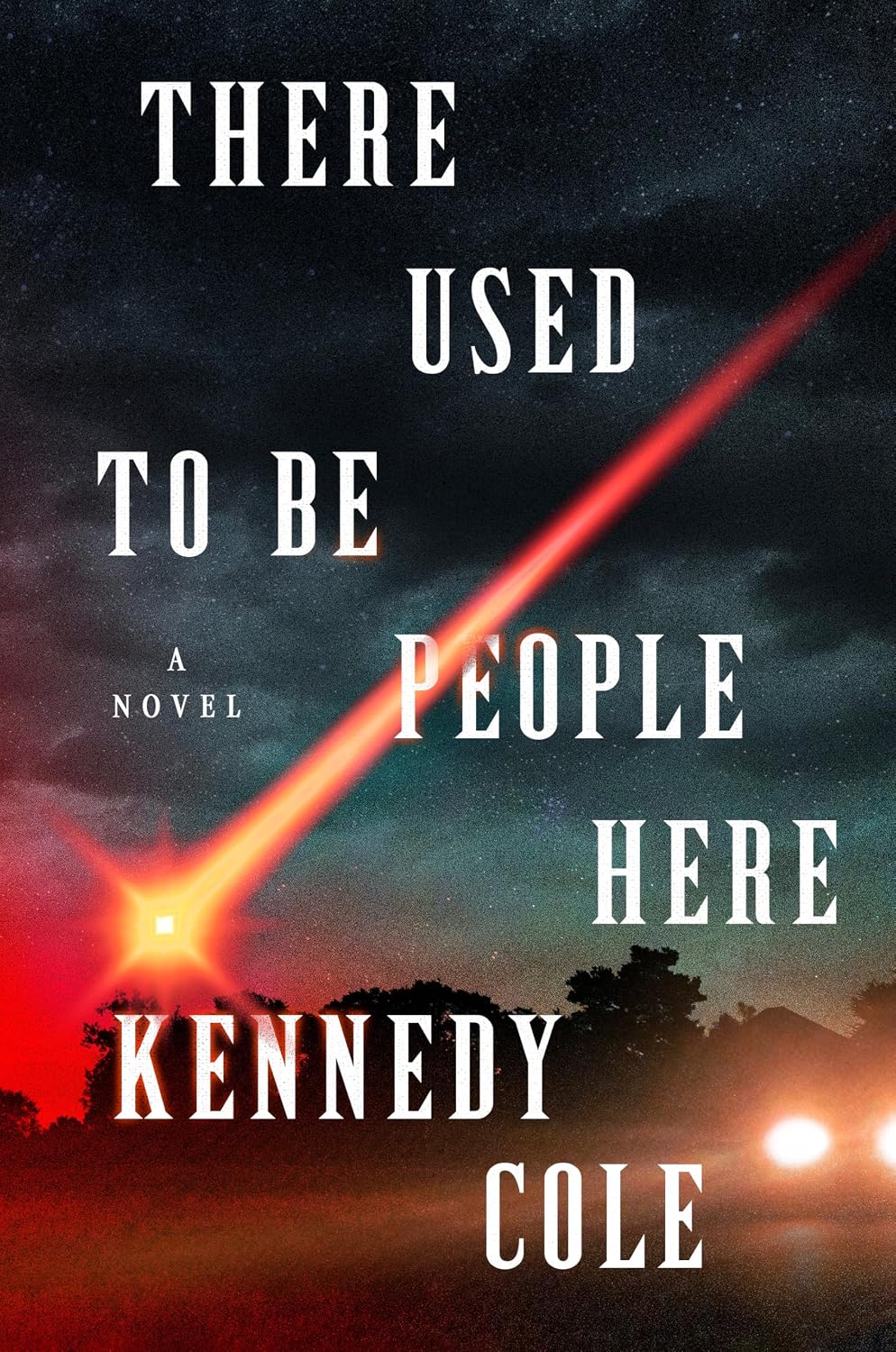
There Used to Be People Here | Kennedy Cole | Berkley | 3 November 2026 |
- Author Kennedy Cole
- Publisher Berkley
- Publishes 3 November 2026
- Pages 368
- Format Hardback, ebook, audiobook
- ISBN 9798217187119
- Subgenre Sci-fi horror, Southern noir
- Reviewed by Jim McLeod
Wenton, Mississippi, 1978. A man is found dead in the bathroom of a gay bar, turned to face the wall, and the town’s only Black detective follows the case towards a crash nobody will explain.
Kennedy Cole’s debut takes a Southern murder case and lets something alien land in the middle of it. Patient, frightening and full of heart, There Used to Be People Here asks who a small town ever counted as people.
There Used to Be People Here Review: A Town Already Full of Strangers
Every small town runs on the same unwritten rule. Keep your head down. Keep your face polite. Do that, and the place might leave you be.
Nobody writes the rule down, because the people it protects never need to read it, and the people it is aimed at learn it long before they can spell their own names. Ask anyone who grew up a bit different in a place with one main street and a long memory. They can recite it in their sleep.
Samuel Barkley could recite it backwards. He is the only Black detective in Wenton, Mississippi. It is 1978. His whole plan for life would fit on a beer mat: stay quiet, close cases, climb the ranks. Then a man walks into the bathroom of the town’s gay bar and never walks back out. He is found cold on the floor, turned to face the wall, his stomach caved in. Nobody can say how it happened. Nobody seems keen to find out.
That is the set-up of Kennedy Cole’s first novel, and from the opening page it knows exactly what it is doing.
Look at how it opens. The very first line has Wenton slide past “in smudges of yellow and brown”, a mix of Monday sun and Samuel’s own scowl caught in the shop windows. It is a small sentence doing a big job. Samuel is looking at the town, but what he sees is his own face laid over it, blurred into the glass. The man and the place share one surface, and neither comes out clean.
Before a body turns up, before a single odd light in the sky, Cole has told you the whole book. This is a story about a man who can see himself in a place that will never see him back.
Then she brings in Harvey Wilkins. Samuel walks into that bathroom, and his new partner points at the corpse with the glee of a wee boy choosing a puppy at the pet shop. Samuel does not blink. Harvey gags at the smell, fidgets, and cannot keep his face still. Three or four beats, and you have them both. One man has learned that showing anything at all is dangerous. The other has never had to hide a thing in his life.
Harvey is white, temporary, and loose where Samuel is wound tight as piano wire. He goes with the flow, mostly because the flow has always gone his way. Samuel cannot decide whether he likes the man or wants to throttle him, and the book is wise enough not to settle that question fast. Their partnership is the slow engine of the novel. It grows in small, cagey moves, a shared silence here, a dropped guard there. It never turns into a buddy-cop cartoon. Harvey’s ease is a privilege Samuel can read at a glance, and Cole lets that sit in the car with them on every drive.
Reading Cole’s prose is like watching heat rise off a county road in July. The tarmac looks solid. The trees look still. Then the air starts to ripple, and you realise you have been driving into the shimmer for miles without noticing. Her sentences are plain and quick. She does not decorate. She trusts a smell, a twitch, a stare held a second too long, and she knows that a cold look on a hot street can frighten more than any monster.
Is There Used to Be People Here Scary?
Yes. It just takes its time showing its hand.
The first half plays as Southern noir, a police procedural with sweat on its collar. There are interviews that go nowhere, witnesses who smile with their mouths only, and a department that hands Samuel the jobs nobody else wants. Some readers will want the strange stuff sooner. I understand the itch. But the patience is the point. Cole spends those chapters making Wenton feel solid, ordinary and mean, so that when the ground shifts you feel it in your feet.
And it does shift. The case brushes up against a plane crash the town would rather forget, and the jacket copy is honest with you: whatever came down in Wenton was not a plane. I will say no more about what it is. What matters is how it gets to people.
When the horror arrives, it comes through the body. Cole has a real gift for wrongness in flesh, for the moment when a person stops being quite a person and the people around them pretend not to notice. It is body horror with a cold, clinical streak, nearer to The Thing than to splatter. It works because the ground was so carefully laid. You have spent a hundred pages learning what normal looks like in Wenton. Now you watch normal start to curdle.
The deeper fear, though, is being watched. Everyone in Wenton is watching. Samuel feels eyes on him from every porch and every shop counter, the fake smiles and the questions under the questions. The regulars at the bar know that being seen there could cost them a job, a family, maybe more. Then something new arrives, and the watching gets worse. Who is looking out from behind that neighbour’s face now? Can you tell? Could you ever?
Here is the clever turn, and it is what lifts the book well above a smart genre mash-up. Wenton already treats Samuel and the men at that bar as invaders. They are the outsiders, the ones who do not belong, the ones the town would quietly like gone. Then something truly alien turns up, and it fits in better than they ever did. It wants to stay. The town has always had firm views on who gets to.
That irony runs under every page like groundwater. Cole never spells it out in a speech. She does not need to.
If there is a cost to all this, it is small, and worth naming. A few threads only make full sense late on, and Samuel keeps his inner life close, so readers who want every corner of his past lit up may find him guarded. I would call that character, not a flaw. A man like Samuel in a town like Wenton does not hand out his history to strangers, and the book respects that. By the final stretch, every guarded choice pays out.
How Kennedy Cole Turns First Contact Into a Story About Belonging
The obvious ancestor is In the Heat of the Night. A Black detective, a white partner, a Mississippi town and a body nobody wants to explain: John Ball’s novel and Norman Jewison’s film laid those tracks back in the sixties. Cole knows it, and she builds a wilder line on the same route. The publisher reaches for The X-Files and S. A. Cosby, and both fit. There is the conspiracy and the cover-up of Mulder and Scully. There is also the Southern grit of Cosby’s All the Sinners Bleed, with its Black sheriff fighting his own town while a horror grows in the dark.
There is plenty of older sci-fi horror in its blood too. Invasion of the Body Snatchers is the clearest cousin, that terror of a neighbour who is suddenly not your neighbour. John Wyndham’s The Midwich Cuckoos sits nearby, with its quiet village and its unwelcome guests. Stephen King’s The Tommyknockers did small-town contact with a buried ship. Cole’s version is closer to the ground and far more interested in who the town already hated before anything landed.
That puts her in good company with recent Black horror that uses history as its haunted house. Tananarive Due’s The Reformatory found its ghosts in 1950 Florida. Matt Ruff’s Lovecraft Country put Jim Crow and cosmic terror in the same car. Cole joins that conversation with her own accent. Her monsters are strange, but her town is real, and the real one frightens more.
The queer side of the book matters just as much. The murder happens at what the town calls a boy bar, and the way Wenton talks about that place tells you everything about Wenton. Cole writes the bar and its regulars with a care the town never shows them. It sits well beside Dean Cade’s Cruising, another recent horror novel that finds its dread in the danger of being queer and seen in the 1970s South.
For readers who like a small-town copper out of his depth, Jonathan Janz’s Marla makes a fine companion, with its haunted detective and a legend nobody will look at straight. And if you like the idea of an alien that works less as a monster than as a mirror, Dan Soule’s Murphy’s Lore does that trick in deep space. Cole does it in a Mississippi heatwave, and the mirror shows the town, not the thing that landed in it.
This is Cole’s first novel, and the background makes the poise of it more striking. She drafted it as a student at university in North Carolina, after a run of short fiction, poetry and non-fiction in small literary journals. It has already earned a starred review from Booklist, and it is the first book of a two-book deal with Berkley. On this evidence, the second one cannot come soon enough.
Some debuts show you a writer finding her feet. This one shows you a writer who found them a while back and has been waiting for the right road. The plotting is tight. The tone moves from noir to horror to something close to tenderness without a grinding of gears. And she lets her two leads change each other slowly, in ways that feel earned rather than handed out.
She has also said she wanted her characters to have some hope by the end, and the last stretch earns it without going soft. That is rarer than it sounds. Plenty of horror novels think despair is the same as depth. Cole knows better. The fear in this book is real, the losses are real, and so is the stubborn decency that refuses to give the town the last word.
Which brings us back to that title. It reads at first like a ghost story, a line you might find scrawled on a door in a ruined town. By the end it reads more like a census. It asks who in Wenton was ever counted as people at all.
And it leaves you checking your own head count.
The Verdict: Is There Used to Be People Here Worth Reading?
The verdict
A patient, frightening and warm debut that turns a 1970s murder case into first contact horror and asks who a small town ever counted as people.
Read it if: you want In the Heat of the Night with something strange out by the crash site, slow-burn noir that tips into body horror, and a detective partnership you will root for.
Skip it if: you want aliens on page one, or a story about racism and homophobia in 1978 Mississippi is not something you can sit with right now.

Keep reading on Ginger Nuts of Horror
 Be Not Afraid by Phil Keeling Review: A Debut That Bites Back
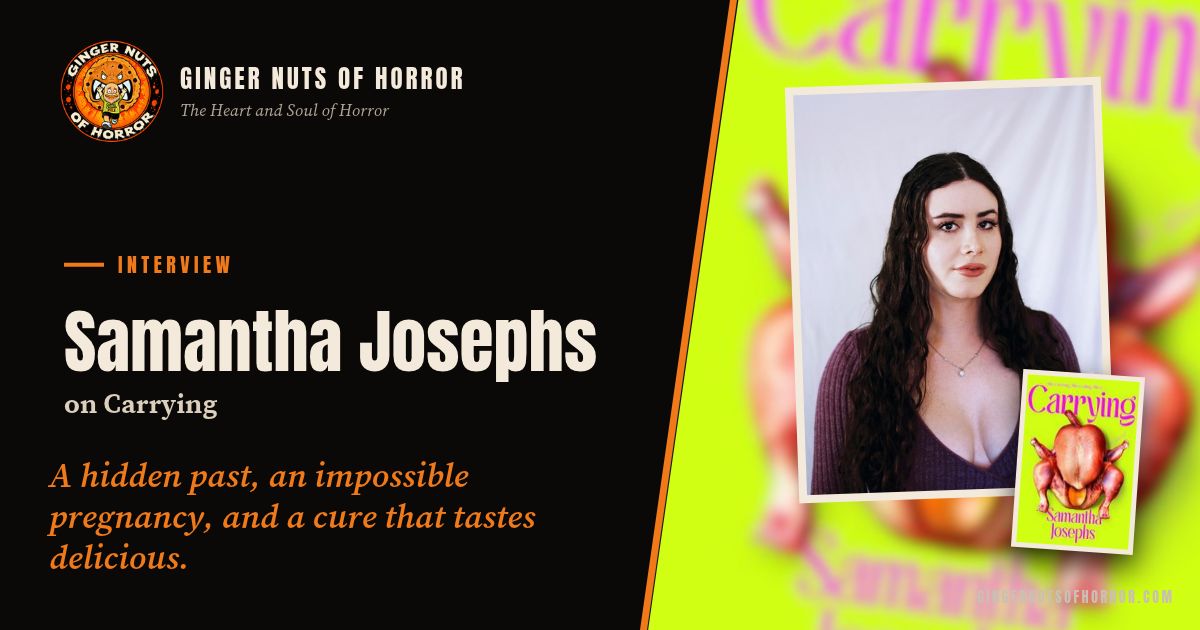 Doing Too Much: Samantha Josephs on Carrying
 Cold Eternity: A Chilling Space Horror Book Review
About Ginger Nuts of Horror
Ginger Nuts of Horror is an independent horror review and culture site based in Edinburgh, Scotland. Edited by British Fantasy Award nominee Jim McLeod, it publishes horror book reviews, film reviews, author interviews, features and cover reveals. Ginger Nuts of Horror won Best Inclusive Film & Book Review Platform at the SME News UK Enterprise Awards 2026.