- Thirteen for Halloween: Mr Hyde, the Monster Repression Made
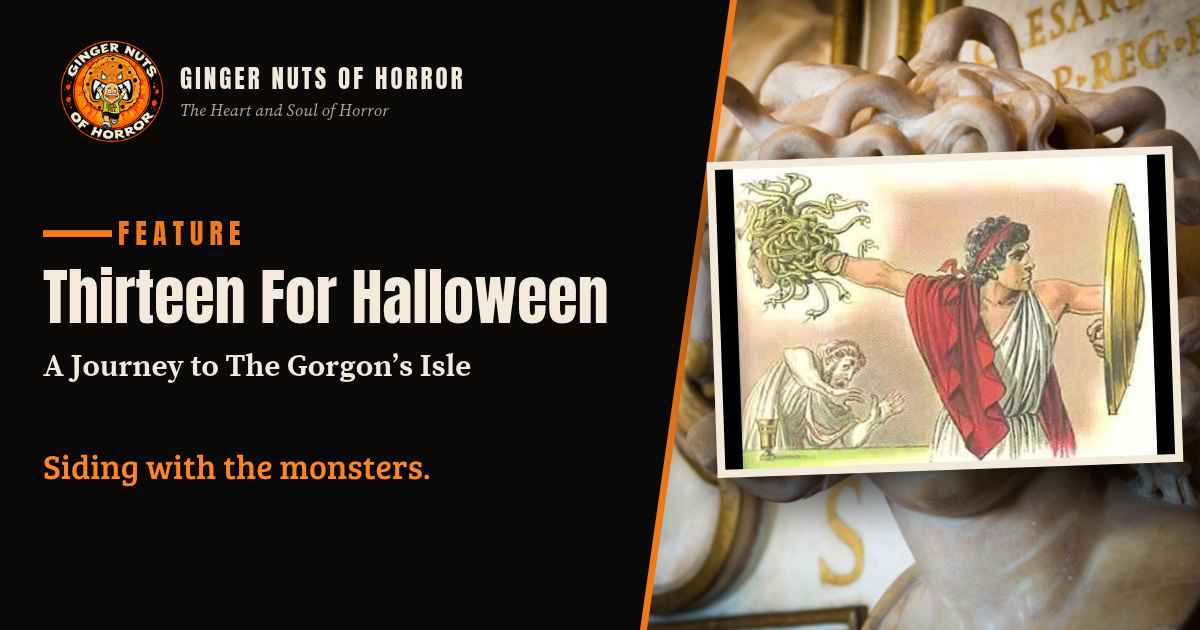
- Thirteen for Halloween: Horror Monsters and the Gorgon’s Isle
Thirteen for Halloween: Horror Monsters and the Gorgon’s Isle | My Life in Horror
Forget the heroes. The monsters were always the point.
George Daniel Lea introduces his Thirteen for Halloween series with a question close to every fan’s heart. Why do horror monsters hold us so much tighter than the heroes sent to slay them? This entry in our My Life in Horror series is part memoir and part statement of intent.
Lea traces his fascination back to Ladybird books of Greek myths, Jim Henson’s Labyrinth and The Dark Crystal, Saturday trips to the video shop and Stephen King read before double digits. He also argues that queer and neurodivergent readers have long found their kin among the villains. What follows is his invitation to the Gorgon’s isle, the first step on a tour of the monsters that shaped him.
A good monster will always snare George Daniel Lea’s attention, and this opening piece digs into why: a childhood soaked in Ladybird myths, Henson creatures and Stephen King, and a queer, neurodivergent kinship with the outcast villains, never the bland and frictionless heroes sent to defeat them.
Horror Monsters and the Children Who Sided with Them
By this point, anyone who’s been following my work knows I’m a sucker for a good monster. I’ll forgive any number of sins if media can deliver an interesting or inventive creature of some description. I don’t entirely know where this preoccupation with the inhuman comes from, but it’s been consistent and consuming since my earliest memories.
I can, however, speculate on its origins to some degree:
From the earliest age, I’ve had access to media that has revelled in the monstrous (even when attempting to frame it as disturbing or horrific). From illustrated Ladybird books of fairy tales, Greek myths and classic horror stories (the latter of which will feature prominently in this series) to cartoon series, comics, toy-lines and animated films in which monsters were rendered with overt and obvious artistic delight (Rankin Bass’s animated film, The Flight of Dragons, is conspicuous in this regard, as are the Jim Henson projects, Labyrinth and The Dark Crystal).
Toy franchises, children’s comics and cartoons of my childhood were replete with monsters, beasts and liminal entities of every stripe and description. From He-Man’s Skeletor and his inhuman hordes to the various computer-generated spooks and spectres of the -aptly named- children’s show, Knightmare (again, more on this later), children’s media of the era was infested with imaginative monstrosities (to the point it might be more apt to ask how anyone growing up in it escaped sans similar obsessions).
Articles of horror were also culturally ambient throughout the latter half of the 1980s and the 1990s. The advent of home media, the escalation of genre publishing incited by the likes of Stephen King, Clive Barker et al, meant that, even if our parents took considered steps to insulate us from such subjects, the monstrous would find us, one way or another.
For my part, horror fiction has always been readily available and unrestricted. I have deeply fond memories of reading Stephen King stories before I even reached double digits, not to mention the plethora of horror available on broadcast television, VHS etc (another formative memory involves regular Saturday trips to the video rental shop, from which we often returned bearing an eclectic haul of cartoons and horror films).
It’s little wonder, then, that my passion for the monstrous has sustained every tumult and transformation, every trauma and evolution in my life, when so much else has been abandoned or sloughed away.
As a child, I had particular fascination with the liminal; entities that occupied an ill-defined space between one state and another (or which exhibited the capacity to shift between). My imaginative play often consisted of intensely sensory evocations of what it must feel like to be those entities, to experience the physical shedding or shifting of one’s humanity (an obsession which expresses itself to this day through much of my fiction). Again, the source of this particular preoccupation is difficult to pin-point or even describe with any perspicacity. However, I would certainly assert that my nascent queerness, among other factors, was significant:
As explored more trenchantly in other articles, I distinctly recall identifying with the monsters and villains in media more sincerely than any purported “heroic” protagonists. When it came to toys, I always wanted the “bad guys” (and if they happened to be of a particularly monstrous rather than humanoid ilk, then so much the better).
This is hardly uncommon in youth who grow up to identify as queer in some fashion (nor for neurodivergent individuals, among whom I also number). As entities who are innately -and inalienably- “other,” exiled from the narratives and structures prescribed by tradition, it’s hardly any surprise that we identify with fictional characters of similar status. Throw in a historical tendency to heavily queer-code villainous characters in popular media as a species of short-hand for moral deviancy, et voila: you cultivate a cultural condition in which the monsters and villains, not the “heroes,” become the identifying factors for numerous sub-cultures and marginalised demographics.
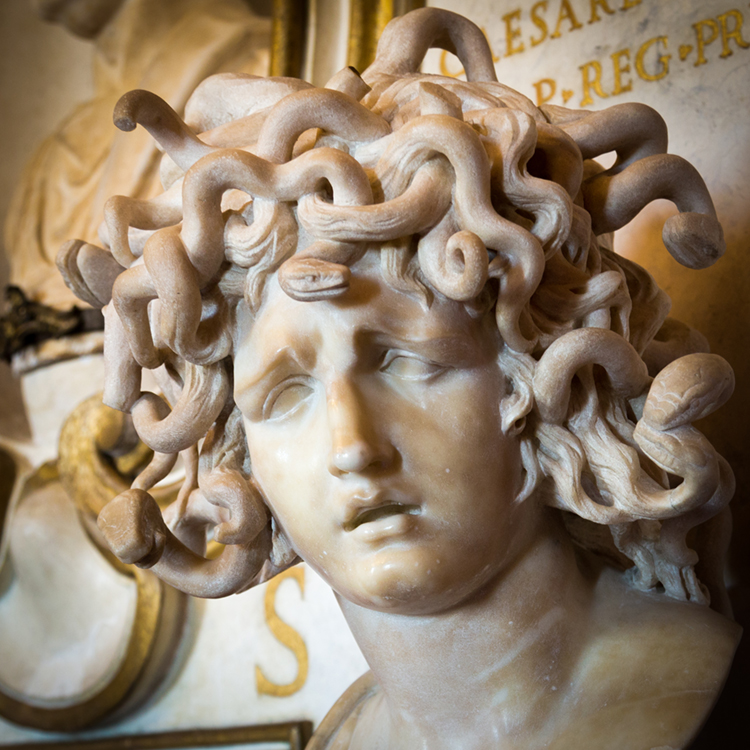
Aesthetically, monsters and the monstrous have always held appeal far and beyond the heroes and protagonists set against them. In myth and folklore, the Gorgons and Griffins have always exercised deeper and more abiding appeal than the -comparatively- bland and indistinct men and women destined to be their banes. In comic books, super villains, particularly those physically altered or removed from their humanity in some fundamental fashion, are the essential hook; the factor that inevitably snares my interest.
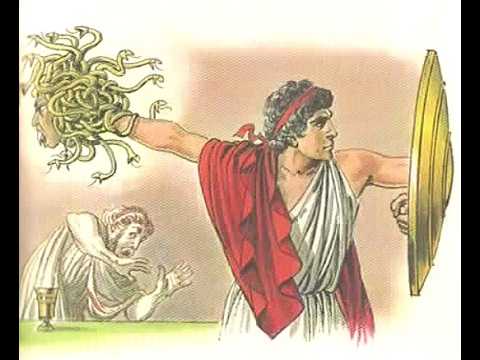
By comparison, their counterparts have largely proven banal and frictionless; creatures I find difficult to develop association or identification with. This started as early as memory reaches with the cartoons I enjoyed as a child: if they didn’t feature anything of the strange or outré, I largely wasn’t interested (hence why the likes of G.I.Joe/Action Force held no appeal whatsoever). Why would anyone be interested in basic humanity when there were dragons and demons to be enjoyed?
While my tastes have broadened massively since, that bias still exercises significant power: a good monster will always, always snare my attention, even if the media it features in isn’t particularly noteworthy.
In this series, I intend to delve deep into those creatures that have particularly fascinated, distressed and/or disturbed, the monsters I return to again and again, and inspire those congealed within my own imagination.
So, accompany me to the Gorgon’s isle at the edges of the world, into the demon-haunted pool and the dragon’s den, where we might admire the monsters together, and perhaps come to understand why that designed to repel and terrify has become the subject of such enduring adoration for so many of us.
George Daniel Lea 07-10-2026
Pack light for the Gorgon’s isle. Horror monsters will forgive you almost anything, but they do insist on eye contact.
Keep reading on Ginger Nuts of Horror
 After-Pride 2: Shame or Sincerity?
 Alien – The Necessity of The Unknown, My Life in Horror
 Mr Hyde: The Monster Victorian Repression Made
About Ginger Nuts of Horror
Ginger Nuts of Horror is an independent horror review and culture site based in Edinburgh, Scotland. Edited by British Fantasy Award nominee Jim McLeod, it publishes horror book reviews, film reviews, author interviews, features and cover reveals. Ginger Nuts of Horror won Best Inclusive Film & Book Review Platform at the SME News UK Enterprise Awards 2026.


