Not evil made flesh. Just Henry Jekyll with the shame taken away.
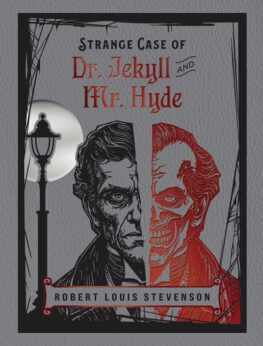
Strange Case of Dr Jekyll and Mr Hyde | Robert Louis Stevenson | Longmans, Green and Co. | January 1886
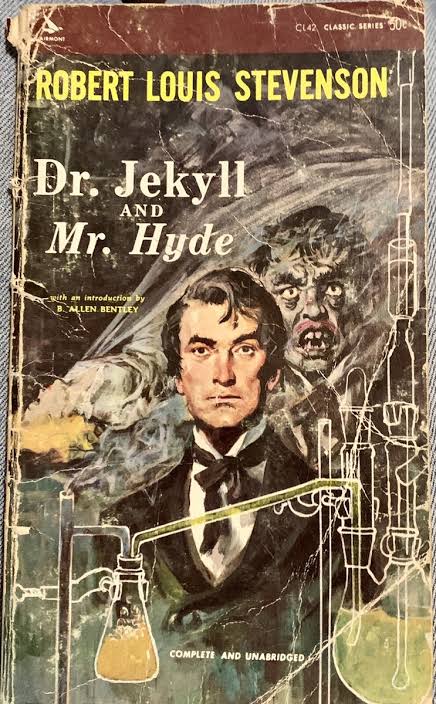
- Author Robert Louis Stevenson
- Publisher Longmans, Green and Co.
- Published January 1886
- Subgenre Gothic horror
In Victorian London, the lawyer Mr Utterson grows uneasy about his old friend Dr Henry Jekyll, and about the plain, unsettling stranger named Edward Hyde who seems to have a strange hold over him.
Mr Hyde is the odd one out at the classic monster party, and George Daniel Lea knows it. In this Thirteen for Halloween essay on Mr Hyde, he goes back to Robert Louis Stevenson’s book and finds a plain, short man where the films put a beast. Lea’s Hyde is not evil made flesh. Nor is he a second soul sharing Jekyll’s skull. He is what a Victorian world built on shame breeds when it makes people deny their own appetites. It sits well beside Lea’s Frankenstein essay on the horror of being, and it is one of the sharpest horror features we have run this Halloween. Here is his case for the monster that isn’t a monster.
Hyde is no beast and no second soul. He is Henry Jekyll with the brakes cut, the dark child of a Victorian world that ran on shame, stigma and the threat of exile, and living proof that a society which denies sincere desire ends up breeding its own monsters.
Mr Hyde: The Monster That Isn’t a Monster
A somewhat contentious entry in Thirteen For Halloween this time around: the monster that isn’t a monster, yet is traditionally ranked alongside Dracula, werewolves, The Mummy and sundry others as an iconic example of the condition.
Much of this is due to what the numerous adaptations of Robert Louis Stevenson’s original novel have done to the character: the vast majority depicting Hyde as a literal monster, some misshapen abhuman whose interior malevolence is reflected in his appearance. This portrayal stands in stark contrast to how Hyde is depicted in the book: whilst it is true that Henry Jekyll physically transforms after imbibing his formula, he does not become a monster. Edward Hyde is a fairly unremarkable looking human being, somewhat short and not especially handsome, but in no way unusual or aesthetically repulsive.
Rather, the book, via its narrator, Mr. Utterson, conveys that, while Hyde is physically unremarkable, he nevertheless exudes an almost uncanny, elemental negativity that affects the tempers and passions of those around him, arousing anger, disdain and even violence where they’re otherwise rare and unusual.
What makes Edward Hyde so singularly fascinating as a classical “monster” is what he represents:
Hyde’s peculiar species of monstrosity is symbolic and deeply transgressive in its deeper commentary. Whilst the popular reading of the story paints it as an analysis of moral duality, that is an extremely reductive and superficial reading that ignores certain key complexities innate to the text:
Hyde is not a separate entity from Jekyll. That is made explicit at several points throughout the story. He is not a distinct or divorced consciousness inhabiting the same skull. Everything Hyde does, Jekyll is sapient of and vice versa. Furthermore, there are moments of interior monologue in which Hyde refers to himself and Jekyll interchangeably. Indeed, much of the latter chapters involve Hyde’s futile attempts to recreate the formula and return to his Henry Jekyll state (since it’s Mr. Hyde who’s aroused the attention of the law with his wanton and murderous violence).
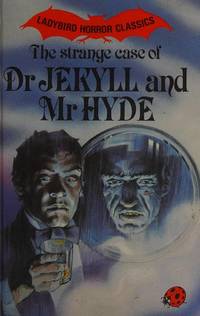
Perhaps the most telling evidence of this status comes early on, in Jekyll’s motivation for creating the formula and becoming Hyde in the first place: Whilst the book glosses over any particulars, Jekyll confesses in his writings to certain “unclean appetites” that he regularly indulges, but is terrified of losing his status and station over, should they be discovered or made public. This paranoia underpins the fundamental monstrosity of Edward Hyde: he is the “monster” within humanity born of oppression, self-denial and sublimation. In that, he is peculiarly Victorian and even more conspicuously English (a species of spiritual monster bred in the hearts of humanity by a society which denigrates and denies certain inalienable drives and appetites).
Hyde is not the personification of “evil” innate to our species (a highly reactionary and reductive reading). Rather, he is the unhappy by-product of what germinates within us when our natures are stigmatised, denied and twisted into vectors of shame.
The strata of Victorian society in which Jekyll operates as a doctor is prescriptive; obsessed with nigh-religious etiquette and arbitrary notions of propriety. It is a monster in and of itself; an abusive horror that torments and slowly digests those trapped within its belly, breeding beasts of extreme nature through its smothering stultification. Hyde is the most sincere child and expression of that abortive, self-mutilating status quo, a perfect mask Jekyll crafts for himself, so as to indulge those unspoken “appetites” he specifically refers to without shame, guilt or fear of social stigmatisation.
The horror of Hyde is therefore dense and many-layered: on the personal, immediate level, he manifests what human beings are capable of when they are forced to conform to cultural prescriptions that prohibit their natures and turn them in on themselves. More broadly, he is metaphorically representative of the inevitable horror and extreme expressions society cultivates when it utilises such instruments as shame, social stigma and the threat of exile to force our behaviours and states of mind.
Hyde is the id run rampant, appetite and impulse without constraint or consideration. Whereas Jekyll has to necessarily operate in constant denial of himself, Hyde does not. Whatever inclination or impulse Hyde harbours, he follows it to its inevitable conclusion (including the irrational, the angry, the violent). He operates entirely shrived of the strings and straitjackets Jekyll has been constricted by his entire life. He is indulgence; the sublimated desire to be a very young child again, without the restrictions and considerations that come with emotional and intellectual development and hold our behaviours in check.
But, fundamentally, he is still Henry Jekyll, and the appetites and indulgences he was conceived to fulfil are shared between them. The question of what, exactly, happens to their shared consciousness when they transition is a thorny one, but one that the text itself contains numerous clues to:
The psychological distinction between Jekyll and Hyde is far from as profound as most adaptations make it: while it’s true his state of mind is altered (as if he were under the influence of some narcotic or neurological disorder), Jekyll recalls everything he does as Hyde and vice versa. They are intimately associated with and connected to each other (such that Jekyll even makes legal provisions for himself as Hyde, signing over much of his estate to the man in the event of his death or disappearance).
Rather than a full transition or metamorphosis, it’s more accurate to speak of the psychological shift between the two as a rewriting of parameters and priorities: Hyde is Jekyll with certain constraints and restrictions removed. Jekyll seeks release from the stultifying straitjacket of his cultural status, the fear of stigmatisation and exile, and that is exactly what Hyde embodies. It’s even ambiguous to what degree the formula alters his brain chemistry, the neurobiological elements of his mind.
There’s a very sincere argument to be made that it doesn’t alter them at all, only his physical appearance, and that the distinction between them is purely psychological: as Hyde, Jekyll sees his chance to express and indulge every sublimated, repressed urge and emotion, everything he’s been swallowing back since childhood.
And, in classic psychological fashion, when repressed drives are finally given vent, they occur in often monstrously extreme ways.
It’s no mistake that one of the key victims of Hyde’s violence is an older, upper-class gentleman. Not only is he emblematic of every paternalistic, authoritarian prescription of the societal structure Jekyll has been forcibly choked by all his life, he also thematically represents the very social mores and constraints Hyde is created to unravel, to fly directly in the face of.
In the visceral brutality of that particular murder, Jekyll/Hyde expresses all of the pent up rage and frustration of numerous social classes, the neuroses sickening an entire culture. It is also an act of supreme, self-destructive impotence (as are most such expressions, when we are denied the means of more productive protest or alternative). By that act, Jekyll/Hyde signs his own death warrant, ensuring that the full machinery, the immune systems of that culture, will harass him to his ultimate destruction.
It isn’t the murder itself that necessarily excites this reaction (the fact of violence and murder is simply ambient in the London of the era), but that he dared raise hand against someone of that particular class and status. That sin cannot be borne or allowed to pass (despite numerous other examples of their twilight escapades going largely unremarked, particularly when they occur among the city’s lower classes, where Hyde typically operates).
This is also a fascinating quality of the Hyde persona: whereas Jekyll would’ve been prohibited from such associations by rigid class parameters, Hyde is a much more fluid entity owing to his relative anonymity. He has no position or reputation to protect, and so is free to move between the layers and strata of Victorian society as and how he pleases. This even becomes a subject of judgement from the narrators of the story when he is believed to be an associate or companion of Jekyll’s (why would a man of Jekyll’s standing associate with an evidently lower creature such as Edward Hyde? And how can that relationship be anything but corrosive?).
Hyde is not a literal monster, nor is he one innate or inalienable to humanity. Rather, he is the dark child of repression, of stultifying cultural stricture and self-denial. As Blake and the Romantics well understood: denial of sincere desire breeds monsters within us, and that is Edward Hyde. Not the “shadow side” of humanity, not the “evil within all men,” but a manifest expression of a sick and abusive history, of traditions that smother, mutilate and madden us.
Get the book
Strange Case of Dr Jekyll and Mr Hyde by Robert Louis Stevenson was first published by Longmans, Green and Co. in January 1886, and is still in print today.
Next time a film hands Mr Hyde a hunched back and a snarl, remember he was a short, plain chap all along, and the real monster was the etiquette at the dinner table. The rest of Thirteen for Halloween carries on at Ginger Nuts of Horror, where even the politest monsters get a fair hearing.
Keep reading on Ginger Nuts of Horror
 Nosferatu: The Feminist Gothic – My Life in Horror
 Baby’s First Lovecraft (At The Mountains of Madness): My Life in Horror
 Weaveworld’s Magic: How Clive Barker’s Novel Fights Fascism and Celebrates Queer Identity: A My Life in Horror
About Ginger Nuts of Horror
Ginger Nuts of Horror is an independent horror review and culture site based in Edinburgh, Scotland. Edited by British Fantasy Award nominee Jim McLeod, it publishes horror book reviews, film reviews, author interviews, features and cover reveals. Ginger Nuts of Horror won Best Inclusive Film & Book Review Platform at the SME News UK Enterprise Awards 2026.

George Lea is an unfixed oddity that can occasionally be sighted wandering around the UK Midlands. Queer as a very queer thing. Following the publication of his first short story collection, Strange Playgrounds and Essential Atrocities, he found a home amongst Perpetual Motion Machine Publications/Ghoulish Books stable of queer writers with his two-volume short-story collection, Born in Blood.
https://youtube.com/@ExaggeratedElegy


