
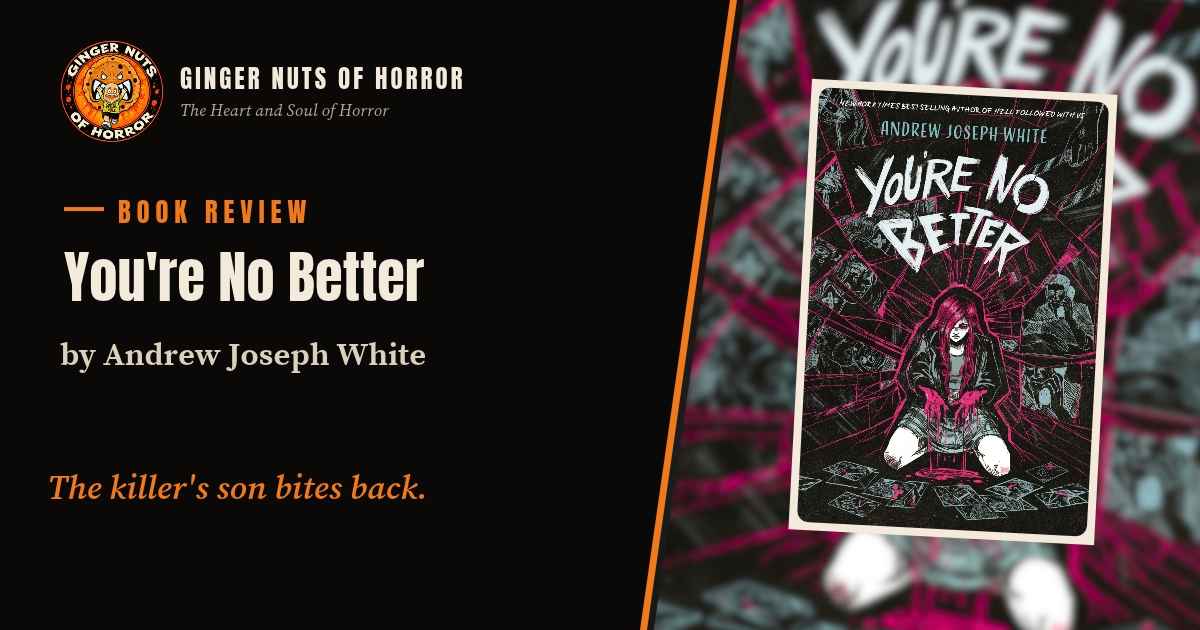
A serial killer’s son fights for the right to be someone else.
You’re No Better | Andrew Joseph White | Daphne Press | 27 October 2026 |
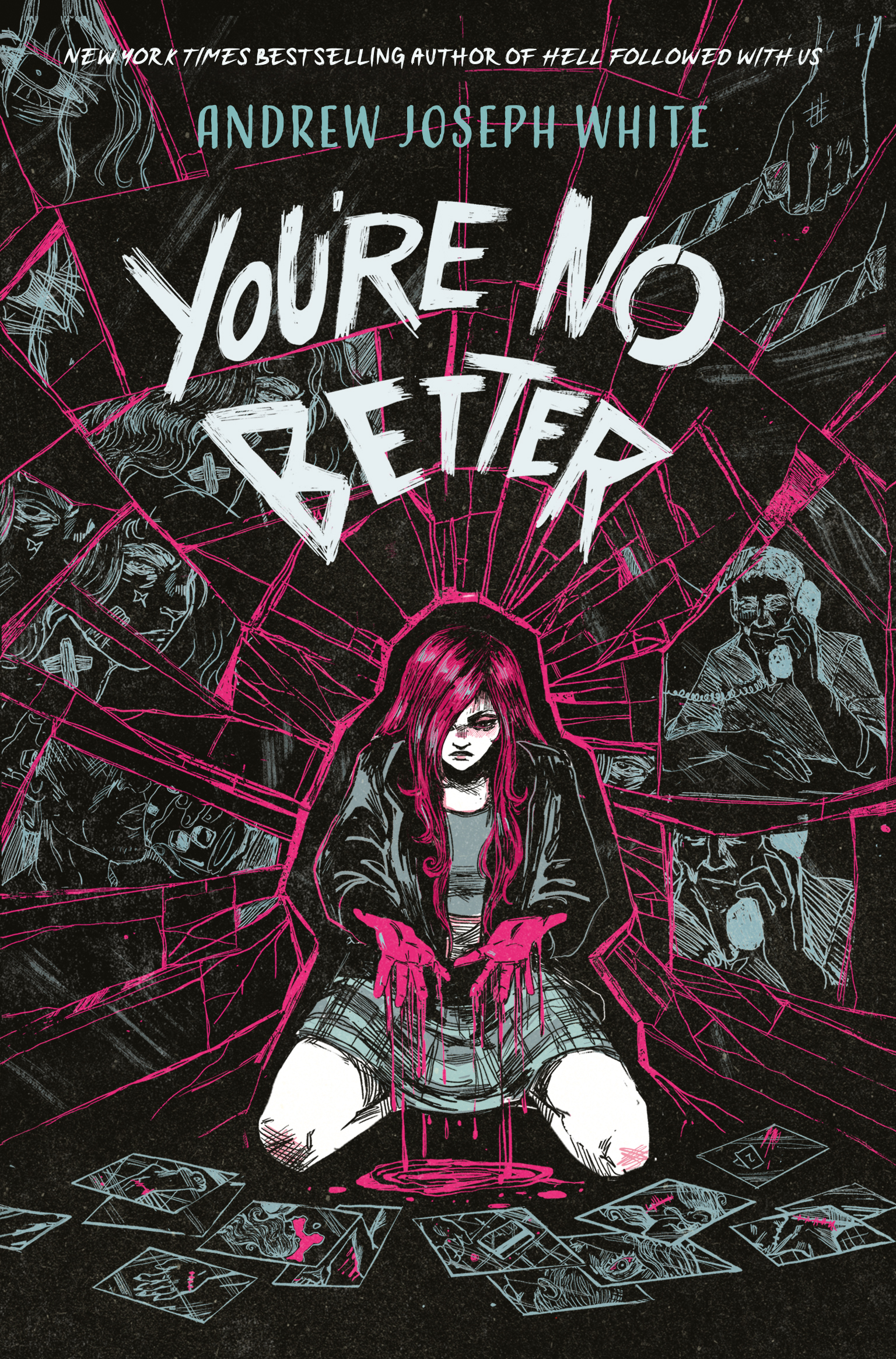
- Author Andrew Joseph White
- Publisher Daphne Press
- Published 27 October 2026
- Format Paperback, ebook
- ISBN 9781837841547
- Subgenre YA psychological horror thriller
- Reviewed by Jim McLeod
Seventeen-year-old Morgan Slaughter helped send his serial killer father to prison. Now a documentary crew is filming his family, and he sets out to name his father’s last unknown victim to prove he is nothing like him.
You’re No Better by Andrew Joseph White is a young adult horror thriller about the son of a serial killer. This You’re No Better review looks at how White turns a true crime set-up into a story about shame, control and the fear of turning into your parent. Morgan Slaughter is seventeen, autistic, trans and still in the closet, and a film crew wants his life on camera. It is a hard book to sit with, and it means to be.
Andrew Joseph White has written a furious, intimate thriller about the son of a serial killer and the people who profit from him. Morgan is hard to like and impossible to give up on. It is a brutal read, and the right one for anyone who has been told who they will become.
You’re No Better Review: The Boy Everyone Has Already Judged
Every true crime story needs a monster. Then it needs a sequel.
Once the killer is locked up and the podcasts have had their fill, the camera swings round to whoever is left in the house. A wife who learnt to smile for the lens. A child who might, with the right edit and the right music, look a little bit like his dad. We like that second shot best, if we are honest. It lets us ask the question we were always going to ask: did it pass down?
That question is the engine of Andrew Joseph White’s new novel, and he never lets it idle.
Morgan Slaughter was a child when he saw his father kill, told someone, and helped put him away. Graham Slaughter is now in prison, and the world has moved on to the next thing it wants from the family. Morgan’s mother has struck a deal. A docuseries will film his last year of school, and in return he gets his trust fund at eighteen instead of twenty-five. The catch is that the cameras want a daughter. So Morgan, who knows he is a boy, spends his senior year in makeup and a dress, playing a part for strangers who are already sure how the story ends.
He has one plan to get out from under it. His father’s last victim was never named. If Morgan can find out who she was, he can prove he is the good one. Then Felicity Keating, a classmate who co-hosts a true crime podcast, turns up with the thing he has spent years burying. Morgan was not only a witness. He was made to help. Felicity will keep quiet, but only if Morgan lets them work the case together.
That is the set-up. It sounds like a thriller, and it moves like one. But the real horror is quieter, and it lives in the house.
Graham Slaughter is the name on the documentaries. Yet the most frightening person in this book is the one doing Morgan’s eyeliner.
His mother wants the clout, the money and the clean public story of the woman who survived a killer. Morgan is her best prop. White writes her with real control. She never needs to raise a fist in the early chapters to make your stomach turn; she just needs to pick his outfit, set up a shot, and remind him what the trust fund is worth. When her temper does break, later on, it lands hard, because White has spent so long showing you the pressure building behind it.
This is where the book is at its sharpest. Most stories about killers’ children worry about the blood. This one worries about who gets to tell the story, and who gets paid for it. The father took lives. The mother, the film crew and the comment sections take something slower. They take Morgan’s say over who he is.
White backs this up with the bits and pieces stitched between chapters. There are notes from the film crew describing how Morgan looks and acts, forum chatter picking over his family, articles, even listings for merchandise. They are short and they sting. Each one is a small reminder that somewhere out there, people are buying mugs.
It is a clever trick, because it puts you in the same seat as the people the book is angry at. You read the forum posts with interest. You want to know what the crew wrote. For a page or two you are part of the audience, and then the next chapter drops you back inside Morgan’s head and you feel a little ashamed of the appetite. Few young adult novels are this willing to point at their own readers, and fewer still manage it without a sermon.
I am working from published accounts of the book rather than the page itself here, so I am paraphrasing rather than quoting. One moment sums up the whole novel. Morgan wants testosterone, wants it badly, and is also scared of it. His fear is not about side effects. It is that the hormones will make his face more like his father’s, and that one day he will look in the mirror and see Graham Slaughter looking back.
Think about how much White packs into that. The thing that would let Morgan be himself is the same thing he fears will turn him into someone else. His gender and his inheritance are knotted together, and every person around him keeps pulling the knot tighter. The crew’s notes on his face and manner do the same job from the outside. They look at him the way the public looks at him, as a set of clues.
It is a quiet idea, and it is the cruellest one in the book. It is also why the title cuts both ways. “You’re no better” is what the world says to Morgan. It is also, at his worst, what he says to himself.
White has said plainly that Morgan was built to be hard to sit with, and he is. He lies. He uses people. He flirts with a young man on the film crew to get a key card into the old crime scene. He takes photographs from the home of his friend Alyssa, whose father is a police chief who has hunted his father for years, and he resents her for being able to transition when he cannot. He is often wrong, and he is often cruel, and the first person voice gives you no room to step back from him.
That is the point. White refuses to let Morgan’s autism, his transness or his trauma work as a free pass. Morgan makes choices, and the choices cost him. At the same time, the book never lets you forget why a boy raised like this might treat every kind word as a trap. His father won trust and then broke it. Of course Morgan sees a hook in every offered hand.
Reading the prose is like holding a hot coal because someone told you to prove you could. It is close, blunt and full of nerve endings. White writes Morgan’s thoughts in short, flat bursts that turn sour without warning, and he leaves the worst images half built, so the reader’s own mind has to finish them. That choice makes the violence feel heavier, not lighter.
How You’re No Better Builds on White’s Earlier Books
White has been circling these ideas since his debut. Hell Followed With Us, in 2022, was a furious apocalyptic novel that put a trans boy at the centre of the end of the world and was a finalist for the William C. Morris Award. The Spirit Bares Its Teeth, in 2023, moved the anger to a Victorian sanatorium and won a Stonewall Honor; it is one of the books that earned him a place in our round-up of the best trans horror writers. Compound Fracture, in 2024, took him home to Appalachia for a queer thriller that won a Printz Honor. Then came You Weren’t Meant to Be Human, his adult debut, which went all in on body horror.
Set against those, this new book is the most grounded thing he has written. There are no monsters from beyond, no plague, no ghosts. The horror is a family, a camera and a public that cannot stop looking. It feels like the work of a writer who no longer needs the supernatural to make the walls close in.
There is a long shelf of young adult books about the children of killers. Barry Lyga’s I Hunt Killers and Dan Wells’ I Am Not a Serial Killer both ask whether a boy is doomed by the man who raised him. Holly Jackson’s A Good Girl’s Guide to Murder made the teen true crime podcaster a genre fixture. You’re No Better knows that shelf well, and it pulls a book off it to look at the back cover with real suspicion.
Where those books often enjoy the puzzle, White is angry at the people who enjoy the puzzle. Felicity’s podcast, the docuseries and the online sleuths all feed on the same story Morgan is trying to survive. It sits more comfortably beside newer, rawer trans horror, books like Grace Byron’s Herculine, than beside the tidy mysteries it seems to resemble on the surface.
Is You’re No Better Too Dark for Young Adult Readers?
It is very dark. Abuse, neglect, violence, transphobia and the crimes themselves are all on the page, and White’s own site carries content warnings that are worth a look before you start. Some readers will feel this reads more like an adult book about teenagers who were made to grow up too soon. That is fair.
But White has spoken about writing for teens with a sense of duty, and you can feel it. The book is dedicated to the angry kids, and it treats them as people who deserve the truth rather than a lecture. Morgan is vicious, and he is still cared for. The novel does not end with a bow on top, but it does leave a door open.
If there is a quibble, it is a small one. The first stretch takes its time setting the board, and one or two turns in the investigation ask you to go along with them. Felicity and Alyssa are also drawn more lightly than Morgan, which is the price of living so deep inside his head. None of it slows the book down for long, and by the final act it has stopped mattering at all.
The world has been asking Morgan Slaughter the wrong question for years. This book finally lets him answer the right one: not whether he is his father’s son, but whether he gets to be anyone else.
5out of 5
The verdict
A furious, tender and fearless thriller that turns true crime’s gaze back on itself, and White’s most grounded book yet.
Read it if: you want a hard, honest story about a difficult trans teen, toxic families and the people who feed on real crimes.
Skip it if: you need a likeable hero, a neat puzzle mystery or a book that keeps abuse and violence off the page.
Keep reading on Ginger Nuts of Horror
 Top Queer Horror Books You Shouldn’t Miss
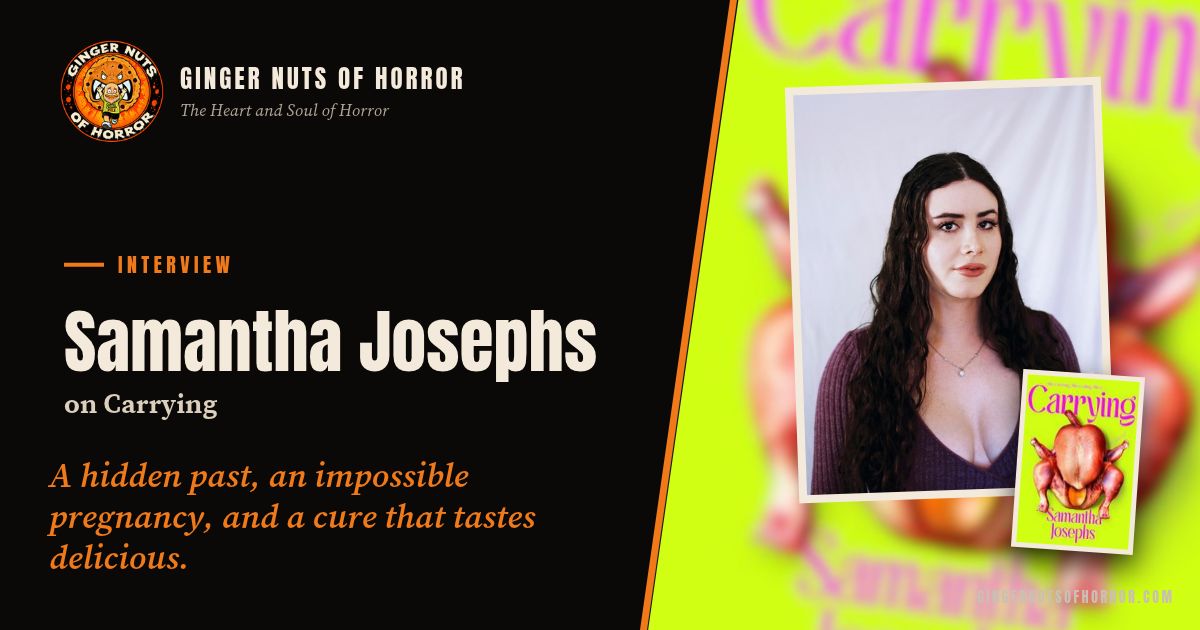 Doing Too Much: Samantha Josephs on Carrying
 Bound in Flesh: An Anthology of Trans Body Horror, edited by Lor Gislason
About Ginger Nuts of Horror
Ginger Nuts of Horror is an independent horror review and culture site based in Edinburgh, Scotland. Edited by British Fantasy Award nominee Jim McLeod, it publishes horror book reviews, film reviews, author interviews, features and cover reveals. Ginger Nuts of Horror won Best Inclusive Film & Book Review Platform at the SME News UK Enterprise Awards 2026.


