
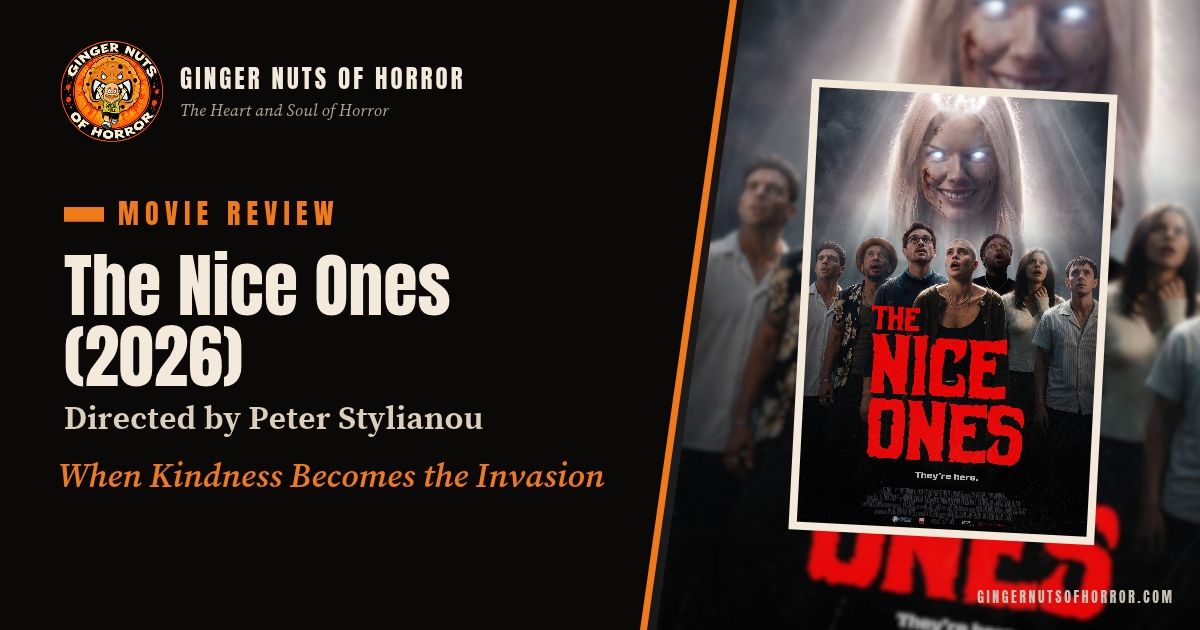
The Nice Ones | Peter Stylianou | 2026 | 1 hr 29 min | Unrated |
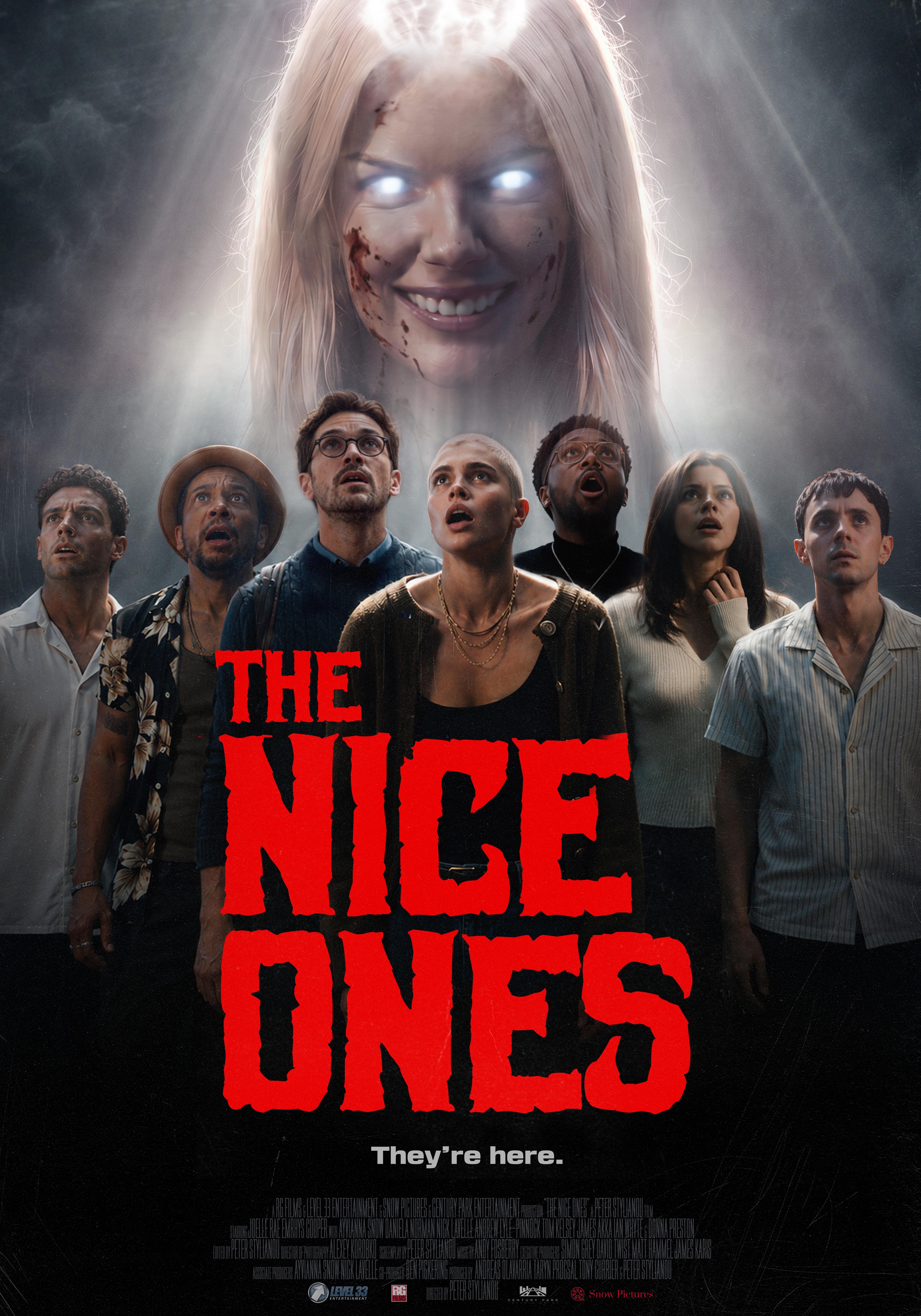
- Director Peter Stylianou
- Starring Joelle Rae, Emrhys Cooper, Ayvianna Snow
- Released 29 September 2026 (on demand)
- Runtime 1 hr 29 min
- Distributor Level 33 Entertainment
- Subgenre Psychological sci-fi horror
- Reviewed by Jim McLeod
Kate joins her boyfriend Dale and his old friends at a country house. Strange lights cross the night sky, and one by one the group turns calm, kind and wrong. Nobody believes her.
The Nice Ones is the new film from British writer and director Peter Stylianou, a single house paranoia piece shot in Kent in just 19 days. This The Nice Ones review looks at a film with a nasty little idea at its centre: what if the invasion did not come with screams, but with smiles? Kate goes away with her boyfriend’s friends, lights appear in the sky, and everyone around her gets lovely. She is the only one who thinks that is a problem. It sits among the smaller, odder titles in our horror movie reviews, and it earns its place there, if not quite a spot near the top. Here is where it works and where it lets go.
The Nice Ones takes the oldest fear in science fiction horror and dresses it in a cardigan. Joelle Rae holds the centre with real nerve, and the idea of kindness as the threat has teeth. It is a slow start and a sudden stop, though, and the film ends just as it finds its feet.
The Nice Ones Review: A Smile Is the Scariest Thing in the House
Nobody shouts in this house once the lights have been. That is the whole trick, and Peter Stylianou plays it with a steady hand for most of ninety minutes.
Kate, played by Joelle Rae, has come to the country with her boyfriend Dale (Emrhys Cooper) to meet his old crowd. It is meant to be a reunion. Old jokes, old wine, old grudges. Then something crosses the night sky, and the people who were sniping at each other over dinner start being kind. Patient. Calm. They agree with each other. They stop arguing. And Kate, who is the only one still behaving like a person, becomes the one who looks unwell.
I love that idea. Horror has spent seventy years teaching us to fear the blank face, the pod person, the neighbour who no longer feels anything. Stylianou flips the dial the other way. His converts do not go cold. They go warm. Too warm. People who were scoring points off each other an hour ago are suddenly all patience and good manners, and that is far creepier than a flat stare.
What watching it feels like
This is a slow film, and it means to be. The first act takes its time getting everyone to the house and into the same room, and with a cast of ten that is a lot of hellos. Stick with it. That patience is what makes the change land, because you need to know how these people talk to each other before you can hear how wrong they sound afterwards. When the niceness starts, you feel the gears shift, and the film never lets go of you again.
From there the dread is quiet and social. It is the dread of a party where everyone else knows a joke you missed. The tension builds in looks across the table, in the way a group closes ranks, in the small cruelty of being told you are tired and should get some rest. Anyone who has been the odd one out in a room full of old friends will know this feeling in their gut. The film knows it too, and it uses it like a blade.
How Stylianou Builds the Dread
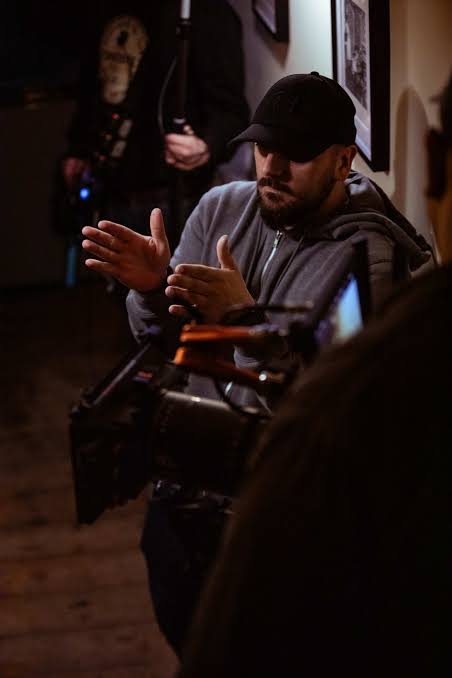
Stylianou wrote, directed, produced and edited the film himself, and it shows. This is a clear, single vision. The film knows exactly what it wants to be, a pressure cooker in one house, and it rarely strays from that. Every choice points the same way.
A lot of the film plays out in near darkness, with faint glows and half seen shapes at the edge of the frame. Alexey Korobko’s camera is happy to leave the corners black and let your eye do the work. It is a smart answer to a small budget, and it suits the story. When you cannot see the room properly, you cannot trust the people in it either.
Andy Fosberry’s score does a lot of the heavy lifting. It sits low and patient for long stretches, then breaks out in strings and sharp stabs, and it has a habit of dropping to whispers and hums just when you want it loudest. Martin Edwards’ sound work keeps the house close and airless. There is a wicked streak of humour in the music, too, with one upbeat cue laid over images that are anything but cheerful. It is a good joke, and the film has a few more like it, with characters puzzling over why everyone is being so pleasant.
The effects are the one area where the budget shows. The lights in the sky are modest rather than overwhelming, and the bloodier moments are decent rather than dazzling. On a shoot of 19 days in one house, that is no surprise, and Stylianou is wise enough to keep most of it in the dark. The film is at its best on faces anyway.
The cast, and the hard job of being nice
Joelle Rae carries the film, and she has to. Kate is the only character who stays herself the whole way through, and Rae plays her as tense, sharp and unsure, without ever tipping into hysteria. That balance matters. If we stop believing Kate, the film has nothing. Rae keeps us on her side even when the others have good reason to doubt her, and that is the hardest part of the job. It is a properly strong lead turn.
Emrhys Cooper’s Dale is the film’s quiet sting. He is dismissive of Kate early on, so when the change comes, it is hard to say what has actually been lost. Is he worse, or just more honest? The film asks that question and is clever enough not to answer it.
The rest of the ensemble, including Ayvianna Snow as Shelly, Nick Lavelle as Jay, Daniela Norman as Jade and Donna Preston as Martha, have a strange brief. They have to play people, then play people pretending to be people. The best of them find the line between warm and wrong with real skill, the smile held a second too long, the kindness pitched a shade too bright. With ten faces in under ninety minutes, a couple of them blur, but the group works as a group, and that is what the story needs.
Is The Nice Ones Scary?
Not in the jump out of your chair sense. It is unsettling rather than frightening, and that is a choice I respect. The fear here is about trust. Stylianou has said he wanted to set close, personal paranoia against something huge and strange, and to ask what happens when the people nearest to you might not be who they seem. He nails the close, personal part, and he is right to keep the huge, strange part mostly off screen, where your mind can do worse.
What the film is really about, I think, is gaslighting. Kate is not just afraid of an alien force. She is afraid of being called mad by people who love her, and of starting to believe them. That is a real fear, and a very modern one. The niceness is a mask, but it is also a weapon, because you cannot fight someone who is being kind to you without looking like the villain. There is a sharp point here about how groups turn on the one person who will not go along, and about how “you seem tired” can be the cruellest thing a friend ever says.
There is a quieter idea under that, too, about relationships. Kate’s boyfriend was not exactly warm before the lights came. Part of the horror is the thought that she might prefer the copy. That is the most disturbing thought in the whole piece, and the film is brave enough to let it sit there.
Where it sits in Stylianou’s work
Stylianou has been circling trust and the people who prey on it for a while now. The Lost, his 2020 crime drama about a girl who goes missing from a family birthday party, built its mystery out of a gathering where somebody in the room was not what they seemed. Drained, the 2024 vampire film he co-directed with Sean Cronin from his own script, used the vampire as a picture of addiction and of people feeding on the vulnerable. The Nice Ones takes both threads and puts them in one house: a gathering, a betrayal, and a predator that wears a friendly face.
It is also his first horror film behind the camera on his own, after sharing the chair on Drained, and it plays like a filmmaker who has worked out how much he can do with very little. One location. A short shoot. A big idea. It is his most confident film yet, and the clearest sign of what he can do.
The Nice Ones and its neighbours
The obvious ancestor is Invasion of the Body Snatchers, in both the 1956 and 1978 versions. But the closer cousins are The Stepford Wives, where the horror is in people becoming pleasant and pliable, and Karyn Kusama’s The Invitation, where one guest at a dinner party sees danger and everyone else sees a man who needs to calm down. There is a dash of Coherence in the strange sky over a house full of friends, and a dash of The World’s End in the idea that the replacements might be better company than the originals.
What sets The Nice Ones apart is the warmth. Most body snatcher stories drain people out. This one fills them up with something sweet and wrong. That is a real twist on a very old form, and it gives the film a flavour all its own.
Mild spoiler ahead: the one thing that keeps it from the top shelf is the ending. The last stretch opens the story wide and then cuts away, as if this were the first part of something bigger. After such a careful build, I wanted one more beat, one more turn of the screw, before the credits. It is the film’s only real misstep, and it is a frustrating one, because everything before it has earned a bigger finish.
Even so, this is the kind of small British horror I want more of: one house, one idea, and a lead who makes you believe every second of it. If you like your horror talky, contained and paranoid, seek it out.
The scariest thing in The Nice Ones is not what came down from the sky. It is how easy it would be to say thank you.
The Verdict: Is The Nice Ones Worth Watching?
4out of 5
The verdict
A smart, slow squeeze of a paranoia film with a terrific lead, held back from the top shelf only by an ending that stops too soon.
Watch it if: you like slow, talky paranoia in one house, The Invitation or The Stepford Wives, and horror where a smile is the threat.
Skip it if: you need every answer by the credits, or want alien spectacle you can actually see.
Keep reading on Ginger Nuts of Horror
 Hellcat Film Review: Brock Bodell Traps You in an Airstream
 Tinsman Road Review: Robbie Banfitch’s Found Footage Grief Horror
 Best Horror Films of 2026 (So Far)
About Ginger Nuts of Horror
Ginger Nuts of Horror is an independent horror review and culture site based in Edinburgh, Scotland. Edited by British Fantasy Award nominee Jim McLeod, it publishes horror book reviews, film reviews, author interviews, features and cover reveals. Ginger Nuts of Horror won Best Inclusive Film & Book Review Platform at the SME News UK Enterprise Awards 2026.


