

- Author Adam Cesare
- Publisher Black Crow Books and Del Rey
- Published 20 October 2026
- Format Collector’s hardback (signed and numbered, 1,000 copies), paperback, audiobook
- Subgenre Extreme horror
- Reviewed by Jim McLeod
A retirement home that looks spotless hides something rotten. Over one terrible day, an unwilling new resident, a proud old Marine and an overworked nurse fight to survive as the residents begin to change.
This Mercy House review looks at Adam Cesare’s care home horror novel, first released as an ebook in 2015 and now revised for print by Black Crow Books and Del Rey. It follows Harriet Laurel, who is placed in a retirement home against her will just as its residents begin to change. The result is fast, filthy and furious, and it asks more of your stomach than most horror does. Splatter with a purpose is the best kind, and this book has one. I rate it 4.5 out of 5. Here is why it stops half a star short of full marks.
A fast, filthy and furious care home apocalypse that turns neglect into a weapon and gives its old people real menace. It tells you little about why any of this is happening, and the gore will test strong stomachs, but the pace and the anger carry it.
Mercy House Review: A Care Home Apocalypse in One Day
Everyone knows the smell. You walk into a care home and it finds you before anyone says hello. Boiled vegetables. Disinfectant. Something underneath that neither can hide. Harriet Laurel notices it the moment she steps inside Mercy House, brought there against her will by her son Don and his wife Nikki. Adam Cesare knows that smell is where this kind of horror starts.
A care home is a closed world. It has locked doors, set routines and residents nobody listens to. That is a good place to lose control of a story, and Cesare uses every inch of it.
The set-up is lean. Mercy House looks clean, modern and calm. Underneath, something is turning the residents into monsters. Cesare squeezes the whole collapse into about one day. That makes the book move like a siege film, not a slow outbreak story. A day is long enough for a world to end. It is too short for anyone to learn better.
The siege shape is old. Night of the Living Dead used it, and so did Assault on Precinct 13. What Cesare adds is a cast that horror usually treats as bait. The genre has a habit of casting older people as weak and easy to hurt. Here they are the danger, and they are also the point.
The trouble starts around the welcome dinner, and that is a smart choice. Dinner is the one scene where a care home pretends to be an ordinary house. A family sits at a table and everyone behaves. Cesare lets that polite ritual crack first, and the rest of the building follows.
He hangs the story on three people. Harriet has early dementia, and she feels her mind sharpen as her anger grows. Arnold Piper is an 85-year-old former Marine. His body has let him down, and his pride cannot take it. Sarah Campbell is an idealistic nurse in a home that never has enough staff. That is neat design. Each lead carries a different kind of failure: of mind, of body and of the system around them. The horror is built from what happens next.
Arnold is the proudest of the three, and pride is a risky thing to give a man in a care home. He wants to manage alone. Every small indignity tells him he cannot. That gives the book a bruised, stubborn heart, and it makes his worst trials, which the publisher says are still to come, easy to dread.
Sarah is the quiet centre. A nurse who is stretched thin before any monster appears is already in a horror story. The book just raises the stakes. Her night gets worse in ways that feel earned, because the lack of staff was there first.
Take Harriet as the clearest example. Her clarity and her anger rise together. Cesare ties them so tightly that you cannot welcome one without the other. She resents Nikki for never giving her grandchildren, and she hates being put away. Those are small, human grievances, and they give her new power an ugly edge. She is not a hero in waiting. She is a woman who has been told she is finished, and she is finding out otherwise.
The split between generations runs through the whole book. The old have been parked, and the young are busy elsewhere. For Don and Nikki, a home like this is a tidy answer. For Harriet it is a sentence. Cesare keeps both views in sight, and that stops the book from becoming a simple revenge fantasy.
Mild spoiler ahead, about how the changed residents behave.
The residents who change do not become mindless shufflers. They keep their wits, their habits and their personalities. That makes them far scarier than any slow mob. Factions form. Hierarchies harden. Mob rule takes over. The carnage gets a political shape as well as a gory one.
There is real anger under the blood. The book takes aim at poor funding, old equipment and staff who were barely checked. Those are the questions any family should ask before signing a form. The book does not let the home off lightly, and the anger gives the gore a target. One reviewer thinks its unflinching view of ageing feels ahead of its time. I would put it more simply. It still lands.
The structure is the book’s best trick. It sets up its people without heavy talk, eases them toward the horror, then drops them into the splatter. You can feel that shape working. Little is wasted.
Is Mercy House Scary?
Scary is not quite the word. This is horror as assault. Cesare gives you very little room to breathe. The gore is extreme, and so is the volume of bodily fluids.
That pace has a price. The book rarely lets a scene settle. If you like to sit with a moment, you may feel pushed along. If you like momentum, you will not notice.
Under the splatter sits a quieter fear, and it is the one that lingers. It is the fear of being old, ignored and shut somewhere you cannot leave. A care home is already one of the bleakest settings in fiction, and Cesare writes about ageing without sentiment. The book is sharper for it. The premise is ridiculous and the book knows it. But it plays that premise straight, so it reads more like horror than comedy.
The book is also about who gets to be angry. Harriet has been put away by her own family, and her choices have been taken. That sets up a question the horror then answers in blood: what does a person do with fury when nobody listens?
My one real reservation is about answers. The book tells you very little about why the residents change. If you want a tidy cause, you will find it left vague. At this pace the choice makes sense, because every page spent on lore is a page taken from the siege. It is still a gap, and it costs the book half a star.
The prose is plain and bright, like strip lighting in a long corridor. There is nowhere to hide and nothing to admire for its own sake. In a building where everything is wipe-clean, that suits. Cesare cuts his scenes short and turns them fast. He has a good eye for where to put the camera, which fits the cinematic label reviewers have given him. It is not fancy writing. It is exact writing, and it moves.
Mercy House and the Rest of Adam Cesare’s Work
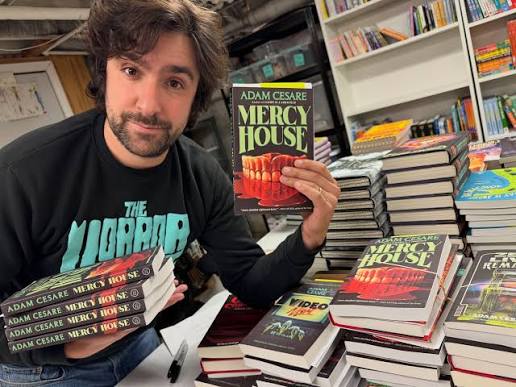
Mercy House is not new. Cesare first released it in 2015 as an ebook through Hydra, Random House’s digital imprint. It was his fourth full-length novel. By then he had published Tribesmen, Video Night and The Summer Job. He came to it with a love of video-shelf horror and a gift for pace.
The years since have made him a name. Clown in a Cornfield won a Bram Stoker Award. Its film adaptation reached Shudder, and GNoH covered it in the Clown in a Cornfield movie review. The series ran on through Frendo Lives and The Church of Frendo.
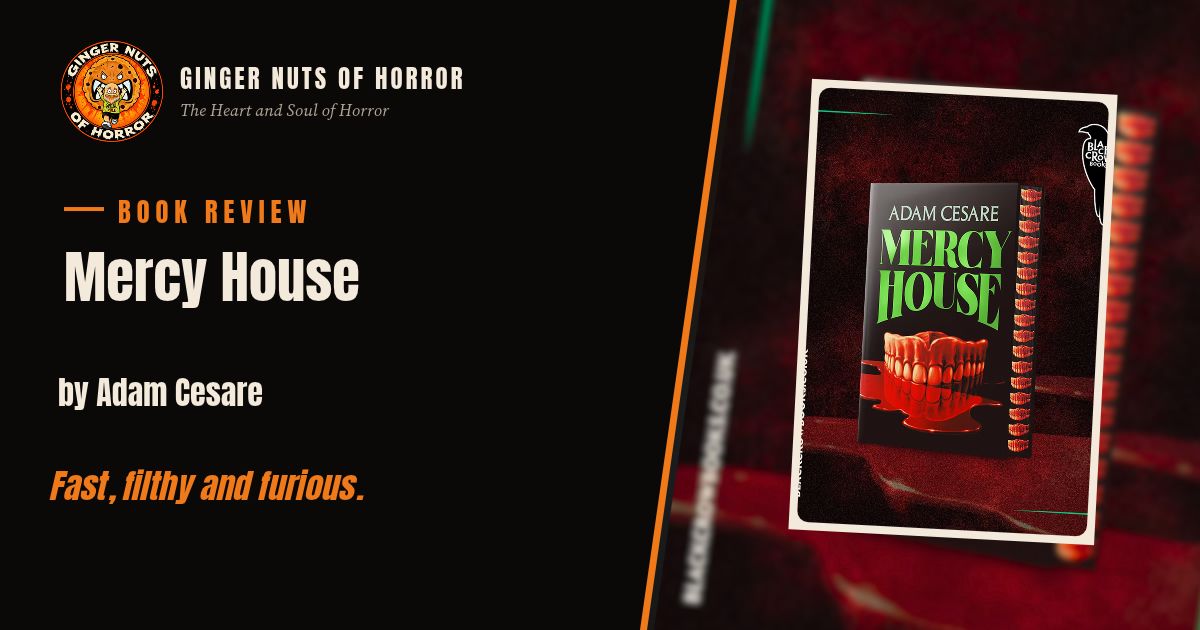
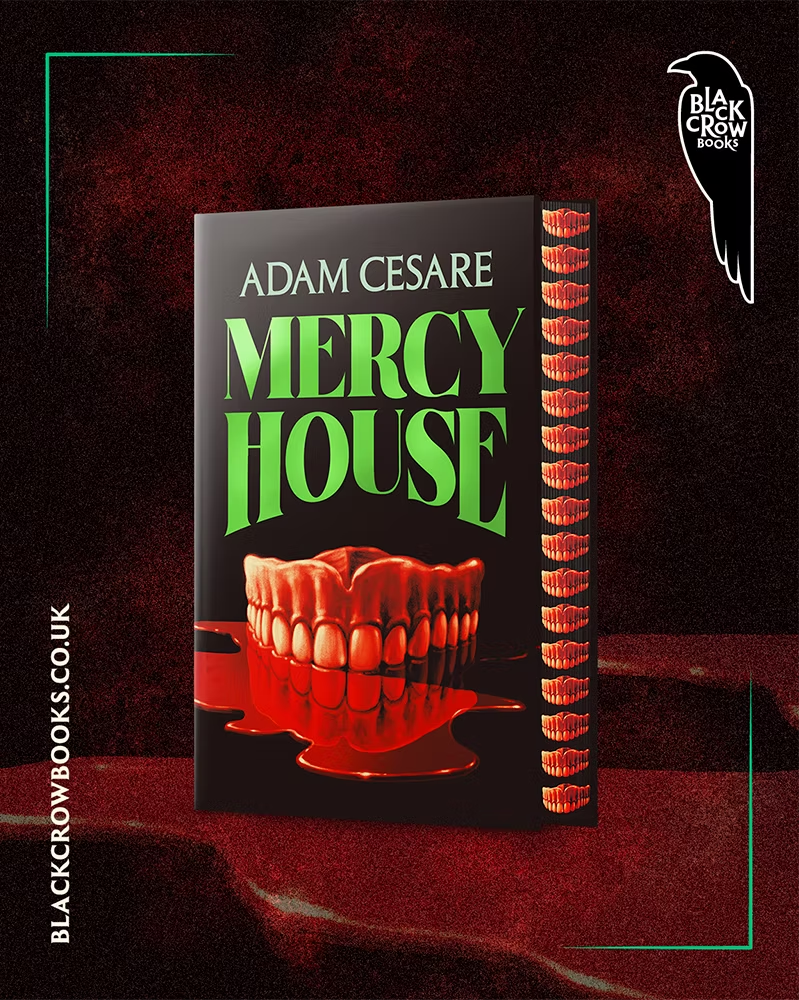
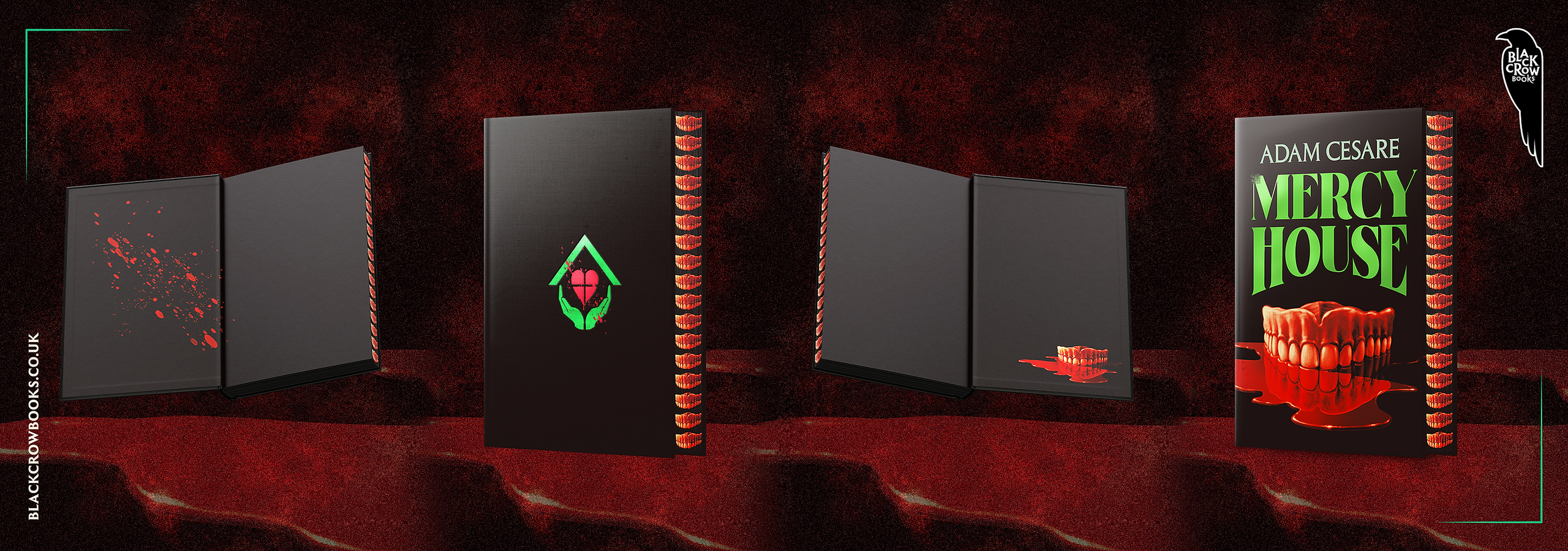
That makes this revision interesting. Cesare says he took Mercy House “down to the studs” for the new edition. I read that as a writer rebuilding an early house with the tools he has now. The new edition comes from Del Rey in paperback and audiobook. Black Crow Books has a signed and numbered collector’s hardback, limited to 1,000 copies, with a cover illustration by Matt Ryan Tobin. The cover is a deliberate throwback to the paperback horror shelf.
The care home is busy ground on screen. The Rule of Jenny Pen, Old People and The Manor all mine the same fear in different ways. Bubba Ho-Tep gave us an old folks’ home with a comic streak. Cesare keeps the setting and plays it straight.
On the page, the nearest neighbour is Philip Fracassi’s slasher among the elderly, which GNoH reviewed warmly as The Autumn Springs Retirement Home Massacre by Philip Fracassi: A Review. Mercy House goes further into the gutter. For the rabid-change angle, think of CJ Leede’s American Rapture and Clay McLeod Chapman’s Wake Up and Open Your Eyes. For sheer drive, fans of Brian Keene and Nick Cutter will feel at home.
It will not suit everybody. The vulgarity is deliberate. The excess is the point. If you want restraint, look elsewhere. For the rest, it is a rare thing: a splatter novel with something to be angry about and the pace to carry it.
Most of us will grow old if we are lucky. Cesare just wonders how angry we will be.
The Verdict: Is Mercy House Worth Reading?
4.5out of 5
The verdict
A fast, filthy care home apocalypse that earns its gore, even if it leaves most of its questions unanswered.
Read it if: you like your splatter with a target, enjoy Brian Keene or Nick Cutter, or fancy an old folks’ home played straight.
Skip it if: you need a tidy explanation for the horror, or gore and bodily fluids make you queasy.
Content warnings: extreme gore and bodily fluids, sexual aggression, vulgar language, dementia, and the neglect of elderly people in care.
Keep reading on Ginger Nuts of Horror
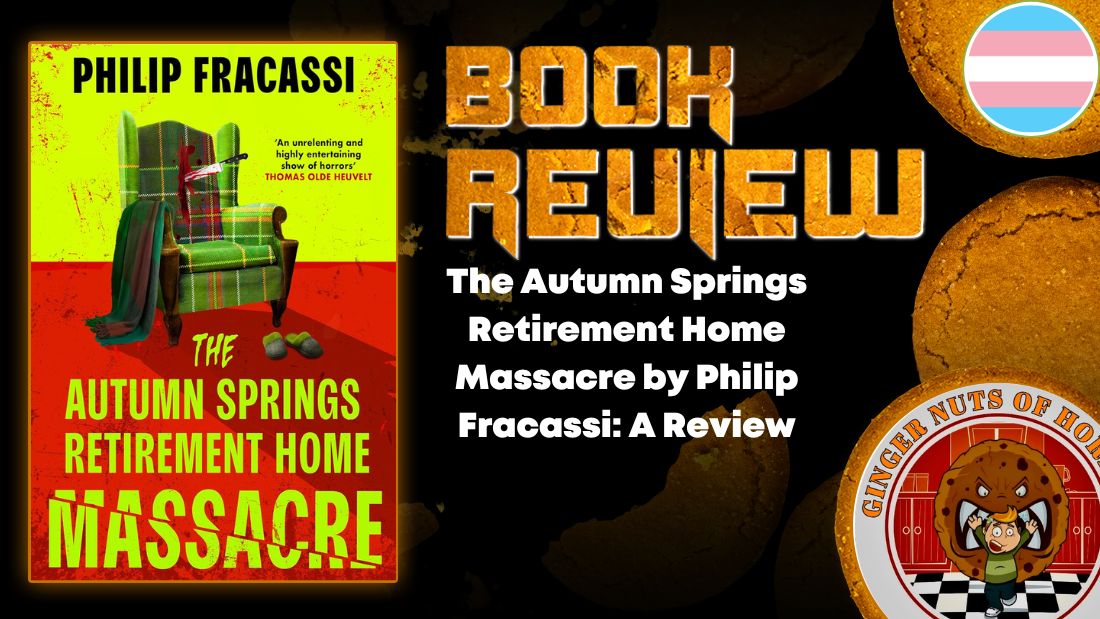 The Autumn Springs Retirement Home Massacre by Philip Fracassi: A Review
 Clown in a Cornfield Movie Review: Blood, Gore, and Fun
 Philip Fracassi’s Gothic: The Horror of Wanting Too Much

About Ginger Nuts of Horror
Ginger Nuts of Horror is an independent horror review and culture site based in Edinburgh, Scotland. Edited by British Fantasy Award nominee Jim McLeod, it publishes horror book reviews, film reviews, author interviews, features and cover reveals. Ginger Nuts of Horror won Best Inclusive Film & Book Review Platform at the SME News UK Enterprise Awards 2026.


