
No one asked to be born. Frankenstein knew that. So did Shelley.

Those who share my ideological positions tend to be afraid of the notion of absolute morality. So often, the concept is abandoned as the exclusive purview of Fascists and dominionist bigots. Historically, I understand why they think so, and why they’re consequently reluctant to embrace the notion themselves (at least consciously speaking).
And yet, it’s an area where I distinctly part company: Absolute morality exists, and not as the result of divine dictate or prescription of unassailable authority; rather as the result of evident, undeniable and universal factors of our being.
One can, for example, make absolute moral statements; that is, statements of such obvious and evident truth, they cannot be assailed. No ideology or tradition or school of thought exists that can countermand or provide corollary to them. Likewise, no division of culture, creed, faith, politics or otherwise ideology presents a means by which they can be undermined.
These are statements that generally describe something innate not only to the human condition, but the state of consciousness as we colloquially experience it (and yes, I understand we’re automatically in the weeds the moment the concept of consciousness is invoked). Furthermore, they tend to operate outside of any particular ideological context or prescription (they are purer than that, based in fundamental, universal human experience).
And, in that strange purity, they describe an inalienable, existential horror.
My own personal favourite, a statement I’ve attempted to critique and dismantle from numerous different positions and perspectives, is a credo of such elegance, it consists of only six words, yet encapsulates so much of the horror innate to being human; of operating as phenomena of ethereal abstraction within the stultifying bounds of our biology and physical restriction:
“No child asks to be born.”
It’s so simple, isn’t it? Such an obvious truth, it might initially seem absurd having to put it into words. And yet, one only has to ponder it consciously for a few moments before the profound, undeniable horror of it begins to extrapolate (a horror that, by the by, necessitates a species of moral expansion):
Not a one of us; no human being ever conceived or that might be, had any say in the matter: Existence, consciousness, is a condition imposed upon us by systems and forces so vast and ancient, they’re practically Lovecraftian. That original imposition (as close to genuine “original sin” as we’re likely to come) is the one from which all others derive. Our first experience of existence beyond the womb is of breathless, bloody, screaming horror and indignity; trauma so profound, we’re hard-wired to forget it (for the sake of sanity). From there, trauma echoes and resonates through every breath and thought, every experience we have.
Insofar as we know, there’s no pre-existence; no metaphysical state of potentia in which we float and decide to enter this Vale of Tears (if there were, it certainly begs the question: Why in Hell would we?). Rather, each consciousness, each life shat screaming into the world, is as much atrocity as miracle. The born, the children of this world, have no say over their conditions or circumstances or whether or not they concede to the process at all.
Of course, this is due to inalienable factors of our species’ evolution and continued existence: The abstract forces, the unseen engines of history acting upon human beings, are so vast and incomprehensible, we not only have little defence against them but, for the vast majority of us, not even the means or contexts to perceive them at all.
Thus, most don’t question the morality of conceiving children. It is assumed and prescribed as a universal good, an unambiguous cause for congratulations and celebration. The bleak truth is: Most lack the means, contexts and imperative to consider the matter on any deeper level. Were any of us to stop and consider the ramifications of doing so in any particular depth or detail, the likelihood is: We’d recoil in horror at the very notion.

And this stands regardless of the state or condition we happen to be born into: The world could be a Utopia of sustained bliss, comfort, plenty and inspiration, and it wouldn’t affect the fundamental imposition foisted upon those born into it one iota (and therefore, nor would it affect the underlying and unassailable immorality of the phenomena). The fact that the world is very, very far from that only strengthens the contention:
Given our own experience thereof, we know that the vast majority of our children will exist in states of privation, confusion, anxiety and suffering, that any moments of joy and contentment they experience will be brief and ephemeral by comparison. Furthermore, we understand on some level that the underlying existential tensions will always be there, informing so much of their existence, whether they acquire the means of articulating and understanding it or not (most won’t; most can’t even begin to do so).
At this point, the morality/immorality inherent should be obvious: From the initial contention, others, similarly unassailable, necessarily derive. If no child asks to be born, then, by the same token, victims are we all. Every human being ever conceived -or that might be- is the subject of this imposition. By virtue of our biological natures, our evolutionary histories, we have no choice or say in the matter. By virtue of having conscious existence foisted upon us, we are all walking vessels of peculiar existential horror. Some of us become obliquely aware of this at some point in our development.
Why or how varies, as does the means by which we express or articulate it. Meanwhile, the vast majority experience the phenomena in a less defined or conscious way,: As vague existential dread, incongruous anxiety, depression, an abiding but inexplicable sense of not belonging.
All of us feel this truth on some level, but we rarely gain the means of knowing it, of examining it further. Every aspect and element of our cultures, our societies, is set up as to prevent it. Not in some conscious, conspiratorial way, but by virtue of their histories and consequent natures. They rely on us remaining ignorant of that truth in the same way and for the same reasons our biologies do (neither societal structure nor species would survive were too many of us to find ourselves lost in these considerations).
It is so difficult to step outside of contexts that are so blindly assumed, so invisible to us. Most only come to do so as a result of traumas or experiences the majority of humanity has no analogue for, making the whole matter conceptually too strange, alien or complex to get a grasp on.
Furthermore, we are biased and blinded against the truth owing to both our cultural conditions and innate, biological programming: We are predisposed to trust and venerate our ancestors, our parents in particular. Our cultures drum into us from the moment we have sapient thought how “grateful” we should be merely to exist. It is treated as a “gift,” some selfless act our parents committed for our benefit. What’s more, parents and children alike come to believe this retrospectively; they are conditioned to do so, but also condition themselves as a natural by-product of their identities.
The truth, as we’ve established, is more complicated:
Contrary to popular cultural prescription, the act of conceiving a child is almost universally either arbitrary or motivated by self-interest: People do not make the decision to have children for the child’s sake (a fact so startlingly self-evident, it’s borderline absurd it has to be stated). Assuming they make the decision at all, and it isn’t the result of accident or imposition, they make it because they feel that having a child will serve or benefit them in some way. It may enhance their lifestyles or social status, may satisfy some biological itch or alleviate loneliness. It may simply be “the done thing” culturally or at the insistence of or by the example set by parents, grandparents etc.
Whatever the motivation, the decision to have children is universally a selfish one, and one that raises profoundly troubling existential and moral questions.
When we speak of conceiving children, what is that phenomena, in its essence? It is the imposition of consciousness upon an entity without any agency, license or permission. The child has no say in the matter; they are always forced into the condition (violently, in states of gasping, shrieking, bloody trauma). It is therefore a situation of profound power imbalance that, were it to occur in any other context, would certainly be deemed immoral and possibly illegal, given precedents set by circumstances we are collectively more willing to consider.
On the levels of both cultures and individuals, we operate in a state of -arguably necessary- blindness when it comes to this inalienable injustice at the heart of our species’ existence. If we didn’t, then perhaps self-authored extinction would become a viable and pervasive talking point, a factor in our politics, cultural discourses etc. Whilst most would undoubtedly see this as horrific, perhaps even evil, I do not:
Our cultures don’t equip us with the contexts, language or imperative to question their purpose. Doing so would arguably be an act of self-sabotage, the authoring of their own potential destruction. What goal are we, as a species, ultimately building towards? What shape do we want tomorrow to take? These are questions society generally doesn’t want us asking in any sincere or incisive fashion, as the act of doing so necessarily upsets the apple-cart; it suggests there are better ways of structuring and organising things. Therefore, traditional states of privilege and restricted plenty come under assault.
This is true to the power of N when it comes to the civil status and unbalanced power dynamics between parents and children. It’s arguably a slippery slope from asking those questions to a species of cultural dissolution; the collapse of certain assumptions that human society has operated under since before prehistory for the sake of its own survival.
My contention is: So what? If there’s no wider purpose, no idea of tomorrow to build towards, then we operate in a state of a-poetic impotence anyway. Continuation for continuation’s sake is stagnation, and is as extinctionist in its own way as any corrosion of those aforementioned traditional assumptions. The only difference is time: One is quicker, more immediate, whilst the other is the slow decline of centuries (which is where we arguably find ourselves mired now).
And even that, even that, doesn’t particularly impact the core, existential horror in question:
Our conception will always, always be an imposition determined on the whims and needs of the pre-existing. It does not in any measurable or meaningful way benefit those that wouldn’t otherwise come to be.
So much of the desperation, the despair, the ennui, the unspoken horror of our beings, derives from our acknowledgement of this injustice, on one level or another. For most, it is little more than a nagging sense of being twisted in one’s own skin and skull, of existing contrary to the patterns of the world around us. It manifests or expresses itself in other, sometimes darker ways. For others, it’s articulated and understood much too clearly, and expressed in the only way that doesn’t invite nihilistic madness:
Through art, poetry and stories.
Horror, of all genres, is perfectly placed to explore this fundamental, existential dread. And it does so consistently, even when it doesn’t consciously realise it.
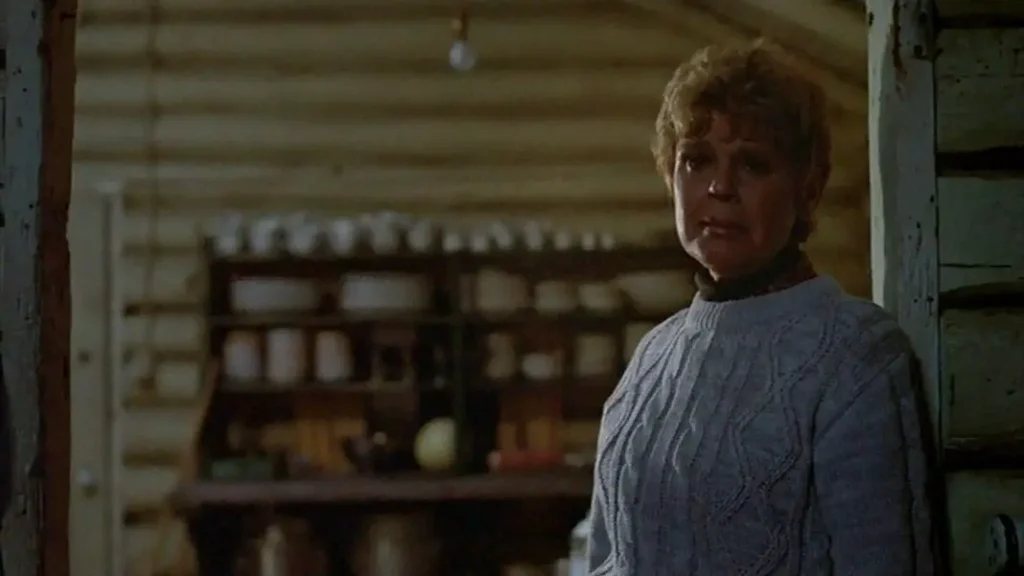
The likes of Friday 13th, for example, generally regarded as a forefather of one of the more brainless sub-genres of horror (i.e. “The Slasher”), contains within its lurid violence, its absurd set-pieces, a subtextual commentary on cross-generational politics. The fact that the “killer” (Mrs. Vorhees) is motivated exclusively by her status as a Mother, and that those she targets are innocent youths and young people, expresses something occurring within US culture at the time of its production (e.g. the escalating gulf between the old and the young, between parents and children), but also, crucially, something more fundamental:
Pervasive cultural contempt and resentment for our children. The film stops short of putting those exact words in any one character’s mouth (though Mrs. Vorhees comes close in the closing acts), rather allowing the lurid, lingering pleasure it takes in the dispatch of its teenage cast to more subtly make the point.
Pervasive throughout the film is the subtext that these teenagers deserve to be murdered, not because of any particular sin on their parts, but owing to their status as young people (the phenomena is particularly acute where adolescents and teenagers are involved, as they necessarily occupy spaces that defy parental and cultural prescription: They aren’t quite children, aren’t quite adults, can’t be controlled or compelled in the way that children can, yet lack the conformity and restrictions of full adulthood. Thus, parents at the microcosmic level -and culture itself at the macro- quietly cultivate contempt for them).
Their existence reminds wider society, particularly elder generations, of the sin of their conception. It serves to emphasise a guilt and shame most lack the means to articulate, and which thus manifests and is expressed in different ways (i.e. as contempt, denigration and judgement). We thus experience a species of pedophobia manifested as protection. Culture at large simultaneously denies and justifies its contempt for its young through that process (they deserve to die because they’re degenerate and terrible, rather than because they stand as living testaments to the profound and selfish sin of their conception).
Nor is this a conscious or deliberate condemnation; it’s more insidious than that. Most no more realise they’re engaging in it than they understand what motivates it: It is merely ambient, part of the hereditary assumptions of society as it stands. When you do finally step back and perceive it, you see it everywhere (in the same vein as misogyny, antisemitism, homophobia etc). It is so entrenched in our discourses regarding children and the young, that contempt and condemnation freely flows, and is allowed to a degree that few other historical biases are.
We naturally and automatically dehumanise and objectify young people to a degree that would be considered abusive and unacceptable towards any other demographic. Part of this derives from the natural, inalienable power imbalance that exists between parents and children, elders and the young. It happens naturally as a result of biological conditions (but is no less morally questionable for that).
The rest has more complex, sinister origins:
We dehumanise -and, indeed, demonise- our young as a projectionist salve to our own unspoken, sublimated sins: The very same they stand as living testaments to, and therefore become the vessels of. Even the most lacking in insight, the most reluctantly self-analytical, understands on some level that we do our children a profound disservice at the point of conception (let alone the trauma of birth itself). It is that inchoate, inarticulate shame that finds expression in our culturally enshrined contempt. Rather than turn that spotlight inwards, acknowledge our own profound selfishness and utter hubris -more on that later-, we concoct self-justifying, diversionary narratives (“Honour thy Father and Mother,” “Life is a gift,” etc etc).
Some horror fiction -not to mention a great deal of science fiction- is intelligent enough to tackle this existential crisis head on:

Mary Shelley’s Frankenstein, Or: The Modern Prometheus examines these tensions between “creators” and “the created” in minute and exacting detail. Popularly, the story tends to be couched in more religious language; the central tensions are often described as examinations of “man trespassing upon divine territory.”
And whilst that’s certainly a key element of the text (reflective of the escalating tensions between religious traditionalism and scientific revelation in the 19th century UK), it is far, far from the entirety:
What tends to be missed or go unspoken is the more trenchant examination the story provides of the innately perverse politics between creators and created: Far from reinforcing the primacy and absolutism of a creator deity, the book calls into stark question the right of any entity to “create” consciousness:
Victor Frankenstein is uniquely complicated in his motivations, inspired by a perverse and morbid fear of death, but also an egocentric desire to simply see if his vaunted intellect is the equal of his ambitions. He does not know exactly why he obsessively seeks to create “life,” to spark consciousness in dead flesh. Following his simultaneous success and failure, he comes to acknowledge this perversity in himself, describing the period leading up to his creation as a kind of “fugue” state, a fevered condition that he almost doesn’t recognise as himself.
When the “monster” comes to him seeking answers as to its own nature, desiring, as children do, some meaning and poetry in their existence, the most Frankenstein can do is shrug and proclaim that he did it because he could; nothing more, nothing less.
The “Monster” is a deeply unflattering metaphor for the pain and trauma we inflict on our children simply by conceiving them: In stark honesty, when they come to us with similar questions as to why they exist, why they were born, the best any of us can offer is either confessions of self-interest or arbitrary distractions. The bleak, existential truth Frankenstein circles around is the universal victim-status of our species, an acknowledgement that, by imposing consciousness on another entity, we condemn it to pain and confusion, just as we ourselves are condemned.
The “Monster” is not apart from or alien to humanity; it is humanity in every aspect, humanity collated and refined to divine formula. In that, it is a reflection of Frankenstein, its Father and creator, but also us as a species. It reflects our sins just as children reflect and expose the flaws and sins of their parents (not to mention the cultures into which they’re born). This is part of why Frankenstein experiences such visceral antipathy towards his creation; not because it’s malformed and monstrous, but because it has succeeded beyond his expectations and prescriptions:
Just as part of the tensions between parents and children derives from the former’s shame at the mirror the latter holds up by virtue of their existence, so too does Victor loathe and condemn his creation because it exposes the very worst in himself (not by virtue if anything it does, but merely because it is). It is the twisted reflection of his fallen condition; the living, walking effigy of his hubris, but also his damnable lack of concern or consideration for consequence.
Victor is as blithe and presumptuous in his divine right to create his “monster” as prospective parents are children. Never once, up until the point he is faced with the manifest result, does he question or consider the ethics of what he’s doing (not with regards to some abstract notion of the taboo or divinely forbidden, but in real, tangible terms: Does he -or anyone- have the right to impose consciousness on another being?).
However, his reaction is extreme and equally immoral: Far from attempting to make amends for his sin to his one and only misbegotten child, he denies and rejects it, as an inconvenience to his life and perpetual reminder of just how truly execrable his “grand work” is.

The implications are fairly stark: Victor here is “The Creator,” the first cause and font of all potential purpose for his creation. Yet, even in the throes of his regret, he refuses to take responsibility for it, instead choosing to deny its existence and continue with his life as though it never occurred. He projects all the blame and scorn he should rightfully reserve for himself upon the creation, the “creature,” who is, at this point, totally innocent (as innocent, in fact, as a newborn).
This is Mary Shelley’s less-than-flattering commentary on the skewed and wicked politics innate to the dynamic between creators and the created, between parents and children, between gods and their creations. Too often, the book is misconstrued as positively religious in nature; that it condemns Victor Frankenstein for trespassing, in his hubris, upon the sacrosanct territory of God.
This is not the case: By implication, the book condemns Victor and God equally, in that it dares state that no entity, divine or otherwise, has the right to arbitrarily impose consciousness on another. If anything, it sympathises more profoundly with Victor than God, in that Victor is akin to his own creation; another lost child of an arbitrary and uncaring parent (as are we all). Victor’s great sin is not in trespassing on God’s domain, but in daring to emulate his ostensible creator too closely, and thereby hold up an unflattering mirror to that entity’s sins (just as the “Monster” does to him).
In that, he and his creation find a peculiar kinship neither recognise or acknowledge: They are both victims of circumstances and agendas far beyond their comprehension or control. They are both abandoned and condemned for reflecting too closely and keenly the unspoken natures of their creators.
One might argue that the notion of “original sin,” as it is commonly held in Christianity, only exists as a means of transferring guilt and responsibility from parent to child, and thereby absolve the former of some of that burden (if only subconsciously). If children are somehow born impure, imperfect, freighted with some abstract ill, then it becomes easier for parents to justify the arbitrary factors of their conception, the more profound evil of imposing existence upon them in the first place (it effectively mythologises the transference, diluting any responsibility a parent might have for apology to their children).
Another factor that binds Victor and his creation, and one that binds us all, is the stark, irreconcilable horror of being itself; of conscious existence within these failing prisons of meat and bone. Origin becomes incidental in the face of that mutual condition: How we come to be is of less significance than how we reconcile the fact of our existence with reference to each other, our societies, the physical world in which we operate.

The “Monster,” being made innocent, looks to its creator for that reconciliation (just as we, as children, look to our parents). It, as we, come to learn the profound error of that, as they flounder under the same existential confusion. The question of “why” can only have the most unsatisfying and desultory answer, given the magnitude of suffering one experiences from the mere fact of conscious existence.
Extended beyond the mundane and immediate, the question becomes divine accusation, a finger pointed in the face of God and a demand for answers even that entity -and certainly its self-fancied representatives on Earth- cannot provide.
The crusade of vengeance the “Monster” embarks on in the aftermath of its most intimate meeting with its ersatz “Father” isn’t motivated by loneliness or the desire for companionship (though that’s the language in which the creature couches its expressions). Rather, it’s expressing the existential despair at the heart of every random temper tantrum and breakdown, every moment of adolescent angst and teenage rebellion. Adults, particularly those who become parents, necessarily forget and become inured to that overwhelming and irreconcilable despair. But Frankenstein’s “Monster,” having been created in a condition of physical adulthood, hasn’t experienced any of the transitions and traumas that allow for that peculiar brand of blindness:
For it, the questions and confusions are raw to the point of agonising and cannot be easily swept aside or diverted from. Having no family, no society, no art or obsession, it only has those questions, which become its overriding imperative, its only design and desire. There is nothing else in all the world save the slender possibility of that revelation. In asking Frankenstein to create another of its kind, a companion, it doesn’t just seek a sop for loneliness, but a reflection of itself, something in which it can see mirrored the same existential confusion, and thereby perhaps discern some answer to the riddle of its being.
The cruel and supreme irony of the story is: All it has to do is look to its creator, as its creator need only look to it. Not for answers; neither are equipped to provide anything so complete or satisfactory, but at least they might have come to understand their shared confusion and despair, and found some solace in that commonality. But this isn’t a path Frankenstein himself is capable of following: As the “creator” of the dynamic, he can only respond to his creation, his child, with horror and repulsion, manifesting as it does a living accusation, a walking, talking testament to his most grievous sins.
And this is where we find ourselves existentially as a species; a condition Mary Shelley well understood at the time of writing: One of necessary and unwitting atrocity, in which we are obliged to continue our species by external pressures and forces that existed long, long before we ourselves were born, and which steadfastly refuse to provide answers as to why.
What, exactly, are we building towards? What shape of tomorrow is it we expect our children and children’s children to operate in? Continuance for continuance’s sake is arbitrary, and yet most reading this will have never been provided, in all their lives, even the beginning of an answer as to what humanity is for, what ideas or designs it exists to fulfil.
The alternative, of course, is extinction, either slowly over decades and maybe even centuries, or perhaps more immediately, if the numerous disasters we seem intent on cultivating for ourselves come to fruition. But, given how arbitrary and ineluctably immoral the phenomena of imposing consciousness on another is, it’s hard not to shrug and declare: So what?
Frankenstein’s creation understands this by the end of the story: There’s a reason it flees into lifeless desolation, one of the most empty and inhospitable environments on Earth. Where else is there for something so unutterably lost, what other condition so acutely reflects the cruel desolation of its soul (and, by extension, that of humanity)?
It leads its Father there not exclusively out of a desire to see the man suffer (though that is certainly part of its design), but to impress upon him the existential horror he has heaped upon what should have been his most celebrated and beloved. The icy wastes of the Antarctic are the very manifestation of the callous silence and cosmic indifference to conscious existence that Frankenstein expresses with every word and act towards his creation, a condition so inimical to humanity, it’s death to wander there.
The empty indifference of the wasteland, the ghostless silence, is our internal condition expressed outwardly. It is our despair, our acknowledgement that nothing, nothing can salve the enduring confusion in our souls, the sublimated agony of our beings. The “Monster” understands this by the end, and seeks to share a measure of that bleak wisdom with its similarly lost and flailing creator. There is nothing left for either of them in the world to which they were born (if there ever was). The fact that they encounter imperial voyagers similarly lost in the ice, dying from exposure and starvation, elevates and expands the existential horror:
They are, to a one, victims of their own unasked for, unsolicited existence, the systems through which they’ve been churned since before the first conscious thought, and which have now abandoned them in the most desolate, desperate circumstances imaginable. Not only does this serve as a canned critique of the self-mutilating evils of empire, nationalistic rhetoric etc, but also an exposure of those confections as masks and diversions for the core, sublimated horror of human existence:
The nigh-Lovecraftian arbitrariness of conscious existence weighed against the vastness and unthinking hostility of creation. In that emphasis, the act of conception and creation becomes necessarily evil; there is no argument, no position, no ideology to countermand that essential truth. We are all the lost and unwanted children of an arbitrary and unknowable existence. And there is strange commonality to be found in that fact.
Victims are we all, from our most distant, anonymous ancestor to those we share blood and grievance with in our day-to-day lives. Every single one of us, regardless of origin, identity or status, suffers the same core existential crisis; is driven and motivated by it in every aspect of our lives, even when we lack the means -or desire- to consciously articulate it.
And the true despair of Frankenstein? Shelley is intelligent and respectful enough of her readership to not presume answers. Neither “Monster” nor Frankenstein himself find what they’re seeking. In point of fact, the very search, the nigh-Dantean pilgrimage, leaves them lost, ragged and without hope. They come to states of mutual disgrace neither could theretofore conceive, and die together in the snow and silence, without intervention or answer.
The book ends in the most honest way it can: Without clean resolution or pat conciliation. There’s no surrender to banality or sentiment, no attempt to salve the reader’s own existential anxieties. Rather, in the lack of resolution, it squarely places responsibility in the reader’s lap, silently enjoining them to embark on their own self-mutilating pilgrimage, to ask the questions and seek after answers that, in all likelihood, are not there to begin with.
Frankenstein is sublimely without myths of prescribed salvation: In the face of Victor Frankenstein’s sin -which, of course, is the collective sin of humanity-, all notions of salvation evaporate just as traditional myths and religious narratives burned to ashes beneath the inferno of scientific discovery.
The story leaves the reader unanchored in themselves just as the “Monster” is, just as Frankenstein is, just as we all our in the deepest, most forbidden reaches of our souls. It surgically punctures and peels away delusions of identity, the elements of ourselves by which we define, and discards them as arbitrary, unimportant. What’s left is a void, a vacuum it refuses to even pretend to fill, because there is nothing that honestly can:
Just as Frankenstein can’t provide his creation the answers it demands, so too are we impotent in the face of similar questions from our children and children’s children. The same questions we ask of our parents and they asked of theirs for which there are no good or honest answers:
Who are we? What is our purpose in being? Why do we feel so empty and arbitrary and dissatisfied at our cores?
Existentially, we might appeal to more abstract sources for those answers, but the most they’ve ever provided is comforting lies and distractions: Structures such as religion, culture, certain species of political and/or ideological movements might prescribe certain identities for their own ends, but these are ultimately, as Frankenstein acknowledges, confections; ephemeral, fragile and achingly shallow. When one operates outside or is exiled from their purview -as the “Monster” is-, one sees them with a certain degree of distance and objectivity.
They become apparent as engines of -perhaps necessary- deception and delusion, providing false answers where there may be none (and, as our histories demonstrate, human beings in general prefer a lie or delusion to an absence of answers). By story’s end, both “Monster” and Frankenstein himself operate in the same rarefied state, both shriven of all delusion or deceit, and lamentable in that condition. The former never had any such baggage in the first place, whilst Frankenstein requires the desolation of utter failure and the slow unravelling of his “life” at his creation’s hands in order to see clearly. A commonality exists here that only the “Monster,” the child, is able to perceive or comprehend:
That its creator, its parent, is as much a victim of existential circumstance as it is, as are we all. None of us has any say or agency over how we enter the world, who brings us into it and for what purpose. Nor do we have any agency over the assumptions and expectations placed on us before we’re even born. Every one of us, every human being ever conceived, find ourselves adrift in that existential void, a condition as vast and pitiless as the sea, as starless night.
What Frankenstein uniquely acknowledges is the unspoken despair that informs our souls, a unifying, universal factor that, ironically, leaves us more alone and arbitrary than we could ever conceive. It is a nightmare that so much horror approaches, but rarely to the same depth or degree, with the same resolute, self-flagellating courage.
It’s such a raw, fundamental trauma, one that’s so irreconcilable, that any work daring to touch that nerve risks drawing the ire of its audience (more recent historical examples attest to this, in which those reacting to material in extreme or prescriptive ways hide behind masks of taste and/or morality, when in fact they don’t like being made to feel existentially uncomfortable).
Frankenstein deftly evades that issue, presenting a theatre in which the core questions are sublimated just beneath the surface, but sufficiently that readers don’t have to engage with them if they don’t wish to.
However, for those with the inclination to dig deeper, who are so made like Victor Frankenstein himself -unable to resist curiosity-, there’s a seething ocean of existential confusion and horror. Victor’s own quandaries remain unanswered, unfulfilled, even in death. There’s no clean or redemptive conclusion for him; no baptismal to wash his soul clean. There’s only desolation, an expanse without answers, pity or humanity, and a child just as lost, just as tormented, with none of the diversions or distractions more naturally-born humanity develops to preserve its sanity.
What is there in a world of pain, deceit and delusion for a creature that is made antithetical to those concepts? A creature purer and more absolute in its excoriating humanity than any ever born? A creature whose honesty and unflinching reflection of humanity is so profound, it’s painful to endure (both for it and those it encounters)?
Nothing, the story concludes. Only pain, disappointment, bitterness beyond understanding. Victor’s eventual death is a strange mercy, the only relief for a man who can no longer deny the inalienable questions of his being. That his creation, his child, follows after, is a sobering portrait of how irreconcilable our existential despair as a species truly is:
These are traumas and confusions we can never escape this side of the grave, to which the only answer is the silence of oblivion. There is a troubling note of suicidal ideation running through the latter chapters of the book, one whose reason and rationalism makes it all the more horrific:
Perhaps, Frankenstein suggests, quiet extinction is preferable to pointless continuation. What, exactly, is the tomorrow we’re willing to commit the ultimate sin for (and not just once, but over and over and over again)? Do we ever even consider it? Do we delude ourselves that we know? Or is it just the arbitrary turning of the great, diseased wheels of history, processes we have no control over or understanding of, but into which we gladly feed ourselves, and our children, and our children’s children.
We are all Victor Frankenstein, parent or otherwise: Even those of us that do not have children largely fail to consider or comprehend the existential imposition, the innate horror, of doing so. We facilitate and allow for that horror without question for the most part, and assiduously deny it in ourselves. We have to, not only for the sake of sanity, but for the sake of survival.

One of the great, sublimated horrors of Frankenstein is the abiding question: What does that mean? What does that look like? Is survival and continuation an end in and of itself, and if so, why is it so unsatisfying to us?
These are questions we rarely have the gumption or insight to raise in the cold light of day, both individually and as cultures. The arenas where we are able to ask, to contemplate the otherwise unthinkable, are in the collective nightmares that are horror stories. That genre allows for a species of self-dissection that might otherwise be self-mutilating, suicidal. Here, we can confront our existential horrors, articulate concerns that might otherwise remain inchoate (for all of their power over us).
And, in a final act of profound and courageous honesty, the book provides no answer, no solution where there can be none. If anything, the story suggests that these confusions are inalienable and insoluble. We are so prey to them, so consumed and defined by them, we can no more find solutions than we can remove ourselves from our humanity, our conditions as conscious entities (at least, not without destroying ourselves).
The sublime honesty of Frankenstein has been referenced and emulated many times and in numerous different forms since its original publication. But rarely with the same mordant, unwavering obsession, the same will to ask what most of humanity spends its days in unwitting denial of.
In that, there’s a punkish transgression to the book that is rarely commented upon, rarely acknowledged even by experts in the field. It’s a uniquely powerful statement of one young woman’s piercing insight and understanding of something so fundamental to the human condition, it hurts to even touch upon it.
Existentially, we are all adrift, every single one of us ever born and whoever will be. We are all seeking the same poetry and place and meaning in our existence as the “Monster,” as Frankenstein himself, in the earliest chapters. And, like both of them, we have only distraction, disappointment and resounding silence in answer. Our parents can’t provide it, being prey to and products of the same diseased engine (i.e. that of history itself), structures such as religion can only pretend to, and thereby only distract from the abyss inside.
So, where does that leave us, when we finally finish and set down the text? In truth, a deeply troubling, fraught and treacherous place. Whilst the story might have ended, the abyss it leaves us stranded at the event horizon persists, and refuses to let us look away. Shelley’s singular genius is such that it is unwavering, ineluctable: The questions it asks, once raised, are impossible to ignore. We find ourselves existentially unseated, aroused to the horror of our own beings in a way very few works of art can equal.
As to what we do with that newfound insight? Search me. I have no more answers than Shelley herself or the characters she created. None of us do, if we’re honest with ourselves, if we dare acknowledge the abyss, and nothing in all the world can draw us back from its edge.
George Daniel Lea, 10-03-2026
Discover the Hidden Depths of Horror with George Daniel Lea’s My Life in Horror
If you’re looking for horror analysis that goes beyond simple scares, George Daniel Lea‘s “My Life in Horror” column on Nuts of Horror is essential reading. This isn’t just a review series; it’s a deeply personal and intellectual exploration of how horror shapes our fears, identities, and understanding of the world.
Lea masterfully blends memoir with sharp critique, using classic and contemporary works—from the existential dread of Silent Hill 2 to the cosmic despair of Stephen King’s The Mist—as a lens to examine universal human experiences like grief, love, and societal anxiety. His writing treats horror with the seriousness it deserves, uncovering the profound truths hidden within the genre’s darkest corners.
For any fan seeking to understand not just what terrifies us, but why it matters, “My Life in Horror” offers a uniquely thoughtful and compelling journey. It transforms your appreciation of horror from mere entertainment into a deeper conversation about life itself.


George Lea is an unfixed oddity that can occasionally be sighted wandering around the UK Midlands. Queer as a very queer thing. Following the publication of his first short story collection, Strange Playgrounds and Essential Atrocities, he found a home amongst Perpetual Motion Machine Publications/Ghoulish Books stable of queer writers with his two-volume short-story collection, Born in Blood.
https://youtube.com/@ExaggeratedElegy


