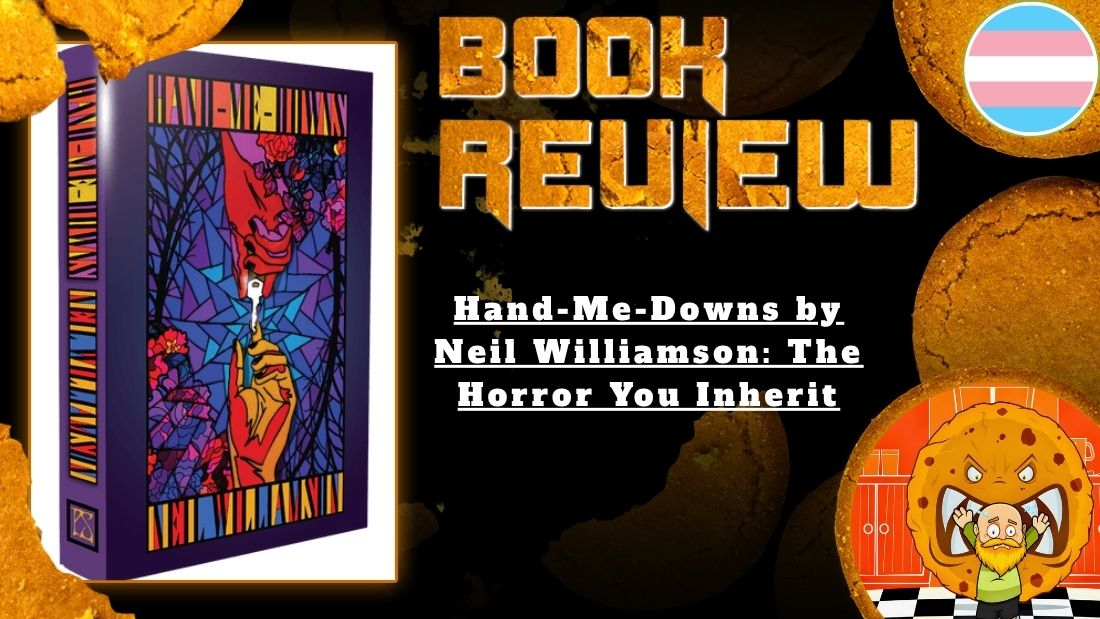
Neil Williamson turns the family bequest into the scariest thing you own.
Some objects come with strings attached, and in Hand-Me-Downs, Neil Williamson pulls every one of them tight. This is his first all-horror short story collection, and his first written to a single theme: inheritance and the ugly intangibles that ride along with the furniture. Across fifteen tales he turns a garden gate, an axe, a shoebox of vapes and one very suspect wheel of cheese into slow-burn dread, with a hard focus on toxic masculinity and the men who refuse to change. It is quiet, funny, Scottish to the bone, and properly unsettling.
Williamson hands you an ordinary object, a gate, an axe, a shoebox of vapes, then waits for you to notice the damage folded up inside it. Hand-Me-Downs is fifteen sharp shots of quiet British dread, and its real monster is the man who will not change. Horror that carries a receipt.
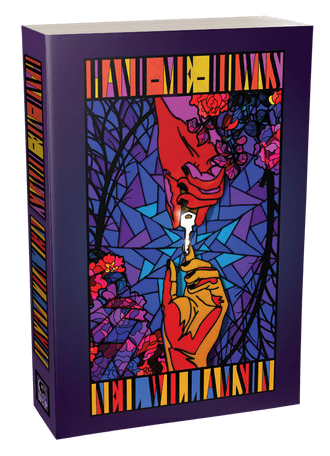
Hand-Me-Downs | Neil Williamson | PS Publishing (Drugstore Indian Press) | July 2026 |
A wheel of cheese sits on a Yorkshire countertop, grey-rinded and blotched with lichen, and by the end of its story I would not have touched the thing a million quid. I love cheese more than anything, except maybe my dogs, and even then it’s a close run. That is the trick Neil Williamson keeps pulling in Hand-Me-Downs. He hands you an ordinary object. A gate. An axe. A spice grinder. A shoebox of vapes. Then he waits, very quietly, for you to notice what came bundled in with it.
This is his first collection that is horror and nothing else. It is also the first he built to a single idea, rather than sweeping together a decade of odds and ends. The idea is inheritance. Not just the will-and-solicitor kind, though there is plenty of that. It is the other stuff. The habits, the tempers, the small cruelties we take on without asking, the way a dead man’s opinions can outlive the dead man. Fifteen stories, and each one asks the same blunt question in a different accent. What did you get left, and what is it doing to you now?
It feels like sitting in a warm room while a draught you cannot locate works its way up your spine.
Williamson does not go in for the big bang. There are no chandeliers dropping on anyone. The dread here is a slow build, laid down brick by patient brick, and the horror usually arrives about a page after you thought the danger had passed. Take the opening story, Thirty-Two Tumbling Teeth. A man called Greg runs the night shift across a chain of launderettes, and there is a rattle in one of the drums. Just a rattle.
Williamson lets you sit with the plainness of it. The hum of the machines. The migraine glare of the strip lights. The sad detail of a gaunt student in penguin pyjama bottoms, worn because they are the last clean thing she owns. By the time the story shows its teeth, you are already too far in to back out.
That is the shape of the book. Domestic, cluttered, true to life, and then wrong. He is very good at the texture of ordinary British misery. Subscription launderettes. Woodchip wallpaper. A rosewood telephone table someone is far too proud of. The grubby feel of a certain newspaper between your fingers. He earns the scares by getting the boring bits exactly right first.
There is humor in it too, which people forget horror is allowed to have. It is dry as a stick, and it never lets the fear off the hook. Anthony Timperly, the launderette boss who runs a chain of washers like a gym membership, is a comic monster of pure ego, and Greg’s running patter on him is filthy, funny, and true. Williamson knows that a laugh loosens you up. He uses it the way a good dentist uses small talk, to keep you relaxed for the part with the drill.
Now the craft, because this is a writer who plainly loves the sentence as a unit of work. He shifts his whole voice to fit each story, and he does it without showing off. The Sea Gate speaks straight at a “you”, in the present tense, one partner watching the other cross a dark garden at night, and the choice puts you inside a relationship at the exact moment it curdles.
Five Vapes In A Shoebox is a mother talking directly to her dead son as she clears his room, and the address, that constant wounded “you”, turns a grief into an accusation and back again. He picks a point of view the way a joiner picks a chisel. Right tool, clean cut, no fuss.
His dialogue adds so much to the stories. Half the menace in the folk-horror piece The Family Axe lives in the things Uncle Alder says and the way the boys have learned not to argue. You’ll respect it, or you can find another roof to sleep under. The horror is not the axe. The horror is a child repeating a grown man’s line because no other line has ever been offered to him. Williamson trusts you to hear that for yourself.
He is a Scottish writer and the book knows exactly where it stands. Glasgow rain and Springburn tenements in The Cold Case, a cold Aberdeen after the clocks go back in Her Little Ray Of Sunshine, a machair coastline and an Atlantic that will not forgive in The Salted Bones. Even the stories set in England feel watched by an outsider with a sharp eye. All gentle Shires and tasteful hallways, with something rotten thawing in the middle of them.
The pages are full of whiny, stuck, self-pitying men. Some you feel for. Some you would happily leave out on the machair yourself. What links them is a refusal to change, or a flat belief that they cannot. That is the real monster of the collection, and it is a brave one to pick, because it does not roar. It sulks. It says it was a man of its time. It buys The Sun and hands the paper to a grandchild without a second thought about what else is being passed across.
This is where the title turns its edge on you. A hand-me-down is meant to be a kindness. Something loved, worn in, given on. Williamson takes that soft word and shows you the damage folded up inside it. The teeth, the skin, the bones. The tempers we did not ask for and cannot seem to bin. There is very little rescue on offer here, and he says so himself, almost cheerfully. If these men grew and healed, the stories would not scare anyone. He is right. The absence of a cure is the whole terrifying point.
A themed collection can easily turn into the same story told fifteen times, and this never does. He covers body horror and folk horror. A police cold case that rots into something worse. A mortician’s showroom in Die Hässlichen Blumen, where grief gets sold back to you with the make-up included. And a daft, truly unnerving novelette about a possibly haunted cheese that has no right to work as well as it does. The Truckle is the sleeper of the book. It should be a joke. Instead, it matures slowly into a real fear about being polite, being owed, and the neighbors you did not choose.
Williamson has form as a folk-horror man, and he has thought hard about that corner, editing an anthology, Blood In The Bricks, that won its category at the BSFA awards. You can feel that thinking here. He knows the field is crowded and he keeps sidestepping the obvious. The natural neighbors sit at the quiet, bookish end of British weird fiction. Think of the Robert Aickman line of unease, and newer voices like Andrew Michael Hurley. But Aickman rarely got his hands this grubby with class and money, and Williamson does. His horror carries a receipt. Someone always paid for the inherited house, the antique chest, the family plot, and the bill is never only financial.
It also earns a place next to his own last two books. Charlie Says, his folk-horror novella, dragged the dread of a 1970s public information film into a meaner Britain. The Packet took a post-war steamer full of Scottish emigrants somewhere very strange. Both are about people carried along by forces older and colder than themselves. Hand-Me-Downs boils it down to fifteen sharp shots. This is a writer who has been circling one idea for years and has finally cornered it.
If I have a note, and I am reaching, it is that a couple of the shorter pieces feel like sketches beside the fuller rooms of The Truckle or The Salted Bones. But a collection needs its breath-catchers, and even the slightest of them lands a clean hit before it goes.
The Salted Bones closes the book, and it is the right choice. A coastal village, a wave that has been promised for a long time, a people who have known what is coming and stood by anyway. Witness, witness, witness. I will not say more. Only that Williamson ends not on a jump but on a verdict, and the verdict is on us.
Read Hand-Me-Downs and you will start eyeing your own shelves differently. The clock from your gran. Your father’s tools. That thing you kept because throwing it out felt like a betrayal. Williamson has quietly convinced me that none of it is neutral. Every object is a message. And some messages should have been left unread. It is the kind of book you would leave to your kids, with a warning scribbled inside the cover. He said that himself. After fifteen stories, I believe him.
HAND-ME-DOWNS by Neil Williamson
A COLLECTION by Neil Williamson
CATEGORY Horror
PUBLICATION DATE June 2026
COVER ART Vince Haig
PAGES 320
ISBN 978-1-80394-584-2
EDITION
Trade Paperback
ABOUT THE COLLECTION
“HAND-ME-DOWNS was planned as a themed collection almost from the start. I’d written a story, “Thirty-Two Tumbling Teeth“, only in retrospect, realising that what I’d been writing about was a sort of reversed inheritance. It was a neat notion and I wanted to explore it more. How ideas get passed on along with objects bequeathed by the dead to the living.
The transference of personality traits and emotional baggage between parents and children, spouses, siblings and friends along with the tangibles of inheritance. I found myself taking a particular interest in the traits of toxic masculinity. And, like I say, found that horror was exactly the right medium to be telling those sorts of tales. The right kind of light to shine to expose those sorts of truths.” —Neil Williamson
Publishing History
- “Thirty-Two Tumbling Teeth” first published in Black Static (2022)
- “The Family Axe” first published in BOREAL: An Anthology of Taiga Horror (2025)
- “Bunting” first published in UNCANNY BODIES (2018)
- “The Death Trap” first published in NOT ONE OF US (2024)
- “A Little Seasoning” first published in Interzone Digital (2023)
- “An Antique Puzzle Chest Of Unknown Provenance” first published in WEIRD HORROR (2023)
- “A Folded Letter” first published in CHTHONIC MATTER (2024)
- “Down To The Roots” first published in SHADOWS & TALL TREES (2019)
- “The Cold Case” first published in ABSOLUTE ZERO (2025)
- “Her Little Ray Of Sunshine” first published in REMAINS (2025)
- “The Salted Bones” first published in Black Static (2023)
- “The Sea Gate”, “The Truckle”, “Die Hässlichen Blumen” and “Five Vapes In A Shoebox” are original to this collection.
Ginger Nuts of Horror: The Heart and Soul of Horror Reviews

Looking to get your horror book or film in front of the genre’s most dedicated audience? Ginger Nuts of Horror is one of Europe’s largest independent horror review websites, with over 30 contributors publishing horror book reviews and horror movie reviews almost every single day.
We offer far more than reviews. Authors, filmmakers and publishers can promote their work through in-depth horror book reviews, horror film reviews, comic and video game coverage, news features, and our popular author and director interviews like Five Minutes With. Our guest feature series, The Horror of My Life, Childhood Fears, The ? That Made Me and more, let creators tell their story while promoting their latest release.
Every feature is built to sell your work. We include backlinks to your website or Amazon author page, a full synopsis, and a universal purchasing link that sends readers straight to their local store. Add a large, engaged social following and an 18-year archive of trusted horror coverage, and you have a platform genuinely built to grow your readership.
Whether you’re an established author, an indie filmmaker, or a debut voice in indie horror, there’s a way for us to help you reach more fans. Explore our horror book reviews and horror movie reviews, then get your horror book or film featured today.


Jim "The Don" McLeod has been reading horror for over 35 years and reviewing it for more than 16. He's the editor of Ginger Nuts of Horror, Europe's largest independent horror review and culture site, and a British Fantasy Award nominee for his work in the genre. When he's not busy inflicting his opinions on the horror community, he can be found annoying his family or getting thoroughly outwitted by his two dogs, Casper and Molly.