
J. Todd Kingrea Interview: Only Angels Have Blue Eyes
J. Todd Kingrea’s Only Angels Have Blue Eyes is a cult horror novel with its roots in a true crime case, and there is not a monster in sight. Maylin is drawn into a group led by Seraph Nakir, whose teaching turns on the angel inside you, and her daughter Margo becomes the measure of how far she drifts. The reader knows it is a cult by chapter two. Maylin does not, and that gap drives the whole book.
Kingrea pastors two churches in Southwest Virginia. He has worked as an art director, a silkscreen printer, a radio DJ and a video shop assistant, and he first met horror aged five, watching The Blob beside his grandfather. He cut his teeth on Call of Cthulhu scenarios before writing The Deiparian Saga and With A Blighted Touch. When his publisher closed in 2025, he put this one out himself. In this J. Todd Kingrea interview, he talks about building a believable cult theology, timing a slow awakening and why nobody plans to join a cult.
Kingrea’s horror lives in the gap between what the reader knows and what Maylin can see. People are not recruited on a good day; they are caught after a death, a move, an addiction or an illness. Only Angels Have Blue Eyes swaps monsters and gore for the slow burn of waiting to see if she wakes in time.
From The Blob to the Pulpit: Meet J. Todd Kingrea
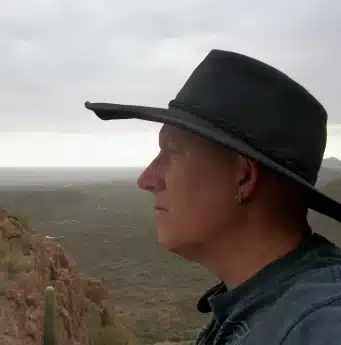
Let’s start at the very beginning. For our readers, please introduce yourself. Beyond the author bio, tell us a little about who you are when you’re not writing, what you love doing, what fascinates you, and what fuels your creativity.
My name is J. Todd Kingrea. I’m a 60-year-old indie author. I currently serve as a pastor of two churches, but I’ve also done stints as a graphic artist and an art director, a video store associate (one of my absolute favorite jobs ever!), a silkscreen printer, and a radio disc jockey. I’ve followed horror/sci-fi/fantasy since I was 5 years old, sitting beside my grandfather watching THE BLOB (1958) on television. Scared the crap out of me, but I knew I was safe because I was with my grandfather.
I still collect comic books and have an extensive physical media library of films. When not writing, I’m usually working at my churches in Southwest Virginia. I’ve traveled internationally on mission trips to Ghana, Africa; the Philippines; Vietnam; and the Czech Republic. I’ve also been fortunate to visit Mexico, Amsterdam, and a little bit of Germany.
Writing wasn’t something I studied in school. I started out creating role-playing game scenarios for “The Call of Cthulhu” role-playing game in the mid 1990s. I wrote two short stories before putting the craft on the back burner when our two sons came along. I wrote a devotional book around 2010 as a way to raise money for a mission trip, and in 2012 saw it released through Dove Christian Publishers. I followed that with a church leadership book around 2014.
I began to wonder if I could write a novel. I set about researching and studying what was involved in it, and decided to give it a try. The result was The Witchfinder, Book I of The Deiparian Saga trilogy, a post-apocalyptic epic fantasy. Books II (The Crimson Fathers) and III (Bane of the Witch) followed in short order. Once that was completed, I worked on With A Blighted Touch, a horror novel based on the experiences of a close friend.
Where Kingrea’s Stories Start
In the early stages of a new project, what tends to come to you first: a compelling character voice, a central thematic question, or a vivid image/scenario? How does that initial spark then guide you in building the rest of the story?
It’s almost always a vivid image or scenario. With The Witchfinder, I wondered what it would look like if the Inquisition of the Middle Ages had become the dominant worldview. The Deiparian Saga is set in what remains of the United States thousands of years after an extinction-level event. Humanity has built back to a medieval level of technology and lifestyle.
For With A Blighted Touch, I took some of the stories and situations my friend had shared with me and pulled it all together into a single narrative. I kept telling him that he should write a book about his experiences. When he didn’t, I asked him if it would be okay if I wrote it, to which he readily agreed.
Only Angels Have Blue Eyes originated in a true crime case that I read about, and I immediately asked myself if I could do something with it the way Jack Ketchum had done with The Girl Next Door back in the late 1980s.
Building a Cult Leader’s Theology From Scratch
Every book has its own unique set of problems to solve. What was the most difficult ‘puzzle’ you had to crack while writing this book? Was it a plot hole, a character’s motivation, the structure, or something else entirely?
One thing I had to do was develop a backstory and belief system for the cult leader, Seraph Nakir. The true crime case never went into detail about the leader’s beliefs. I had to come up with something that made sense (in a cultic kind of way), that I could describe in detail in the story, and that served the leader’s purposes. The “angel-inside-you” angle came up and I went with that.
The other thing that was difficult to balance was plotting how much (and when) the main character, Maylin, learns what she’s gotten herself into. By the second chapter, the reader pretty much knows that she’s gotten sucked into a cult. The tricky part was figuring out how and when Maylin would start to see the truth for herself. Too soon and it’s a really short book! Too late and the reader loses interest.
Self-Publishing Only Angels Have Blue Eyes
The journey from a finished manuscript to a book in a reader’s hands can be a surprising one. What was the most significant way your book evolved during the editing and publishing process, something you didn’t anticipate when you typed ‘The End’?
Honestly, I didn’t expect that I’d have to self-publish it. As I was writing it, the publisher who’d released The Deiparian Saga and With A Blighted Touch was my go-to. We already had a great working relationship. Unfortunately, they closed in the summer of 2025. I started peddling the manuscript to different agents and publishers but only received rejections. I personally didn’t think the story was that bad! Some agents and publishers liked the idea; however, it didn’t fit what they were looking for at the time. So, after a glut of rejections, I edited the manuscript (for the seventh time) and published it myself.
Once a book is published, it no longer entirely belongs to the author; it belongs to the readers and their interpretations. Has a reader’s reaction or analysis ever revealed something about your own work that surprised you?
No, I don’t think so. Based on all the reviews I’ve received for my books, the readers’ have understood what I was trying to do. I haven’t heard any peculiar or amazing interpretations.
Research, Influences and the Draft Nobody Sees
Writing is a demanding, often solitary pursuit. Beyond the apparent goal of ‘telling a story,’ what is the specific, personal fuel that keeps you going through the difficult stretches? Is it the joy of discovery, the need to understand something yourself, the connection with a future reader, or something else?
I enjoy the research. I like reading non-fiction and have always been good at finding information and synthesizing it into a coherent whole. I read a lot, so research comes easy for me. While preparing to write The Witchfinder (and the whole trilogy), I spent months researching everything medieval I could find. I still have an entire shelf with dozens of medieval history books from that time.
We often hear about authors being influenced by other books. What are some non-literary influences on your work, such as a specific piece of music, a historical event, a scientific theory, or even a landscape, that have profoundly shaped your storytelling?
With The Deiparian Saga, as I mentioned previously, it was the concept of a world where the Catholic Church of the Middle Ages—specifically the Inquisition—had become the only accepted worldview. The historical information from that period is sobering and frightening. That era piqued my curiosity. I’m also a fan of post-apocalyptic stories, so that sub-genre was something I was able to work into the backstory. With A Blighted Touch developed out of my friend’s experiences. Only Angels Have Blue Eyes came out of the true crime case.
Who was the first person to see your early drafts, and why did you trust them with your unpolished work? What is the most valuable piece of feedback they gave you?
Nobody sees the first draft but me. The first draft is simply telling the story, getting it out of your head and onto the page. It doesn’t matter if it’s grammatically correct, or missing a few details, or has misspellings. It’s just you and the story. Every draft after that is ‘how can I make this story better?’ My wife, Felicia, is my go-to when it comes to talking about the plot, a scene, or a character. She’s always available to bounce around ideas with me and offer suggestions.
Writing the Horror of Brainwashing
Horror is often most potent when it’s internal. Beyond external monsters, how do you explore the slow unravelling of a character’s sanity or the horror of their own mind?
That’s a key component in Only Angels Have Blue Eyes. I had to brainwash my main character, then pull her back into reality. I showed her buying in to the twisted theology and therapy of the group, so I used her daughter, Margo, to help build the contrast. Maylin’s fiercely protective of her daughter at the beginning, but as she succumbs to the brainwashing Maylin drifts farther from her mind. Again, the reader knows what’s happening, that this is a cult. The question is whether Maylin will realize it in time.
Bringing her back to her senses was easier. That’s where she had started as a character. I used the image of a faint voice coming from down a beach—her subconscious fighting against the indoctrination—to show her returning from the edge.
Turning a Dying Town Into a Source of Dread
Setting in horror is often described as a character in its own right. How do you approach transforming a location, whether a house, a town, or a landscape, into a source of active dread?
I try to do it by anthropomorphizing the inanimate. In With A Blighted Touch, the house where Kit’s father lives has become a reflection of the father. Missing spindles on the front porch railing echo the father’s missing teeth. The blighted town of Black Rock has a decaying aspect to it—it’s a dying town like a dying body.
We relate to things better when there are points of connection with what we already know and experience. We all know what someone looks like with missing teeth, so it’s easier for the reader to picture the dilapidated porch railing.
Plotting the Big Reveal and Playing Tropes Straight
Writing a terrifying buildup is one skill; delivering a satisfying payoff is another. How do you decide when to finally show the monster or reveal the source of the horror?
Timing is important; you have to gauge if it’s too early or too late in the narrative. For me, I outline all my stories ahead of time. I’m a “plotter” as opposed to a “seat-of-the-pantser.”
By doing that, I can see where a build-up needs to happen or when the “big reveal” takes place. It’s about balancing the rising action of the horror with a lowering of emotional intensity afterward.
The horror genre is rich with established tropes and archetypes. How do you engage with these familiar elements, the haunted house, the ancient curse, the final girl, in a way that feels fresh and surprising? Do you consciously seek to subvert a trope, or do you focus on executing it with such depth and authenticity that it becomes new again?
Good question! I’d have to say that I don’t really look to subvert a trope, but to make it as powerful as I can. With A Blighted Touch features a curse on the main character. I didn’t try to reinvent the curse or alter it in some way; rather, I just tried to make it as creepy and weird and dangerous as I could.
In Only Angels Have Blue Eyes, I tried to build suspense because the reader knows the whole setup is a cult, but the main character doesn’t. The tension and fear come from wondering when it’s all going to blow up, and if the main character can overcome the odds.
Short Sentences, Hot Stove Eyes and Too Many Similes
How do you approach writing scenes of intense terror or violence to make them feel physically impactful without tipping into gratuitousness?
I use short sentences, interspersed with slightly longer ones. That creates a staccato-like effect for the reader and moves things along quicker. I also try to think up ways in which the terror or violence can be described as physical sensations. The old standby is “icy fingers on the back of the neck” or something similar. I believe that when a reader can mentally imagine a bite that’s like a hot stove eye, or the sudden rush of adrenaline when we almost rear-end another car, they can relate. That’s why I tend to overuse similies in my writing, and then have to go back during the editing process and figure out ways to reword them without losing the punch.
Why Nobody Plans to Join a Cult
What is the specific, core truth you are trying to expose or explore through your horror?
It varies from book to book. Only Angels Have Blue Eyes is about being careful who you trust, especially when you’re at a vulnerable point in your life. That’s how people get drawn into cults. They don’t wake up one morning and think, “Hey, I’m going to join a cult today!” It’s when they’re at transitional, often painful times in their lives—immediately following a death or a move to a new location, during periods of addiction, when mental illness hits hard—that they become susceptible to the lies and deception of cults.
The core truth I was aiming for in With A Blighted Touch is that no matter who you are, or how old you are, or what you’ve done in the past, there’s always a chance at redemption. You can make a different choice. You can, as one character in the story says, “rewrite your ending.”
In The Deiparian Saga, the truths revolve around freedom, blind belief, redemption and transformation, and standing up in the face of great odds.
Is Only Angels Have Blue Eyes Scary? The Pitch for Horror Sceptics
You have precisely two minutes in a crowded bookstore to hook a reader who is sceptical of the entire horror genre. They look at your book’s cover and ask, ‘Convince me. Why should I read this? I don’t even like being scared.’
Hey, it’s inspired by a true crime case! If you watch a lot of crime and serial killer documentaries on streaming platforms, you’ll enjoy this. It’s not the horror of monsters or zombies or demonic possession, but the very real horror that exists within the world of cults. There aren’t “jump scares” or lots of gore. It’s more subtle than that. It’s the slow burn of knowing everything about this is wrong but not knowing when the main character will realize it. And if she’ll realize it in time.
About the Author
J. Todd Kingrea is the author of With A Blighted Touch and The Deiparian Saga (The Witchfinder, The Crimson Fathers, and Bane of the Witch). He has also authored two non-fiction books, two short stories, and role-playing game scenarios. When not writing, he enjoys collecting and watching movies, reading, and prowling through dusty old bookstores. He and his wife live in Galax, Virginia.
You can find him online at www.jtoddkingrea.com, on Facebook, X, and Instagram. Stay in touch at jtoddkingrea@yahoo.com.
Social Media Links
Goodreads author page: https://www.goodreads.com/author/show/6906422.J_Todd_Kingrea
Facebook: https://www.facebook.com/JToddKingrea
Instagram: https://www.instagram.com/jtoddkingrea/
TikTok: https://www.tiktok.com/@jtoddkingrea
Amazon author page: https://www.amazon.com/stores/J.-Todd-Kingrea/author/B00BSK1S7A
Amazon link to Only Angels Have Blue Eyes: https://www.amazon.com/dp/B0H6SXPWQ9
Goodreads link to Only Angels Have Blue Eyes: https://www.goodreads.com/book/show/254663107-only-angels-have-blue-eyes
That wraps up our J. Todd Kingrea interview. If a smiling stranger ever tells you there is an angel living inside you, nod politely, keep your car keys in your hand and go and read this book instead.
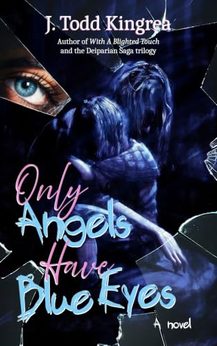
Only Angels Have Blue Eyes by J. Todd Kingrea
Things are looking up for Maylin Cole and her 4-year-old daughter, Margo. Fleeing an abusive relationship, the private clinic Heaven’s Hope offers shelter and the promise of a new life. Led by the charismatic and beguiling Seraph Nakir, they learn a surprising truth: they’re actually angels who have lost their way.
Everyone has an angel name and is being prepared to ‘ascend’ when the time is right. Their angelic identities will play a significant role in aiding humanity when the world ends.
As the weeks pass, Maylin becomes accustomed to the peculiar confrontational therapy. The black curtains and bars on the windows no longer trouble her. The lack of privacy, mystifying theology, and strange rules become commonplace. She sees Margo less frequently since the children are kept in the basement.
The death of another patient awakens Maylin to dark secrets within the walls, and soon the horrifying truth about Nakir and Heaven’s Hope is revealed. Maylin must confront her insecurities, rediscover her individuality, and use her wits and resources if she hopes to save Margo and the other children.
Inspired by a true crime case, this slow-burn thriller roars to a pulse-pounding climax, reminding the reader to think independently, ask questions, and be careful who you trust.
Warning: This story contains descriptions of domestic abuse, indoctrination, and child abuse.