
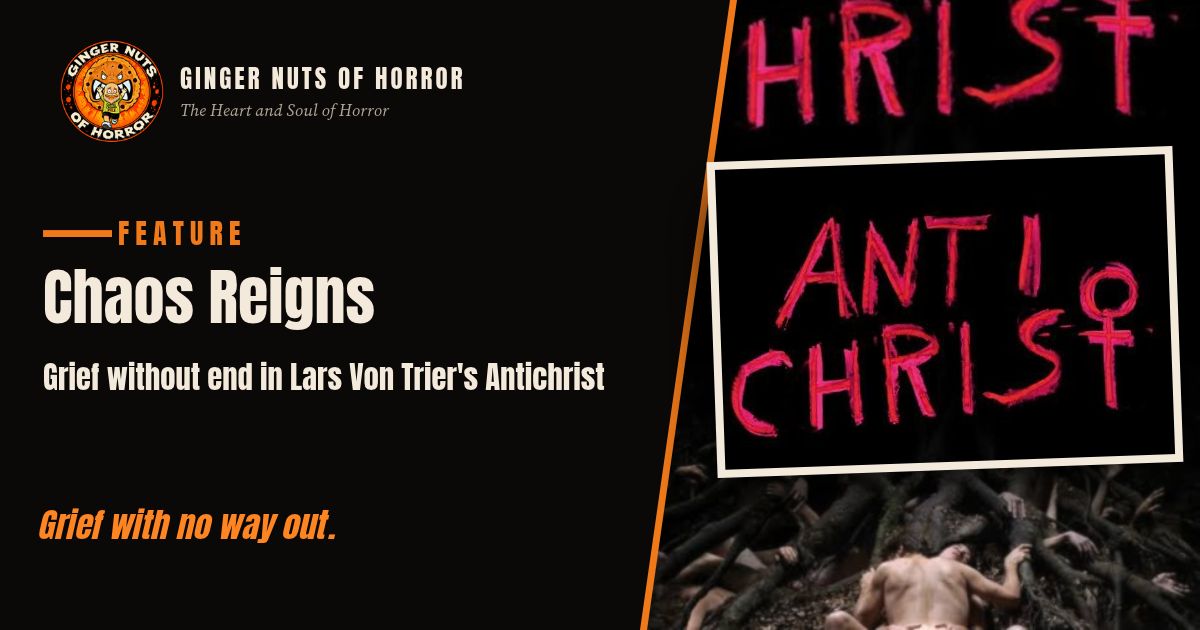
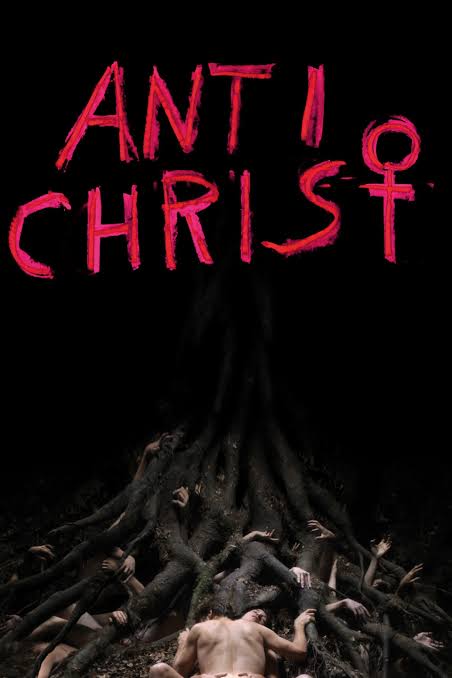
- Director Lars von Trier
- Starring Willem Dafoe, Charlotte Gainsbourg
- Released 24 July 2009
- Runtime 1 hr 44 min
- Certificate 18
- Distributor Artificial Eye
- Subgenre Psychological horror
After their infant son dies in an accident, a therapist takes his grieving wife to Eden, their isolated cabin in the woods, convinced he can treat her despair himself.
Lars Von Trier’s Antichrist became notorious almost overnight.
There were walkouts at Cannes, although Charlotte Gainsbourg was awarded Best Actress for her performance. Tabloids expressed outrage at the film’s excesses, while more serious commentators raised accusations of misogyny. The festival’s Ecumenical Jury even presented the film with an unofficial ‘anti-award’, condemning its portrayal of women.
It was a film talked about by many, but seemingly seen by comparatively few. Seventeen years later, it seems to be remembered more for its notoriety than its achievements. And, as I drafted my own woodland horror, The Forest Remembers, I found myself drawn back to Von Trier’s Eden.
The plot is relatively straightforward. An unnamed couple, He (Willem Dafoe) and She (Gainsbourg), lose their infant son in a terrible accident. Unable to cope with his wife’s grief, He, a therapist, takes her to Eden, their remote woodland retreat, where he sets about trying to cure her.
What follows is one of the most extreme examples of cinematic horror. See the talking fox (which is eating its own entrails)! Watch in horror as She masturbates her battered husband to a blood-filled orgasm! Try not to look away as She mutilates her own genitals with a pair of scissors!
And yet, to think of Antichrist through these grotesque snapshots is to do the film an injustice. Behind the sensationalism lies something more disturbing: a portrait of grief so raw, so unrelenting, that watching it becomes an almost physical ordeal.
Von Trier has spoken of making the film following a prolonged period of depression, and it’s tempting to see Antichrist as an expression of that darkness. Certainly, few films have captured the sheer, suffocating weight of grief with such ferocity. There is no comforting suggestion that time heals, no promise that suffering will give way to acceptance.
He, meanwhile, is a thoroughly unpleasant man. Convinced that his professional expertise equips him to manage his wife’s suffering, he embarks upon a ragbag of cognitive behavioural techniques and questionable therapeutic interventions. There is something almost obscene about his conviction that her grief is a problem to be solved. He cannot simply allow her to suffer. She must be treated. She must improve.
And what of his own grief? He seems so determined to maintain control of hers that he barely acknowledges it.
Gainsbourg delivers a performance of astonishing precision. She moves between cold detachment, tenderness and furious anger, sometimes within the same scene. At one point, she announces that Freud is dead, declares herself better, and demands to know why He cannot be happy for her. The shifts are disorientating, occasionally terrifying. We’re never entirely sure whether we’re witnessing a woman overwhelmed by grief or one exercising a terrible kind of control over it. And while we cannot entirely trust her declarations of recovery, neither can we trust his certainty about what she needs.
Perhaps Antichrist is not so much anti-therapy as it is a condemnation of the arrogance of believing another person’s suffering can be tamed.
The film’s refusal to offer comfort extends to its extraordinary visual language. Anthony Dod Mantle’s cinematography is breathtaking. The opening sequence, filmed in sumptuous black and white and extreme slow motion, is almost operatic in its beauty. As the couple have sex, their child falls to his death from an open window. The juxtaposition is appalling, the imagery exquisite. And the sex itself is explicit. From its opening moments, Von Trier makes clear that this will not be polite horror. There will be no conveniently discreet cutting away, no reassuring distance between the audience and what unfolds on screen.
That same terrible beauty permeates Eden.
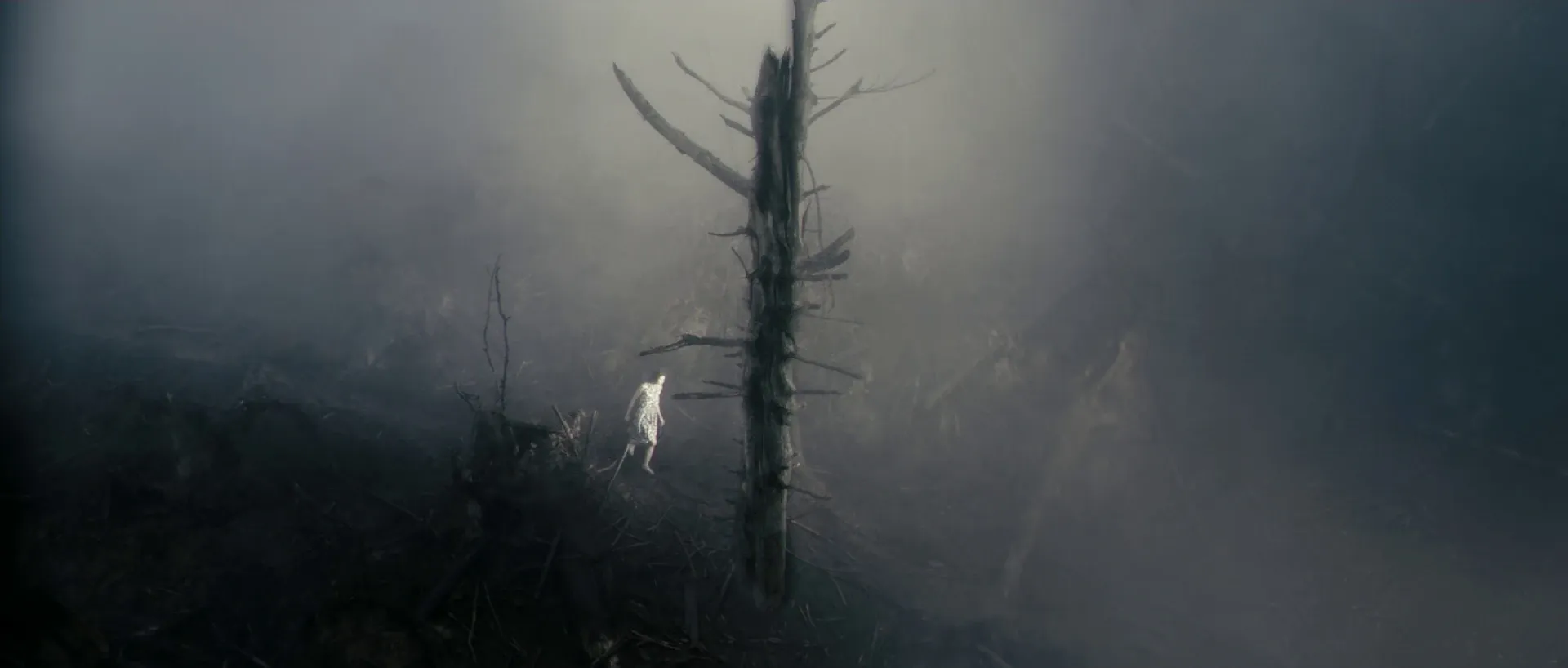
The forest is cold, stark and watchful. The trees loom over the couple like sentinels, observing their disintegration. Yet there is no comfort to be found in nature, nor any suggestion that it cares about the suffering taking place beneath its canopy. Life continues, things decay, creatures consume one another. Or themselves. The natural world is indifferent to the human tragedy unfolding within it.
When a wounded fox turns towards He and announces that ‘chaos reigns’, it seems less a supernatural warning than a statement of fact.
And then there is the question of misogyny.
It’s impossible to dismiss the accusations entirely. The film’s association of femininity with nature, evil and sexual violence is troubling, particularly given She’s research into the historical persecution of women. Yet He is hardly presented as a model of masculine virtue or rationality. His arrogance, emotional detachment and need to control are themselves destructive. Is Von Trier’s bleak vision directed specifically at women, or at humanity itself? Perhaps both? I’m not sure the film offers a comfortable answer, and I’m not convinced it needs to.
What matters, I think, is that Antichrist refuses to let us settle comfortably into any interpretation of what we’re witnessing. Its violence is appalling, its beauty offers no sanctuary, and its depiction of grief is merciless. Von Trier doesn’t take us by the hand and lead us safely through the horrors. He locks us inside them. The camera doesn’t turn away, and neither, it seems, must we.
Antichrist is not an easy film to recommend, nor is it one I can imagine watching for pleasure, exactly. But I think it deserves to occupy a more prominent place in the conversation about horror cinema. Not just because of what it dares to show, but because of what it makes us feel.
Watching it feels like waking up face down on a pillow and struggling to breathe. For an endless moment, nothing else matters but the need for air.
Watch the film
Antichrist, directed by Lars von Trier, is available to rent or buy in the UK on digital services including Apple TV and Curzon Home Cinema.

One lesson from Lars von Trier’s Antichrist: if the local wildlife starts telling you that chaos reigns, it is time to cut the holiday short and head back to town.
Keep reading on Ginger Nuts of Horror
 A Word About Trauma by Alex Hunter
 The Harvest by Alex Hunter, A Chilling and Ambitious Debut
 Horror Films That Meaningfully Address Grief and Loss

About Ginger Nuts of Horror
Ginger Nuts of Horror is an independent horror review and culture site based in Edinburgh, Scotland. Edited by British Fantasy Award nominee Jim McLeod, it publishes horror book reviews, film reviews, author interviews, features and cover reveals. Ginger Nuts of Horror won Best Inclusive Film & Book Review Platform at the SME News UK Enterprise Awards 2026.