
- Author Madison Tyler Nelson
- Publisher Berkley
- Publishes 6 October 2026
- Pages 352
- Format Hardback, ebook, audiobook
- ISBN 9798217189342
- Subgenre Supernatural horror, murder mystery
- Reviewed by Jim McLeod
Tatum Alexander sees the dead and has spent her life looking away. When her best friend is murdered in a way that echoes her jailed mother’s crime, the ghosts of Manhattan stop letting her.
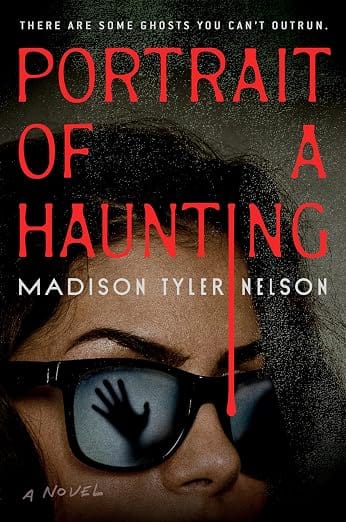
Portrait of a Haunting is the debut novel from Madison Tyler Nelson, out from Berkley on 6 October 2026, and it is the most assured supernatural horror debut of the autumn. It follows Tatum Alexander, a young New Yorker who can see the dead and has spent her whole life refusing to look. Her mother, a famous painter, sits in prison for the killing that made her name. When Tatum’s best friend dies in a way that echoes that old crime, the ghosts stop waiting their turn. In this Portrait of a Haunting review, I look at why a book about seeing turns out to be a book about being seen.
Portrait of a Haunting | Madison Tyler Nelson | Berkley | 6 October 2026 |
Nelson takes the ghost story’s oldest promise, that the dead want something from us, and turns it on the living. A prickly heroine, a slow patch in the middle and a mother behind bars all turn out to be the point. This is a debut that knows exactly what it is about.
Grief, Ghosts and the Daughter of a Killer
Children of people in prison learn a certain kind of quiet early. You learn which questions end a visit. You learn which facts stay off the school form. Above all, you learn that a family can be a crime scene and a home at the same time, and that almost nobody outside will ever see both at once.
Madison Tyler Nelson knows that quiet. Her publisher’s biography says this novel grew out of her own childhood with parents in prison. That history sits in the bones of the book. On the surface it is a ghost story, a murder mystery and a coven novel, all at once. Underneath, it is about a daughter who cannot stop looking at her mother. And cannot bear to.
Here is the set-up, kept clean. Tatum Alexander has the Sight. She can see spirits, and the spirits can tell when she sees them, which is the whole problem. She got the gift from her mother, Amarina. Amarina is a painter. Her last canvas was made with the blood of the lover she killed. She is known as the Red Hand. She has been locked up since Tatum was a child.
Tatum has grown into a young woman who keeps her eyes down on the subway and her friends at arm’s length. That last part is odd, because her friends belong to the largest witch coven in Manhattan, and they know exactly what she is. Then her best friend and flatmate, Mischa, is murdered. The killing carries echoes of Amarina’s crime. The spirits who have tapped at Tatum’s shoulder for years start to shove, and their message is plain. She is next.
That is a fine engine for a paperback thriller. What lifts this book well above that shelf is what Nelson does with it.
The family curse
Look at how early the novel shows its hand. As a small girl, Tatum asks her mother if she is mad. Amarina tells her it is “simply the family curse: ingenuity.” Even then, Tatum files that answer under one short, rude word.
It is a tiny exchange, and it holds the whole book. The mother reaches for a grand word, one that turns a frightening gift into an artist’s flourish. The daughter cuts it down to size with a swear. That gap drives every scene the two of them share. Amarina wants romance. Tatum will not be charmed. Every conversation between them runs on it. Amarina talks in riddles because riddles keep her safe. Tatum hates the riddles because she has spent her life paying for the answers.
The same early pages give us a lovely picture of Tatum as a beacon for the lost dead, a light that pulls them up out of the dark. The key detail is the wish fixed to the image. She would put the light out if she could. Most heroines in this corner of the genre are thrilled to find their power. Tatum would hand hers back with the receipt.
Nelson writes in a close third person that stays tight on Tatum. The prose has a quality I keep coming back to. Reading it is like looking at an underpainting. That is the dull grey layer a painter puts down before any colour goes on. You barely notice it at first. Then you realise it is the reason every bright patch on top sits where it should. For a novel about a painter, that feels about right.
Why Tatum’s worst habits are the point
Tatum is not easy company, and I suspect a good number of readers will want to shake her. She pushes away people who have already proved they will stay. She plays the martyr. She runs hot and cold with Jonas, the man who plainly loves her, for most of the book. On the face of it, this looks like the classic debut stumble: a heroine whose problems would vanish if she just talked to someone.
Except that is the whole design. Think about what the Sight means in this world. To be seen by the dead is to be hunted by them. The only rule Tatum has ever trusted is that you do not let them know you can see them. It is the same instinct as not catching a stranger’s eye on the Tube, scaled up to a life philosophy.
Now put that next to the childhood Nelson has drawn from. A kid whose mother is famous for a murder learns that being seen ends badly. Teachers look at you differently. Friends’ parents look at you differently. So you shrink. When Tatum shuts out Leo and Ziggy and Jonas, she is doing exactly what she does on the subway. She is keeping her eyes down so nothing can follow her home.
Read like that, the repetition stops being a fault. It becomes a pressure gauge. Each time she pulls away, the cost goes up, until the book forces her into the one act she has avoided all her life: looking straight at the thing that frightens her. A heroine who opened up in chapter three would have made a tidier book. She would also have made a far less honest one.
The found family that earns its keep
The coven could have been set dressing. A few witches to hand out facts and the odd charm. Nelson makes them people instead. Leo and Ziggy in particular have their own weight, their own tempers and their own ideas about how Tatum should be living. They push her as often as they comfort her. Real friends do that. Friends in novels rarely get to.
Mischa matters too, and that is a harder trick than it sounds. The murdered best friend is one of the oldest props in crime fiction. Here her absence has a shape. You feel the space she leaves in the flat and in every room Tatum walks into. Grief in this book is not a mood. It is furniture you keep walking into in the dark.
The romance with Jonas is the slow burn the blurbs promise, and I would argue it is pitched just right. It stays at the edge of the frame because Tatum keeps it there. Readers who want the will-they-won’t-they settled early will be frustrated. That frustration is doing a job, though. Tatum cannot accept his love until she can stand being looked at, and the book refuses to pretend otherwise.
Is Portrait of a Haunting Scary?
Yes, though not in the jump-scare sense, and not through gore. Nelson’s dead are not wisps. The more Tatum looks at them, the more solid they get. They edge closer to human, until the line between a ghost and a person in the room gets very thin. That steady creep is where the real dread lives. It is the fear of something that wants to be let in and is getting better at it.
New York helps. The city is as crowded with the dead as with the living. Every platform and stairwell holds someone who never quite left. The early subway scene, with Tatum working hard to avoid a spirit before he realises she can see him, sets the tone for the whole book: polite avoidance as a survival skill, and the dawning horror of what happens when it fails.
There is also a quieter idea running under the scares, one the book returns to again and again in different forms. In paraphrase, it is that the dead mostly want to be remembered. That gives the horror a sad, human ache. Every spirit pressing at Tatum is also a person someone forgot.
If I have one small reservation, it sits in the middle third. As the rules of the Sight and the coven come into focus, the book spends a bit too long on its lore. The pace dips for a spell. It is the single place where you can tell this is a first novel. It is also brief, and the final act more than pays back the patience.
That final act turns on a secret Amarina has kept for decades. I will not go near it, beyond saying that it lands, and that it changes how every scene between mother and daughter before it reads. It is the rare twist that makes the book better on reflection rather than cheaper.
How Portrait of a Haunting Compares to Ninth House
Both the publisher and Nelson herself have pointed to Leigh Bardugo’s Ninth House, and the comparison is fair as far as it goes. Alex Stern and Tatum Alexander are both young women cursed to see the dead. Both move through a hidden world of magic inside a real American city. Bardugo cares about institutions: the secret societies, the money, the rot in the old stone. Nelson is fascinated by a family. Her coven is less a power structure than a group of people who love each other and argue about it.
The other book Nelson has named is the better key to this one. Janet Fitch’s White Oleander gave us Ingrid, a brilliant poet who kills her lover, and Astrid, the daughter left to grow up in the wreckage. Swap the poems for paintings, add the dead, and you are standing very close to Amarina and Tatum. What Nelson adds is the ghost story’s oldest power. It makes inheritance literal. Tatum does not just carry her mother’s reputation. She carries her mother’s eyes.
There is a pop culture touchstone in here too. Anyone who grew up on The Sixth Sense will recognise the premise of a child who sees the dead and is terrified of being noticed by them. The difference is that this time the child has grown up, and the question is no longer whether the dead are real. It is whether she can stand to live as someone who sees.
A debut from a writer who did the work
This is Nelson’s first published novel, but it is not her first book. In her newsletter she says she wrote a string of earlier manuscripts first, young adult dystopia and fantasy among them. This was the one that landed her an agent. It shows in the best way. The structure is sure, the ensemble is crowded without ever getting confusing, and the mystery is laid out with crumbs that only make sense in hindsight.
Some of that young adult training shows in the energy of the cast. If you want a grim, adult horror novel, know that the tone sits nearer the New Adult end of the shelf. That is a description, not a complaint. The book knows its people are young, raw, loud and still working out who they are.
For listeners, the audiobook is read by Patricia Santomasso and runs a little over twelve and a half hours. The full details sit on Berkley’s page for Portrait of a Haunting.
The dead in this book want, more than anything, to be remembered. Madison Tyler Nelson has written the kind of debut that makes sure she will be.
The Verdict: Is Portrait of a Haunting Worth Reading?
The verdict
A grief-soaked ghost story and murder mystery that turns its heroine’s worst habits into its sharpest insight, from a debut author with real nerve.
Read it if: you want ghosts with a heart, a found family worth fighting for, a dark mother and daughter story, or more in the vein of Ninth House.
Skip it if: you want gore and relentless scares, or have no patience for a heroine who keeps everyone at arm’s length.
Ginger Nuts of Horror: The Heart and Soul of Horror Reviews


Jim "The Don" McLeod has been reading horror for over 35 years and reviewing it for more than 16. He's the editor of Ginger Nuts of Horror, Europe's largest independent horror review and culture site, and a British Fantasy Award nominee for his work in the genre. When he's not busy inflicting his opinions on the horror community, he can be found annoying his family or getting thoroughly outwitted by his two dogs, Casper and Molly.