S.A. Barnes Interview: From Space Horror to Dark Academia Romantasy
Claustrophobic space stations. Corporate corruption bleeding into deep space. A doomed luxury cruiser lost for decades, its halls still wet. S.A. Barnes built a devoted readership on sci-fi horror that traps you in the dark with nowhere to run.
Now she’s swapped the wreckage for a dusty university library. But don’t mistake the change of clothes for a change of temper.
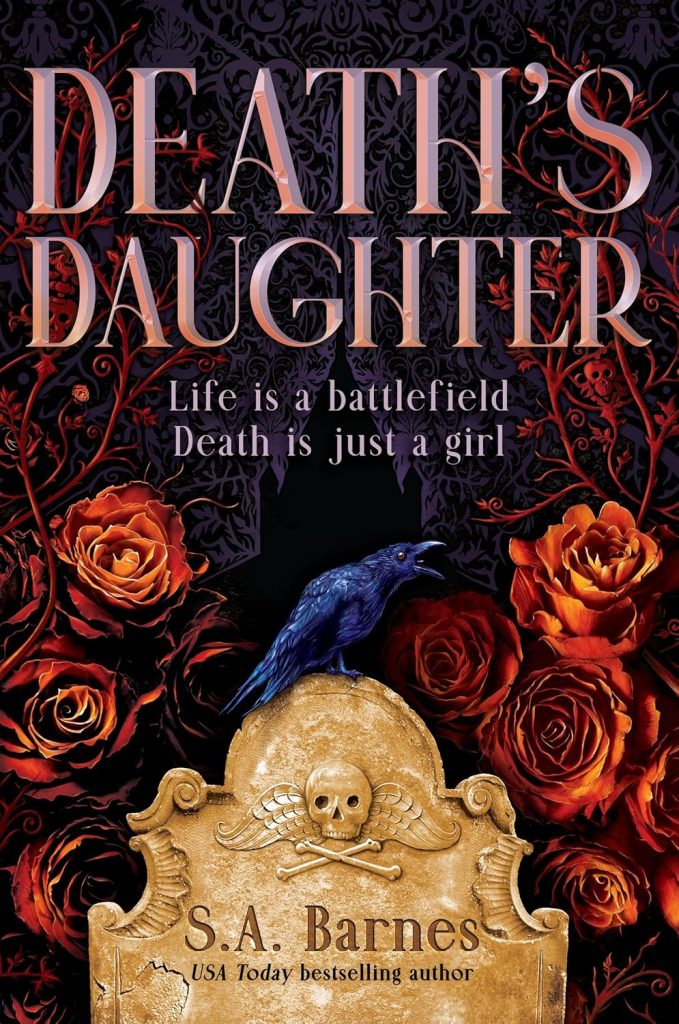
Death’s Daughter, released May 5th from Tor’s Bramble imprint, is the first in her Children of the Old Ones series: a dark academia romantasy about Jocasta Trelane, the only child of Death, trying to finish her final year at Beecher University without anyone finding out that her father can literally end their existence. She’s built a normal life. Good friends, great classes, even a messy situationship with her former TA. She feeds on disappointments and failures instead of souls, a moral compromise she’s learned to live with. Then the descendant of Lust shows up, the deaths begin, and her carefully constructed isolation starts to crack.
We sat down with Barnes to talk about the transition, the Buffy the Vampire Slayer logic that shaped her protagonist’s moral compass, and why writing the end of a draft, no matter how messy, is the only rule that matters.
Death’s Daughter is being described as a blend of “the steamy mythology of Neon Gods meets the dark academia of Ninth House.” What was the initial spark for this story, and what drew you to explore the concept of the personified “Old Ones”, like Death and Lust, in a contemporary university setting?
This story started as a contemporary YA concept with more of a comedic tone. I wrote a full draft of that version and in the process, I realized I’d made the world and the magic far too complicated. In that version, the main character was a process server for a paranormal court, one that judged supernatural entities for violations of their (very complicated) set of rules. By the time I was done, I hated it. So, I set it aside and moved on to other projects.
But years later, I realized I was still thinking about elements of the story, particularly the idea of what it would be like to be Death’s daughter, only in a more serious light. And when you have Death as a character, it only made sense to me to have others (Lust, War, etc.) as well.
The contemporary university setting came about simply because I think characters that age (early twenties) are still very much trying to figure who they are on, the threshold of becoming fully independent adults where there’s less of a safety net underneath the decisions they make. It feels like standing on a precipice, where every choice is heightened. That was interesting to me.
Your protagonist, Jocasta, is the only child of Death who is desperately trying to live a “normal” life and feeds on the “disappointments, failures, and rejections” of her classmates rather than their lives. This is such a compelling and unique moral compromise. Can you talk about developing that internal conflict, the struggle between the nature she inherited and the person she wants to be?
I’m a big fan of Buffy the Vampire Slayer and I was intrigued by the metaphorical premise at the heart, that “high school is literally hell.”
So, for Death’s Daughter, I was thinking about the idea that we all inherit traits or characteristics from our parents that we might not love—in them or in ourselves. Some genetic, some environmental. We all worry about growing up and turning into our parents, in one way or another. A workaholic, an abuser, a neglectful parent, etc. Jo has all those concerns, magnified by a thousand because her father is Death. So, it’s relatable–I hope–while also connecting on the life-or-death level. She has to survive, but her survival has a cost.
Without getting too in the weeds, I think Jo’s struggle also relates back to worthiness. Why is her survival (life) more important than the one she’s feeding from? She has to answer that question every time her hunger rises, and it’s difficult for her.
I loved the fresh take on mythology and the intriguing magic system. Without giving too much away, how did you approach building the rules and history of this hidden supernatural world that coexists with our own?
I’ve always been fascinated by the idea that we don’t know everything that goes on in our world–call it the X-Files effect! In this instance, I went from the perspective that these beings are a threat to humans. Because, frankly, that’s more interesting than them living peaceably among us. What would make them a threat? Needing us for food. Using us for entertainment or reproduction. I probably took more of a science fiction angle rather than a more traditional magic-based structure.
These entities are more powerful than humans are, and only our sheer numbers force them to stay hidden. Yes, they have magic, but it’s not limitless.
This probably goes back to my thoughts on aliens and how they might not announce themselves and could very well have been here the whole time. And to mangle that famous quote, what is magic but technology or science we don’t yet understand.
The publisher’s copy highlights the “dark academia” and “autumnal vibes” of Beecher University. You’re renowned for creating incredibly vivid and oppressive atmospheres in your horror novels like Dead Silence and Ghost Station. How did your approach to crafting the setting for this novel differ, and what atmosphere were you most intent on capturing for readers?
In some ways, the setting was easier. I’ve been to a college campus in the fall. I’ve felt the leaves crunch beneath my boots, smelled the bonfires and stale beer! When I’m writing science fiction horror, I obviously can’t draw on personal experience. Weirdly, it doesn’t feel any less real to me, but it’s a different process.
For this book, I really wanted readers to feel Jo’s comfort with her “home” on campus and to slowly sense with building dread that something is wrong. That her home is no longer safe and may never be safe again.
Jo’s dynamic is complicated by two key figures: Devon, the “sexy… descendant of Lust,” and Carter, her “former TA” and “messy situationship.” Readers seem divided on the love triangle, with some finding it natural and others wanting more chemistry. How did you navigate balancing Jo’s personal history with Carter against the intense, new, and potentially dangerous allure of Devon?
I know this will sound odd, but I don’t always plan things–people, relationships, and situations just sort of…pop up in my head. In this situation, I knew Carter had to know Jo because he was giving her a hard time about not graduating on time. That was actually the first scene to show up in my head.
Devon also was there from the beginning. I knew he was the trigger, he brings danger to the relative safety of her life. But in some ways, Devon is the more acceptable choice for her. He had no interest in keeping a potential relationship with her hidden. He’s honest about who he is and what he wants and needs.
From a very simple perspective, Carter represents the human life she has and wants to continue. Devon represents the other part of her life, the part of her that is Death, that she wants to keep carefully controlled and tucked away.
So, they’re both part of her and therefore appealing or impossible in different ways. In book one, we’re getting more of her history and interactions with Carter. In book two, we’re going to learn more about Devon and see how Jo grows and changes with him. There will also be a book three.
“A brilliantly twisted premise where the daughter of Death feeds on human failure rather than souls. Barnes builds a captivating dark academia world with genuine emotional stakes. “
Jim Mcleod Ginger Nuts of Horror
Jo’s fierce desire to “protect the people she loves” is a core driver of the plot. Her friends and her connection to Beecher represent the “normal life” she’s built. Can you discuss the role of found family and friendship in a story in which the main character grapples with an overwhelming, isolating supernatural legacy?
One of the hardest things about having people you love is that you fear losing them or driving them off. Jo, especially, does not have many people in her life who accept her for who she is. She’s learned the hard way–from her experiences with her mom—to hide the scary or unacceptable parts of herself from those she cares about.
Found family is huge in this novel because these are the people who mean the most to Jo. They’re the ones who motivate her to action, who teach her, who remind her of her own humanity. If they’re lost, she’s lost.
Some of this is based on my own experiences in college, where I found true friends and people who accepted me for the person I was/am. But as someone who struggles with OCD and anxiety, it also felt important to keep those less loveable aspects of myself hidden. (They all know now–believe me!)
It’s sort of this horrible Catch-22. We all want to be known, right? But we fear it, too.
You’ve built a career writing compelling sci-fi horror like Dead Silence and Ghost Station, and now you’re releasing a contemporary romance. Many long-time fans, as seen in the reviews, are “intrigued” and excited by this shift. What called you to write romance and fantasy at this point in your career? Was there something you felt you could explore in this genre that you couldn’t in horror?
I think it was less about the limits of the genre—any genre—and more about narrowing in on the specific story I wanted to tell. There are elements of horror in the story, and certainly there is a version of this story where it could be viewed as horror—perhaps more as a discovery of her powers and learning who she is by accident when people start dropping dead around her.
But for me, the story I wanted to tell is about power and how we use it. How do we figure out the “right” thing to do. There are also familial elements as well, what we inherit from our parents both genetically and environmentally and how it affects as we’re trying to become the people we want to be.
Also, I think a common theme in everything I’ve written is wanting to be accepted or loved (romantically or platonically as part of a family or team), despite the central character believing themselves unworthy for a variety of reasons. I wanted to draw that out more in this story.
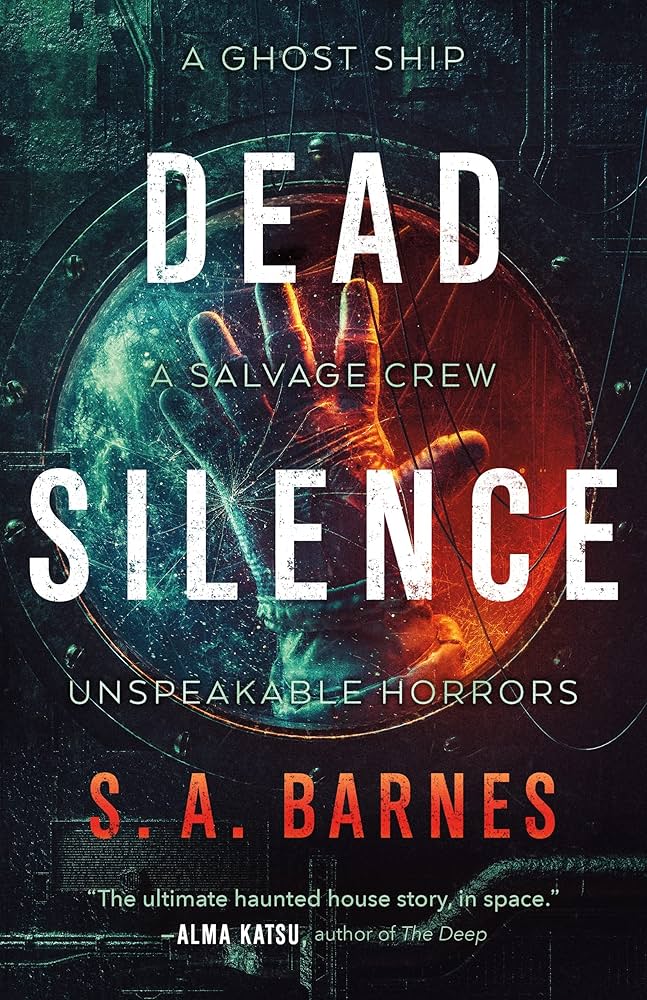
Your novel Dead Silence was a Goodreads Choice finalist and was praised as “truly unput-downable.” That book masterfully blends classic ghost story tension with claustrophobic sci-fi horror aboard a doomed luxury spaceship. What was the seed of that idea, and how did you go about building a mystery in a setting where the characters quite literally have nowhere to run?
The seed of that idea came from my obsession with the Titanic—the ship, not the movie. Even though I would never do it in real life, I felt almost envious of those who explored the wreckage and brought artifacts up from the bottom. The chance to see these items exactly as they were from the moment the ship touched the ocean floor. It’s the closest thing to time travel, right?
In any case, I took that idea and brought it into space, which has always fascinated me.
As for the setting, I think the trickiest part of any haunted house story, whether it’s a ship or a planet or a literal house, is making sure the characters can’t leave or have a good reason to stay. They can’t stay just because that’s the story. They have to be trapped or—even better, in my opinion—driven to stay for personal or selfish reasons.
Once trapped or determined to stay, then I think it’s human nature to try to figure out what’s going on or what happened to create the situation. And the characters piecing that mystery together with the clues that could reasonably be found on-board was part of the challenge, one I really enjoyed!
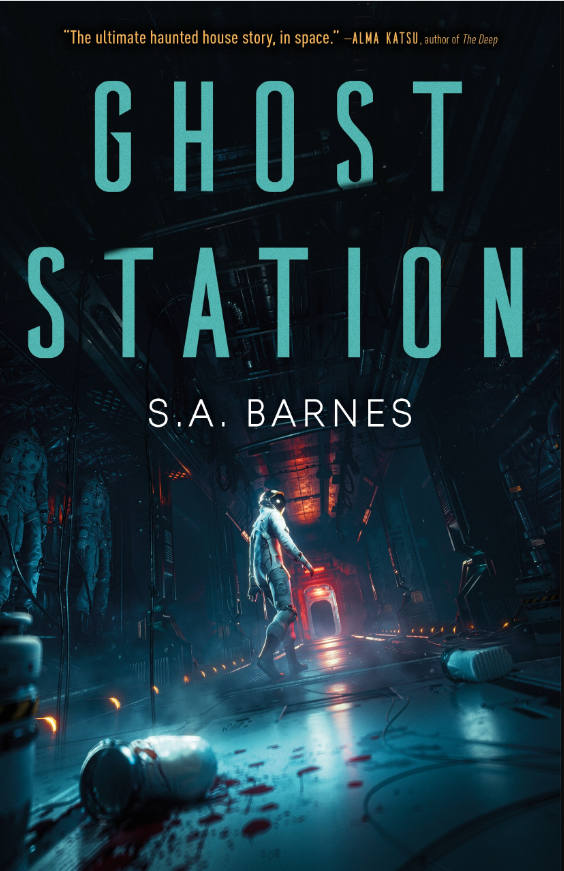
In Ghost Station, you returned to sci-fi horror, focusing on corporate corruption and the psychological toll of deep-space colonisation. The protagonist’s anxiety and trauma are almost a secondary antagonist. Was it important for you to explore those real-world psychological themes within such a heightened, otherworldly setting?
I think that isolation makes anxiety and trauma worse. And Ophelia should absolutely not be in this situation. But I think she, like many of us, believes a) “I can handle it” and b) “I need to prove myself to be worthy.” I suspect that I could have explored this idea in a more “normal” setting. But dropping Ophelia and the others off on an abandoned planet where there’s no one else to help or even offer an outside perspective raises the stakes and makes it even more difficult for Ophelia and the crew to keep tabs on their own sanity.
Many of your readers may not know that you’ve also published numerous novels across different genres under the name Stacey Kade, including young adult fiction. How has writing in different genres and for different age groups influenced your approach to crafting stories and characters in your adult S.A. Barnes titles? Do you find skills from one genre unexpectedly bleeding into another?
Hmm. I think writing YA back in the heyday of taught me that I had permission to crash genres together at will. My first YA novel (The Ghost and the Goth) was a paranormal romcom mystery…thing. YA wasn’t separated by genre in bookstores back, then. It was all just YA, so you could do that more easily.
I still love blending genres to create interesting (to me, at least) combinations.
I think, to an extent, writing is writing. But you have to know the genres and the expectations of each, particularly when you’re trying to blend them. I find it fascinating to see how the same idea can change, depending on which elements you bring to the forefront.
Even with the shift to romantasy, some reviewers noted they could feel your “signature sense of dread” woven into the mystery of Death’s Daughter. Do you see a common thread of tension or a particular type of character (perhaps one grappling with isolation or a dark legacy) that connects all your work, regardless of genre?
Legacy is certainly a theme Death’s Daughter shares with Ghost Station and Cold Eternity. I think a desperation to belong or be valued is something most, if not all, of my main characters have in common. How they react to that desperation (bury the pain, try to pretend it’s not there, attempt to fix it) is where they differ.
Acknowledging the Reader’s Eye — Addressing Recurring Critiques
Writing a mystery-thriller is different from writing a fantasy with romantic elements. How did you approach pacing the reveals and the action in Death’s Daughter to keep both the mystery and the character-driven stakes high?
Ha! You’re not going to like my answer on this one—I have no idea. I wrote to entertain myself. I suspect I’ve read enough dark academia/romance that the beats are just ingrained in me.
I loved the slightly humorous internal monologue. How do you find the balance between making a character’s internal struggle authentic and relatable without it becoming wearying for the reader, especially when that character is actively trying to resist a core part of their identity?
It is a fine line. I’m in my head a lot. My inner monologue never shuts up. I suspect I have given most of my characters the same issue. That said, I think the interiority of a character needs to reflect the continuing struggle—the “try and fail” process of changing. One step forward, and then resistance/disaster. Another step forward and then, uh-oh, a new problem we don’t want to step out of our comfort zone to solve.
Because that’s what growth is like. And the point of a story is watching a character grow and change.
Your bio mentions your day job at a high school library, where you “remove the occasional forgotten cheese stick as a bookmark.” As an author who has now written space horror, psychological thrillers, and a romantasy about the spawn of the Old Ones, if you could magically find one bookmark in the return slot tomorrow, which of your own characters would you most hope had left it there, and what snack would you expect to be stuck to its pages?
My immediate thought is that Halley (Cold Eternity) would be returning a book about Zale Winfeld and the construction of the Elysian Fields. Her bookmark would be a meal-pak wrapper, probably the sweet and sour chicken.
Now that the story is complete, is there an unanswered question about this world or its characters that you, the author, still enjoy pondering?
There will be two more books in the Children of the Old Ones series, so yes, lots of pondering is still taking place!
Things I’m thinking about now: can someone be forgiven for the seemingly unforgivable? How much damage can a (powerful) parent do before you have to take action and fight back even if you might lose? Also, parents are imperfect people who make mistakes in their own personal lives–what does that look like when said parent is nearly immortal and capable of killing lots of people without batting an eye?
If a reader could take away only one feeling or idea from your book, what would you want it to be?
This might sound odd, but I hope it’s joy. I loved writing this book so much! I hope they finish the book having enjoyed the adventure.
Death’s Daughter by S.A. Barnes
Publisher : Headline
Publication date : 5 May 2026
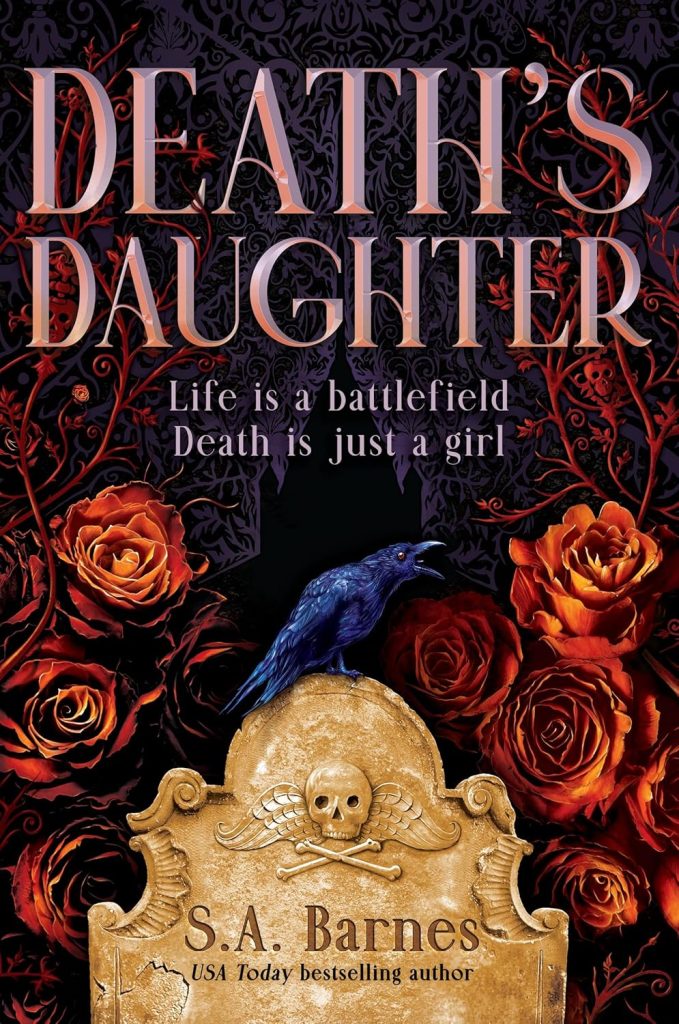
NEW SEMESTER. FRESH BLOOD. WELCOME TO FINAL YEAR AT BEECHER UNIVERSITY.
‘Paranormal lovers rejoice, your new obsession has arrived!’ HANNAH WHITTEN
‘Like a spicier, modern take on the old school urban fantasies I love so much . . . but with a gritty dark academia world all its own’ reader review
‘It gave me big Buffy the Vampire Slayer vibes…students with paranormal secrets, a campus setting, and blissfully oblivious authorities’ reader review
__________________________________
Jocasta has carved out a normal life at Beecher University – well, as normal it can be when your name is Jocasta and you are the only child of Death.
Jo has a good job, great friends, and is trying to get over a secret fling with an unbelievably attractive (and unbelievably unavailable) grad student. But she’s also lonely.
No one close to her knows the truth about who – or what – she is. Or that she must feed to survive, and she feeds on them – their disappointments, failures, and rejections. It’s not a perfect system, but it works. Just.
Until a handsome stranger – and descendant of Lust – shows up on campus and announces that Death has formally named Jo as his successor. Now she’s both a powerful ally and a massive threat, and everyone she loves is a target.
But Beecher is the one place that has ever felt like home, and Jo will do anything to protect it. Even if it means becoming the very thing she hates . . .
Perfect for fans of Buffy the Vampire Slayer, The Vampire Diaries, Nightshade, and Ilona Andrews, Death’s Daughter is the first in a deliciously dark and spicy urban fantasy series with a mystery at its heart, where the only daughter of Death is named his successor, making her both a powerful ally and a massive target, all while she tries to make it through her final year at college . . .