Tim Curry made performance itself part of the scare.
The Clown: A Tribute to Tim Curry | Feature | Kit Whitfield |
Some performers create characters. Tim Curry seemed to create unstable weather systems and then stroll through them grinning. That is the key to Pennywise, and to the particular kind of horror this tribute keeps returning to. The fear is not simply in the costume, the voice or the clown makeup. It comes from the sense that Curry understands exactly how much of a performance can feel like an invitation, a threat and a joke at the same time.
That tension runs through his work. The Rocky Horror Picture Show gives us exuberance that can liberate and unsettle. Muppet Treasure Island turns menace into comic play. Clue lets manic energy sit beside ambiguity. With Pennywise, those same gifts become predatory. Rhythm, repetition, posture, eyes, mouth and voice all work together until the clown feels both horribly human and completely alien.
This is why Tim Curry matters to horror. He could be huge without being simple, funny without becoming safe, and frightening without losing the pleasure of performance. Pennywise did not just make clowns scarier. Curry showed why performance itself can make us nervous.
The joke keeps moving, and so does the danger, because Curry never allows one meaning to settle for long.
Curry understood that performance itself can be frightening. His Pennywise lives between bully and alien, mockery and mimicry, while the same wild energy that made his other characters so funny could also turn, without warning, into something that made you check the room.
The Clown: A Tribute to Tim Curry
Tim Curry destroyed clowns in the American imagination. Sure, there were always people who found them creepy, but there was something about his performance.
There was always something about his performance.
Let’s take a moment to pay tribute to how really exceptional his contribution to horror was.

Especially considering this: he wasn’t really a horror actor.
Oh, he was prolific, and he often played villains, but when you look at his most iconic roles they’re generally comic-with-an-edge-of-menace rather than menace-with-a-sting-of-comedy.
Frank-n-Furter in The Rocky Horror Picture Show: villain, liberator, sex pest, the character who should have aged poorly but somehow can’t. Long John Silver in The Muppet Treasure Island: jovial scoundrel the film doesn’t have the heart to punish. Wadsworth, Clue’s manic butler who might or might not be a criminal depending on which ending you got. Curry made you laugh your head off – but also check it was firmly attached, just in case.
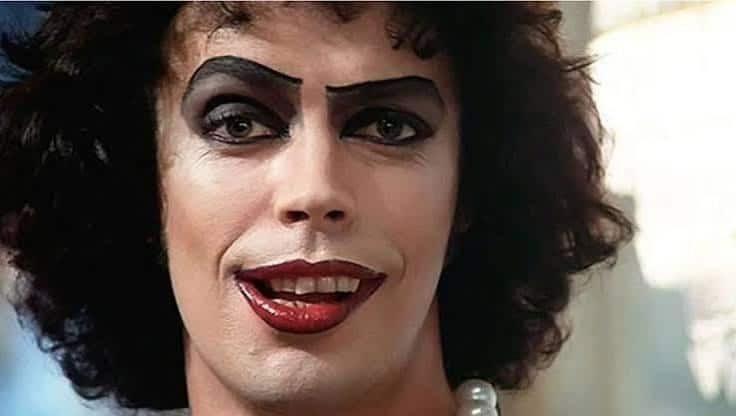
He was the ultimate clown.
Even if you aren’t a card-carrying coulrophobe, clowns aren’t meant to be entirely comfortable. Maybe a children’s birthday clown is ok, but their comedic violence, their lavish misery, the continual threat that they might just follow you around mimicking your walk or pick you out of the audience to tease – that’s part of their deal. A clown is a comic character who can’t be trusted to let you stay safely out of the act.
And who wants to live in a comic universe? A joke needs a punchline, and it can so easily be you.
I don’t think Curry’s Rocky Horror make-up was coincidence. It’s drag – but there’s an edge of the clown as well. What is Frank but a performer who drags the straights into the act? He always had that quality that might stretch out a hand and grab you. It’s just that with Rocky Horror, for a non-conforming kid in the 70s, that extended hand was one that might be reaching in through the closet door to pull you out into the light.
Curry could make it affirming, joyous. But he could turn it around as well.
Pennywise, as a character, might have been simple. Cinema is full of scary clowns, and you don’t have to give a subtle performance to get by. The simplest way to play it is as a classic sadist: the clown’s laughing, but you sure aren’t.
That wasn’t Curry’s approach. His Pennywise is so unsettling because he fully understood the power of performance. It’s not just that he’s performing a frightening character: it’s that he understood performance itself can be frightening.
Clowns approach the uncanny valley from the wrong side.
When we think of uncanny beings we usually think of non-human things that look a little too human. The concept was defined by Masahiro Mori, a roboticist who was interested in the point where machines stop being engaging and become repulsive.
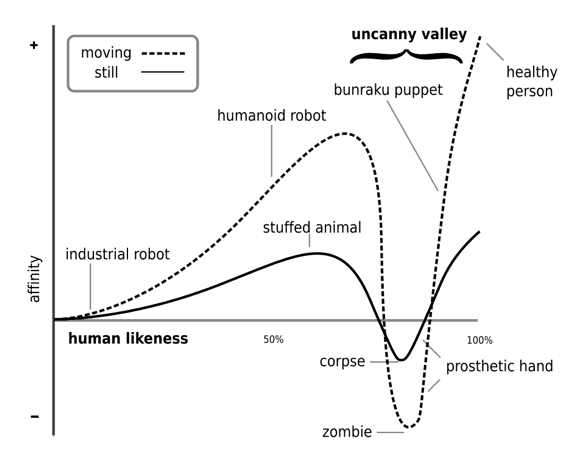
Check out the graph. The only organic points on it are things that once were human, but have degenerated: a corpse, a zombie, a thing that’s definitely dead. A ‘healthy person’ is at the highest point on the affinity axis.
A clown messes with that.
A clown is a healthy person. If anything they’re vigorous and athletic: clowning is a physically demanding job. But look at this guy:
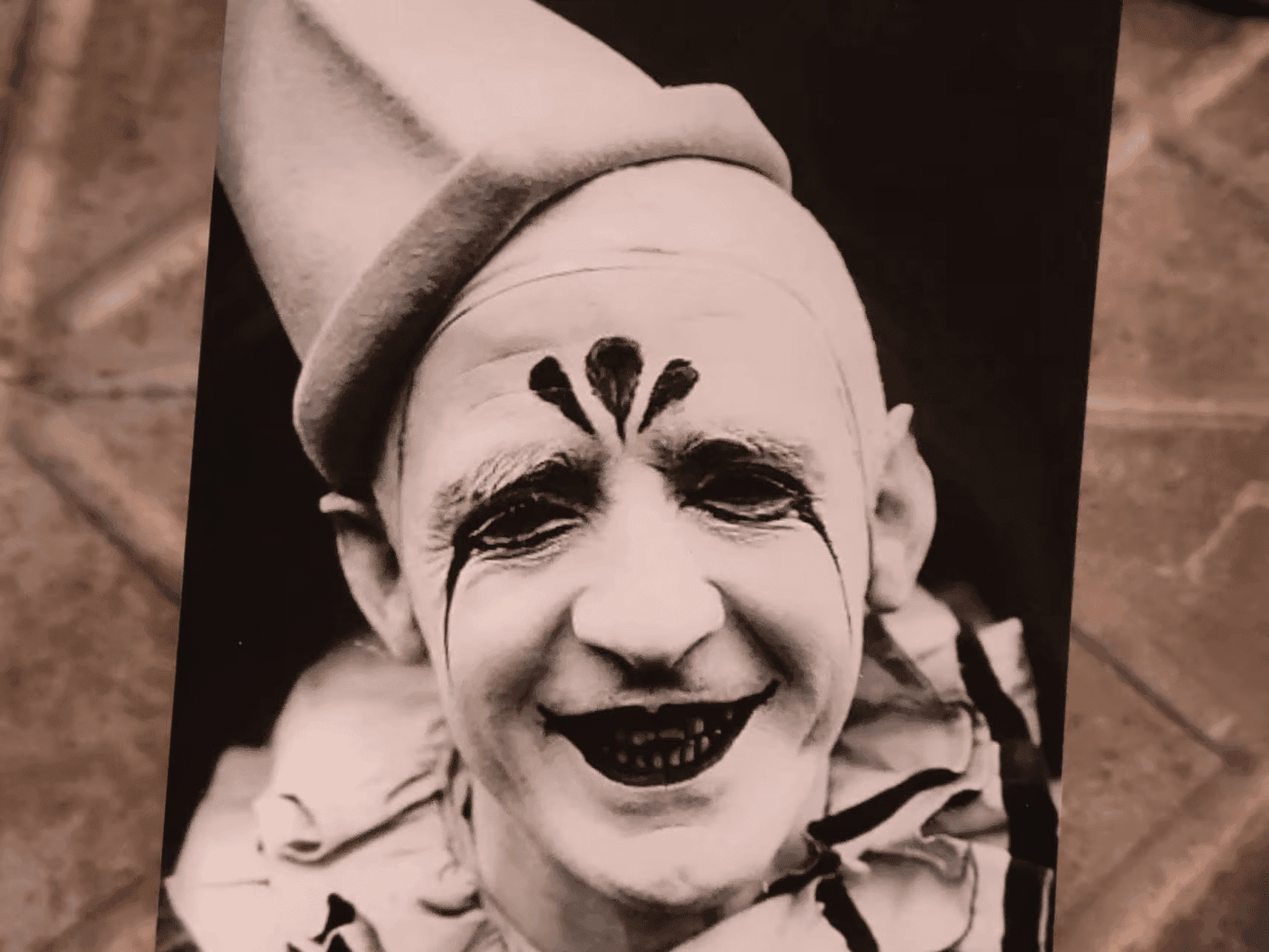
That’s a Pierrot, a traditional stock character that goes back to the Comedia dell’Arte, and he’s not supposed to be a menacing figure. Pierrot is a sad clown, usually in unrequited love with Columbine, a failure, a weeper we pity and wonder uncomfortably if we might resemble. Pierrot, narratively, is just a loser.
But don’t tell me that picture doesn’t make you a little nervous if you stare at it too long.
Clown makeup makes the face uncanny. You paint a caricature over yourself to hide the fine details Mori would say mark out the human.
That’s what’s unnerving about clowns: where most uncanny things are aiming for human and falling short, or have suffered a misfortune that strips away the full humanity they once possessed, clowns are volunteers. They’re doing this on purpose.
So of course, look what we find when I Google ‘uncanny clown’: Tim Curry’s uncannily talented face.
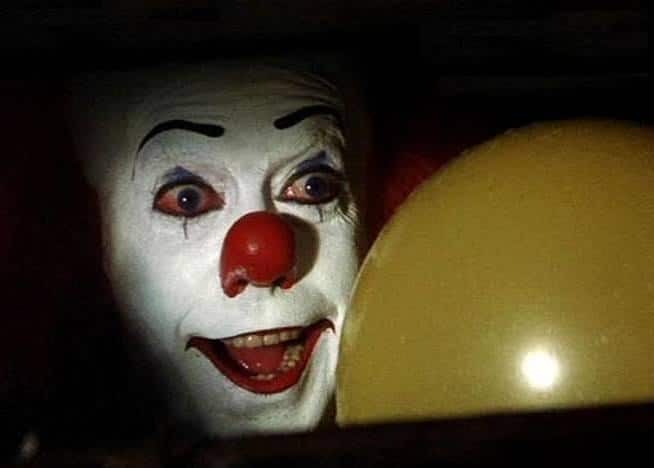
A clown is an actor who knows what he’s doing, pretending to be a zany who doesn’t know what he’s doing. It’s a role of deep ambiguity.
And Tim Curry was the loudest performer of ambiguity we ever had.
What other actor can you think of who could perform liminality at the top of his voice?
Curry’s Pennywise is above all a creature of rhythm. Every line he speaks is staccato, words clipped and stretched just a little wrong. His movements are jerky, poised and awkward at the same time, each one a kind of deliberate gesture so that even if it shouldn’t be directed at you, you know it is. The presence is huge, and the wrongness is in a million tiny choices. His whole presence is like a pointing figure, aimed right at you.
Your mind shuttles back and forth: what are you seeing? There are two intolerable possibilities:
On the one hand, perhaps you’re seeing a human kind of intelligence – just one animated with absolute malice. We know it can see your fears, and Curry’s guttural voice and fixed stare have all the savage glee of the bully. His motions are sometimes outright deranged: think of the library scene where he tells hoary old jokes from the balcony and then jolts his arm in rhythm to a viciously false laugh: ‘Weh-heh! Weh-heh! Weh-heh!’
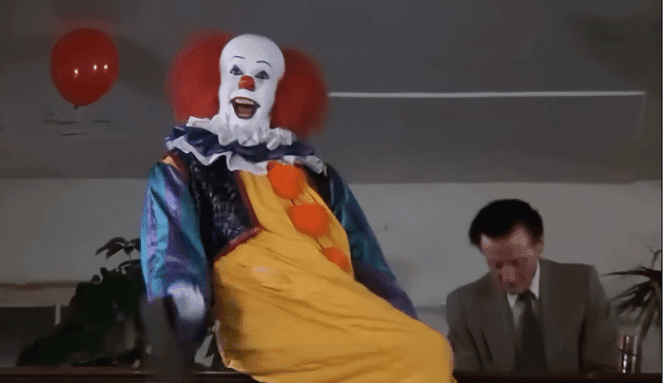
It goes on too long, that laugh, and the smile that goes with it is a kind of hatred. Joy at the thought of your suffering, or rage at the idea that humans ever laugh at all? In its mockery, its outright disgust at the concept of happiness, it’s both.
So that’s one possibility: the hateful clown. But on the other hand, there’s the alien.
Pennywise isn’t human – and perhaps these gambols are a predator’s lure. A clown looking innocent enough to draw children, sure, that’s an easy scare . . . but Curry brings something else: the uncanniness of a thing that knows humans make these noises, but doesn’t fully understand why. It just knows they sometimes work.
They float.
Boy did Curry get value out of that word. And the way he performs it always carries those two possibilities: mockery or mimicry.
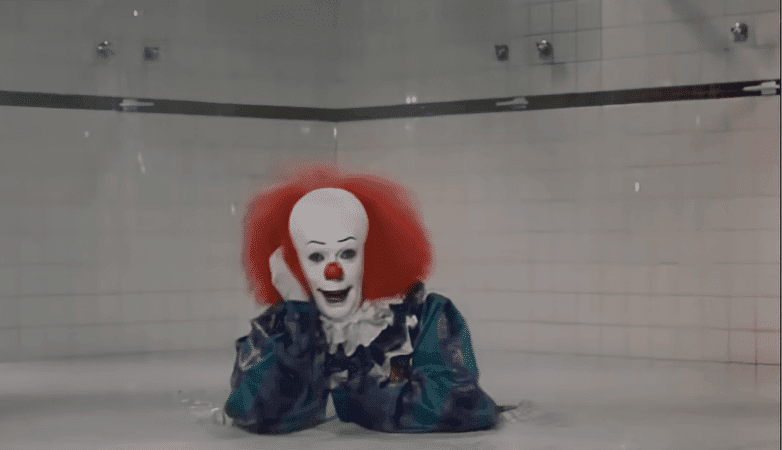
On the one hand, ‘Do they float?’ is what poor little Georgie asked about the balloons Pennywise offered before eating him; it’s the murder that began the cycle our story follows. In a way, Pennywise is laughing at everyone who loved Georgie, and everyone who loves those loving people, by playing the playground bully’s trick: chose a word the victim said and repeat it until the victim feels degraded into the ground.
But at the same time . . . nobody but Pennywise ever heard Georgie say that. It just heard its prey say the word ‘float’ as a sign of interest in what it was offering. Pennywise says ‘They float’ or ‘We float’ really quite a lot, in situations where it doesn’t make much sense. It just copies like we’re a duck and it’s got a decoy whistle.
Have you heard of echolalia? It’s a behaviour where someone repeats a word or phrase over and over, not because of its content but for the sake of repetition. Autistic kids are probably the biggest users, but it pops up with other conditions too, like Tourette’s, dementia and aphasia. It’s what you do when the meaning of the word isn’t what matters most to you.
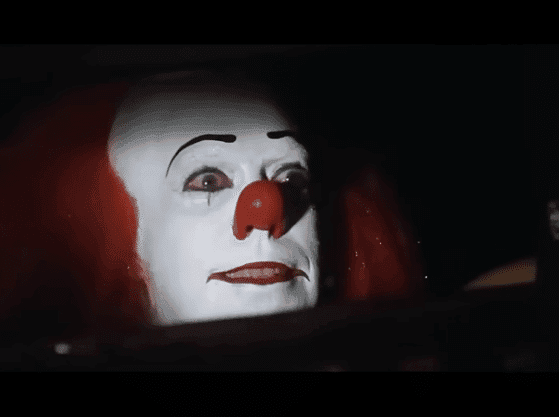
Pennywise has got an echolalic grip on the word ‘float’. And the way Curry repeats it – gravelly, relishing, drawn-out, devoid of relevance – gives us a glimpse into the deadlights: a creature that dangles the word like an anglerfish’s lure, and with about as much fellow-feeling for the children it’s preying on.
It doesn’t know what ‘float’ means. It’s possible it doesn’t know what any word means, not completely. It just knows that if it uses them, it gets what it wants.
Which is it? In performance, at least, it’s both.
Curry knew how to be two things at once. That was his genius.
What’s Frank – masc or femme? What’s Long John Silver, good or bad? What’s Wadsworth, order or chaos?
They’re Tim Curry, silly. That’s what he was.
His game could be joyful, capering, hilarious. And if we also sometimes had to ask if it was funny or scary?
Well, it was Tim Curry.
There’s a comparison that keeps occurring to me – perhaps an odd one, except that it’s about another beloved queer icon. It was said of Judy Garland by film historian Richard Chickle – which, credit where it’s due, I’m quoting it from the excellent video essay ‘Judy Garland at Carnegie Hall: The Greatest Night In Entertainment History’ by YouTube channel Be Kind Rewind.
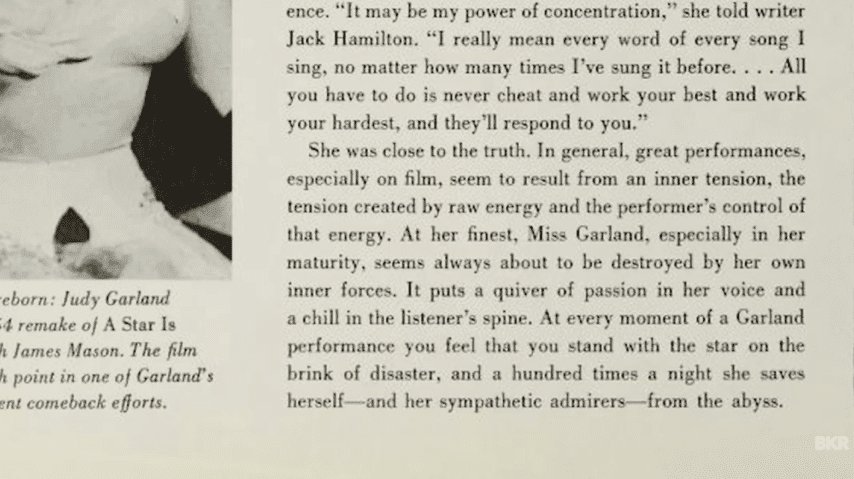
Chickle said of Garland:
Great performances, especially on film, seem to result from an inner tension, the tension created by raw energy and the performer’s control of that energy. At her finest, Miss Garland, especially in her maturity, seems always about to be destroyed by her own inner forces . . . At every moment of a Garland performance you feel that you stand with the star on the brink of disaster, and a hundred times a night she saves herself – and her sympathetic admirers – from the abyss.
Isn’t that true of Curry as well?
Curry was a performer of such energy he was always an instant away from flying apart. And yet he kept moving so fast he flew forward instead.
Remember him in The Muppet Treasure Island? He introduces himself by, for no reason at all, pretending to believe our heroes are stowaways, threatening to ‘shish-kebab and barbecue’ them, and then making this face:
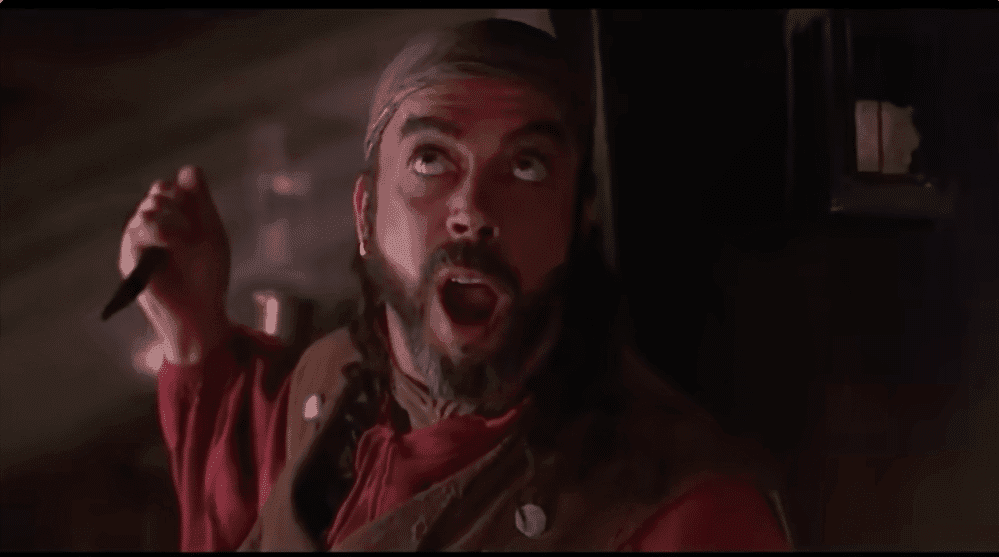
His energy just spilled out of him; it always seemed like he was suppressing a cackle so huge it might tear him to pieces. It made him uproarious, and also sometimes frightening in the way an unpredictable person is frightening: you never know when they might stop laughing and lunge.
It’s a strange thing to attribute subtlety to such a wild performer – but I think we have to.
Curry, more than any actor I can think of, understood what it was to be big, noisy, excessive, just too much – and to create space not by taming that exuberance but by creating multiple meanings for it to flow through. We talk about broad performances; Curry was broad like a huge river that split into distributaries, each carrying its own energy. Joy, fear, rage, longing, power, degradation, humour: blink and he’s something else.
Well, his channels have all flowed into the sea now. But as long he was with us, he was joyful with a ferocity that made us all glad to be sitting in the splash-zone seats.
Ginger Nuts of Horror: The Heart and Soul of Horror Reviews
Every feature is built to sell your work. We include backlinks to your website or Amazon author page, a full synopsis, and a universal purchasing link that sends readers straight to their local store. Add a large, engaged social following and an 18-year archive of trusted horror coverage, and you have a platform genuinely built to grow your readership.
Whether you’re an established author, an indie filmmaker, or a debut voice in indie horror, there’s a way for us to help you reach more fans. Explore our horror book reviews and horror movie reviews, then get your horror book or film featured today.

Jim "The Don" McLeod has been reading horror for over 35 years and reviewing it for more than 16. He's the editor of Ginger Nuts of Horror, Europe's largest independent horror review and culture site, and a British Fantasy Award nominee for his work in the genre. When he's not busy inflicting his opinions on the horror community, he can be found annoying his family or getting thoroughly outwitted by his two dogs, Casper and Molly.