Micaiah Johnson builds a house where nothing bad ever happens, then asks where all the bad went.
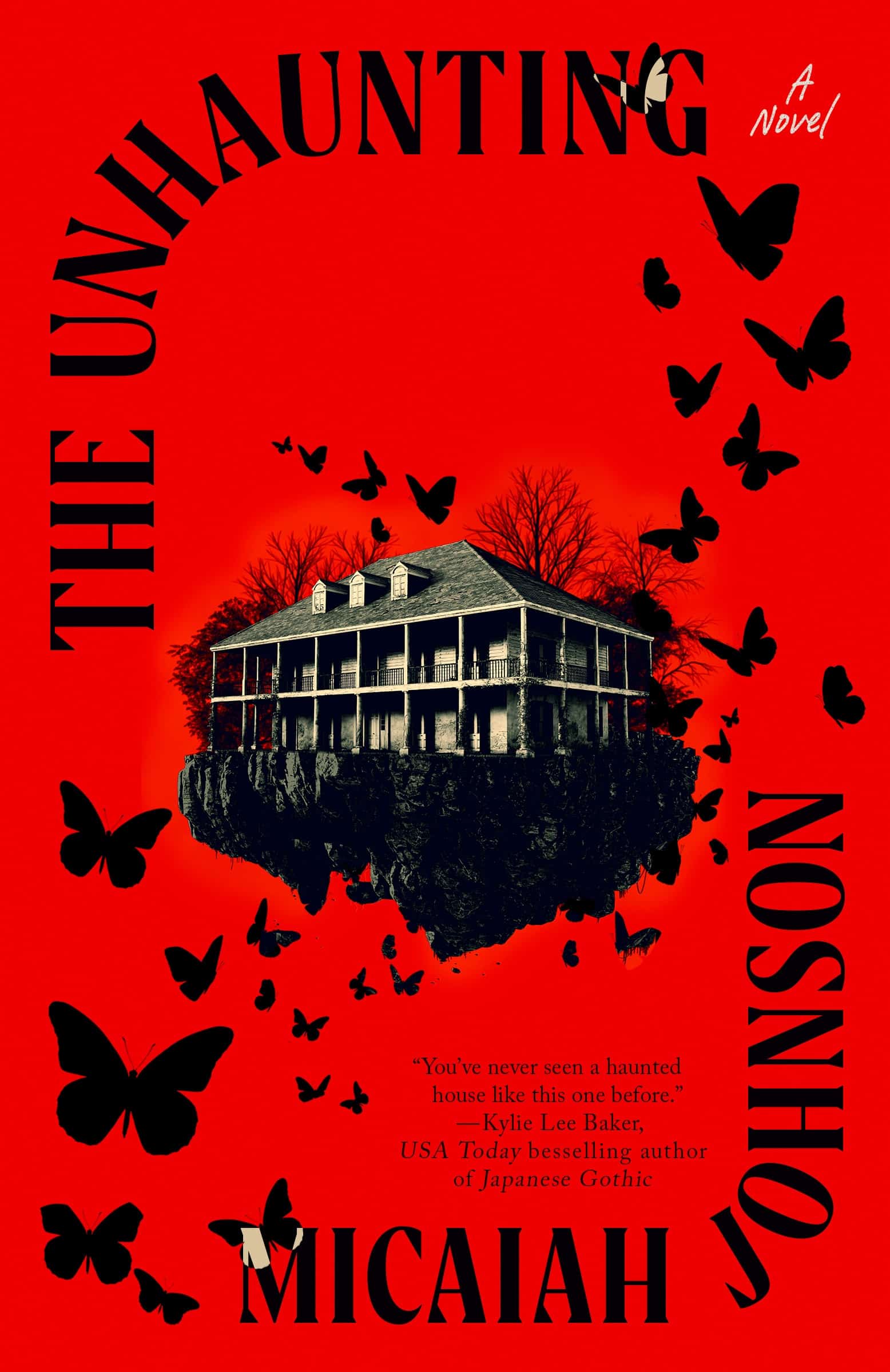
- Author Micaiah Johnson
- Publisher Viking
- Published 29 September 2026
- Pages 288
- Format Hardback, ebook, audiobook
- ISBN 9780241846940
- Subgenre Southern Gothic haunted house
- Reviewed by Jim McLeod
Shantell’s oldest friend inherits a grand old house in the Deep South with no dark history at all. It heals everyone who moves in. So where are the ghosts coming from?
The Unhaunting by Micaiah Johnson turns the haunted house story inside out, and it is out now from Viking. The Sunday Times bestselling author of The Space Between Worlds brings her long fascination with privilege to Southern Gothic horror, with a house built on a single wish: that nothing bad would ever happen inside it. Three people move in to do it up, and the house makes their lives better. That is the problem. This is a short, sharp Micaiah Johnson horror novel that asks who pays for somebody else’s peace. It earns four stars from me, with one real reservation, and The Unhaunting review below explains both.
Most haunted houses want you gone. This one wants you to stay, and it makes a very good case. Micaiah Johnson has written a slow, cold Southern Gothic about the bill that comes due on other people’s peace, and by the time the house shows its hand, it is far too late to open a window. — GINGER NUTS OF HORROR
Period Features, Previous Occupants
Every haunted house novel is a property listing with the small print left out. Period features. Large grounds. Previous occupants still in residence, and rather attached to the place. The genre has spent two and a half centuries teaching us to read the ad with care (Joshua Chaplinsky’s A Brief History of the Haunted House Novel is a fine map of the trail), and every stop on that trail says the same thing. Never buy cheap. Always ask what happened in the cellar.
So what do you do with a house that has no past at all?
You worry. In the Deep South, a big old house with nothing bad in its history is the most suspect thing on the market.
That is the trap Micaiah Johnson sets in The Unhaunting, her first step into horror after two prized science fiction novels. Abernathy House went up at the end of the Civil War on a wish, made by a daughter of the Confederacy: a place where nothing bad could ever happen. The wish held. Some 170 years later, Avery inherits it, and he brings his oldest friend, Shantell, and his older brother, Tobias, to fix it up.
Most haunted houses want you gone. This one wants you to stay. And it makes a very good case.
Shantell has lost almost everyone. Her father went to war in Iraq and did not come home. Her brother was killed by the police. Her mother died by suicide. She lives with anxiety and with pain, and for years she has been shrinking into her own four walls. Avery is the one person who stayed.
Then the house starts to help. Tobias, the contractor on the job, gives up chain smoking, which any former smoker will tell you is the most supernatural event in the book. Avery, a man who has never had to feel much, starts to feel things. And Shantell’s anxiety, at last, goes quiet.
The central idea is sharp and cruel. A house where nothing bad happens has to put the bad somewhere. Ursula K. Le Guin built a whole city on that bargain in The Ones Who Walk Away from Omelas; Johnson moves it indoors and hands the deeds to the Confederacy. She never needs to spell it out. The title does half the work.
The jacket copy gives you the key in nine words: “A house is a housefire, waiting for its match.” Look at how it is built. A plain noun, then its disaster, then patience. The word “waiting” does the heavy lifting, because it hands the house a will of its own. The copy repeats that shape line after line, the way a spell is said, or a curse. It also names what the house lacks. A match. Something to catch. Abernathy House has stood dry for 170 years, and it needs people the way a fire needs fuel.
This is where the book earns its dread. For Shantell, a safe home has never been a given. It has been a thing other people had. So the horror here is not a slammed door or a cold spot on the stairs. It is the offer. What would you give up to feel safe for once? And who do you let pay for it? Avery, by contrast, has known mostly ease, and he swears the place was never a plantation.
The gap between what these two friends have been allowed to feel at home is the true fault line under the floor. Toni Morrison put the ghost of slavery inside 124 Bluestone Road in Beloved. Johnson turns the telescope round and asks where a house sends the ghosts it will not keep.
Walls have always been her subject. In The Space Between Worlds, Cara slipped between versions of Earth, and the line between Wiley City and Ashtown decided who got to live. Those Beyond the Wall went back to Ashtown and its violence, and made the shortlist for the Ursula K. Le Guin Prize.
The Unhaunting shrinks that wall to the size of a front door. Same question, closer range: who gets the safe side, and what lies behind the plaster? Set it beside Max Doty’s The House That Eats the Dead, a house that does your chores for a price, or Tamika Thompson’s The Curse of Hester Gardens, where the curse is simply America, and Johnson’s deal is the colder one. Her house does not eat. It keeps accounts.
Is The Unhaunting Scary?
Now the one real problem, and it is a proper one. The book takes its time. The house is kind before it is cruel, so the first third plays like a long stay at a lovely bed and breakfast with a faint smell of burning. Early readers split right here. Some found the opening slow and the ghosts oddly scarce, and Johnson leans on spooks far less than the cover might suggest. It is a choice, and it pays off once the history starts to rise, but patience is the price of entry. A romantic thread splits readers too, and it risks thinning the friendship the whole book stands on.
When it bites, though, it bites. Johnson’s restraint works like a thermostat nudged up one degree a night. Nobody notices the heat. Then everyone notices the smoke. The worst moments land out of nowhere, all at once, and by then the windows are painted shut. That is the design, and it is a clever one.
So, who is it for? If you want Hell House with the lights going mad from page one, this is the wrong address. If you want a Southern Gothic that treats comfort itself as the threat, pull up a chair. Just maybe not that one.
Shirley Jackson told us her house was not sane. Johnson’s is perfectly sane, and very well mannered, and that is far worse. The Unhaunting is short, sharp and angry in the quiet way, a ghost story about the bill that comes due on other people’s peace. Read it. Then take a long, hard look at your own foundations.
The Verdict: Is The Unhaunting Worth Reading?
The verdict
A clever, cold inversion of the haunted house story whose slow first act is the price of a truly nasty payoff.
Read it if: you like your Southern Gothic angry, your ghosts sparse and your houses far too welcoming.
Skip it if: you want doors slamming by chapter two; this house keeps its manners for a long while.
Abernathy House is not currently on the market. Having seen the paperwork, that is probably for the best.
Ginger Nuts of Horror: The Heart and Soul of Horror Reviews

Jim "The Don" McLeod has been reading horror for over 35 years and reviewing it for more than 16. He's the editor of Ginger Nuts of Horror, Europe's largest independent horror review and culture site, and a British Fantasy Award nominee for his work in the genre. When he's not busy inflicting his opinions on the horror community, he can be found annoying his family or getting thoroughly outwitted by his two dogs, Casper and Molly.