
Lock the doors. The thing outside already knows what you did.
When the Night Comes Knocking | Katherine Daniel | 3AM Books | 19 November 2026 |/cu
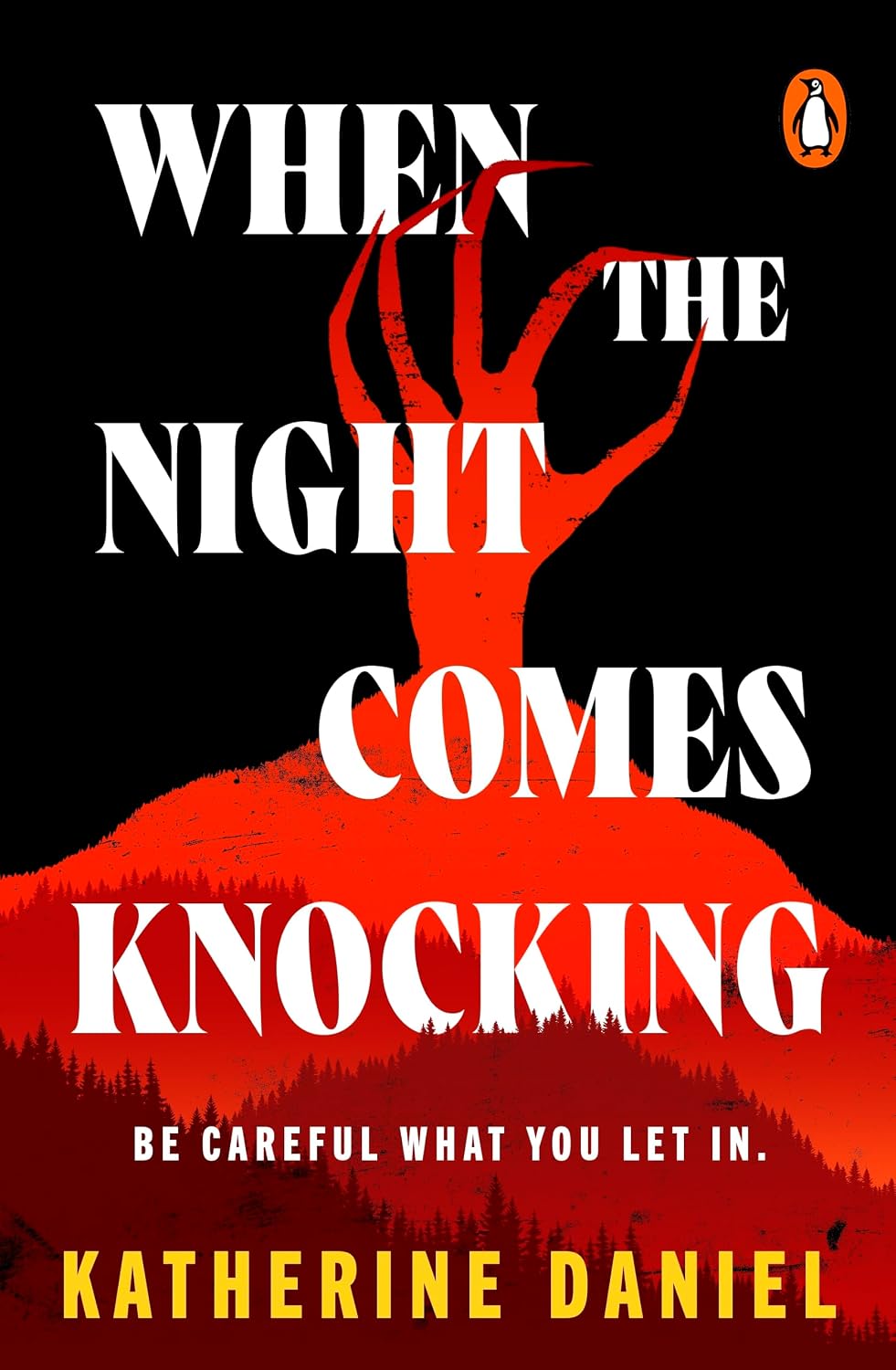
- Author Katherine Daniel
- Publisher 3AM Books
- Publishes 19 November 2026
- Pages 304
- Format Hardback, ebook, audiobook
- ISBN 9781911780021
- Subgenre Appalachian folk horror
- Reviewed by Jim McLeod
Two siblings who have barely spoken since an accident that nearly killed them both stop at a store in the North Georgia mountains. Then something comes down from the trees, and it only wants the guilty.
When the Night Comes Knocking is the debut horror novel from Katherine Daniel, and it is one of the sharpest creature features of the year. Estranged siblings Jane and Thomas pull into a roadside store in the North Georgia mountains and end up trapped there for the night with a handful of strangers, while something from the trees picks them off one guilty heart at a time. Berkley publishes it in the US on 20 October 2026, and 3AM Books brings it to the UK on 19 November. In this When the Night Comes Knocking review, I look at why a very old siege story feels so fresh.
Katherine Daniel takes the oldest siege in horror, strangers locked in with a monster at the door, and makes guilt the bait. You can sometimes see the gears of the plot turning, but the dread is real, the prose is sharp, and the thing in the trees is one you will not shake off in a hurry.
When the Night Comes Knocking Review: The Monster Outside, the Secrets Within
Every old story has a rule about the door. Do not answer it after dark. Do not open it to a voice you think you know. In those stories the knock is never the real danger. The danger is the moment you decide to let it in.
Horror has leaned on that rule for a long time. W. W. Jacobs gave us a knock in The Monkey’s Paw that nobody in the house wants answered. George Romero locked a group of strangers in a farmhouse and let them prove that the people inside were half the problem. Stephen King filled a supermarket with frightened shoppers and fog, and the fog was not the worst of it.
Katherine Daniel knows all of this. Her debut takes that old rule about the door and gives it a nasty new twist. The thing outside only wants the guilty. So the question is not whether to let it in. The question is which of you it came for.
Jane and Thomas are brother and sister, and they have not spoken since the accident that nearly killed them both. They are driving home from college through the North Georgia mountains for Thanksgiving, in the kind of silence you could stand a spoon in. They stop at a roadside store for a few last things. Then a man staggers in out of the dark with a mangled body and a story about a monster.
Nobody believes him. Then the next person to step outside is killed. And then, in the detail that gives the book its title and its best chill, the dead come back to the door and ask to be let in.
There is a beast in these mountains, the old story goes, and it feeds on guilty hearts. Someone in that store has drawn it down from the trees.
“Once upon a time” is the voice of a bedtime story. It is the voice of every tale told to keep children out of the woods. Then the tense snaps into the present. Jane looks. Jane knows. The fairy tale is not safely in the past. It is happening now, in a car on a mountain road.
And the thing Jane knows has nothing to do with a monster. It is about her brother. Before a single drop of blood, Daniel has shown you where the real wound is. That is the trick of the whole book in one sentence. The folk tale gives you the frame. The family gives you the fear.
Daniel’s prose is clean and quick, and it does its best work at the edge of the light. In one scene, Thomas steps out into the car park with two of the other men. Jackson is a steady Boy Scout type holding a shotgun. Evan has borrowed his wife’s pink Taser. Across the tarmac, the trees are waiting.
Then she plays the scene like a good horror director. A rustle. A phone torch. A pair of eyes in the dark. And it is a possum. Everyone breathes out. Then Winnie, the dog, starts to growl, and she is not looking at the possum at all. That beat, the false scare that lets you relax just before the true one, is as old as the hills. Daniel times it beautifully. A smell of rot comes in on the wind. Thomas has one word in his head, set apart on the page: “Dead.” Then he sees a face in the branches, and it is gone.
Reading Daniel’s prose is like watching a torch beam sweep a tree line. It only ever lights a small circle, and the dark around that circle does most of the work.
She is good on people, too. In the middle of all that dread, Thomas cracks a joke about the pink Taser scaring the thing off. It is crude and it is funny, and it is exactly what a frightened young man would say to stop his voice from shaking. Those small human notes keep the cast from turning into a queue of victims. You want them to live, even the ones you would not want to sit next to on a bus.
Is When the Night Comes Knocking Scary?
Yes, and in more than one way.
The first fear is the creature. The UK edition’s copy lets slip that it can wear other people’s faces, so I will say no more than that, except that it is the right choice. A monster that can stand at the glass looking like someone you know turns every knock into a test. Do you open the door to your friend? Are you sure it is your friend? Daniel builds a whole night out of that one question, and she never lets you settle.
The local rhyme helps too. “Rattle, rattle in the dark,” it begins, and you can hear it being sung by children who have no idea what it means. Folk horror lives in that gap between the song and the thing the song is about.
The book also has a clock. The whole story runs across a single night, from dark to dawn, and that ticking does a lot of quiet work. Every chapter brings morning closer. Every chapter also brings fewer people to see it.
The gore is real when it comes, but Daniel spends it with care. She would sooner show you a shape between the trees than a body on the floor, and the book is stronger for that choice. Readers raised on splatterpunk may want more blood. Everyone else will be glad of the restraint.
The second fear is the one that lasts. Once the survivors work out what the beast is hunting, they turn on each other. If the creature wants the guiltiest heart, then the fastest way to stay alive is to prove that someone else is worse than you. That is a horrible idea, and Daniel follows it all the way down. Lock a group of frightened strangers in a room with a rule like that and you do not need a monster at all. It helps, mind you.
Here the novel feels closer to The Hateful Eight than to a creature film: a roomful of people in a remote shop on a cold night, each with something to hide, and nobody leaving until the truth is out. The difference is that Tarantino’s people mostly know what they are. Daniel’s people have spent years telling themselves they are not.
How When the Night Comes Knocking Compares to The Mist
The UK edition sells itself to fans of The Mist, and the comparison is fair as far as it goes. There is the siege. There are the frightened customers. There is the slow slide from “we are all in this together” to “we need someone to blame”. Anyone who remembers Mrs Carmody in King’s supermarket will recognise the moment a crowd starts looking for a sacrifice.
But Daniel is not writing about the end of the world. Nothing has crawled out of a secret lab. Her monster is older than the road and older than the store, and it is personal in a way King’s tentacles never were. The Mist asks what people become when the rules collapse. When the Night Comes Knocking asks what people have already done, and whether they can carry it.
The better comparison, for my money, is a pair of horror films. Feast and Splinter both trap strangers in a building with something hungry outside, and both understand that the cast is the special effect. Daniel’s book has their grip and their claustrophobia. It adds a folk tale and a family, and that makes it richer than either.
The siblings are the heart of it. What happened between Jane and Thomas is fed to you in small pieces, and the drip is well judged. Like the two siblings in Grady Hendrix’s How to Sell a Haunted House, they cannot be in a room together without old injuries flaring up. The difference is that Daniel puts a monster outside the door that is drawn to exactly that kind of injury. Their feud is not a side plot. It is bait.
It also sits neatly beside another face-stealing debut this autumn. Mathilda Zeller’s It Looks Like You in the Dark sends its creature into an Alaskan winter, and Daniel sends hers down a Georgia mountain. Both writers understand that the worst thing a monster can borrow is trust.
Now, the one place the book creaks. A monster that hunts the guilty needs the guilty to be found out. So, one by one, the survivors give up what they have done. It is a strong engine for a siege. It is also a visible one. Once you have watched a couple of secrets come out, you can feel the shape of the next one before it arrives, and in the long middle of the night the rhythm settles into something closer to a rota than a shock. The pages still turn. The tension never drops away. But the machinery is on show, and it is the reason this book stops just short of the very top shelf.
That is a fair price for a first novel this confident. Daniel grew up in Georgia, and she has hiked Blood Mountain and got lost on it, which you can feel in every description of the slopes and the trees. That kind of knowledge cannot be faked. The woods in this book are not a backdrop. They are a character with a long memory.
The book’s path to readers says something too. Berkley picked it up in the US, and in the UK it lands with 3AM Books, the new horror imprint Transworld launched this year as Penguin Random House UK’s first horror list. A debut on a launch list carries a lot of hope on its back. This one carries it without breaking a sweat.
What stays with me is the moral design of the monster. A beast that eats hearts is frightening. A beast that only eats guilty hearts is worse, because it turns every survivor into a judge, and every judge into a suspect. Daniel understands that guilt is not a single act. It is a story you keep telling yourself so you can sleep, and the creature is simply the one listener who will not believe it.
Lock the doors, by all means. Just remember that the thing outside has already counted who is in there, and it knows exactly what each of them did.
The Verdict: Is When the Night Comes Knocking Worth Reading?
The verdict
A sharp, scary debut that turns a classic siege into a trial of guilty consciences, held just short of five stars by a confession structure you can sometimes see coming.
Read it if: you love The Mist, siege horror and creature features with an old folk tale at their core, or stories about siblings who cannot forgive each other.
Skip it if: you want extreme gore, or you tire of horror that has its characters own up to their sins one at a time.