Some inheritances come with fangs.
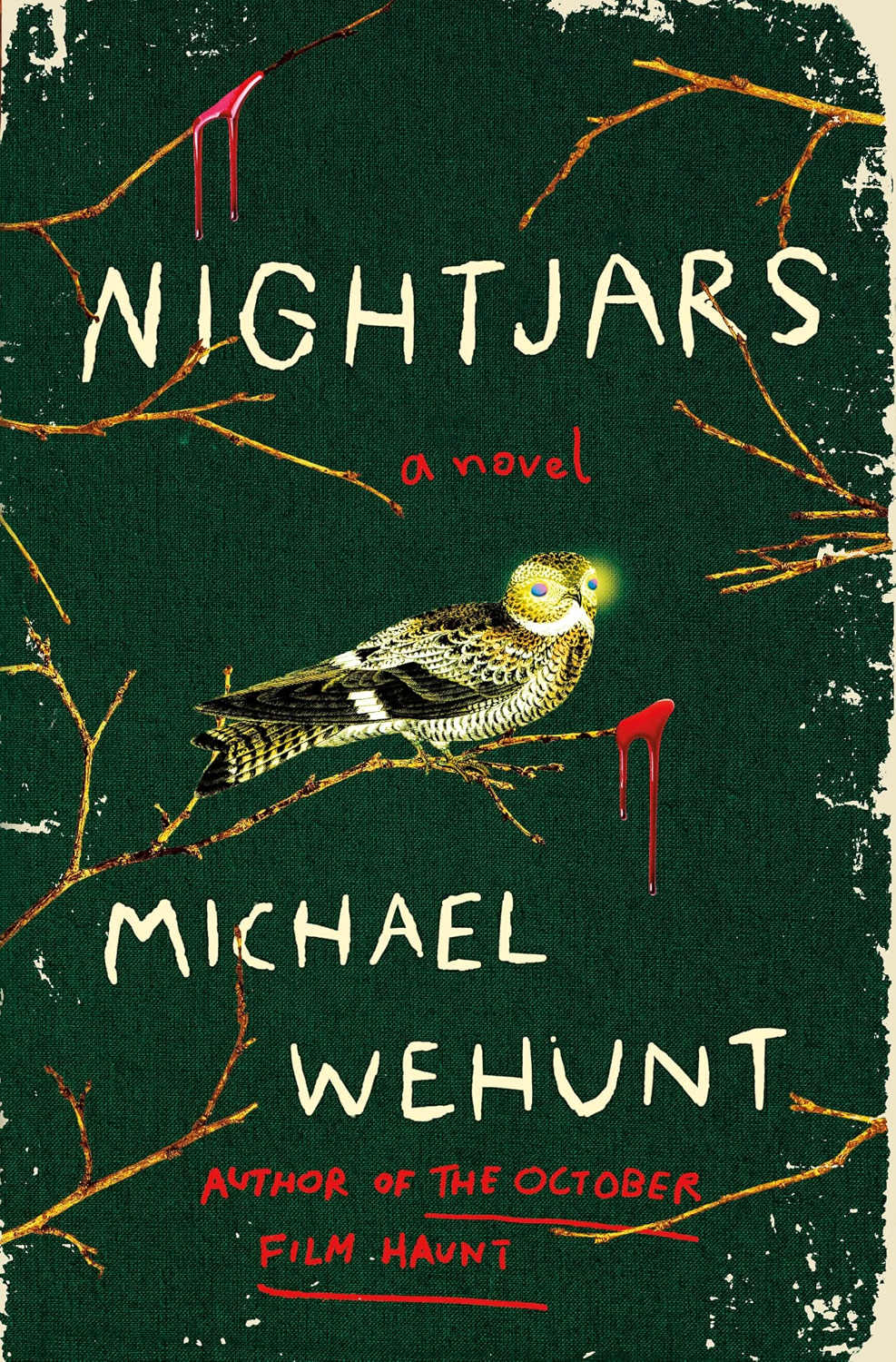
- Author Michael Wehunt
- Publisher St. Martin’s Press
- Published 29 September 2026
- Pages 352
- Format Hardback, ebook
- ISBN 9781250333728
- Subgenre Vampire horror, serial killer horror
- Reviewed by Jim McLeod
Sober bookshop owner Luke Oshel is left a photograph of himself as a boy beside a body, and every new picture pulls him deeper into his dead father’s bloody legacy.
Michael Wehunt follows his Bram Stoker-winning debut The October Film Haunt with Nightjars, a novel that grafts serial-killer dread onto vampire myth. Luke Oshel is a recovering addict, a divorced father and a small-town bookshop owner whose rebuilt life comes apart when a blind date walks out on him and leaves behind a photograph he cannot explain: himself as a boy, a body in the shadows, a masked man he has spent decades trying to forget. What follows digs into inherited violence, buried memory and the stories families tell to survive themselves. Ginger Nuts of Horror gives Nightjars five stars ahead of its 29 September 2026 release.
Nightjars doesn’t reinvent the vampire. It sits the vampire down and finally makes it explain itself, and the answers are better than the genre usually bothers to give you. Four stars, held back only by a middle stretch that circles when it should be climbing.
A Serial Killer’s Son, a Vampire’s Appetite
Every decade or so, someone tries to reinvent the vampire. And every decade or so, the stake goes back in the drawer marked well, that didn’t work. Big Vampire (my term, feel free to steal it) runs on charisma alone. New blood needs a real reason to exist. Not just glossy fangs and eyeliner. It has to do something the last hundred takes on the old count never tried.
Here’s a rarer trick. Take a man who finds an old photo and watches his whole life come apart. Take a serial killer’s son who can’t be sure he hasn’t picked up the family trade himself. Normally you get one story or the other, not both in the same coat. Michael Wehunt has spent a decade proving that dread works best when it’s grieving something. He decided the coat could hold both.
This is his follow-up to the Bram Stoker-winning The October Film Haunt. It’s about a recovering addict trying to stay the right kind of father to a small daughter. Add a dead father who drained his victims of blood, and a stack of old photos nobody should still have. Out of that, he builds Nightjars. It earns its fangs the hard way: through the people, not the teeth.
Luke Oshel runs a small bookshop. He stays sober one day at a time. He spends every visit with his daughter trying to be the father his own never was. Wehunt spends the first act making you like him. Then he starts taking that life apart, one photo at a time: Luke as a boy, standing near a body.
Luke as a man, covered in blood he can’t remember spilling. Proof that the killer everyone thought died with his father might still be working. It’s a serial-killer plot with a vampire’s appetite bolted on. The trick is that Wehunt won’t let you decide which genre you’re even reading. Not for a long stretch. That’s the point. Luke doesn’t know what he is either.
How Nightjars Compares to The October Film Haunt
This is Wehunt doing what he has always done, just with more plot underneath it. His story collections, Greener Pastures and The Inconsolables, built a reputation on quiet, poetic dread. That’s the kind of horror that sits in what a character can’t bring himself to say. The October Film Haunt, his Bram Stoker-winning debut novel, did something similar. It bolted a mixed-media, found-footage structure onto that instinct.
It used the wreckage of a horror obsession to dig up grief. Nightjars keeps the scrapbook habit. Luke’s account is threaded with journal pages. They make you read around the edges of what he’ll actually admit. The running time, though, gets trimmed. Those interludes owe as much to Stoker’s own diary-and-letters Dracula as they do to true-crime scrapbooking. The result reads like a thriller wearing a literary coat.
You feel that most in the prose itself. It favours the glancing image over the flat statement. One early passage turns the bird in the title into a small piece of family myth. There’s an ex-wife’s half-remembered poem. A hyphen Luke never noticed before. Then a metaphor that will carry the whole book: something built to hold the dark, sealed shut at the lid. It’s a handful of sentences, no more.
It does more work than most novels manage in a whole chapter. It wires the book’s bird-watching to its digging through old violence. You don’t notice you’ve been primed until later. Wehunt’s sentences move the way blood finds a slope. Unhurried, right up until they hit the incline. Then gone before you can put a hand out.
The vampire myth is the novel’s least interesting trick, once the book finally commits to it. It’s also the most needed one. There’s barely any cape-and-castle furniture on show. Wehunt cares more about what it means to inherit a taste for violence. It’s the way you’d inherit a chin or a temper. There’s a real fear underneath it. Sobriety, therapy and hypnosis are just stronger locks on a door that was always going to open. Luke’s four-year-old daughter, who knows none of this, is the novel’s real stake in the ground. Every choice Luke makes gets weighed against what she might become if he gets this wrong. That weighing, not the blood loss, is what gives Nightjars its teeth.
Is Nightjars Slow in the Middle?
The book asks the most of you in the middle third. The hunt for Luke’s father slows down there, to make room for home life. It’s the only quibble I’d raise, and a small one. The plot circles back over ground it already made its point about. The scrapbook structure made the opening unsettling. Once the mystery’s shape is clear, though, it starts to work against the pace. A reader here just for the vampire thriller promised on the jacket may find themselves waiting for the next photo. Not the next answer. Stay with it. That home life is where the stakes get built, and the book spends every bit of it.
None of that stops this from being the work of a writer getting better while you watch. Stephen Graham Jones and Paul Tremblay were in his corner last time out. On this evidence, they backed the right horse.
Nightjars doesn’t reinvent the vampire. It sits the vampire down and finally makes it explain itself. The answers are better than the genre usually bothers to give you. Five stars. The middle stretch circles a little; the rest of it climbs. Read it for Luke. Stay for what his daughter does to the stakes. Wehunt is two novels into proving something. The monster you inherit beats the monster you watch on screen. Bring garlic if it helps you sleep. You won’t need it. The blood in this one comes from somewhere much closer to home.
The Verdict: Is Nightjars Worth Reading?
The verdict
Wehunt makes the vampire earn its place through a father’s fear rather than its fangs, and a middle third that circles a little is the only mark against it.
Read it if: you want literary horror where the dread comes from family, buried memory and a man trying to break a bloodline.
Skip it if: you want a fast, cape-and-castle vampire thriller, or lose patience when a mystery pauses for home life.
Ginger Nuts of Horror: The Heart and Soul of Horror Reviews

Tom B. Stone is not his real name. In fact, there is a reasonable chance that Tom B. Stone is not anyone’s real name.
The person lurking behind the pseudonym reviews horror for Ginger Nuts of Horror and has gone to increasingly ridiculous lengths to ensure their true identity remains buried deeper than the final reel of a cursed VHS tape. Bribes, disguises, burner phones, false moustaches and legally questionable witness-protection arrangements have all been rumoured. None can be confirmed. Tom would like to keep it that way.
What can be confirmed is an unhealthy enthusiasm for horror fiction, haunted houses, things that should probably stay buried, and books capable of ruining a perfectly good night’s sleep. Tom approaches reviews with a sharp eye, a dry sense of humour and the firm belief that even the darkest horror deserves the occasional terrible pun.
Authors seeking revenge for a bad joke are advised not to bother looking. Publishers attempting to discover Tom’s real identity have already been added to a list.
Tom B. Stone exists.
Who is underneath?
Nice try.