

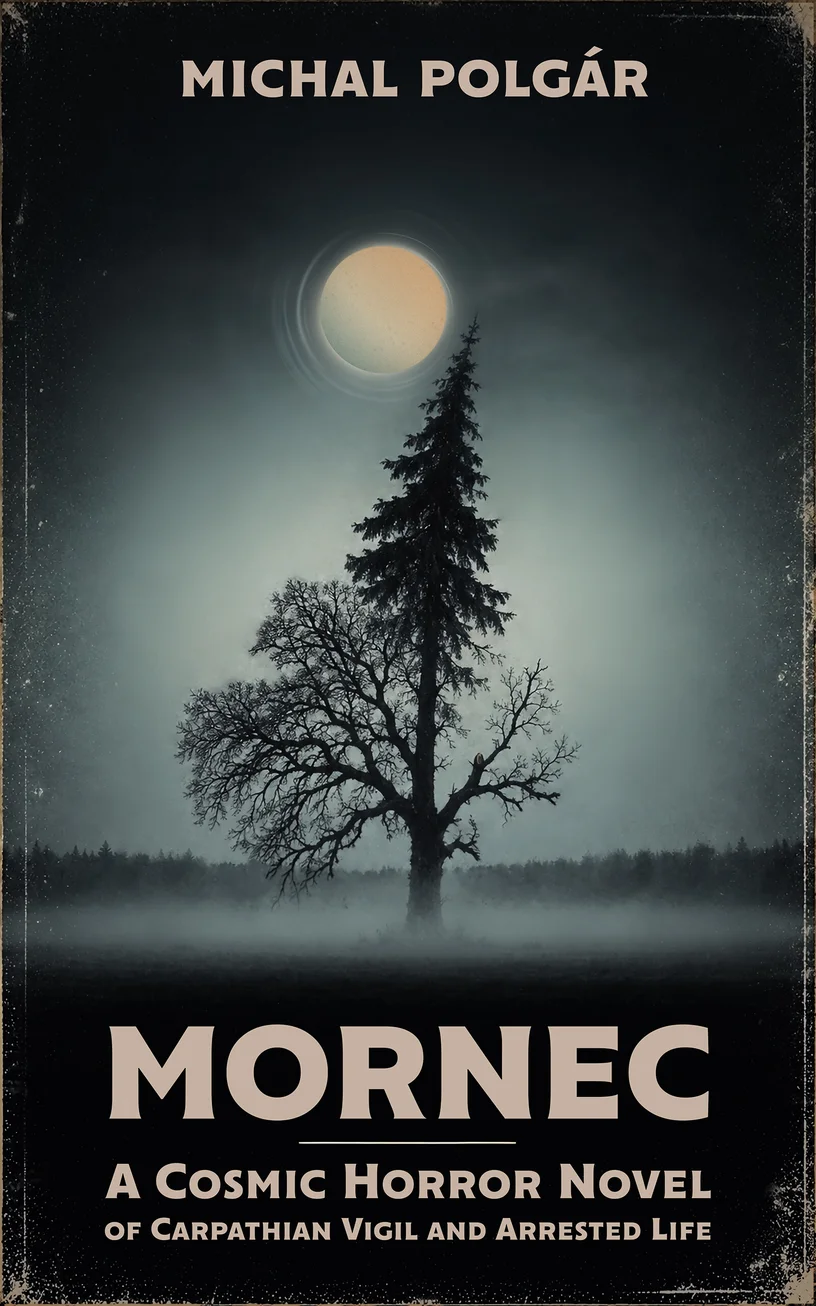
- Author Michal Polgár
- Publisher Michal Polgár (independent)
- Publishes 1 November 2026
- Pages 324
- Format Paperback, ebook
- ISBN 9788269433319
- Series Quiet Ends, book 2
- Subgenre Cosmic horror
In a village in the Slovak Carpathians, beekeeper Filip Hrehuš is caring for his ill mother when his hives fall silent, and through October and November the valley around him starts to change.
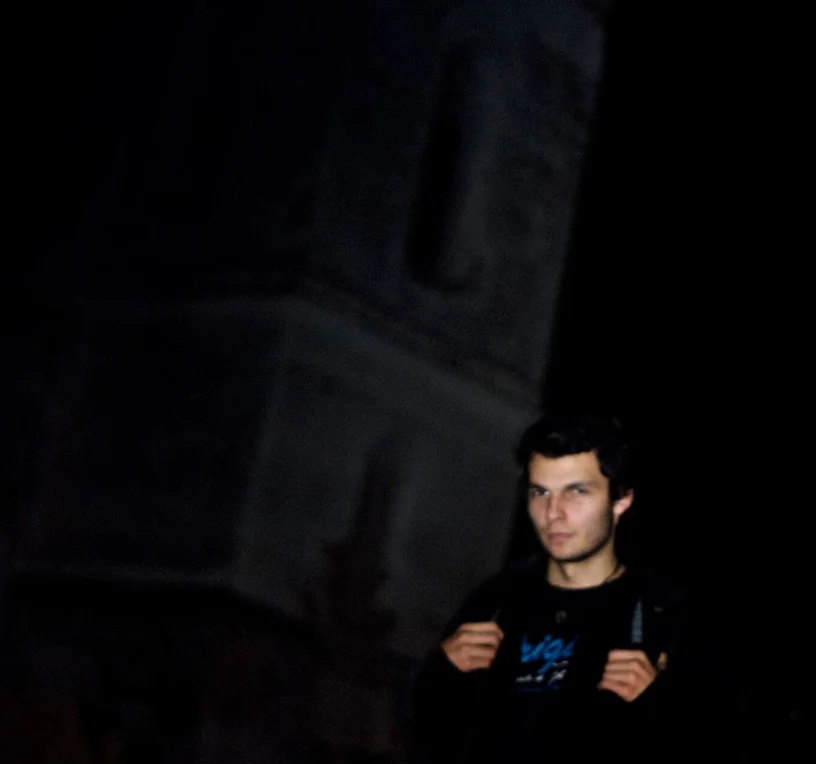
Michal Polgár, the Slovak-born author of the Quiet Ends novels, publishes Mornec on 1 November, the first day of Dušičky. In March, Michal Polgár wrote for us about the beauty of catastrophe and the Arctic silence that shaped his writing. This time he goes back to the coal town where he grew up, and to the way Slovakia keeps its dead at the start of November. Along the way he takes in a mine, a cemetery, a dig on the edge of Bratislava and a beekeeper in a Carpathian village.
Polgár sets the Slovak days of the dead beside the graves he once opened as an archaeologist, and finds the same duty in both. Remembering passes from hand to hand, from the candle to the brush, and the man who left Handlová has kept the light burning.
Michal Polgár on Candles, Coal and the Little Souls
In Slovak, the glass holders we set on graves at the beginning of November are called kahance. Each one holds a candle, and the glass, usually red, keeps the wind off the flame. A kahanec was also the lamp miners carried underground, in the years when the light in a mine was still a flame. I grew up in Handlová, a coal town in the Upper Nitra region of central Slovakia, and for a long time I did not notice that the word was doing two jobs, because in Handlová the two kinds of light were never far apart.
Readers in Britain and America know the end of October as Halloween. In Slovakia the days that follow are also given to the dead, and they are kept in a different way. The first of November is All Saints’ Day and the second is All Souls’ Day, and together they are called Dušičky, the little souls. Families go back to wherever their dead are buried, clean the graves, bring chrysanthemums and light candles. There is less fear in it than in Halloween and much more seriousness. Nobody dresses up.
For me it began in the forest before it began in the cemetery. Through October the woods above Handlová went brown, and then darker, and the darker they went the more they drew me. Everything slowed down at the end of the year. It was the darkest and most serious stretch of it, and it had a feeling nothing else had. I felt a pull toward it, toward the layer under everything. The old word for that layer is the underworld. The solemnity of those weeks came to me more from the forest than from people.
Before the railway came through the hills in 1931, men from Sklené, the village on the other side, walked through that forest to the Handlová mine every day, over the hill before the shift and back over it after. The older people I grew up among told me this, and as a boy I could not imagine it.
The mine was the oldest coal mine in the country, and for more than a century the town arranged itself around it. My family came to Handlová in the 1950s, and my grandfather worked for the mine through the socialist years, though not underground; he was a planner, in the office. Among the dead the town remembered were men who had gone down for a shift and not come back up.
The cemetery in Handlová is not large. The monuments to those men stood over everything else in it: a wide stone relief, and near it seven tall stones, each with a plaque carrying a long list of names. On the other side stood the memorials to the dead of the wars, the First World War on one side and the Second on the other. There is a statue of a girl with her head bowed. Between all of it, in the evenings, the candles burned behind their red glass.
My mother and I lit candles on the graves of people we had barely known. There was something in her on those evenings that I took for fear. Now it looks to me more like respect, or her way of answering whatever she felt on those nights. What I felt there was solemn in a different way from the adults around me. They had come to close something: to sweep the grave, light the candle, say the names and go home. I wanted to stay. At home my grandmother lit her own candles and remembered from the kitchen table, in complete silence, sometimes with photographs of the dead in front of her.
Archaeology was not my first plan. It found me because in those years I already lived close to what it deals with: old things, the dead, and what cannot be known about them. By then I was also making dark ambient music, long, slow pieces I thought of as a way of catching darkness and holding it still for a while. Both came from the same pull. Archaeology was the more literal of the two. It went down into the ground.
Every November the people of Handlová went up to the cemetery to close the year over their dead. My work ran the other way. I opened graves.
In 2017 I worked on an excavation at Podunajské Biskupice, on the south-eastern edge of Bratislava, where the new D4 motorway was going to run. Under the topsoil lay a cemetery of the Avar Khaganate from the eighth century, more than 460 graves, most of them probably ordinary farming people. Nearly every grave had a clay vessel set in beside the body, an offering for the life after. One grave was richer than the others, and we called her the princess.
The grave I remember is not hers. It was a girl’s. Nobody had a name for her. She wore plain bronze earrings. The ground had turned them green, and they were so thin they nearly broke when I touched them. Simple things, the kind that would have made her beautiful in her own time.
The pot stood by her feet, with the food they had put in it for her. Her skull had a hole in it and was badly broken. I worked it with a brush. Slowly. The whole head, a little at a time. I did not hurry it. Whatever my mother had felt between the candles, I was close to it there. It was not the same.
The people in those graves had been mourned. Someone had stood at the edge of each one and given them a pot for the life after, where we would give a candle. Then that stopped. After enough centuries there was nobody left whose task it was to remember them, and the remembering passed to us, people with trowels and notebooks who did not know their names. That was the part of the work I could not leave on site in the evening. When the excavation ended the graves were filled in and the finds went to the museum. The motorway runs over that ground now. Every grave we opened had once been somebody’s Dušičky.
There is a saying in Slovakia for when people leave a place: posledný zhasne, the last one turns off the light. In Handlová it stopped being only a saying. The mine closed in 2021, after 112 years of industrial mining, and two years later the town published a book of its miners’ memories under that title. By then I had left for Norway. I live on a small island in Nordland, at about 67 degrees north, where by the beginning of November the afternoons are already dark.
I wrote Mornec here. The village in the book is called Mornec, and the woods around it are the mixed woods above Handlová, beech and spruce and pine. Its narrator, Filip Hrehuš, is a beekeeper looking after his ill mother while something in and around the village begins to go wrong. In the book the village goes up to its cemetery on All Saints’ Day, with chrysanthemums and candles in red glass, and Filip reads the faces at the graves and sees fear under the ritual. I did not have to invent that. I had seen the edge of it in my mother.
Distance turned out to be the method. When I wrote, I was back in the forest above Handlová where I walked as a boy, and when I looked up I was here. I could only see Handlová clearly from far enough away. The book is published on the first of November, the first day of Dušičky, and I chose that date on purpose.
The pull has not gone. I light a candle almost every evening here on the island. On the first of November there will be more of them, and they will be for remembering. One will be for my grandfather. One will be for the girl at Podunajské Biskupice, whose name nobody knows. The remembering passed to me with the brush, and I have not found a way to give it back. My mother lit candles for people she had barely known, and I never asked her why. I think I know now.
In Handlová the cemetery will be full of small red lights, some of them in front of the stones with the miners’ names. Under the town the mine is closed, and nobody carries a lamp down there any more. The saying is about the last one to leave, who turns off the light behind him. I left, and I keep a light on.
Get the book
Mornec by Michal Polgár is published on 1 November 2026 in paperback and ebook, the second standalone novel in the Quiet Ends series.
Keep reading on Ginger Nuts of Horror
 Michal Polgár On The Beauty of Catastrophe Where the Arctic Silence Ends, Something Else Begins
 The Sea Hides Its Dead By Megan Bontrager: Cosmic Horror That Makes You Confess
 Grief: A Deep and Slow Burn, My Life in Horror

About Ginger Nuts of Horror
Ginger Nuts of Horror is an independent horror review and culture site based in Edinburgh, Scotland. Edited by British Fantasy Award nominee Jim McLeod, it publishes horror book reviews, film reviews, author interviews, features and cover reveals. Ginger Nuts of Horror won Best Inclusive Film & Book Review Platform at the SME News UK Enterprise Awards 2026.
