

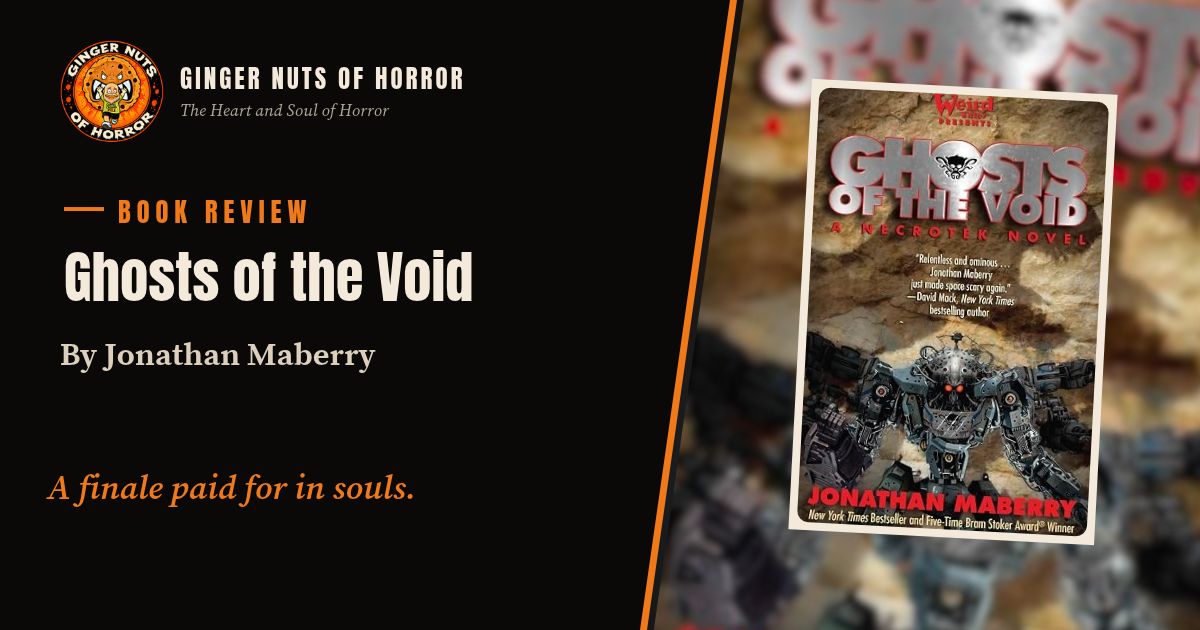
Lovecraft’s cosmos does not care. Maberry’s dead fight for it anyway.
Ghosts of the Void | Jonathan Maberry | Blackstone Publishing | 13 October 2026
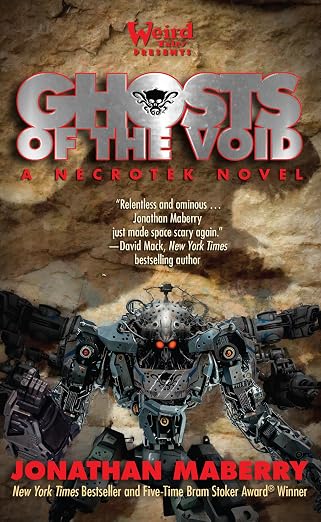
- Author Jonathan Maberry
- Publisher Blackstone Publishing
- Published 13 October 2026
- Format Hardcover, ebook, audiobook
- ISBN 9798200688562
- Series The NecroTek Series, Book 3
- Subgenre Cosmic horror science fiction
- Reviewed by Jim McLeod
The survivors of Asphodel Station and their ghost pilots search a wrecked alien ship on a storm-lashed moon for a way to end the war and get home, while an enemy fleet closes in.
Ghosts of the Void by Jonathan Maberry closes the NecroTek trilogy, the Weird Tales series that flings a space station full of people across the galaxy and into a war with Lovecraft’s monsters. This Ghosts of the Void review looks at how the finale sets the dead pilots of Asphodel Station against the Mi-Go, and at the hard choice the series puts to anyone killed in battle. It is out now from Blackstone Publishing in hardcover, ebook and audio. Anyone who follows our horror book reviews will know cosmic horror rarely comes with this much hope. Here is why that hope is both the book’s great strength and its limit.
Ghosts of the Void turns Lovecraft’s cold cosmos into a war worth dying for twice. The choice it gives its dead is the best idea in the trilogy, even if the dogfights often drown out the dread, and nobody should start the series here.
Ghosts of the Void Review: The Price of Fighting Back
Lovecraft built a universe that did not care if we lived. That was the point of it. You did not fight the things from outside. You found out they were there, and then you went mad, or you wrote it all down and waited for the knock at the door. In his stories, courage rarely saved anyone.
Jonathan Maberry has never believed a word of it.
In a short essay for John Scalzi’s blog this month, he puts it plainly. He does not write about monsters, he says. He writes about the people who fight them. That one thought explains the whole NecroTek trilogy, and Ghosts of the Void, the third and final book, is where it gets pushed as far as it will go. What does it cost to keep fighting a war you cannot win? And who pays the bill?
Here is where things stand, with nothing given away beyond the jacket copy. In NecroTek, a test of the WarpLine teleport gun went wrong and threw Asphodel Station, twelve thousand people and all, from its orbit round Jupiter to the far side of the galaxy. Out there, the old gods of the Cthulhu stories were real, and their shoggoths came hunting. The one ally the humans found was Lost, the ghost of the last pilot of a dead alien alliance. With his help, and the help of a priestess of the dead called Jessica McHugh, fallen human pilots came back as ghosts to fly shape-shifting alien ships. Necromancy plus hardware. NecroTek.
Cold War split the story in two. One half stayed with the war in deep space. The other went down under the Antarctic ice, where a team of researchers found a ship that should not be there. Anyone who has read At the Mountains of Madness, or John W. Campbell’s Who Goes There?, knew exactly what kind of cold that was. Night-Gaunts joined the enemy list.
Ghosts of the Void brings the two crews together. The people of Asphodel and the science ship Tempest go down to a storm-lashed moon to pick over a wrecked Mi-Go science ship. Inside it lies a key to the war, and maybe a way home, through a lost device the books call the God Machine. Meanwhile a Mi-Go war fleet is on the way, and it badly outnumbers them.
The choice of villain is smarter than it looks.
The Mi-Go first crawled into print in Lovecraft’s The Whisperer in Darkness, in Weird Tales in 1931. They are the fungus things from Yuggoth, and their worst habit is cutting human brains out and carrying them across space in metal cans. The mind goes on. The body stays behind.
Now look at what NecroTek has been doing for two books. It takes dead pilots, strips away the flesh, and puts what is left inside a machine so it can keep flying. The heroes have been doing their own version of the Mi-Go trick all along. Setting the last act against the one race in Lovecraft that made a trade of minds in boxes holds up a mirror. I cannot tell you how hard Maberry leans on that rhyme from page to page. But it is there in the bones of the set-up, and it is the sort of echo a Weird Tales editor does not leave lying about by accident.
That editor’s chair matters. Maberry runs the magazine that first printed most of Lovecraft, and the trilogy carries the Weird Tales name on its cover. This is not a writer borrowing the Mythos from a safe distance. It is a writer who has moved into the house and started knocking through walls.
The best idea in the trilogy is not the mechs. It is the choice.
In this series, a pilot who dies is not simply drafted back. By Maberry’s own account, the dead are asked. They can go into the light, as he puts it, or they can come back as ghosts and keep fighting. And the alien ships they fly run on a power source that slowly wears away the soul inside. Every sortie costs a little more of who you were.
That turns a war story into a ledger. Warhammer 40,000 has its Dreadnoughts, fallen heroes sealed inside walking tanks, but there the deal is glory. Here the price is the self, paid in instalments. A ghost who signs up is choosing to be rubbed out slowly so the living can go on. Some of Maberry’s dead say no and move on. Some say yes. The series keeps its conscience in the gap between those two answers, and Maberry has said the toll is at its heaviest in this last book.
It is a sharper moral question than most war fiction bothers with. Soldiers in real wars do not get asked twice. Maberry’s do, and the asking is the horror. Duty stops being a medal and becomes a slow leak.
There is a second heart beating under the armour, too. Maberry calls the talks between the philosopher Lars Soren and the alien ghost Lost the core of the whole story. A living man and a dead alien, trying to find any common ground at all. That is first contact in its purest form, and it owes a debt to Ray Bradbury, whom Maberry names as a mentor. The idea is that space will be won by people, not machines. Even when the people are dead.
Maberry is also clear that he will not take the easy line on aliens. They are not all good. They are not all bad. Some want things we will never decode. That refusal keeps the Mythos strange, even with a war on.
Cosmic horror runs on smallness. It needs you to feel like an ant on the motorway. Maberry’s people are not ants. They are ghosts in giant war machines, with call signs and banter. You can make that exciting, and Maberry does, but it is very hard to make it frightening. Event Horizon, a film Maberry names as an influence, is terrifying because nobody is coming to help. In NecroTek, the dead are the cavalry. That is the trade at the core of the series, and the finale makes it again.
The second limit is simpler. You cannot start here. Maberry has said the trilogy is one long story, planned whole, and that he knew where this book would land before he had finished the prologue of the first. That is a gift to anyone who came aboard in 2024. The cast is vast, from the Lost Souls pilots to the feral Jokers to the scientists and philosophers, and a finale has no reason to slow down for latecomers.
How Ghosts of the Void Fits Maberry’s Career
None of this comes from nowhere. Maberry won the Bram Stoker Award for best first novel with Ghost Road Blues, the start of the Pine Deep trilogy, a small-town horror that ends with the whole town under siege. Patient Zero launched the Joe Ledger books, where he learned to write a team under fire and keep the jokes coming while the world ends. Rot & Ruin took the zombie novel to teen readers, and Tony Jones picked it for his Top YA Survival Horror Picks for Teens on this site. Then came Kagen the Damned, his long run at dark fantasy, which closed in 2024 with The Dragon in Winter.
NecroTek took all of that into deep space, and you can see every earlier book in it. The squad is Ledger’s. The siege is Pine Deep’s. The mix of grief and grit is pure Rot & Ruin. Maberry has also said he worked with real scientists on the hard science side, which tells you how seriously he takes his toys.
Reading a Maberry ensemble novel is like watching the bank of screens on a carrier’s bridge during an attack. Every screen shows someone in trouble. You never stay on one long enough to get settled, and just when you want to look away, the picture cuts. Across the first two books he built the story from short, sharp sections that hop around a big cast. It is not prose for lingering. It is prose for momentum, and he is very good at it.
He also knows that a war story with no laughs is a war story nobody finishes. Maberry says the finale mixes humour and romance in with the hard science and the horror. That has always been his trick. The banter is not decoration. It is how his people stay human while everything around them tries to make them something else.
Ghosts of the Void belongs at the big, loud end of cosmic science fiction. Think Battlestar Galactica crewed by the recently deceased, or Pacific Rim if the pilots had already died. Its nearest neighbour in print is Kevin J. Anderson’s Nether Station and Nether Vortex, which Maberry himself points readers towards. Fans of Laird Barron, or of the slow, cold stuff that makes Lovecraft work, will find this a much warmer book. That is less a flaw than a choice of side.
It also says something about where the Mythos has gone. For decades, writers took Lovecraft’s monsters and kept his despair. More and more now, they keep the monsters and argue with the despair. Maberry argues louder than most. His universe is still vast and still hostile. The difference is that the people in it get to decide what their lives, and their deaths, are for.
Lovecraft told us the cosmos does not care. Maberry’s answer is that we do, and that some things are worth dying for twice.
The Verdict: Is Ghosts of the Void Worth Reading?
4out of 5
The verdict
A big-hearted finale that makes Lovecraft’s cold cosmos worth fighting for, even when the space battles drown out the dread.
Read it if: you have followed Asphodel Station since the first jump and want cosmic horror with mechs, a moral sting and a beating heart.
Skip it if: you have not read NecroTek and Cold War, or you want your Lovecraft quiet, slow and hopeless.

Keep reading on Ginger Nuts of Horror
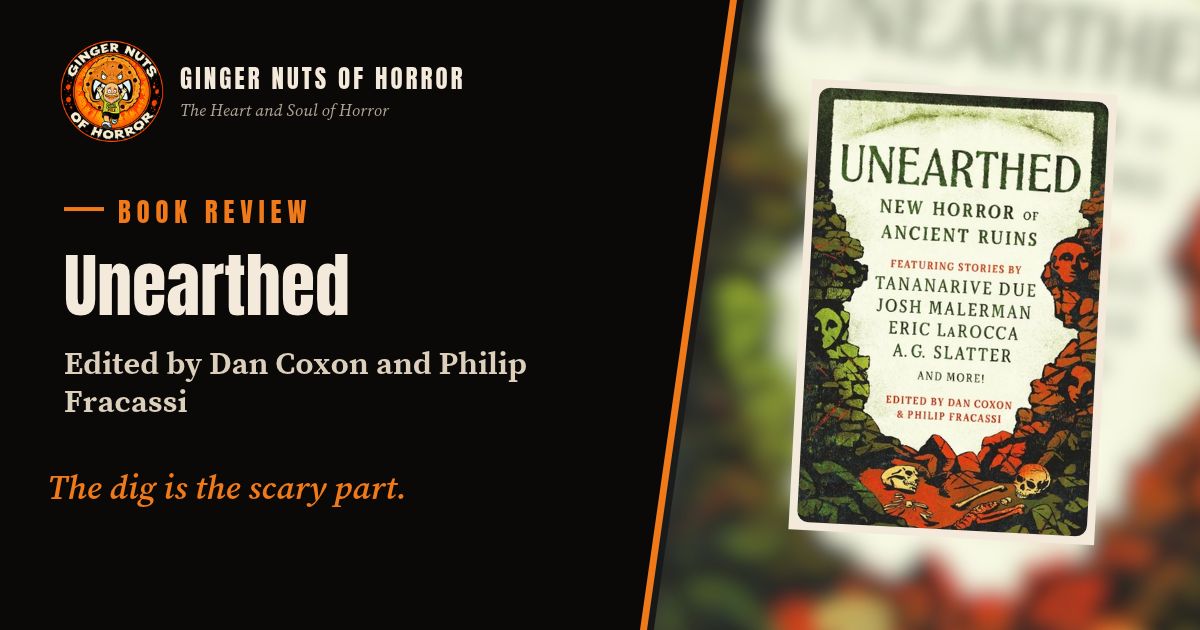 Unearthed by Dan Coxon and Philip Fracassi Review: The Past Wants Paying Back
 This Way Lies Madness: When Horror Meets Mental Health
 Spin the Rack of Terror: Inside The Rack II, a New Anthology of Vintage Horror

About Ginger Nuts of Horror
Ginger Nuts of Horror is an independent horror review and culture site based in Edinburgh, Scotland. Edited by British Fantasy Award nominee Jim McLeod, it publishes horror book reviews, film reviews, author interviews, features and cover reveals. Ginger Nuts of Horror won Best Inclusive Film & Book Review Platform at the SME News UK Enterprise Awards 2026.