
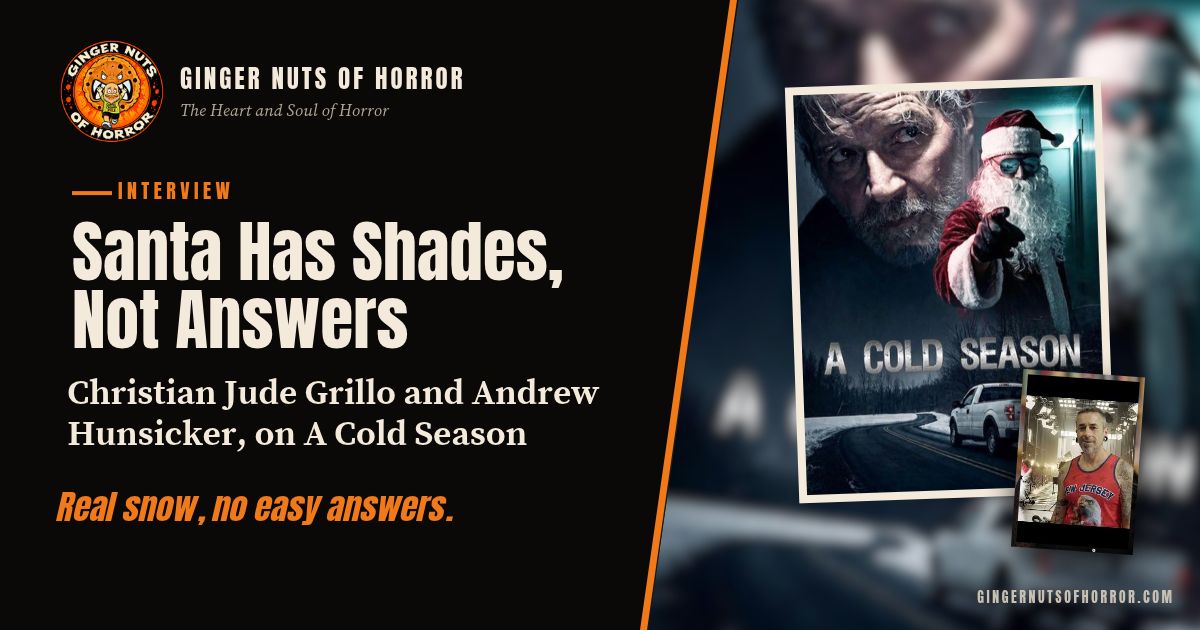
A Cold Season | Interview | Ginger Nuts of Horror
- Director Christian Jude Grillo
- Starring Andrew Hunsicker, Julie Chapin, Elijah Santoro
- Released 10 November 2026 (US streaming)
- Runtime 1 hr 20 min
- Distributor MVD Entertainment Group (US)
- Subgenre Christmas psychological horror
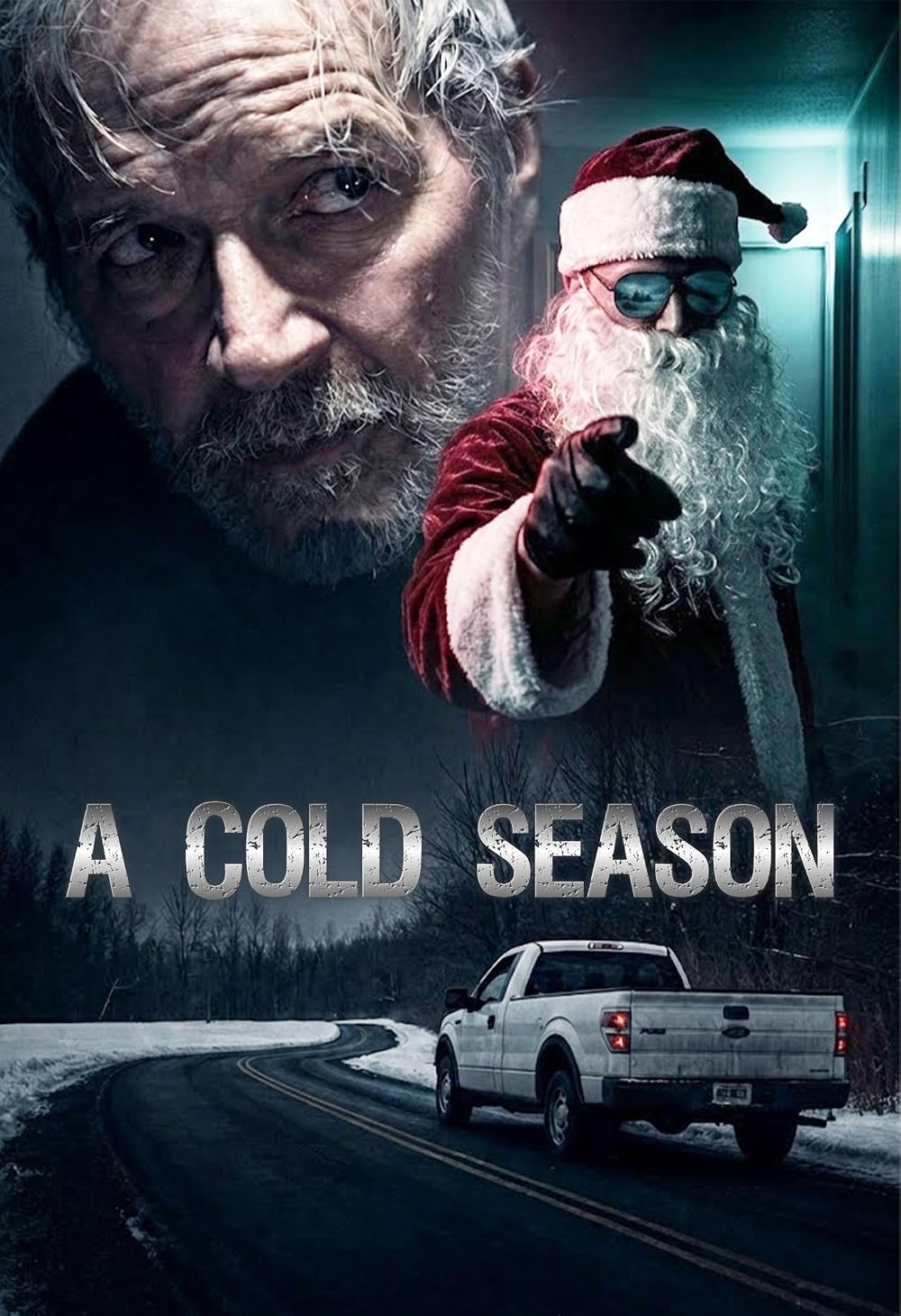
A lonely man in a snowbound Pennsylvania town keeps to a quiet winter routine while a shades-wearing Santa double pushes him towards violence, and the film never says whether that figure is real.
Of everything Christian Jude Grillo puts on screen in A Cold Season, the pair of shades on his Santa is the smartest and nastiest choice. This Christian Jude Grillo interview, shared with producer and star Andrew Hunsicker, goes behind that Santa and the lonely, snowbound film built around him. Grillo wrote, directed, shot and edited the film and supervised its music; Hunsicker produced it and plays Jacob White, a polite man whose quiet Pennsylvania winter hides something far worse.
They filmed through a real winter at weekends, with a microcast and about half the supporting roles going to local people, and MVD Entertainment Group began streaming the result on 10 November. I gave it three and a half stars in my review of A Cold Season, praising its cold, lonely tone and its Santa double while noting a thin supporting world and the marks of a small budget.
It is also the third feature that Grillo and Hunsicker have finished through Intruder Films in just over two years, which makes this a good moment to ask how two people run a film company out of Pennsylvania. It starts where the film does, with a feeling.
Christian Jude Grillo and Andrew Hunsicker made A Cold Season at their own pace, shooting the snow first and the spring last, with local people alongside trained actors. Both argue that quiet horror is scarier than the loud kind, and neither can say what the Santa really is.
The Christian Jude Grillo Interview: A Cold Season with Andrew Hunsicker
Christian, the film grew out of your own sense of loneliness and disconnection, and it opens with Jacob telling his side of events before the story runs back from there. Why tell it as a statement after the fact rather than straight through, and what did that frame let you do with a man who is working so hard to seem fine?
Christian: I tend to fall more into a Hitchcockian type of storytelling. I don’t like everyone always knowing what the answers are.
Or to be a sense of mystery. Hitchcock was a master performer at writing this for the screen. I think I’ve been leaning towards that side of writing lately. I feel like neighbor was very Hitchcockian and I feel like.
I feel like A Cold Season has a very Hitchcockian type of vibe to it, especially stories like A Lamb to the Slaughter.
Um, so yeah, I think it’s… I like that type of storytelling. Um, Pulp Fiction was the same way. You kind of get the end gist of something, but you don’t know how you got there. I like that, that’s fun.
It’s more of an older school way of telling a story. I’m more of a fan of the older horrors than I am the newer ones. I think it shows in my writing. I like a more classic type of storytelling, but distorted. That’s where I kind of take a modern slant, is…I don’t even feel like the story of a cold season hasn’t been told before in other ways, it’s just my way of telling it. Really, me and Andrew’s way of telling it.
Andrew, as well as Jacob you play the shades-wearing Santa, the double who pushes him on. Jacob is tidy, polite and very still, so how did you make the double feel like a different body and a different voice rather than the same actor in a costume, and which of the two did you find first?
The first thing I found with Jacob was his stillness. That was really the foundation of the character. He’s very controlled, very deliberate, and doesn’t give much away physically. Once I established that, it gave me a lot of room to explore what was happening underneath, particularly through his eyes and facial expressions.
Interestingly, the Santa costume helped me figure out how to approach both characters.
The first time I put it on was for the scene where Jacob visits his ex-wife’s house. I immediately realized how much the beard concealed my face. So when I was playing Jacob dressed as Santa, I made a conscious effort to keep the beard a little loose, allowing my face and especially my eyes to remain visible. I wanted the audience to still see Jacob underneath the costume.
Then Christian came up with the idea of having Badder Santa wear aviator sunglasses. When I first saw myself with the full beard and glasses, I realized my face was almost completely hidden. No matter how I delivered a line, the audience couldn’t really see the emotion behind it.
That’s when I realized I could use the same physical restraint in two completely different ways.
With Jacob, the audience could read his emotions through subtle expressions. With Badder Santa, those expressions were hidden, making him much harder to read and, hopefully, more unsettling.
But that meant that Badder Santa needed to be heard, so for the voice, I drew inspiration from one of my favorite movies, True Romance. It also happens to be one of the few films that Christian and I both have on our all-time favorites lists.
In that movie, Val Kilmer plays Elvis as this imagined figure inside Clarence’s mind. I always remembered the rougher, harsher quality of his delivery. That stuck with me, along with his presence, and it became the starting point for Badder Santa’s voice.
So Jacob came first. But the costume, Christian’s idea for the sunglasses, and that memory of Val Kilmer’s performance helped me discover Badder Santa. I liked that they could look and sound so different while still sharing something fundamental, because ultimately, they’re two sides of the same man.
To you both: filming ran from December to May, at weekends, around Andrew’s other work, so a Pennsylvania winter turned into spring while Jacob’s story stayed frozen. What did the real snow, wind and mountain roads give you that you could not have faked, and what did five months of shifting weather cost you in continuity?
Christian: Um, we condensed all the winter shooting into the beginning weeks of filming. Um, I think our first 7 days were all snowy, so we didn’t have an issue with continuity, really. Plus, Andrew also came up here when we had more snow.
There was only one brief week or two where we had less snow up here, but it came right back. We had plenty of time to shoot.
It was really the, um, stuff that we shot in the third act that’s supposed to take place in spring that we actually shot in spring.
Um, and it helped because it was real. You can’t, you know, ain’t nothing like the real thing, baby.
Andrew Hunsicker: True. No studio lots, no recreations. We used what we had. Leaned into the challenges.
Grillo: I prefer reality over fake.
Christian, you also composed the music, and festive songs play while Jacob drives with something terrible in the back of his truck. How did you score a film whose warmth has to curdle, and which of the Christmas sounds in it are yours?
Christian: So, basically, with the scoring of the film, I don’t really consider myself the composer of A Cold Season. I consider myself the sound supervisor or the music supervisor. Um, on a lot of films, especially in the 90s and the early 2000s, they started using a lot of songs from bands and known artists to create the score of films.
A Cold Season is like that in many areas where it just feels like it’s song driven. And because of the type of music I was doing, it was much easier to use Suno and not actually compose the score, but sort of craft a score from ideas of what old Christmas music sounded like. So I was more of a music supervisor on this film, and even Neighbor, where I was crafting ideas more than actually creating the music myself, which I still do.
To this day, I just found this more effective to use it for these two films.
Andrew: That sounds like more of a music curator.
Christian: Yeah, that’s what I’m kind of doing. I don’t always want to create the music. I can’t always produce the music that needs to be there. Marty Friedman from Megadeth is one of my favorite guitarists. I don’t think I could have hired him to create the music that we did in A Cold Season. As great as a musician as he is, he’s not the kind of musician I need.
I’m not the kind of musician I need in every aspect, and I don’t want every film to sound like my music.
At first and foremost, when I make a movie, the movie comes first, not me trying to hammer in my skill sets.
None of the sounds are mine. They were generated from AI, which I felt was more effective than me trying to create it.
Andrew, about half the remaining roles went to local people, among them Daijah Lilly, who had never acted before and plays the delivery driver opposite you. What do you owe a first-time actor in a scene, and how did you adjust your own performance to keep it honest next to theirs?
I think one of the biggest obstacle any actor faces is being self-conscious, or simply getting in their own way. I’ve seen it in actors at every experience level, myself included. Sometimes we get so focused on acting that we forget the most important thing is simply to is to listen and react. And I think that’s especially true for someone who’s never acted before.
So the first thing I try to do is help them relax and keep things natural. Don’t overthink it, don’t try to manufacture a performance, and don’t feel like you have to do more than what the scene calls for. Most times, less really is more.
The second thing is to stay connected to what’s happening around you, whether that’s your scene partner, the action, or the environment. If you’re genuinely engaged in the moment, your reactions will come much more naturally.
And the third thing, which is where I come in more as their scene partner, is to give them something real to react to. I think that’s especially important when you’re working with someone who hasn’t acted before.
With Daijah, for example, I did my best to make my character genuinely frightening, even when the camera wasn’t on me. I wanted her to have something unsettling to respond to rather than having to manufacture that fear herself. And when you get an authentic reaction like that, it makes your own performance better, too. You’re no longer just delivering lines; you’re responding to each other. And it did help that Daijah has talent, in fact all of them do.
We were really fortunate to get terrific performances from all of our actors. In addition to our first timers, Daijah, Lizzie Gehman and Cait Wiley, we had a local young Pittsburgh actor, Elijah Santoro, who absolutely slayed in his role as the cop, and it was an absolute joy to trade lines and emotion with Julie Chapin, Paul Monte, Frank Volpe, Jake Hunsicker and Christian. Those guys are top notch and make everyone around them better.
Everybody absolutely killed it, and in a couple of cases, they got killed, too! But that’s what happens when you sign up for a Christmas horror movie.
Christian, the grief under Jacob’s guilt includes losses that are hard to watch, and your own content warning on the film flags them. How did you decide what the camera would show, what it would only imply, and what the ending of Jacob’s story owes the people who are gone?
Christian: Wow, these are so many questions in one question.
Um, my answer to that is, um, grief is uncomfortable, and I did not want my movie to be comfortable. I wanted you to feel uncomfortable watching it.
And honestly, that’s been a nerve in most of my body of work is that my body of work or films makes people uncomfortable. If that’s the feeling that I’m good at getting out of people in film, then I’ll take it.
I seem to hone in on that. And I don’t mean uncomfortable in a way where you don’t want to watch it. It’s… I like to tell a story, or invoke a feeling that makes you face something, or even faces a fear. Things that… things that we’re afraid of are what make us uncomfortable. Facing death and loneliness and isolation for me are very uncomfortable.
Christian, you have around twenty years behind the camera, with credits that include Deer Crossing, Apocalypse Kiss and Sugar Skull Girls, and your last two films before this were Intruder, a space horror that reviewers read as deliberate B-movie camp, and the psychological thriller Neighbor. What did that run teach you about tone, and why was this the film where you went quiet?
Christian: I’ve been expressing a lot of my um I guess inner desire of what I wanna see in film that I don’t see today. I don’t find movies riveting today. I don’t find them challenging. They’re more geared towards just being entertainment. I have a hard time just being entertaining. I’d like there to be a point to something.
I definitely enjoy any type of art that sticks with you through your whole life.
The things that are deliberate in my movies are what is deliberate in my artwork and to to to learn to learn is is never ending when you are a creator. You are always learning. If you truly love the art and love what you create, which is art.
Then you’re never done learning. So, every movie that Andrew and I have done out of these three films has been a new learning adventure for me to explore more of myself as a storyteller and go deeper.
So what you see in A Cold Season is probably the closest to the filmmaker that I really am.
And have been…um maybe holding back, I feel like A Cold Seasoned and Neighbor are probably more in the direction of what type of filmmaker I truly am. Uh, though all of my films are my films and have my stamp of craziness on them and being very juxtaposition in many cases. The quietness of Neighbor and A Cold Season tell more of my own story.
Andrew, you were accepted onto the American Academy of Dramatic Arts summer programme in 1983, did not go, and by your own account regretted it, then spent more than forty years in a corporate career before returning to acting in late 2013. How does that long way round show up in Jacob, and what changes when the same actor is also the producer who has to find the money?
Andrew: These last forty years have given me experiences, successes, failures, and regrets that I simply wouldn’t have had as a young actor. They shaped my perspective and gave me a better understanding of people, including myself.
For years, I regretted not attending the American Academy of Dramatic Arts and starting acting as a young person. But now looking back, I consider myself fortunate. I wasn’t ready for potential success or the absolute uncertainties of this industry at that age. If I was lucky enough to have had any success, there’s a pretty good chance I would have drunk or drugged it away. More likely, it would have been a slow painful unsuccessful grind without a lot of life experience to fall back on when/if it failed. That would have most likely ended the same way for me, drunk and fraught with peril.
Either way, I certainly would not have met my wife and have had my four wonderful kids and one grandson, which have been the best part of my life. So my regrets for my career path have diminished.
And when it comes to Jacob, in a lot of ways, I am Jacob. I’m an alcoholic who struggles with mental health. I’m a father with regrets, a husband who sometimes wishes he’d tried harder to understand his wife, and a man who occasionally feels the world is moving on without him. And I’m the guy who doesn’t particularly appreciate being told how happy he’s supposed to feel at Christmas.
Obviously, I’m not Jacob in every respect. But I recognize a lot of myself in him, and that gave me an emotional connection to the character that I don’t think I could have brought to the role forty years ago.
As for being both an actor and a producer, Andrew Hunsicker the actor and Andrew Hunsicker the producer are two very different people.
Andrew the actor believes he can play absolutely anything, from a four-year-old girl with spina bifida to a 95-year-old man with dementia. He’s convinced he’s the right guy for every role!
Andrew the producer knows better. He understands that Andrew the actor isn’t right for every part, regardless of what he thinks.
But with Jacob, the two Andrews agreed. I was the right age and physical type, I understood the character emotionally, and since I was producing the film, I was already going to be on set every day.
And perhaps most importantly, Andrew the producer knew Andrew the actor would work for nothing. Since we self-funded A Cold Season, every dollar mattered, even though the entire budget was roughly the price of a used 2014 Honda Accord in fair condition.
So in this case, the creative and financial decisions lined up perfectly. Andrew the actor got the role he wanted, Andrew the producer stayed within budget, and for once, we were both happy!
To you both: Intruder Films has finished three features in just over two years, Christian shooting, editing and composing while Andrew produces and acts. Where does your division of labour break down, and what is the argument you keep having that the films are better for?
Andrew: I can tell you what I would say.
Christian: Yeah, I have a feeling. Yeah, go ahead.
Andrew: I was going to say about the actors.
Christian: Yeah.
Andrew: You’re a lot more open to untrained actors than I am.
Christian: I, yeah, I like that.
Andrew: So that’s a good thing that we talk about that a lot in terms of can they do it.
Christian: Yeah, it’s a good mix between… it’s a good marriage between the two of us.
I like the danger in people who’ve never acted, but I also like the realness that you can get, the authenticity, and I… I think that’s what’s happening in my… in our films, Andrew, is they’re becoming more authentic.
Andrew: Yeah.
Christian: And I think a lot of that is me wanting to use not only the landscape, but the people who live in it are part of that. And I feel like when you don’t incorporate some of the people who are naturally from that area. And some of your greatest films have done that. Um…
People probably think I’m crazy, but Mel Gibson’s movie, um…the one that they shot in the jungle. I can’t even think of the name of it, but what a great, what a disservice that I’m not remembering the name. But he used, you know, he used, he didn’t just use actors, he used actors that were actually from those areas.
Um..God, what is the name of that film? That’s gonna drive me crazy now.
Andrew: While you think of that, I’ll say, but the thing about it is what we have discussion on a lot is ability to do the job of acting because that is definitely where experience makes a difference.
Christian: Yes.
Andrew: If is a situation where you have to do it 10 times, 12 times, 15 times, and you still have to bring the same emotional energy to each take or it’s not going to be good enough. And that’s where experience really helps, I think, and training helps.
With that said, I did love the energy and authenticity of those new actors in A Cold Season. But, you need to mix in the new with the more experienced and accomplished actors.
Christian: Oh, absolutely. I also love working with well-trained actors. I always have. I mean, I’ve worked with some really great actors, um, alongside of Andrew. I mean, I’ve worked with Ernie Hudson, I’ve worked with Doug Bradley, I’ve worked with Michael Berryman, I’ve worked with, um…so many… God, Tom Atkins. Just so many people are so classically trained and such wonderful actors. And…
Andrew: I mean, also, all the other great actors in A Cold Season, lots of talent, Julie Chapin, Paul Monte, Frank Volpe, Elijah Santoro, my son, Jake …
Christian: Uh, yeah, our actors that we’ve, that we’ve, you know, sought out, you know, Frank and Alair, Dana Godfrey, I, I, I mean, Iryna Scarola, we have so many great actors in our films. It’s, it’s, you know, uh, and it’s some of these, these actors I’ve met years ago and I just keep pulling them back.
Uh, Julie Chapin, who is in A Cold Season, we’ve worked with multiple times. What a great actor she is. And she’s like, an undiscovered older actress that honestly should be in Hollywood films. Um, or for whatever that means. Let me, let me rephrase that. No, she shouldn’t be in Hollywood films. She should be in more great independent films to help propel them, because she’s a talent.
Um… there’s… there’s a lot of… a lot to say about better trained actors. But I do like the danger of the authenticity of taking somebody, like I did in Deer Crossing, and throwing 3 people in who’ve never acted alongside of a really good actor, and just saying.
Riff. Go. Be in the scene. There’s a fun, crazy authenticity to that. That probably lends more to, you know, some of your 80s actors that were just trying to do something different.
Andrew: Good stuff, and we have some good local actors here, actually, local actors who were due.
Christian: Yes, we do. I like working with both. You can’t work with just one. You can’t just have one, I think, to make my movies. I like… I like that bounce. And I didn’t say balance, I said bounce between the two.
To you both: Simon Thompson at Bloody Flicks placed A Cold Season in the tradition of Black Christmas, The Silent Partner, Batman Returns and Gremlins, while recent seasons have brought robot Santas and vampire Santas in far louder films. Which of those touchstones were conscious, which would you disown, and what can a cold, quiet Christmas film do that the gleeful ones cannot?
Christian: I got a great answer for you.
Andrew: Go ahead.
Christian: I grew up listening to death metal. It’s some of the most insane, ridiculous music out there. You combine things like jazz and fusion and then take, you know, metal and wrap it up into the most.
Insane amount of noise that’s so controlled and so finessed.
And I could never be that type of musician as good as some of those musicians are. I have created death metal, but…
It’s not as good as the musicians I like. Bands that are so good. Jazz is another example of great music that I cannot play. It’s too… it’s so good.
It’s so good, I have such a great appreciation for it, but I can’t… I’m not that good.
Um, to compare that in art to these movies, it’s…I don’t want to go to the extreme anymore. I felt like I had to compete with that. I had to be that, like, being those great musicians, or I’m not a good musician.
For me as a filmmaker and an artist, I’ve matured over 20 years, I hope so. And I’m learning I don’t have to splash blood on the walls, and I don’t have to. I don’t have to hit you with flashes and booms and pretty colors.
If I can tell you a really good story and effectively tell it, and make you feel like you’re the wingman inside of that story and you’re trapped in it.
I think that’s louder, faster, and crazier then all of that combined.
Because it’s in your head more. And I think I’ve learned that.
Andrew: Yeah, I was going to say the same thing about that. The scariest things for me are between my ears and what I create more than, you know, anybody chasing me with a… with a chainsaw. I’d… I’d find my way out of that one. Nothing is greater than the fear and anxiety I create in my own head. So I agree.
Also I think those things are more… the more subtle the kills, the more subtle the action shows how…commonplace it was, like, how uneventful this was. Someone’s life is so…
casually discarded by him, because it’s just in the way, really.
Christian: Yup. And that’s what disturbs people most about this film more than any of my films. I’m not trying as hard to tell you the story.
You are getting… you are getting a more authentic, real story here, and that is much scarier than anything like Terrifier.
Andrew: Yeah, and the mental illness thing…He’s real. I mean Jacob White exists in every community. I don’t think Art the Clown does.
Christian: And you can’t laugh at them.
Andrew: And you can’t, yeah, you can’t laugh at them. But, uh, there’s a lot of those little ticking time bombs. This is not a sociological piece, it’s a film, but… is it kind of a character study of one person’s mental health.
Christian: Yes, and I think the story really evokes a deeper, darker horror that exists than having to compete with those louder movies.
Andrew, you have worked on well over a hundred projects, by your own count, across film, television and commercials. Which performance in another horror film made you forget the actor was acting, and what did it show you about playing a man who is lying to himself?
With A Cold Season, I kept thinking about Patrick Bateman in American Psycho. Now, Jacob and Bateman are two very different people, but both stories have you wondering whether what you’re seeing is actually happening or whether it’s all in the character’s head.
There were a few things in the story that reminded me of American Psycho, like Jacob’s confession, going back to the house looking for the cop’s body, and even his obsession with the heat and music in his truck. I never really talked to Christian about it, so I have no idea whether he incorporated those similarities, but I certainly saw them.
And that was something I found interesting about playing Jacob that is similar to Bateman. I think he believes what he’s experiencing is real, even when the audience starts questioning it. So I didn’t want to play him like some crazy guy who was completely losing his mind. I wanted to play him as someone who thinks he knows exactly what’s going on, even though he might be completely wrong.
Christian, the film is told by an unreliable narrator, so every shot is a claim about what Jacob remembers. How did you decide what the camera was allowed to see that he could not have known, and what did you change in the edit once you knew how the whole thing played?
Christian: This is a really fun question because I don’t have a real answer for it. I’ve become more organic in my writing and I’m an unreliable writer.
Uh, so I become the unreliable narrator. The unreliable narrator is the guy who wrote the movie.
It’s all over the place because my brain’s all over the place. And that is reality. That is mental illness.
There is…so much in a human mind that can’t be explained to this day, just like the depths of the ocean are the deepest, darkest, blackest places in our universe.
We haven’t figured out…why some people remember things differently than others. We haven’t figured that out yet. Why two people will tell a story completely different.
Even the same person will tell you 2 different stories, depending on when they tell you.
We’re unreliable. We are unreliable witnesses in our own life.
Because we have…so much influence in the way we see things and how our brains process it when it happens. And it changes throughout our life. And the way I would have told a story when I was 13 is way different than I would tell it at 53.
So my recollection even becomes different.
Andrew, Jacob works hard to look fine, and the dread in the performance comes from stillness rather than noise. Where do you find tension in an actor who barely moves, and what do you know now about playing quiet that you wish you had known when you started in 2013?
There’s an old acting technique where you associate an animal with your character. It sounds a little strange, but it’s a great way to find your footing and establish the foundation of a performance. Once you’ve done that, you may never consciously think about the animal again, but it’s there.
For Jacob, I chose a polar bear. Obviously, it fit the environment, with all that snow and cold, but it was really the animal’s nature that interested me. Polar bears are solitary, patient, incredibly powerful, and potentially very dangerous. There’s a deliberate quality to everything they do. They don’t waste movement or energy, and they can remain perfectly still for long periods. I saw a lot of Jacob in that.
Now, being able to bring that kind of restraint to a performance is something that’s taken me years to develop. Part of it is just life experience, but I’ve also been fortunate to have some terrific acting teachers along the way. Going back to Mike Lemon and Drucie McDaniels in my early days, then Kenneth John McGregor, and more recently Bryan Fox. I’ve learned something significant from all of them.
In fact, stillness was something I specifically worked on with both Ken and Bryan. It’s harder than it looks, at least for me, because my energy is all over the place. And, as an actor, there’s always that temptation to do something, to show the audience what your character is feeling. But sometimes the most powerful thing you can do is absolutely nothing and just let the audience come to you.
Christian, as the Altoona Mirror reported it, you made this film out of loneliness and disconnection, then spent five months of weekends with a business partner, a small cast and local residents filling many of the roles. Did making a film about isolation feel like the opposite of it, and what did that do to the film?
Christian: Well, both have an intimacy to them. Isolation and loneliness also is very intimate. You really get to live inside of your head.
And you really get to feel the cold around you, and you really get to feel the wind. And you smell things more because you’re not distracted.
Um, and that’s what’s awesome about the way that we went about the production of A Cold Season. I told Andrew multiple times, while making this, that how comfortable I felt making this film. Um, making it intimate, uh, where 80% of the shooting was just me and Andrew, it was… it allowed me, I think, to really express myself as an artist more, because I didn’t feel like I had an audience watching me and waiting for me to do something.
It was at our own pace, and I think out of all the films I’ve ever done in 20 years, this film was most at my own pace. And that intimacy…and that allowance and that freedom to where we just had a few people on some days took so much stress off of me as a filmmaker that I believe the intimacy is what caused the cold season to become what it is.
To you both, and answer separately before you compare notes: the film never settles whether the Santa is real, a breakdown, or a story Jacob tells to put the blame somewhere else. Which is it for each of you, and does Jacob himself know?
Christian: My answer is…just as unreliable as the question. I don’t know. And that’s mental illness.
Are… when…we go into dark head spaces, do we blame someone else for it? Do we go back in our life and blame our parents or people who have scorned us? What put us into this type of a personality, or is… is it really just us? Do we have to face ourself in the mirror? And that… that’s Santa Claus. That’s Jacob facing himself in the mirror. When he sees that, it’s his conscience.
And, you know, bad or Santa is Jacob’s conscience. I see, but your own conscience, like the story and the storyteller, is unreliable. So which one is it? Is Santa real? Is he a breakdown? Or is he somewhere in between all of it?
I don’t know.
Period.
Andrew: I go back and forth between all three scenarios and at times just have no idea what Santa is. At the time of this interview my answer would be , I don’t know.
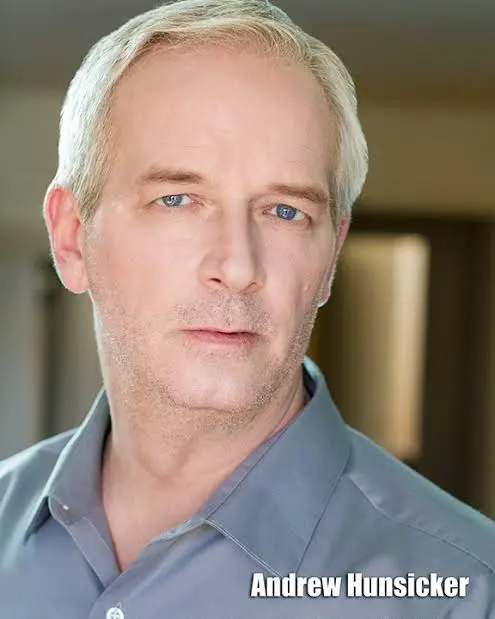
That wraps our Christian Jude Grillo interview, and the safest advice for December stands: if a Santa turns up in aviator shades, do not ask where he got them. If you want a killer Santa with a louder agenda, our review of the Silent Night, Deadly Night reboot has one.
Keep reading on Ginger Nuts of Horror
 Not Your Grandma’s Santa: The Silent Night, Deadly Night Reboot is a Creepy, Clever Gift
 ‘Twas the Night by Kevin Johnson Review: The Village That Worships Santa
 It’s a Wonderful Knife – Horror Movie Review

About Ginger Nuts of Horror
Ginger Nuts of Horror is an independent horror review and culture site based in Edinburgh, Scotland. Edited by British Fantasy Award nominee Jim McLeod, it publishes horror book reviews, film reviews, author interviews, features and cover reveals. Ginger Nuts of Horror won Best Inclusive Film & Book Review Platform at the SME News UK Enterprise Awards 2026.