
Dani Soncasie on the Horror That Made Her | Features | Ginger Nuts of Horror
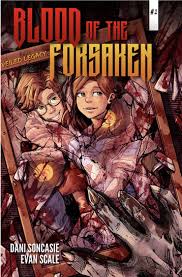
- Author Dani Soncasie
- Editor Carrow Brown
- Art Evan Scale
- Format Graphic novel
- Setting Small-town Midwest
- Subgenre Supernatural thriller, vampire fiction
When vampires descend on the Hogan family home, Emma is trapped inside the one place she should be safe. Her twin brother Jimmy, miles away and certain something has gone badly wrong, races home to find her.
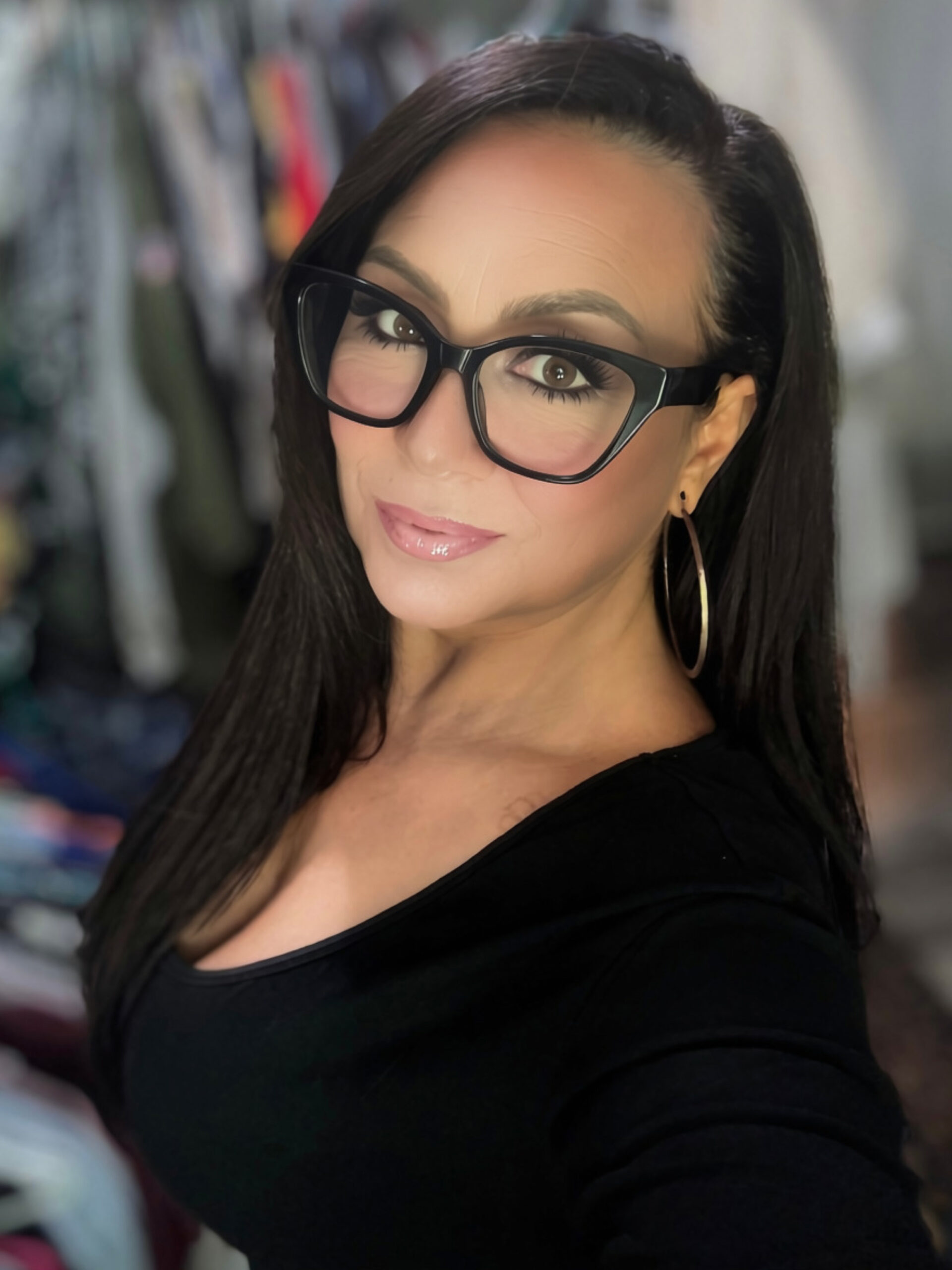
Dani Soncasie is an indie comic creator and horror author from Missouri, and her 2006 novel One Foot in Darkness built a vampire world she has now carried into comics. Blood of the Forsaken, her new graphic novel made with editor Carrow Brown and artist Evan Scale, brings that world home to a Midwestern family. In this guest post, Soncasie picks the three horror influences that made her: a book, a film and a comic. Fans of Anne Rice, The Lost Boys and Hellblazer will find plenty to nod along to, and anyone who reads our horror features on the stories that shape writers will feel at home. Here she is, in her own words.
Dani Soncasie traces her vampires, hunters and family secrets back to three sources: Anne Rice, The Lost Boys and Hellblazer. The thread running through all three is that the supernatural should cost something, and that a story can give a reader somewhere to go when they cannot go anywhere.
Dani Soncasie The Witching Hour
In 1994, I was fourteen years old. I had just had my right foot amputated and my left knee reconstructed, and I was stuck in a bed and a wheelchair.
This was 1994. We didn’t have cable. The internet technically existed, but having it in your home certainly wasn’t commonplace yet, and it was nothing remotely like the endless source of entertainment and distraction we have today. There were no smartphones, no streaming services, no social media.
What we did have was quite the library.
And I was a voracious reader.
I was already a huge fan of vampire books, thanks largely to Christopher Pike. Somewhere along the way, I discovered Anne Rice and proceeded to tear through her Vampire Chronicles in about a week.
Then I picked up The Witching Hour.
I was enraptured.
At fourteen, my physical world had suddenly become very small. I couldn’t simply get up and go somewhere. My body was healing from an amputation and major reconstructive surgery. I was confined to a bed and a wheelchair and whatever was immediately around me.
But Anne Rice could take me anywhere.
Through The Witching Hour, I wasn’t stuck in a bed anymore. I was in New Orleans. I was wandering through generations of the Mayfair family, surrounded by witches and ghosts, magic and spirits, family secrets and histories that stretched across centuries.
That book transported me.
And I don’t mean that in the casual way we sometimes say a good book “takes you somewhere.” I needed somewhere else to go.
Anne Rice gave me one.
What fascinated me wasn’t simply the supernatural element. I’d already fallen in love with vampires. What The Witching Hour showed me was how enormous supernatural fiction could be. A horror story could contain history, family, sexuality, religion, medicine, mythology, tragedy, romance and generations of complicated, deeply flawed human beings. The supernatural didn’t have to replace the human story. It could be woven through it.
The world could feel real enough that the impossible belonged there.
That stayed with me.
Looking back at my own work now, I can see that influence everywhere. I’m fascinated by mythology and history. I love complicated families and supernatural worlds with histories that extend far beyond the characters currently standing on the page. I’m interested in what happens when something impossible crashes into an otherwise recognizable human life.
Most importantly, Anne Rice taught fourteen-year-old me something about storytelling that I don’t think I had words for at the time:
A story doesn’t just have to entertain someone.
It can give them somewhere to go when they can’t go anywhere.
Thirty-two years later, I still haven’t forgotten where The Witching Hour took me.
The Film That Made Me: The Lost Boys
I don’t remember the first time I watched The Lost Boys.
It came out when I was a kid; I’ve seen it more times than I could possibly count, and for most of my life it was simply one of those movies I loved.
It wasn’t until I became a horror creator myself that I started looking at the stories I was writing and realized:
Well, shit.
Apparently The Lost Boys REALLY got in there.
The vampires were actually monstrous. They weren’t just attractive people with slightly pointier teeth. When they revealed themselves, they transformed. Their faces changed. They became creatures. And the practical effects used to bring those transformations to life made them feel physical and real.
I loved that.
But the movie was also FUNNY. It understood that horror and humor aren’t enemies. You can have genuinely frightening monsters and still let your characters be funny, ridiculous, sarcastic human beings.
Then there were the Frog brothers.
Vampire hunters.
Who worked in a COMIC BOOK STORE.
And where did everyone start finding answers about the vampires?
Comic books.
I eventually became a comic creator who writes about vampires and vampire hunters.
Apparently subtlety was never going to be my thing.
But looking back now, I think what influenced me most wasn’t any single ingredient. It was how many different things The Lost Boys allowed a vampire story to be at once.
It’s a horror movie, but it’s also about family. Michael and Sam aren’t just two convenient victims dropped into a vampire story. They’re brothers. Lucy isn’t simply “the mom.” Those relationships matter to what happens.
And then there’s Max.
The reveal that Lucy’s seemingly respectable boyfriend is actually the head vampire is fantastic on its own, but there’s something much darker underneath it that I appreciate even more as an adult. He’s an older man who has cultivated a group of younger people, exerts control over them, and then inserts himself into the life of a single mother and her children. There’s an incredibly effective metaphor for grooming and predatory control sitting underneath the supernatural story.
And just when you think you’ve figured everything out, Grandpa casually reveals that he knew about the vampires all along.
Of course he did.
It’s funny, surprising, and completely changes the way you look back at him.
That’s another thing I apparently carried with me: I LOVE a reveal that makes you reconsider everything you thought you understood about a character.
When I look at the stories I create now, I can see all of those ingredients rattling around in there somewhere: monstrous vampires, hunters, humor in dark situations, family at the center of supernatural horror, hidden knowledge, complicated power dynamics, and reveals that change how you understand what came before.
And comic books.
Lots and lots of comic books.
I don’t think I ever consciously decided that The Lost Boys was going to influence me as a creator. That’s not really how it happened. I was a kid. I loved a movie. I watched it again and again and again.
Eventually, you grow up and start creating your own monsters.
And every once in a while, you look at them and realize you recognize some of their ancestors.
The Comic That Made Me: Hellblazer: Rake at the Gates of Hell
I’ve always loved magic.
But I don’t particularly like magic without rules.
Give me consequences. Give me limitations. Give me a universe where supernatural power isn’t simply something a character can pull out of their pocket whenever the plot requires it. If someone is going to reach into something ancient, powerful and dangerous, I want there to be a price for touching it.
And I want that price to HURT.
That’s one of the things I fell in love with about John Constantine, and particularly Garth Ennis’s Rake at the Gates of Hell, issues #78–83 of Hellblazer.
Constantine exists in a world filled with demons, Hell, magic and supernatural forces, but those things aren’t simply there to give him something cool to fight. They have rules. They have histories. They have consequences.
And Constantine himself is never allowed to walk through that world untouched.
That’s what fascinated me.
He isn’t interesting because he’s the strongest person in the room. Half the time, he absolutely isn’t. He’s interesting because he’s clever enough, stubborn enough and sometimes ruthless enough to survive things that should destroy him.
But survival doesn’t mean he wins.
Not really.
The things Constantine experiences tear pieces out of him. People around him suffer. His decisions have consequences. His victories can be ugly. His mistakes follow him. His relationships bear the weight of the things he’s done, and the supernatural world he keeps reaching into always seems prepared to collect another debt.
I LOVE that.
By the time you reach Rake at the Gates of Hell and Constantine is settling his score with Nergal, you’re not simply watching a hero confront a demon. You’re watching the culmination of history between them. There is weight behind it. Constantine carries everything that came before into that confrontation.
That’s the kind of supernatural storytelling that stayed with me.
Magic is far more interesting to me when it isn’t easy.
If you summon something, there should be rules.
If you cast something, there should be limitations.
If you make a bargain, somebody is going to collect.
If you acquire power, that power should change something.
And if you spend your life walking around among monsters, demons and things human beings were probably never meant to understand, I don’t believe you emerge psychologically pristine at the end of it.
I want characters who carry their stories with them.
That’s probably the greatest influence Hellblazer had on me as a creator. It helped shape my belief that supernatural worldbuilding needs more than mythology. It needs consequences.
The rules matter.
The cost matters.
And perhaps most importantly, what all of it does to the PEOPLE involved matters.
I create worlds with vampires, magic, ancient organizations, supernatural abilities and people trying to understand forces much older and more powerful than themselves. I spend an almost ridiculous amount of time thinking about the rules governing those things.
What can this power do?
What CAN’T it do?
Where did it come from?
Who understands it?
What happens when someone uses it incorrectly?
And what does using it cost?
Because “magic did it” has never been a particularly satisfying answer for me.
Tell me the rules.
Then show me what happens when someone is desperate enough to break them.
That’s where things get interesting.
Get the book
Blood of the Forsaken by Dani Soncasie, edited by Carrow Brown with art by Evan Scale, is in production and crowdfunding now on FundMyComic.
Dani Soncasie has made her case: magic needs rules, vampires need proper monster faces, and every answer worth having is filed in a comic shop. The Frog brothers would approve, though they would still make you pay for the comics.
Keep reading on Ginger Nuts of Horror
 Darkness by John Saul, My Life In Horror
 DURHAM RED AND THE RETURN OF THE PROBLEMATIC VAMPIRE
 5 Best Teen Vampire Movies That Capture High School Horror and Alienation: A Fright Club Special
About Ginger Nuts of Horror
Ginger Nuts of Horror is an independent horror review and culture site based in Edinburgh, Scotland. Edited by British Fantasy Award nominee Jim McLeod, it publishes horror book reviews, film reviews, author interviews, features and cover reveals. Ginger Nuts of Horror won Best Inclusive Film & Book Review Platform at the SME News UK Enterprise Awards 2026.


