
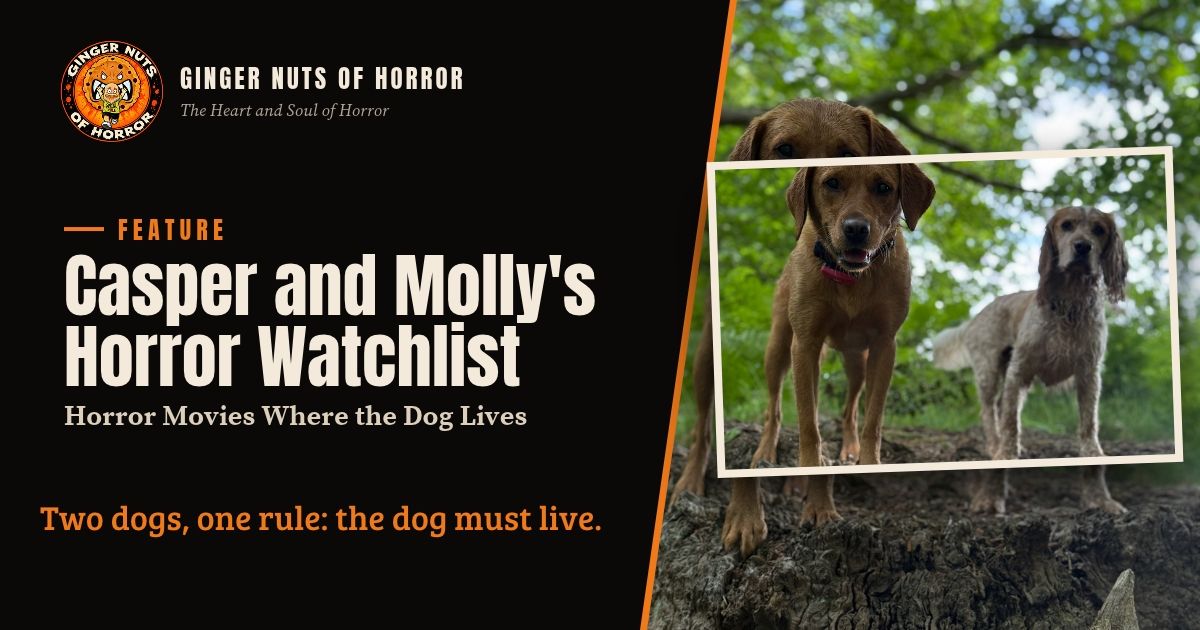
Two dogs, one rule: the dog must live.
Casper and Molly’s Horror Watchlist: Films Where the Dog Lives | Feature
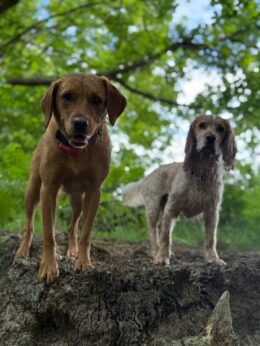
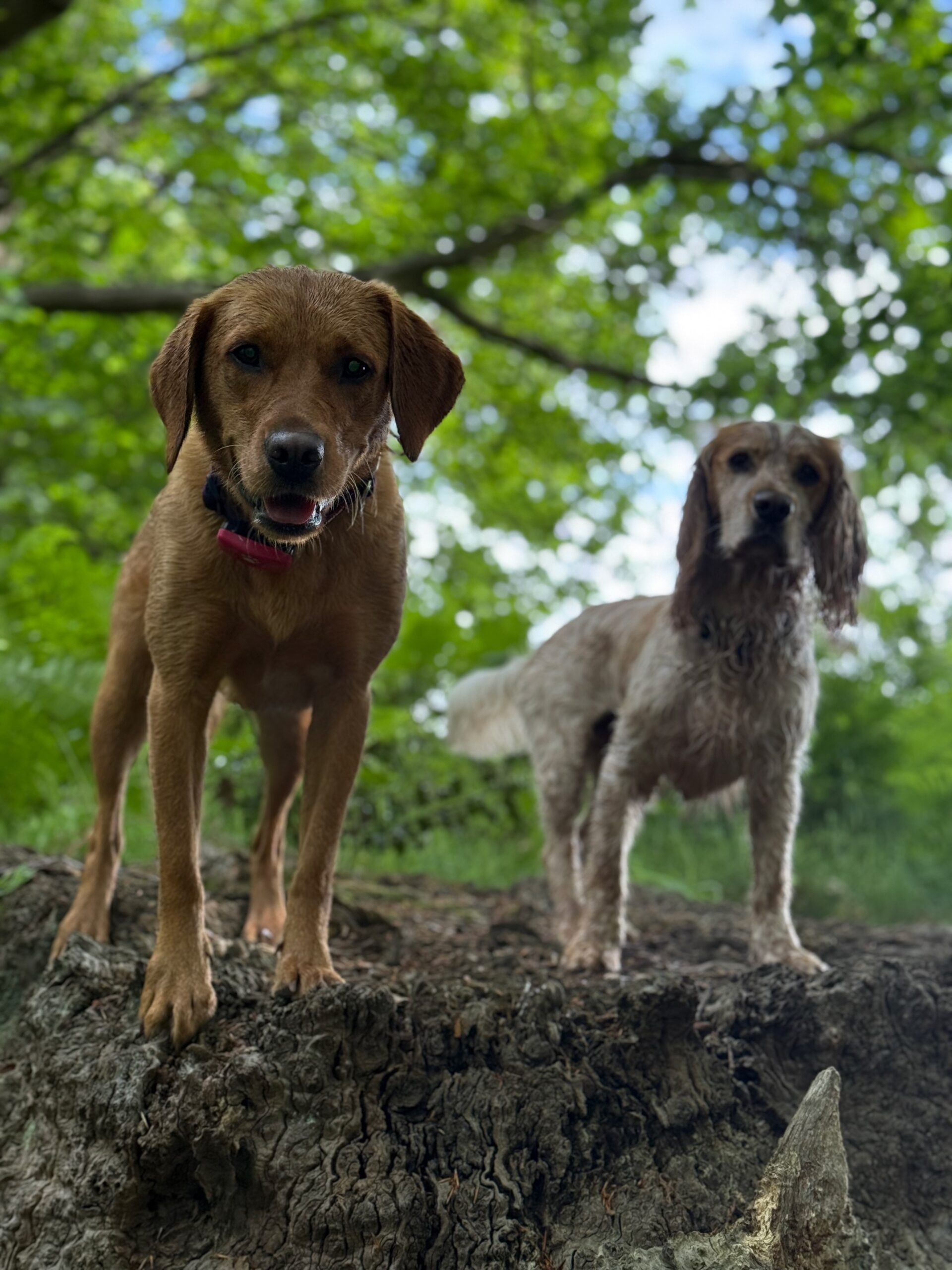
Horror movies where the dog lives are rarer than they should be, so this Halloween the task of finding them goes to Casper and Molly, the two dogs who share a home with Ginger Nuts of Horror’s editor. Their panel has one rule. Every film on this watchlist has been checked for the only question that matters, which is does the dog die, and sorted into approved, approved with conditions, and rejected. Expect Gremlins, Dog Soldiers, The Lost Boys, Poltergeist, The Amityville Horror and Good Boy on the right side of the line. The piece also asks why dogs in horror movies so rarely make it to the credits. Biscuits are optional.
Horror kills the dog for the same reason it cuts the phone line. The dog is the alarm. It sees the thing in the corner first. It growls at the basement first. And it is right, every single time.
When the trailer for Good Boy landed in 2025, the internet asked one question, and it wasn’t about the ghost. Does the dog die?
Searches for the answer shot up so fast that the director, Ben Leonberg, spoke up to settle nerves. His point was simple. Horror has trained us to expect the worst for dogs. Usually, the dog does not make it out of act one.
That habit has a cost, and in our house it is paid by two very serious critics. Casper and Molly sit on GNoH’s strictest review panel. They are not moved by performances, they have no views on cinematography, and they will not be drawn on the ending of The Lighthouse. They have one rule, and it is the only rule.
The dog must live.
Casper and Molly’s Horror Watchlist: Horror Movies Where the Dog Lives
What follows is their watchlist for Halloween, sorted by verdict. A few house notes before we start. A dog that is the monster does not count, for or against. Cats are not the panel’s department. And spoilers about dogs are not spoilers. They are a public service.
Approved: The Dog Lives
Dog Soldiers (2002). The panel’s top pick, and it starts with a test of character. In the opening scenes, Private Cooper fails selection for the special forces because he refuses to shoot a dog. The panel admires his priorities. Neil Marshall’s film then drops his squad into the Scottish Highlands to fight werewolves, and by dawn the only ones still standing are Cooper and Sam, a Border Collie. Sam comes out of the cellar alive.
The film is set in Scotland and was shot almost entirely in Luxembourg, which the panel considers a lesser crime. GNoH’s Fright Club crew have already made the case for Dog Soldiers among the great werewolf films. Stick count: a whole Highland forest of them, the best the panel has ever seen, sadly guarded by very large, very hairy neighbours who do not play fetch.
Gremlins (1984). Barney has a rough Christmas. A local miser wants him put down, and the gremlins string him up in fairy lights. But he makes it to the end, and he is there when Stripe finally gets what’s coming. The panel was less pleased to learn how close it came. The writer, Chris Columbus, has said that his early script killed Barney off, and that the gremlins then ate him. Steven Spielberg had the script toned down. Casper and Molly would like to thank Mr Spielberg personally. Snack rating: poor, since the little green fellows get fed after midnight and nobody offers the dog so much as a crumb.
The Lost Boys (1987). Nanook is a Malamute in a family that has just moved to a Californian beach town full of vampires. He saves young Sam when his big brother gets peckish, and in the final fight he drags a vampire into a bath of holy water. The panel notes that Nanook is the only member of the household who spotted the problem at once. Ball count: none, but there is an entire beach to dig up, which the panel agrees more than makes up for it.
Poltergeist (1982). E. Buzz, the family’s Golden Retriever, reacts to the ghosts from early on. When things get truly bad, the family sends him away to be safe, and he is with them at the end as they flee to a motel. The panel approves of a family that makes the dog’s safety a priority, and would like other horror families to take note. Food rating: patchy, as the kitchen chairs keep stacking themselves before anyone gets round to filling the bowl.
The Amityville Horror (1979). Harry the black Labrador is the first to sniff out the red room in the basement. On the last night, as the walls bleed and the family flees, George Lutz goes back into the house to fetch him. Harry then helps pull George out of the sludge. The panel regards this as a fair trade, and the only sensible decision anyone makes in the whole film. Stick count: high, since the house comes with plenty of land and a great many flies, which the panel regards as a bonus game.
Dawn of the Dead (2004). Chips is a stray who turns up at the mall halfway through Zack Snyder’s remake. The zombies don’t notice dogs at all, so the survivors use him to carry supplies in a little backpack to a man trapped in the building next door. He makes it to the end, which is more than most of the humans manage. The panel liked the backpack. Snack rating: the best on this list, because he lives in a shopping centre, and the panel has always believed a shopping centre is just a food hall with stairs.
Good Boy (2025). The whole film is seen through the eyes of a dog, Indy, as his owner moves into a haunted house in the woods. Leonberg cast his own dog and shot the film over a few years, in short sessions, so Indy was never overworked. Indy lives. The humans fare rather worse, so bring tissues. The panel approves, with the note that it is the only film on this list made by someone who clearly understands the panel’s priorities. Ball count: unknown, as the panel spent the whole film barking at the telly, which they take as a sign of quality.
Approved With Conditions
The Hills Have Eyes (1977). A split verdict. The Carter family bring two German Shepherds, Beauty and Beast, on their road trip. Beauty does not survive the first night. Beast does, and he spends the rest of the film helping the family fight back. The panel approves of Beast, and cannot forgive the loss of Beauty. Stick count: there are none in the desert, which the panel suspects is why everyone out there is in such a foul mood.
The Silence of the Lambs (1991). Precious the Bichon Frisé lives, and ends the film in the arms of the woman who was trapped in the pit. The panel noted that her owner is a serial killer. They also noted that he was a very attentive dog owner. They have chosen to leave it there. Treat rating: very high, since Precious is clearly spoiled rotten, though the panel will not be accepting a basket from anyone in that house.
The Invisible Man (2020). Zeus the Doberman lives with Cecilia and the controlling boyfriend she escapes. She takes off his shock collar as she leaves. Later she comes back for him, and he goes with her for good. The panel approves of the film and of Cecilia, and would like it on record that the collar should never have been there. The panel’s only question is who throws the ball in a house where you can’t see anybody, and whether it still counts as fetch.
Rejected
Halloween (1978). Lester, the neighbour’s dog, does not make it through the night. The panel reminds readers that the film was made on a tiny budget, and that it still found room for this. Snack rating: nil, on the one night of the year every door in the street hands out treats that dogs are not allowed, which the panel calls cruelty in itself.
The Babadook (2014). A fine film. The family dog does not survive it. Rejected, with regret. Ball count: irrelevant, because the panel watched the whole thing from under the sofa and has no further comment.
I Am Legend (2007). Sam is the only friend Will Smith has left in an empty New York. The panel will not discuss it further. Stick count: an entire empty city’s worth, and the panel still cannot bring themselves to talk about it.
The Conjuring (2013). Sadie the dog refuses to come into the house on the first night. She is right. She is also the first to go. The panel finds it hard to forgive a film that punishes the only one with any sense. Food rating: unknown, as Sadie never got as far as the kitchen, and frankly she had the right idea.
Cujo (1983) and The Thing (1982). Recused. When the dog is the monster, or the monster is pretending to be a dog, the panel withdraws from the case and goes to lie down in another room. For the record, neither film offers a single decent stick, which the panel considers the least of their problems.
Why Horror Keeps Killing the Dog
In fairness to film-makers, the dead dog is doing a job. It tells you the danger is real, fast, and without spending one of the main cast. An audience that shrugs at a dead teenager will sit up at a dead dog. That makes it cheap, efficient, and very effective. Leonberg made much the same point himself. The whole of Good Boy is built on that trope, and on our fear of it.
But look at the dogs on this list and a pattern shows. Harry finds the red room. E. Buzz reacts to the ghosts. Sadie won’t go in the house. Nanook knows what his brother is before the family does. Indy sees what his owner can’t. In horror, the dog is almost always the first to know.
Horror kills the dog for the same reason it cuts the phone line. The dog is the alarm. It sees the thing in the corner first. It growls at the basement first. And it is right, every single time. Kill the dog and the house goes quiet, and that silence is where the film wants you.
So the panel’s advice for anyone moving into an old house this Halloween is simple. Watch the dog. If the dog won’t go in, neither should you. For anything not on this list, the crowd-sourced website Does the Dog Die will tell you before the film does.
And if you are choosing what to watch tonight, pick one where the dog is the cleverest one in the house. It usually is. Casper and Molly would like that noted.
Keep reading on Ginger Nuts of Horror
 Top Werewolf Movies to Watch This Winter – Fright Club Podcast
 Five Horror Movies Where the Surgeon Is Almost Certainly Not Board Certified
 Best Horror Films of 2026 (So Far)
About Ginger Nuts of Horror
Ginger Nuts of Horror is an independent horror review and culture site based in Edinburgh, Scotland. Edited by British Fantasy Award nominee Jim McLeod, it publishes horror book reviews, film reviews, author interviews, features and cover reveals. Ginger Nuts of Horror won Best Inclusive Film & Book Review Platform at the SME News UK Enterprise Awards 2026.