Be careful what you wish for. It might wait fifty years to collect.
Mazywood | Tananarive Due | Titan Books / Saga Press | 22 September 2026 |
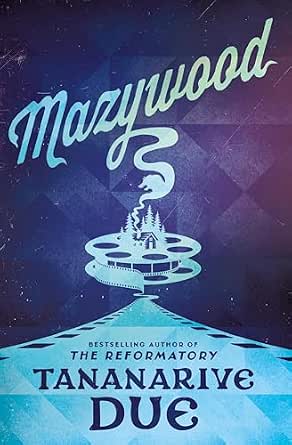
Tananarive Due follows her Stoker- and World Fantasy-winning The Reformatory with Mazywood, a generation-spanning creature feature from Saga Press. This Mazywood review takes on a novel that opens in 1926, when a poor Florida girl named Mazelle wishes at a pool for a friend and wakes as a Black child star of Old Hollywood. Fifty years on, her grandson Johnny brings his family to the mountain retreat she left behind, where something lonely and angry still waits in the trees. Part haunted-house drama, part survival horror, part historical family saga, it is Black horror built on the oldest question of all: what did that wish really cost?
A granted-wish horror with a century of rage behind it. Due asks the genre for a monster, a family saga and a survival story all at once, and gets all three, cost and all.
A granted wish is the oldest trap in horror, older than the haunted house and crueller than any monster, because it turns up wearing the face of a gift. You ask for one small thing. The universe, grinning, hands you precisely that and quietly itemises the cost of everything else.
Tananarive Due has built a career on learning where those costs land hardest, and in her new novel she posts the invoice to three generations of one Black family. Mazywood opens in 1926, in Gracetown, Florida, the fictional patch of the South that has become Due’s own Castle Rock. A poor child named Mazelle Washington walks out to a wishing pool and asks for a best friend, someone who will love her better than anyone has yet managed.
A white stray called Scout trots out of the trees, and the wish seems to come true twice over, because almost at once Mazelle is a child star of the silver screen and her whole family is lifted clear of poverty. Fame, in the Hollywood of Hattie McDaniel and Lena Horne, is a peculiar thing to hand a Black girl. It arrives with its own long bill, and Due has read every line of it.
Cut forward the better part of a century. Johnny Washington, Mazelle’s grandson, is a screenwriter whose career has stalled and whose latest big project has just fallen apart. He needs somewhere to lick his wounds, so he takes his wife Sharise and their daughters up to Mazywood, the remote mountain retreat his grandmother left behind. The cabin has been waiting. So has the thing in the woods around it, which the book calls lonely and angry, and which has been hidden there far longer than anyone living can remember. Johnny has driven his family straight onto its hunting ground, and he does not yet grasp that the monster and the wish are the same story told from opposite ends.
The horror here is not the creature, or not only the creature. It is the symmetry. A lonely child once asked the dark for company and the dark answered. Decades later a lonely, furious thing waits in the trees for someone to come home. Due lets you feel the rhyme before she ever spells it out, and the dual timeline quietly stops being a structural trick and becomes an argument.
Wishes do not expire. They compound. The loneliness Mazelle tried to wish away as a girl never actually left; it went into the ground at Mazywood and grew, fed on a century of a family turning against itself under the weight of racism, secrecy, and the strange violence of being made a public spectacle. When the creature finally shows its face, it is not a random beast that wandered in from another book. It is the bill, arriving with interest.
Look closely at how that wish is granted and you can see the whole novel’s method in miniature. Mazelle does not summon a demon or sign anything in blood. She asks for a friend, a dog appears, and stardom simply follows, as though the world had been waiting for an excuse to be kind to her. That is the cleverness of the setup and the root of its slow dread. Nothing announces itself as cursed. Scout is only a stray. The film roles are only luck. The money is only relief.
Due withholds the price for so long that by the time you understand there was one, it has already been paid several times over, by people who never made the wish at all. A story like this usually shows its hand early, with a monkey’s paw curling or a genie smirking behind the fine print. Due plays it entirely straight-faced, and it is far more frightening for the patience.
This is Due at the height of her powers as an architect of dread. Read her at her best and the prose works rather like a wishing pool itself, still and clear on the surface, with something patient moving in the deep water. She has been circling this material for thirty years. Her 1995 debut The Between set a Black husband and father sliding between life and death while his family fielded racist threats, and even then she was writing about the supernatural as a pressure that racism applies rather than a thing that visits from outside it. The African Immortals sequence, from My Soul to Keep onward, gave her scale.
The Good House gave her a haunted property and a family curse to run through it. Ghost Summer and The Wishing Pool and Other Stories gave her Gracetown and the wishing pool premise that Mazywood now stretches to novel length.
And The Reformatory, which took both the Bram Stoker and the World Fantasy Award for Best Novel in 2024, proved she could hold a whole historical horror on her shoulders without dropping the human weight of it. Mazywood is unmistakably the book of the writer who made all of those. The Old Hollywood chapters, in particular, land with the confidence of someone who has been building a haunted map of America one title at a time and finally reached its glittering, rotten west coast.
Mazelle’s timeline crackles. The modern one idles. Johnny and Sharise spend long stretches stuck in neutral, frozen in thought and second-guessing, and the reader waits for them to do something while the past chapters are alive with a child star navigating an industry that wants her small. Around the midpoint the novel also changes shape, sliding out of a Shining-style chamber piece in a cursed house and into open-air wilderness survival horror, and the join shows. The survivalist stretches thicken with detail exactly where the dread should be tightening, and you feel a hundred or so of those pages more than you feel the rest.
There is a version of this book fifty pages shorter that is sharper for the cut. Credit where it is owed, though. Even the slack chapters stay highly readable, Due’s line-level control never slips, and supporting players keep the modern timeline breathing when its leads will not; early readers have singled out young Imani and Uncle Ricky, and they are right to.
One late turn in the present-day storyline also arrives more abruptly than it earns, the sort of pivot a chapter or two of connective tissue would have carried more gently, and you can feel the seam where the stitching pulls. The sag is real, but it is a soft spot in a strong book, not a crack running through it.
Where Mazywood really earns its place is at the crossroads of half a dozen horror traditions at once. It is a creature feature. It is a haunted-house novel. It is a survival thriller. It is a hundred-year family saga about the price of assimilation and the fury that gets swallowed to pay it.
Saga Press is pitching it as S. A. Cosby’s All the Sinners Bleed meeting Percival Everett’s Erasure, and for once the marketing comp actually earns its keep: Cosby for the Southern reckoning with racial violence, Everett for the acid portrait of a Black artist trapped inside a white industry that will only reward a certain performance. Set it beside Victor LaValle’s monsters and the Jordan Peele films Due literally teaches at UCLA, and you can see the tradition she is writing from and feeding back into. Gracetown, meanwhile, quietly does the work Castle Rock and Derry do for King, gathering her books into one haunted geography where a wish made in one story can grow teeth in another.
The Old Hollywood strand is where the book’s history does its sharpest cutting. Due sets Mazelle down inside an industry that will gladly light a Black girl beautifully on camera and then have no idea where to seat her once the cameras stop, an industry that turns her into a beloved image while quietly stealing the ordinary life that image is built on top of.
Naming Hattie McDaniel and Lena Horne in the same breath as Clark Gable is not set dressing. It is a reminder of the exact terms on offer to a Black performer in that era, and of how thin the line ran between being celebrated and being consumed. The creature in the trees is monstrous. The machine that made Mazelle a star is monstrous too, and it does not have the decency to grow fur or leave tracks.
The theme underneath all of it is rage as inheritance. Not the loud kind. The kind that gets buried to keep a family safe, then passed down anyway, warping every generation it touches. Due has always understood that the true monster in this kind of story is the machinery that made the rage necessary, the studio system that would crown a Black girl and cage her in the same breath, the country that turns spectacle into a substitute for personhood.
The creature in the trees is frightening, but it is not the villain. It is the honest expression of a hurt nobody was allowed to name out loud. That is a far harder trick than a jump scare, and it is the reason her horror keeps winning prizes that horror is not always given.
So here is the shape of it. Due asked the genre for a monster and a family saga and a survival story all at once, and, like every wish in her fiction, the request was granted. The gift is everything around them, and the gift is the reason she remains the most necessary horror writer working the American haunt today. Make the wish. Just remember who taught you that they always come true.
Mazywood by Tananarive Due
From the Bram Stoker, World Fantasy and Los Angeles Times Book Prize winning author of The Reformatory.
A gripping and thrilling supernatural horror and family saga about Mazelle Washington, a child star of 1920s Hollywood, and the legacy of her wishes generations later.
1926, Gracetown, Florida.
A young Mazelle sets out from her Florida home to find the Wishing Pool, and make her wish for a better life. A best friend forever, who will love her better than anyone else.
When Scout the Wonder Dog appears, it seems her wish has come true, and she is suddenly a star of the silver screen, her entire family lifted from poverty.
Johnny Washington, Mazelle’s grandson, late in his screenwriting career, needs a break after a major project falls through. So he takes his wife and daughters out to Mazywood, the remote retreat he inherited from his grandmother.
But wishes are tricky things, and fame isn’t always fortune. Hidden in the forest around Mazywood is a legacy of pain and sorrow, of a family turned against itself by legacies of racism.
As they uncover Mazelle’s lost legacy, a terrifying creature stalks the woods, and Johnny and his family are thrust into a desperate fight for survival in the icy wilderness around Mazywood.
Ginger Nuts of Horror: The Heart and Soul of Horror Reviews
Every feature is built to sell your work. We include backlinks to your website or Amazon author page, a full synopsis, and a universal purchasing link that sends readers straight to their local store. Add a large, engaged social following and an 18-year archive of trusted horror coverage, and you have a platform genuinely built to grow your readership.
Whether you’re an established author, an indie filmmaker, or a debut voice in indie horror, there’s a way for us to help you reach more fans. Explore our horror book reviews and horror movie reviews, then get your horror book or film featured today.