
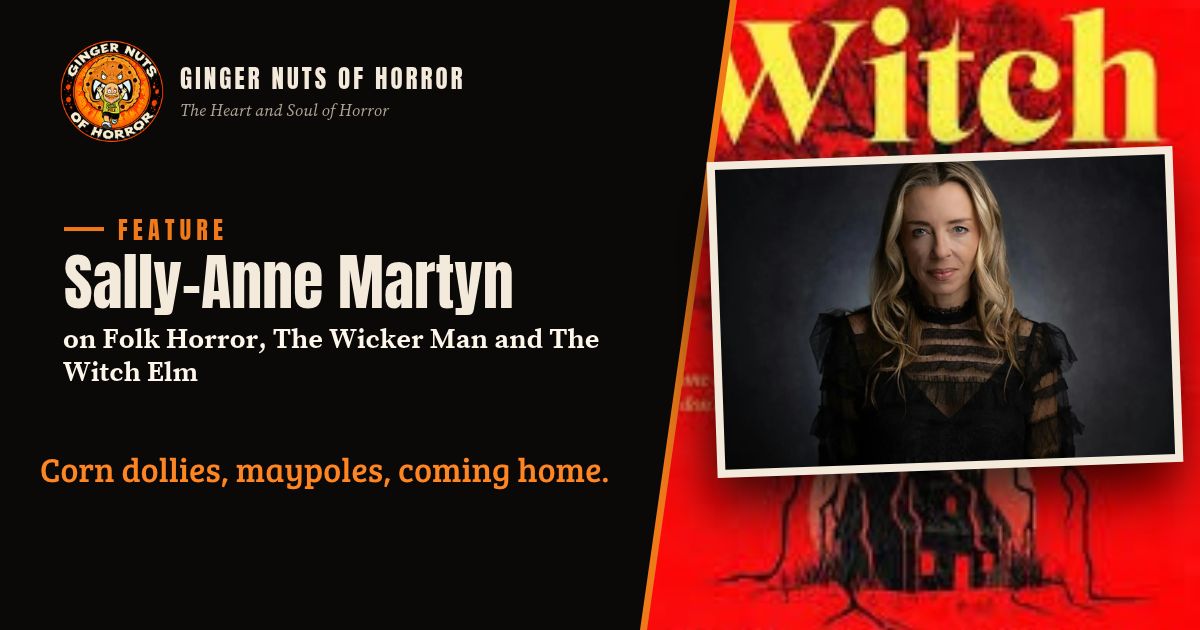
The Witch Elm | Sally-Anne Martyn | Boldwood Books | 9 October 2026 |
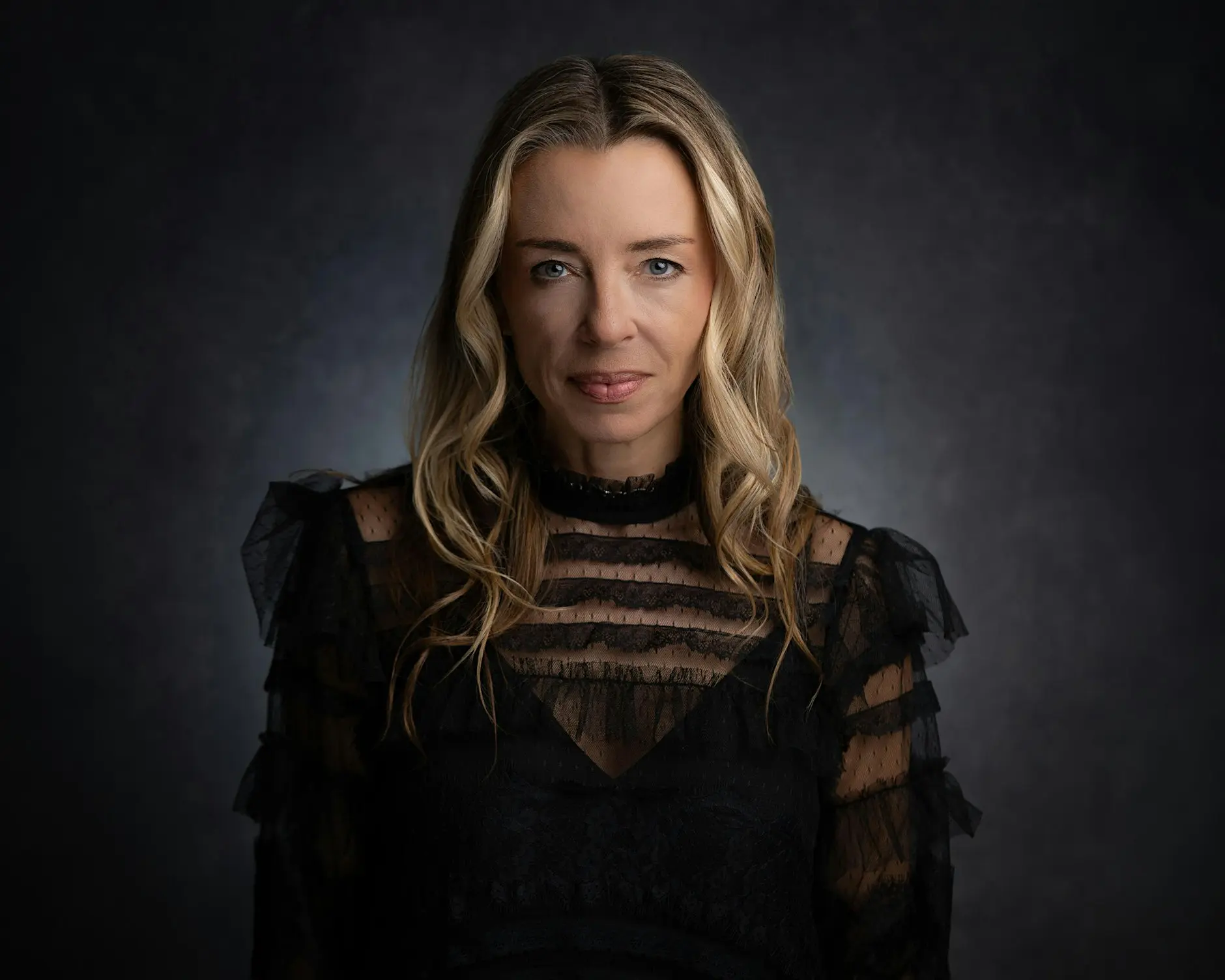
Sally-Anne Martyn grew up in a small Derbyshire village in the Peak District, and her new novel, The Witch Elm, is a folk horror out now from Boldwood Books. In this guest post she looks back on corn dollies, well dressings and gala weeks, and on the New Year’s Eve when she finally saw The Wicker Man. She takes in stone circles, a Bakewell witch trial and a wise woman who could find any missing husband. It is a warm and funny read, and a fine fit for our horror features. She also has a bone to pick with one famous Maypole scene. Here is Sally-Anne Martyn on folk horror, in her own words.
For Sally-Anne Martyn, folk horror is less a fright than a homecoming. Raised on corn dollies, well dressings and stone circle legends, she found The Wicker Man felt almost like coming home, give or take the sacrificed policeman, and the traditions of her Derbyshire village became the ground her fiction now grows from.
Sally-Anne Martyn on Folk Horror, The Wicker Man and The Witch Elm
I was born in 1973, the same year one of the best folk horror films of all time was released. I watched horror from a very young age, I don’t know why, I was just always drawn to it. Horror doesn’t really scare me, it thrills me. Had I grown up in a dysfunctional unhappy home, maybe I would have preferred Disney films to escape into, but my childhood was happy and horror for me was a safe way to experience the darker side of life.
The Wicker Man had somehow escaped me until my mid-twenties. For most of the seventies and eighties my horror viewing relied either on being taken to Blockbusters by my dad, or whatever might appear on terrestrial TV. My all-time favourite film is and always will be An American Werewolf in London. After falling in love with it from first rental watch, my dad taped it for me. Unfortunately, the cassette was glitchy and so for years I missed key lines, ‘You made me mi *glitch* board before.’ Luckily, I had watched the rented version enough that I could fill in the blanks (and the swear words that had been dubbed over).
But back to The Wicker Man. It wasNew Year’s Eve and other than my sister and her partner I was among strangers, but any group that decides on watching horror post Auld Lang Syne are most definitely my kind of people. I was a fan of folk-horror from that moment on.
I have seen it many times since and a proud owner of the 50th anniversary special edition box set, which must be one of the most beautiful re-editions out there. There are are a couple of things however that bug me about it. Firstly (and probably controversially) I feel Ingrid Pitt and Diane Cilento’s characters are a blonde siren too far. Not that I mind blonde hair, I am blonde and firmly on #teamblonde.
It’s just that it feels like they are one role split into two. Perhaps Diane was against a nude bath scene, or Ingrid not on board with the ethics of tying a beetle tied to string so they split a role? Who knows, but it’s a small concern. The second issue I have is bigger, and no, it’s not Britt Ekland’s clunky body double scenes…it’s the Maypole dancing.
I grew up in a small Derbyshire village in the Peak District, and it wasn’t until watching The Wicker Man that I realised some of our traditions might be perceived as ‘other’ and well frankly, strange. I have made corn dollies. Many a house in our village displayed them in the 80’s alongside illustrations of doe eyed children and sombrero wearing wicker donkeys bought back from package holidays to Spain. Rural village life was mapped by religious holidays and old traditions. The creating of the ‘Well Dressing’ was a big event for us.
Patient and diligent villagers intricately placing single petals and twigs into damp clay to create a mosaic, usually with a religious theme. The masterpiece then blessed by the vicar to give thanks for our water supply. The most exciting week in the village was Gala week. This would be where the new Carnival Queen and her attendants would be ‘crowned’ followed by a week of events from tug-o-war to wheelbarrow races. The final day a procession through the village culminating in a barn dance.
Much of what I write, whether it’s dark thrillers or with my latest book, a folk-horror The Witch Elm is heavily influenced by my upbringing. Though my village (‘she would say that’) was not creepy in anyway, I know how small communities are can be daunting for the ‘incomer,’ think of An American Werewolf in London and the infamous ‘Slaughtered Lamb’ scene. Add to that long held traditions and ancient myths and I had the perfect grounding to write the weird.
Not far from where I lived is ‘The Nine Ladies’ stone circle, somewhere I have visited many times. Legend has it that nine women went dancing on the Sabbath and were turned to stone as punishment. Not far from The Nine Ladies and another place I went to as a child is Rowtor Rocks, a formation of rocks near ‘The Druid Inn’ pub. I was told it was a druid house, but there is no concrete (excuse the pun) evidence. There are steps and passages linking the rocks, carvings and entrances to ‘rooms.’ There are stories of ritualism, religion and even witchcraft. Whatever Rowtor Rocks is, it is rich in atmosphere and stories.
Nearby Bakewell, a town more famous for its puddings and tarts (an on-going argument over which is best) has one of the most famous stories of Derbyshire witchcraft. In 1608 Mrs Stafford a milliner, lived with her sister / companion and they would take in lodgers. One night a Scottish traveller reported seeing lights shining through the gaps in his door and heard a spell being chanted.
The women vanished and when he repeated the chant, he was whisked away to London where he found himself beside the two women. To explain his presence, he reported what he had experienced, leading to the two women being tried and executed for witchcraft. Another witchy encounter tells the story of The Wise Woman of Killamarsh, a supposed witch who would be consulted by people in difficulty. Her particular skill was locating absent, drunken husbands and it was said she never failed. Today we don’t need to risk a trial and potential burning for such skills, we have social media detectives to do our bidding!
When you grow up in a place as steeped in tradition and folklore as Derbyshire is, especially if you’re drawn to the darker side, it’s easy to see how this can become part of you. The Wicker Man doesn’t scare me, as brilliant as it is. It’s almost a comfort, like coming home but without the sacrificial police man. To the best of my knowledge there was no sexual shenanigans in the graveyard, had there been I fear our Vicar Mr Hulbert would have expired like a freesia in the Saraha. And Mr Hulbert brings me nicely back to the Maypole scene in The Wicker Man.
While Edward Woodward is clutching his investigative pearls at the day’s lesson plan, I was more focussed on the children dancing around with their ribbons. At the end of the dance the ribbons should be neatly weaved down the pole, theirs looked like an explosion in a haberdashery factory. Though maybe if at seven years old, I’d have known I was dancing around a giant phallus in front of the vicar and his wife, maybe my ribbon might have gone a bit skewwhiff.
Ribbons aside, my love for The Wicker Man remains and always will, there is nothing creepier and unsettling to me than a stranger in a strange village. It’s what I like to read, watch and write and it’s what I know. I am grateful for growing up in such a place, I have lived in many different places in the UK and abroad, but it’s clear from my writing that you can take the girl out of Derbyshire, but you can never take Derbyshire out of the girl.
Sally-Anne Martyn’s novel, The Witch Elm is published by Boldwood and is out now.
Get the book
The Witch Elm by Sally-Anne Martyn is out now from Boldwood Books in paperback, ebook, large print and audiobook.
Keep reading on Ginger Nuts of Horror
 The Last Sacrifice Review: The Unsolved Murder That Haunted British Folk Horror
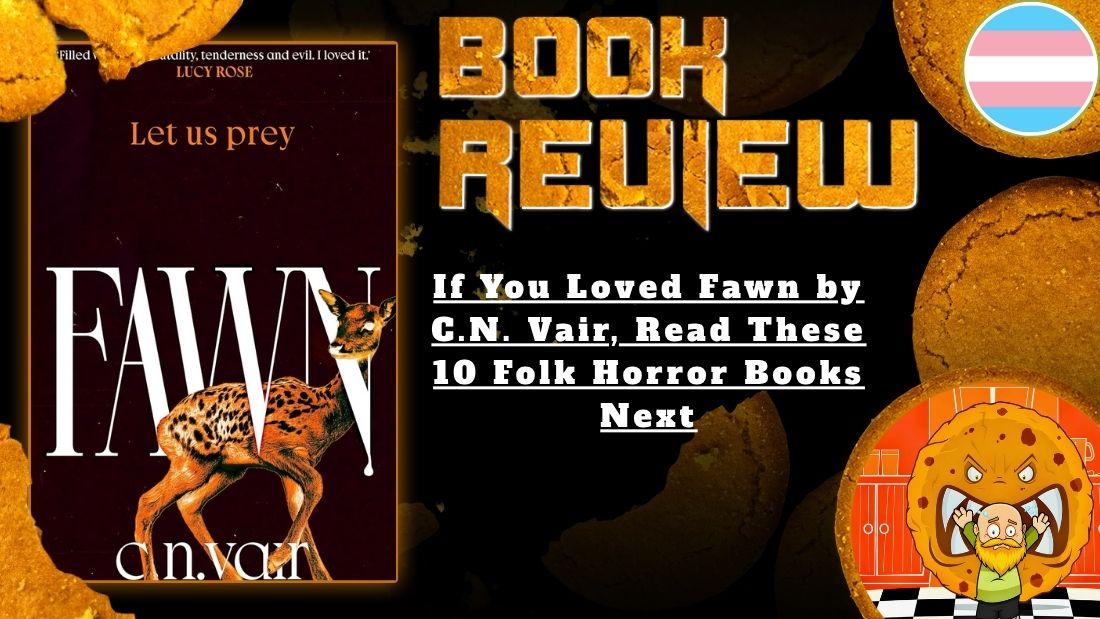 If You Loved Fawn by C.N. Vair, Read These 10 Folk Horror Books Next
 Queens of the Crone Age by Tracy Fahey: The Finest Irish Folk Horror
About Ginger Nuts of Horror
Ginger Nuts of Horror is an independent horror review and culture site based in Edinburgh, Scotland. Edited by British Fantasy Award nominee Jim McLeod, it publishes horror book reviews, film reviews, author interviews, features and cover reveals. Ginger Nuts of Horror won Best Inclusive Film & Book Review Platform at the SME News UK Enterprise Awards 2026.


