
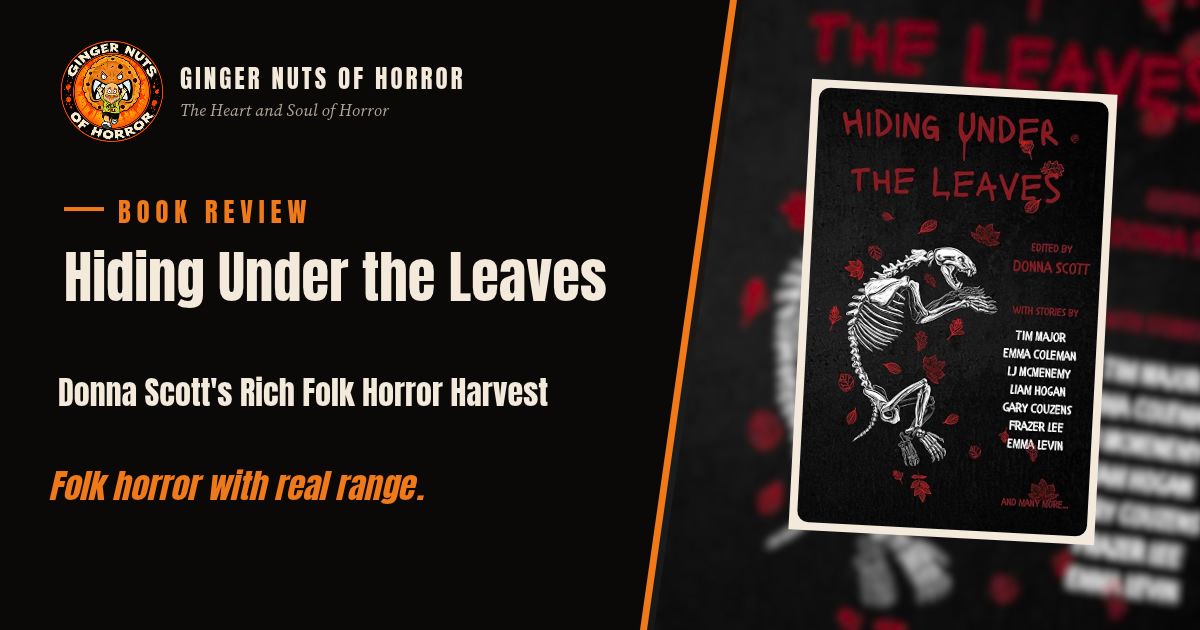
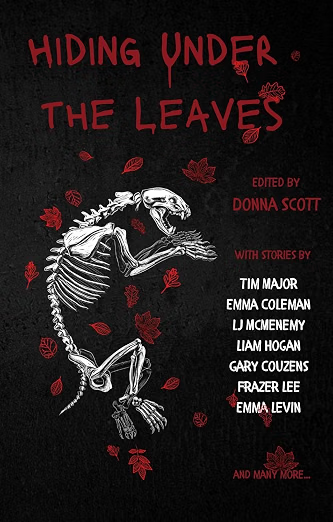
Hiding Under the Leaves | Donna Scott (editor) | The Slab Press | 3 November 2025 |
Twenty-two original folk horror stories from The Slab Press, edited by Donna Scott, and a book with real range.
- Author Donna Scott (editor)
- Publisher The Slab Press
- Published 3 November 2025
- Pages 360
- Format Paperback, ebook
- ISBN 978-1-7384268-6-7
- Subgenre Folk horror anthology
- Reviewed by Jim McLeod
Twenty-two new folk horror stories reach from a school playground to a Lincolnshire fen in 1641, gathering curses, rituals, uneasy landscapes and old beliefs that refuse to stay buried.
This Hiding Under the Leaves review looks at the folk horror anthology edited by Donna Scott for The Slab Press, published on 3 November 2025. It gathers twenty-two original stories, from a school playground and a Wiltshire long barrow to a Lincolnshire fen in 1641 and a bed and breakfast in the English countryside. Contributors include Tim Major, Frazer Lee, Gary Couzens and Pete W Sutton. Folk horror has had a busy few years, and our horror book reviews keep testing where its edges lie. This collection pushes those edges outward without losing the mud on its boots. Here is why it earned five stars.
Twenty-two stories, and the soil is different under every one. Donna Scott has built a folk horror anthology with real range, from comic bite to quiet grief to plain dread. The two longest tales ask for patience, and they repay it. Step off the path.
Hiding Under the Leaves Review: Twenty-Two Ways to Lose the Path
Every footpath is a promise that somebody walked it before you and got home. Folk horror asks who, exactly, and when.
Donna Scott’s anthology hands that question to twenty-two writers, and they answer in twenty-two voices. Some are funny. Some are cruel. One or two are so tender that you forget this is horror. Then a last line puts a hand on your shoulder.
Variety is the first thing to say about Hiding Under the Leaves. The Slab Press is a young publisher, set up in 2023 by Scott herself. It has built a book where setting, era and form change from story to story. We get a school gate and a Wiltshire long barrow, a fen in 1641 and a Slavic village at noon. We get a story told as a questionnaire, one told as a gossip’s monologue, and three told in the second person. Nothing repeats. The fields change, and so does the thing standing in them.
Folk horror has been busy lately, and it turns up often here at Ginger Nuts of Horror. The Fiends in the Furrows (Nosetouch Press, 2018) mapped much of the old ground. So did Stephen Jones’s The Mammoth Book of Folk Horror (Skyhorse, 2021). Paul Kane and Marie O’Regan’s Folk Horror Short Stories brought famous names to the subject in 2024. Scott’s book differs in a useful way. It trusts newer voices, and it stretches the label.
The usual parts are all here: curses, sacrifice, old trees, rituals, suspicious neighbours. But the writers bend them. A pagan tradition survives in the life of a woman with a Bag for Life and a Sunday shift at the supermarket. A fen spirit turns up in a tale of land, money and old guilt. Folk horror is about what a community believes and what that belief costs. This book keeps that rule and breaks almost every other one.
Beneath the variety, three ideas keep coming back. The first is debt, in its many forms: money, guilt, inheritance, the price of a bargain. The second is grief, handled with care by Frazer Lee and Marisca Pichette in very different ways. The third is what a community demands from the person standing nearest the fire. Scott’s running order lets these ideas echo without ever repeating a tune. Kev Rooney’s seventeenth-century fen tale is followed by Emma Levin’s modern laboratory, and the jolt works.
The writing is plain where it needs to be and strange where it can afford it. Most stories run from two thousand to five and a half thousand words. The two longest, from Rooney and Emma Coleman, each run to about nine thousand. They ask for patience in the middle, and they repay it.
Is Hiding Under the Leaves Scary? Story by Story
In several ways, yes. Some stories are plain dread, and I would put Lee, Rooney and Pete W Sutton in that group. Others are dark comedy, with Ivor K. Hill, Selina Lock and Laura Jane Round all pulling a grin out of the gloom. One or two sit closer to elegy. If you want every page to make you jump, you may be disappointed. If you want stories that make you glance at the hedge on the walk home, you will not be disappointed at all. Here is each one in turn.
Rumours Overheard in the School Playground Relating to Miss Angeline Holst, by Tim Major.
The whole story is one voice at the school gate, chatting to a man called Neil. It opens warm. “She’s a wonder, isn’t she? A real miracle worker.” Within a page the praise has a hook in it. Miss Holst is kind to the children and cold to the parents, and she seems to know too much about everyone.
Major lets the gossip grow by small steps: her hair, her big house, her smile. By the end the voice says “she lives alone and she eats worms” in the same breath as a plan for the evening. That is the craft on show. Rumour is the folklore of the school gate, and it builds a monster exactly as old villages did. Everything we learn about Miss Holst comes filtered through the crowd, and the crowd is the real horror. A sharp, funny, nasty opener.
Tumulus, by Frazer Lee.
Tomas takes a minibus to a Wiltshire long barrow. He carries a bag, a hip flask and instructions left by his late partner, Kris. Lee’s great strength is the guilt. Tomas remembers Kris’s illness, his own drinking, the pull of the exit door, and the new-age friends he used to mock.
The grief is honest and uncomfortable, and it sets the trap before we see it. The barrow itself is drawn with a lover’s eye for stone, wheat and grey air. When the story closes, it does so in the dark with the same intimacy it opened with. Lee was a Bram Stoker Award finalist for his debut novel The Lamplighters, and the control shows. Nothing is rushed. Everything is placed.
No One Knows the Old Ways Anymore and It Will Be the End of Everything, by LJ McMenemy.
The “you” here is a city woman alone in an old tin shepherd’s hut. She is deep in ancient woodland, on her third night around the summer solstice. The phone battery is low, the matches are missing, and a grey squirrel keeps tugging at your shoelace. The title gives away the destination. That is a brave move, because the story is about the dread of knowing and walking on anyway. McMenemy catches how nature sounds when you are afraid of it. The birds grow louder at dusk, and the stillness feels like a held breath. The last page turns the city versus country joke into a warning delivered with a straight face. Short, sharp and well judged.
Mister Persimmon, by Rachel Henderson.
Another second-person voice, and a very different one. “Are you ready to meet Mister Persimmon? Of course you are.” The reader is a farmer in a hard January, with dead fields, overdue bills and a father’s beer-soured stories to remember. Wassailing offers a way out, with odds that nobody advertises. Henderson ties a folk rite to rural debt, and the money fear is more convincing than any curse. The wit is dry, the images are fruit and rot, and the final turn hits hard. It reads like a fable told by somebody who has opened a bank letter.
The Forgiveness Tree, by Paul Crosby.
Jules takes the Harwich branch line to Wrabness to varnish a plaque on his father’s green burial tree. On the way he scans the woods for another tree, the old oak of local legend that is said to forgive. Crosby writes the Essex estuary like someone who loves it: low land, salt, winter, trees hunched against the wind. The pace is slow and deliberate, and what Jules carries is heavier than a tin of varnish. A sister, an inheritance and a family row sit just under the surface. The closing image, of the tree glimpsed from a passing train, is one of my favourites in the book.
Teas at the House, by Sam Hicks.
Irene is a lone woman hiker in the 1950s. She takes the train out of London Bridge on a Saturday she has fought to claim. A dying rabbit begins a word as she watches. Hicks builds the dread with politeness. Irene is brisk and practical. The horror arrives as courtesy: a view that is a little too perfect, a tea room laid out like a child’s party. The period detail is worn lightly, and the cake table is the most unsettling I have met in a horror anthology. At over five thousand words it is a long one, and it earns every page.
The Tiddy Mun, by Kev Rooney.
Boston, Lincolnshire, 1641. Ambrose Shiveley rides north into the fens with three men he calls brothers, bound together by deeds of valour and by guilt. His father’s engineers have plans for this land, and the fen has its own ideas. Rooney’s opening sky over the marsh is the finest scene-setting in the anthology, with the water glass-still and every sound swallowed. Then the mist closes in, an inn goes quiet, and a small voice by the fire names the Tiddy Mun. The folklore is real and Rooney uses it well. At about nine thousand words this is one of the two long stories. The dread builds like a tide coming in. The ending is cruel, and fair.
Things that Look like Ribbons, Things that Sound Like Bells, Or: Mayday, by Emma Levin.
The best formal trick in the book. It opens with a question, “Which of the following statements are true?” Then it arrives as a list of statements in the second person. A scientist joins an environmental monitoring lab, and the work leads to a village ringed by woods and Morris Men. You sample river water, hunt for invasive species, and wonder if the villagers see the scientists as one. The list form lets Levin jump years ahead in a cool, official voice. The final statements about a future commission land like a door closing. It is funny and cold at once. The reader keeps doing what the opening asks: deciding what is true.
The Crow Who Burned, by Ivor K. Hill.
The narrator is tied to a stake and describes the burning in a rough, funny Irish voice while the fire climbs. How did it come to this? A group of friends once played at making a god on a stone beach. It turns out that three acts are all a god needs. Hill gives the narrator the best voice in the anthology: sharp, bawdy and sad. The story is comic until it isn’t. It is also a smart look at how legends get made, who gets left out of them, and who gets blamed.
Muddy Water, by Epiphany Ferrell.
A jealous husband in the swamp country buys a pistol he says is for birds, then goes looking for a spell. Jimmie is sure that his wife, Thelma, is seeing another man. Ferrell writes the heat well: the empty fireplace on a July night, the unshaved chin, the Mason jar on the table. The story knows more than Jimmie does, and the fun lies in watching the gap widen. Madame Nerline’s craft and Jimmie’s own heart decide where it all goes. It is an old shape, the man who gets what his temper has earned. Ferrell gives it fresh edges and a sharp last turn.
In the Field at Noon, by Ren Graham.
A pile of meat lies on a hill. A girl called Květa is told she is no longer little. The village has thatched roofs, buckwheat fields and a noon hour that now needs a curfew. Graham draws on Slavic folklore, and the old woman who cries out “Poludnitsa!” gives the spirit its name. The story is short and cold. What it says about marriage, labour and what a community takes from its girls is clear by the end. The last page is quiet and very hard to read.
A Walk Before Lunch, by Matt Thompson.
Nadine has come to meet her boyfriend Tom’s parents at a grand house. The dogs will not let her touch them. Tom’s mother holds him in a gesture “protective and hostile”, and each meal and walk wears down another of Nadine’s choices. Thompson knows that the creepiest community may be a family that is just a little too welcoming. Red birds, a lamp-lit courtyard and a bed of feathers push the tale into body horror. The writing keeps its nerve. It is good folk horror about being absorbed into somebody else’s tradition.
When the River Flows Three Times, by Gary Couzens.
Phoebe moves to a village with her baby daughter, Esme, and her husband, Matt. The neighbours are kind, and many of them are older women. Marilyn arrives with roses. Soon Phoebe is sitting among the village women, whose talk is warm, frank and happy to discuss bodies. Couzens is steadily building a different kind of unease, one that sits in friendship, desire and who gets to decide. The title comes from a local saying about a river, and that saying matters. It is the quietest story in the book and, in some ways, the oddest.
Fens Sutton, by Emma Coleman.
Edward Harris is sick of grey rain, fish for breakfast and an Aunt Ada whose voice lives inside his head. He moves on to Fens Sutton, and the first sight is perfect. There is a medieval bridge, a dyke bright with reeds, and white cottages with diamond-paned windows. Coleman uses a polite, period voice and lets it curdle. The nagging voice follows Edward, the boatman does not come, and the village’s charm starts to look like a lure. It runs to about nine thousand words and earns them. A closing scene has a different visitor and a colder tone. It pulls the lens back and shows you what kind of place this is.
How Do You Like Your Feather Bed? How Do You Like Your Sheets?, by Tom Johnstone.
A bitter narrator climbs to the chalk figure of Lady Margaret, cut into the downs, and smiles at her sorrow. The reason is a lover’s betrayal, and the narrator’s fury runs through every page. Johnstone uses folk song as a weapon: lines from the ballad drift into the prose, and the fog does the rest. The ending lands with a bedroom, a duvet and the feeling of being watched. Then it goes one step further than you were ready for.
A Hunt One Morning, by Thomas Wren.
The oddest story in the book, and the one that will divide readers. A household wakes to instructions slid under the door. Milder, Molder, Festel and Fose follow them, put on masks and go out to hunt. Wren opens with song epigraphs, from the traditional “The Cutty Wren” and from Richard Dawson. The fable that follows is flat and strange. A road sign can send someone into a rage, and nobody remembers why. It asks you to read it as you would a folk song, as something older than its explanation. I admired it more than I could explain, which is rather the point.
Shifting Sands, by Liam Hogan.
Winston drives a lorry for a harbour project that moves a beach, one tonne at a time. In the quayside pub the locals sneer: it is the sea that moves beaches. Hogan has fun with the dull job and the stink of dredged sludge. The men in the bar say you will find out if you dig long and deep enough. Then a drowned town, a church, a storm and wartime bombs crowd onto the same ground. It is steady, unfussy folk horror in which the land keeps its own records. The closing scene, back in the pub, is quiet and perfectly judged.
The Clootie Tree, by Selina Lock.
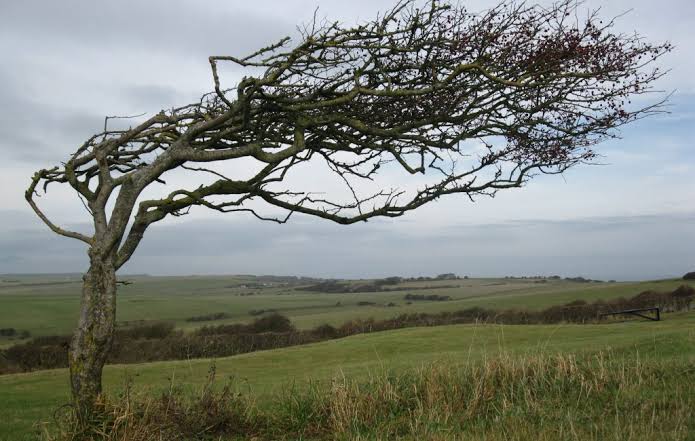
Maureen works Sundays at the supermarket. She spends her spare hours at a hawthorn tree, where her grandmother taught her to leave ribbons. The woodland is marked for clearance. She hunts for a way to save it, and finds one in an old memory of blood, chanting and red ribbons. Lock plays the comedy of rice-paper ribbons and cups of tea against something fierce, and the mixture is sharp. At about two thousand words it is one of the shortest in the book. It hits harder than many of the long ones. It is firmly on the side of the tree.
Red, Red Wine, by KB Willson.
Meredith wakes to find a creature at the foot of her bed. It is waiting for an answer to a question she has avoided for a year. Her mother left her the vineyard, and her brother has not forgiven it. The title and a nod to Christina Rossetti’s “Goblin Market” give Willson her shape: a bargain, a family business and a price. It is a quiet gothic of inheritance. It shows how sentiment can be the very thing that traps you. The ending is calm, and the calm is the horror.
In the Forest There are Doors, by Pete W Sutton.
The narrator’s friend Jo, a YouTuber, vanishes after trying the RandoNautica app with the intention “blood”. Her battered car turns up in the Forest of Dean during lockdown, and the narrator goes looking with friends. Sutton pulls modern internet folklore into old woods, and it feels right. The app’s random coordinates are a ritual by another name. His two short story collections were shortlisted for British Fantasy Awards in 2017 and 2022. The pacing shows a writer who knows where to hang a door. The finale has rattling handles, a summoning and a very bad night.
Nature Morte, by Marisca Pichette.
The gentlest story and one of the strongest. Ynes keeps plants, ferrets and a bat named Porter, who sleeps in the rafters. Her partner, Luca, has died. Luca’s body rests in a Quietus, a small shed set aside for the slow work of becoming soil. Pichette writes about grief and the body without flinching and without syrup, and her final paragraph is both strange and kind. If folk horror is about the old ways of dealing with death, this is a new way, and it is tender.
The Trembling of Dog, the Fierceness of Sheep, by Laura Jane Round.
Dina is on a countryside break after a row with Jon, hunting for the perfect gift to smooth things over. A creature in the garden, a duvet of leaping dolphins and a phone that will not behave keep the tone dry and light. Round makes you laugh first, and then she makes you stop. The anthology closes on a grin you can almost hear. The last line is one of the driest in the book.
Step off the path. These twenty-two writers have already gone ahead, and they left the gate open.
The Verdict: Is Hiding Under the Leaves Worth Reading?
5out of 5
The verdict
A varied, confident folk horror anthology that keeps its promises across twenty-two stories.
Read it if: you enjoy folk horror in every register, from comic to cruel, and like a collection where no two stories sound alike.
Skip it if: you want one steady tone throughout, or a book of traditional supernatural tales with no experiments.
Content warnings: bereavement and terminal illness, animal death, strong language, violence and gore, self-harm and ritual sacrifice, domestic abuse, sexual content, and body horror.
Keep reading on Ginger Nuts of Horror
 Folk Horror Short Stories (Beyond and Within) edited by Paul Kane & Marie O’Regan
 Come Sing for the Harrowing by Dan Coxon – Book Review
 Lord of Misrule, folk horror, and why we’re still arguing about The Wicker Man
About Ginger Nuts of Horror
Ginger Nuts of Horror is an independent horror review and culture site based in Edinburgh, Scotland. Edited by British Fantasy Award nominee Jim McLeod, it publishes horror book reviews, film reviews, author interviews, features and cover reveals. Ginger Nuts of Horror won Best Inclusive Film & Book Review Platform at the SME News UK Enterprise Awards 2026.