
In a world run by medical AI, one hospital holds out. What happens there will determine everything.
Have you ever sat in a doctor’s waiting room and watched people scroll on their phones? Everyone’s got that little rectangle glowing in their palms, mining for symptoms, self-diagnosing, plugging their anxieties into a search bar that spits out WebMD horrors. We trust the algorithm more than the person in the white coat we haven’t seen yet. That trust is the quiet erosion Justin C. Key has been watching for years, and in The Hospital at the End of the World, he builds a whole society around what happens when we finally hand the stethoscope over to the machine for good.
This isn’t his first rodeo. Key’s 2023 collection The World Wasn’t Ready for You announced him as someone who understands that the scariest monsters aren’t the ones jumping out of shadows but the ones we invite into our homes, our bodies, our bloodstreams. That collection had a rawness to it, a short-story writer’s willingness to wind up and throw heat without worrying about where the pitch lands. The novel form suits him better, though. It gives his obsessions room to breathe.
The setup arrives clean. Pok Morning grew up in America where the Shepherd Organisation’s AI runs everything. It decides what you eat, where you work, and which medical school will take you. Pok wants in. Badly. He’s the kind of kid who has optimised himself within an inch of his life, believing the system’s promises because the system has delivered for him so far. Then a drone delivers the news: denied from all of the “Prestigious Twelve.”
He initially blames his father, a physician who practices the old, human way, for sabotaging his applications. But when his father dies unexpectedly in a hospital, an AI-generated version of him—a “Memorandum”—appears with cryptic advice. It’s polite. It’s helpful. It’s absolutely hollow. And then a warning comes through: get the fuck out of New York. The lie is out that he poisoned his own father.
New Orleans becomes the destination. The city, shielded by towers that scramble both hurricanes and data surveillance, hosts the last human-led medical school in the country. Hippocrates. The name carries weight. Key paints this New Orleans with affection but not nostalgia, a place where refugees from Shepherd-controlled America wash up with mysterious illnesses like Agrypnia, the sleeping sickness they call the Grips.
Pok arrives sceptical of the whole operation. He wanted the clean data, the pure algorithm. What he gets is a bunch of doctors who touch their patients, who look them in the eye, who practice medicine like it involves actual humans on both ends of the transaction.
The prose lands somewhere between surgical and lyrical. Reading it feels like watching someone suture a wound while reciting poetry. The sentences know when to cut clean and when to linger. Key, the psychiatrist, shows up on every page, not just in the medical details but in the way he tracks how people bend under pressure. Pok’s classmates feel real. Their fears, their petty rivalries, their moments of grace under the fluorescent lights of a hospital that might collapse any day. The man understands that medical training isn’t just about learning procedures. It’s about learning what breaks first when you get pushed too far.
Underneath the thriller mechanics, underneath the chase scenes and the corporate conspiracies, Key is asking a question that matters: What do we lose when we remove the person from the practice of healing? He’s not naive about it. The Hippocrates doctors aren’t saints. They carry their own biases, their own failures, their own inability to see patients clearly. But they show up. They’re present. In an era where we outsource everything to devices, that presence starts to feel like rebellion.
The author’s growth from the short story collection to this novel is clear. Here, Key builds a world brick by brick. He trusts the reader to follow. He doesn’t explain the Shepherd Organisation’s tech in exhaustive detail. He shows you what it does, how it feels to live under it, and lets you draw your own conclusions about whether that future is already here, wearing different clothes.
Other books have walked this ground. Malka Older’s Infomocracy trilogy mapped what happens when information systems become governments. Naomi Alderman’s The Power flipped the script on who holds the cards. Key lands closer to the ground than either of them. His concern isn’t grand geopolitical shifts. It’s the room where a doctor sits with a scared patient and decides whether to reach out or reach for a tablet. That intimacy gives the book its weight.
The villain, Odysseus Shepherd, gets one of the best lines in the book. Arguing for why New Orleans must be brought to heel, he sneers that “human-led medicine is like having monkeys fly a plane.” It’s a perfect distillation of the technocrat’s arrogance. And Key, to his credit, doesn’t entirely disprove him. The humans at Hippocrates are flawed. They make mistakes. But the book keeps circling back to a more uncomfortable question: even if the algorithm flies the plane better, does it care if the passengers are scared? Does it care if they live or die?
One moment near the middle stopped me cold. A patient, suffering from the mysterious Grips, looks at Pok with a clarity that cuts through the fever. She doesn’t ask about treatment options or survival rates. She asks something simpler and harder. The algorithm managed her care for years. But did it ever actually care? Pok starts to give the standard answer, the one about optimised outcomes and data-driven decisions. He stops. He can’t answer. Neither can the book, really. But Key has the courage to leave the question hanging there, unresolved, because that’s where we live now. Between what technology can do and what only people can offer.
The Hospital at the End of the World. The title suggests isolation, the last outpost before wilderness. But Key means something else. He means the hospital as the last place where we refuse to let the machines take over completely. Whether we hold that line depends on people like Pok, his father, and the exhausted nurses and overworked residents who still believe that healing requires a heartbeat on both sides of the equation. The algorithm can fly the plane. But it cannot hold your hand.
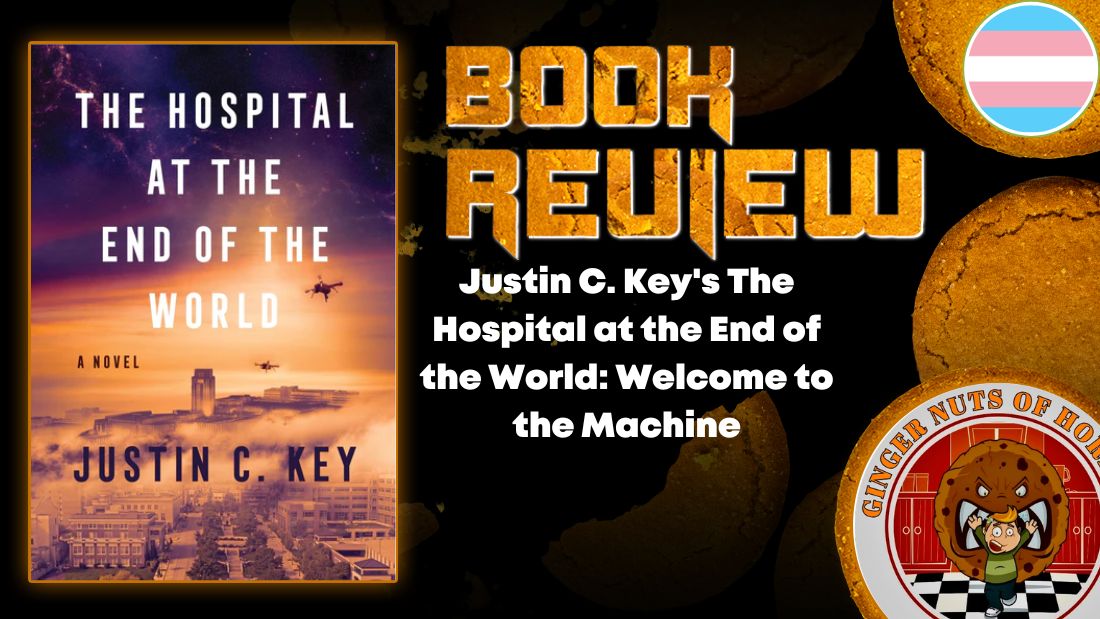
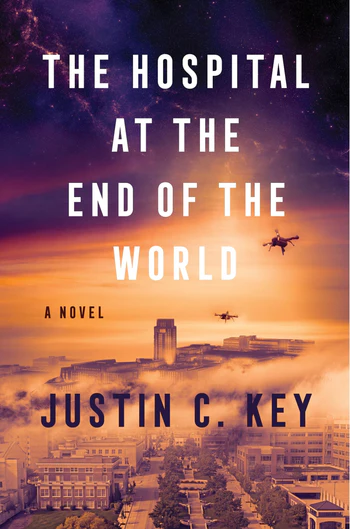
The Hospital at the End of the World by Justin C. Key Harper

From the author of the acclaimed The World Wasn’t Ready for You comes a thrilling first novel, set in a near future where artificial intelligence runs the world, involving a young medical student who must unravel family secrets to uncover the truth of his father’s mysterious death.
In a time not so far from our own, society is run by a global AI system controlled by an all powerful corporation. The Shepherd Organization oversees every medical school in the country save one in New Orleans, the renegade Hippocrates which still insists on human-led medicine.
It is the last choice school for an ambitious young New Yorker named Pok. But after his father—himself a physician—dies under mysterious circumstance that seems connected to “the shepherds” and their megalomaniacal young CEO, Pok finds himself on a quest for answers that leads right to Hippocrates.
Once enrolled, he stumbles upon a further mystery: a strange illness is plaguing newcomers to New Orleans who grew up under shepherd rule. What is causing this fatal anomaly? And how does it relate to the mystery of Pok’s father’s death and his own mysterious past?

Justin C. Key
Justin C. Key is a practicing psychiatrist and a speculative fiction writer. He is the author of the story collection The World Wasn’t Ready for You, and his stories have appeared in the Magazine of Fantasy & Science Fiction, Strange Horizons, Escape Pod, Lightspeed, and on Tor.com.
Horror Book Reviews: Ginger Nuts of Horror, Your Premier Horror Website for 17 Years

For every horror enthusiast searching for authoritative horror book reviews and a definitive horror website, your journey ends at Ginger Nuts of Horror. As a trusted pillar of the dark fiction community, we have spent over 17 years building a reputation for the most passionate, insightful, and credible coverage in the genre.
Our dedicated team of reviewers lives and breathes horror. Our collective expertise, forged over nearly two decades, ensures every review is a deep, critical analysis. We don’t just summarise plots; we dissect the terror, explore the thematic depths, and connect you with the very emotional core that makes horror books so compelling.
Why Ginger Nuts of Horror is the #1 Resource for Horror Fans
Unmatched Depth & Legacy in Horror Book
Reviews: With 17 years of reviewing horror, we offer an unparalleled perspective. Our reviews expertly guide you from mainstream bestsellers to under-the-radar indie gems, helping you find your perfect, terrifying read.
Exclusive Access to Horror Authors: Go behind the scenes with in-depth interviews that reveal the minds behind the madness. We connect you with both legendary and emerging horror authors, exploring their inspirations and creative processes.
Award-Nominated Authority & Community: Founded by Jim McLeod, Ginger Nuts of Horror has evolved from a passion project into an award-nominated, essential horror website. We are a global hub for readers who celebrate horror literature in all its forms, from classic ghost stories to the most cutting-edge dark fiction.
Experience the Difference of a Genre-Dedicated Team
What truly sets us apart is our dedicated team of reviewers. Their combined knowledge and authentic enthusiasm ensure that our coverage is both intelligent and infectious. We are committed to pushing the genre forward, consistently highlighting innovative and boundary-pushing work that defines the future of horror.
Ready to dive deeper?
For horror book reviews you can trust, a horror website that champions the genre, and a community that shares your passion, Ginger Nuts of Horror is your ultimate destination. Explore our vast archive today and discover why we’ve been the top choice for horror fans for over 17 years.