
There Are No Giant Crabs in This Novel Revierw | Jason Pargin | Titan Books | 3 November 2026
- Author Jason Pargin
- Publisher Titan Books
- Published 3 November 2026
- Pages 384
- Format Paperback, ebook
- ISBN 9781835419533
- Series John Dies at the End, Book 5
- Subgenre Cosmic horror comedy
- Reviewed by Jim McLeod
A sticky heap of severed limbs turns up in the snow outside an empty store in Undisclosed. One of the arms is Dave’s, though he still has both of his. John, Dave and Amy have a long weekend ahead.
There Are No Giant Crabs in This Novel by Jason Pargin is the fifth John Dies at the End book, and it is out now from Titan Books. Dave, John and Amy are back in Undisclosed. A pile of limbs has turned up in the snow, and one of the arms is Dave’s. Horror comedy is hard to get right, and most of the horror book reviews on Ginger Nuts of Horror that touch it find one half pulling against the other. Not here. Here is why this one works so well.
Pargin takes a pile of severed limbs, a war between worlds and a gang of loveable idiots, and finds a book about care hiding inside the gore. The middle sags a touch and the jokes are as crude as ever, but this is the most complete trip to Undisclosed since the first.
There Are No Giant Crabs in This Novel Review: Kindness in a Flesh Log
Most small towns have one thing they would rather you did not ask about. A mine that shut. A fire. A man who went into the woods and came back wrong. In Undisclosed, the thing nobody asks about is everything, all the time. The people who live there have learned to shrug at it, the way the rest of us shrug at rain.
That shrug is the heart of the book. It is the best joke in it. It is also the saddest.
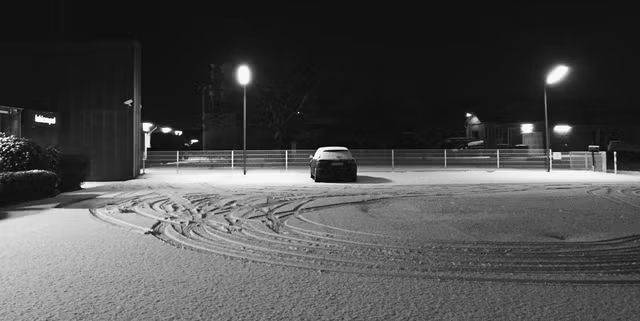
The set up is pure Pargin. A great sticky heap of human limbs turns up in the car park of an empty store, in the snow, in a hard winter. Bare footprints lead away from it. Nobody is missing an arm. Some of the prints on the fingers belong to people who still have both hands. One arm belongs to Dave, who is still wearing his. The police would rather not deal with any of it, so they call the town’s three resident experts. Then a stranger knocks on Dave’s door. He is hunting something he calls the Penetrator, and the weekend goes downhill from there.
What follows is a multiverse story. It is also a war story, a story about who gets to decide what is true, and a story about friends who keep turning up for each other when they have every reason to run.
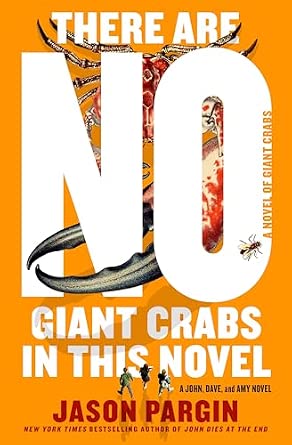
Start with the title, because Pargin does. The cover swears there are no giant crabs. The subtitle calls it a novel of giant crabs. Then each chapter opens with a countdown to a Giant Crab Attack. So the book has two voices telling you two different things from the first page, and neither can be trusted.
That is not just a gag. It is the whole book in small. Dave tells the story, and Dave has never been a reliable man. The forces at war in this novel all want the gang to believe them, and they all have reasons to lie. Who are the good guys? Is anyone telling the truth? You are as lost as the people on the page, and that is the point. Pargin builds doubt into the furniture.
Look at one small moment from the publisher’s own extract. I am paraphrasing most of it. Dave tells us he does not want it to seem like he ignored “the flesh log situation”. He just thinks life is about balance, and you cannot let every odd little thing knock you off course.
Read it fast and it is a laugh. Read it slowly and it is something else. “Situation” is an office word. It is the word you use for a leak in the staff kitchen. Pargin bolts it onto a lump of human meat, and the clash of tone does the comic work. But the second half of the thought is self help talk, the language of someone coping. Here is a man who has seen so much that a pile of limbs gets filed under admin. The joke is scar tissue. Dave has always used humour that way, and in this book Pargin lets you see the wound under it more often.
Reading his prose is a bit like looking at the flesh log itself. All sorts of parts that should not fit are pressed hard together, until they hold a shape. Then you notice there is a pulse.
Is There Are No Giant Crabs in This Novel Scary?
Yes, though perhaps not in the way the opening warning suggests. The book starts with a note telling you how awful the things inside are going to be. Some of that is Pargin having fun with you. There are big set pieces of real cruelty, body horror and torture, and they hit hard. But they are spread wider than in the earlier books, and a lot of the novel leans towards science fiction. Portals, other timelines, versions of people who should not exist.
The fear that sticks is quieter. It is the arm. If there is a spare copy of you lying in a heap in the snow, then what exactly are you? This is the old horror of the double, the face in the mirror that is not quite yours, and Pargin finds new rot in it. Bodies here are cheap. People can be copied, used up, swapped out. The war at the heart of the book is fought over the gang’s minds and attention, and that is a sharper horror for 2026 than any monster.
Then there is Jumbo, a local man who goes missing and comes back in a state rather worse than dead. It is funny in a way only Pargin could manage. It is also deeply wrong, and the book never lets you forget both things at once.
How It Compares to the Earlier John Dies at the End Books
John Dies at the End began as a web serial in 2001 and became a book in 2007. It was a shaggy, stoned, glorious mess. (Confession time: When I first read it, I hated it, but I went back to it after having fun with the movie, and I finally got what he was doing with the book.) This Book Is Full of Spiders (2012) tightened the screws and gave the series its paranoia about crowds and panic. What the Hell Did I Just Read (2017) turned the doubt inwards, onto Dave’s own memory. If This Book Exists, You’re in the Wrong Universe (2022) put the gang on Dr Albert Marconi’s payroll and widened the frame.
Between those, Pargin wrote the Zoey Ashe books, from Futuristic Violence and Fancy Suits to Zoey Is Too Drunk for This Dystopia. Then came I’m Starting to Worry About This Black Box of Doom (2024), his first standalone, a road trip satire about how the internet turns fear into fuel.
You can feel Black Box all over this one. The gang has to stop the strange thing, yes, but they also have to stop the panic. If the headlines get out of hand, the feds may try to wipe the town off the map. Again. That threat is the series’ long memory at work, and it ties the cosmic horror to something we all know: the speed at which a crowd decides what is true.
That is the theme Pargin keeps coming back to, and here he pushes it further than before. Every side in this war wants to own the gang’s attention. Every side has a story ready, and each story sounds fine until the next one arrives. It is hard not to think of the feed on your phone. Stephen King built Derry as a town that looks away from its own monster. Pargin builds Undisclosed as a town that cannot look away from anything, and is worn down to the bone by the effort. Both towns end up in the same place. People stop asking questions, and that is when the thing in the dark gets fed.
Marconi’s writings break up the chaos at intervals, and they are some of the best pages in the book. They read like a calm lecture in the middle of a riot. They also hold some of the novel’s deepest thinking about what is real and who gets to say so.
There is a cost to the gang’s steady pay cheque. Earlier books had a raw sense of what it means to be broke in a dying town, and some of that bite has gone now the three of them have a wage. It is a small loss, and it is a fair one. People grow. Their stories change with them.
What lifts this book above a good entry is how much it cares about its people. It feels as if Dave and Amy forgot to cut the soft parts out. Their bond gets more room than ever, and it is written with real warmth. John is still John, a walking fire alarm with a mullet of the soul, but even he gets lines of odd wisdom. Joy, who has quietly become a key part of the gang, steals every scene.
And then there is Snowball, a small furry creature with an endless craving for snacks. Some will call Snowball filler. I would call Snowball the book’s thesis in one small furry body. In a world where people can be copied and thrown away, here is one small life that the gang simply refuses to treat as cheap.
The fourth wall takes a beating too. Pargin’s narrators know they are in a book, and they nag, argue and correct each other in front of you. Other voices join the tale, including an entity known as the Scourge, and the switch between them keeps the tone on the move.
Is it perfect? No. The middle stretch runs long, and a reader who has guessed the shape of things may feel the brakes go on. The crude jokes about bodies are still here, and a few of them feel like old habits rather than fresh ones. These are small things. They are the price of a writer who has always put chaos first, and the last act pays the debt back with interest.
In genre terms this sits with books that treat the end of the world as a dark farce. Think of Good Omens by Terry Pratchett or Grady Hendrix’s Horrorstör, which also found real dread in a big shop after closing time. Welcome to Night Vale is a close cousin, a small town where the strange is just the weather.
New readers can start here. The callbacks are light enough that you will not feel lost, and the afterword makes the case that these books never needed reading in order. Old hands will spot how Undisclosed has changed since the last disaster, in small asides that reward a long memory without punishing a short one.
The title tells you not to worry about the crabs. Worry about the arm. Then worry about how fast you stopped worrying about the arm.
The Verdict: Is There Are No Giant Crabs in This Novel Worth Reading?
5out of 5
The verdict
Pargin’s fifth trip to Undisclosed is the most complete John Dies at the End book since the first, and by far the kindest.
Read it if: you like your cosmic horror filthy, funny and soft at the centre, or you loved Black Box of Doom and want more.
Skip it if: crude jokes about bodies wear you down, or you want a straight horror novel with no laughs in it.
Content warnings: graphic gore, body horror, dismemberment, torture, crude sexual humour, strong language.
Keep reading on Ginger Nuts of Horror
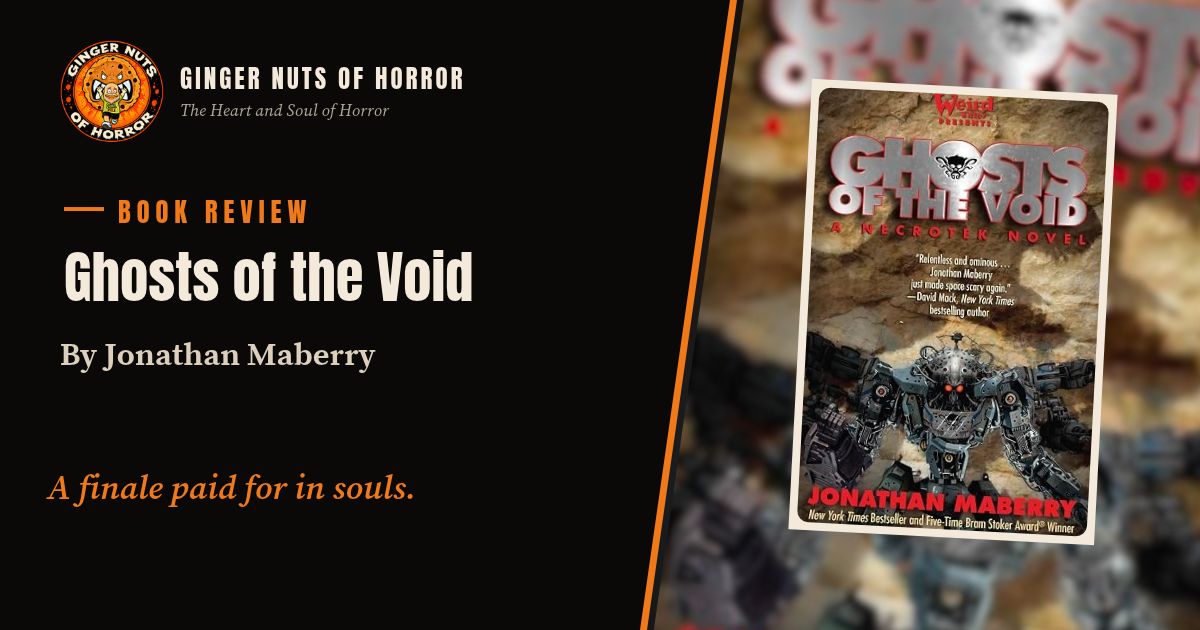 Ghosts of the Void by Jonathan Maberry Review: The Dead Fly One Last Time
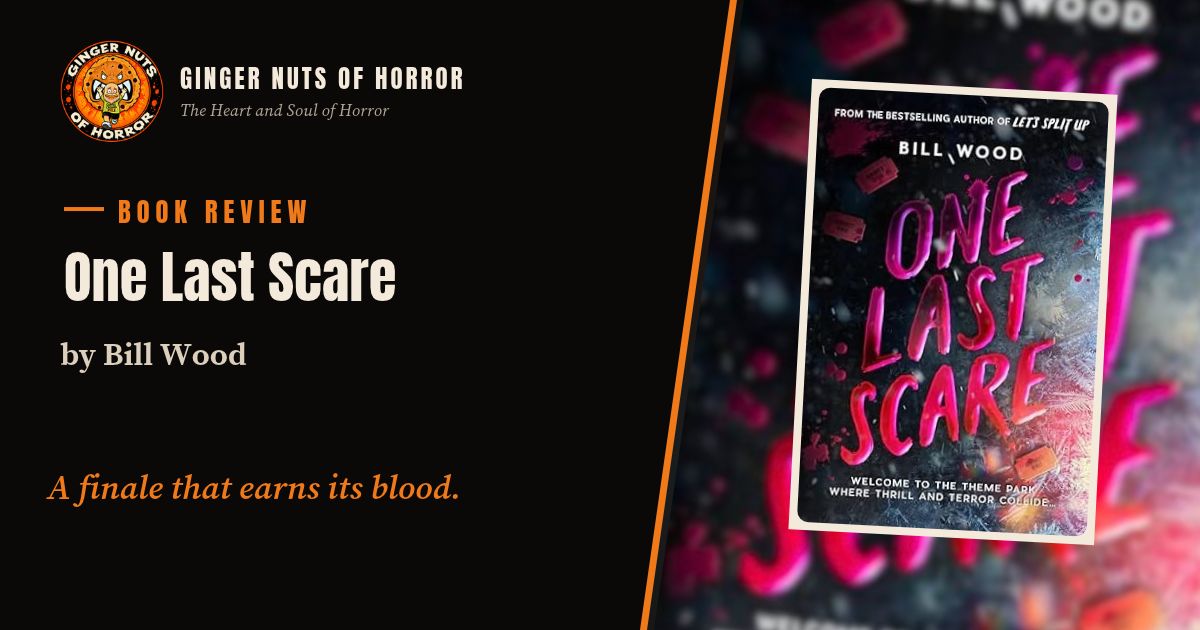 One Last Scare by Bill Wood Review: The Sanera Four’s Frozen Finale
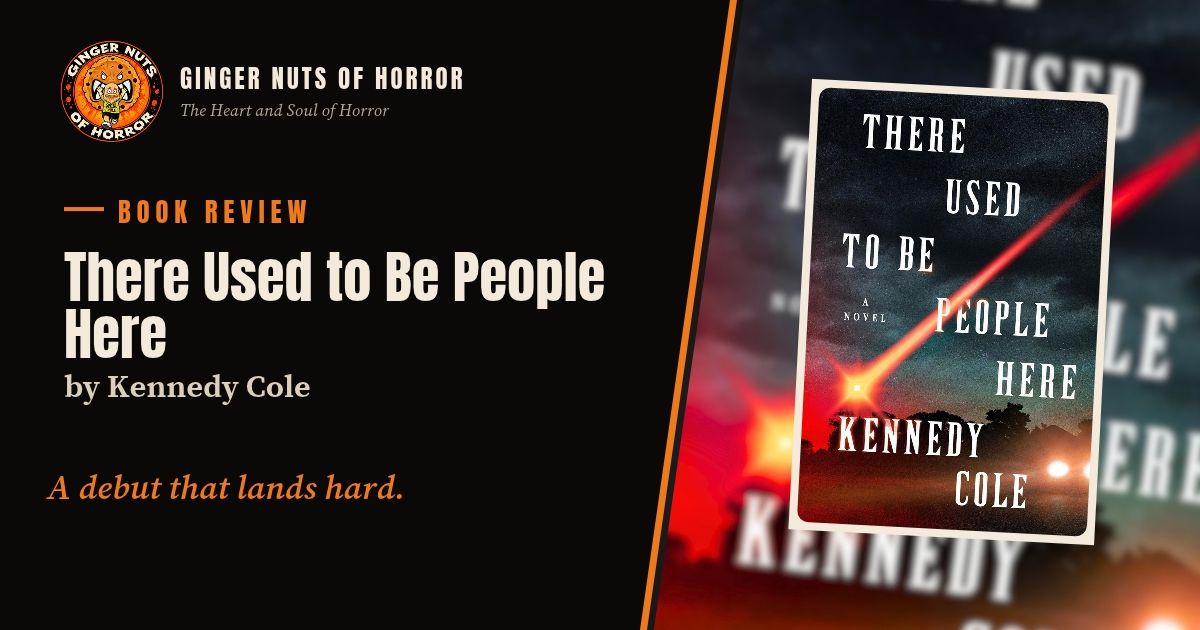 There Used to Be People Here by Kennedy Cole Review: Something Landed in Wenton
About Ginger Nuts of Horror
Ginger Nuts of Horror is an independent horror review and culture site based in Edinburgh, Scotland. Edited by British Fantasy Award nominee Jim McLeod, it publishes horror book reviews, film reviews, author interviews, features and cover reveals. Ginger Nuts of Horror won Best Inclusive Film & Book Review Platform at the SME News UK Enterprise Awards 2026.


