
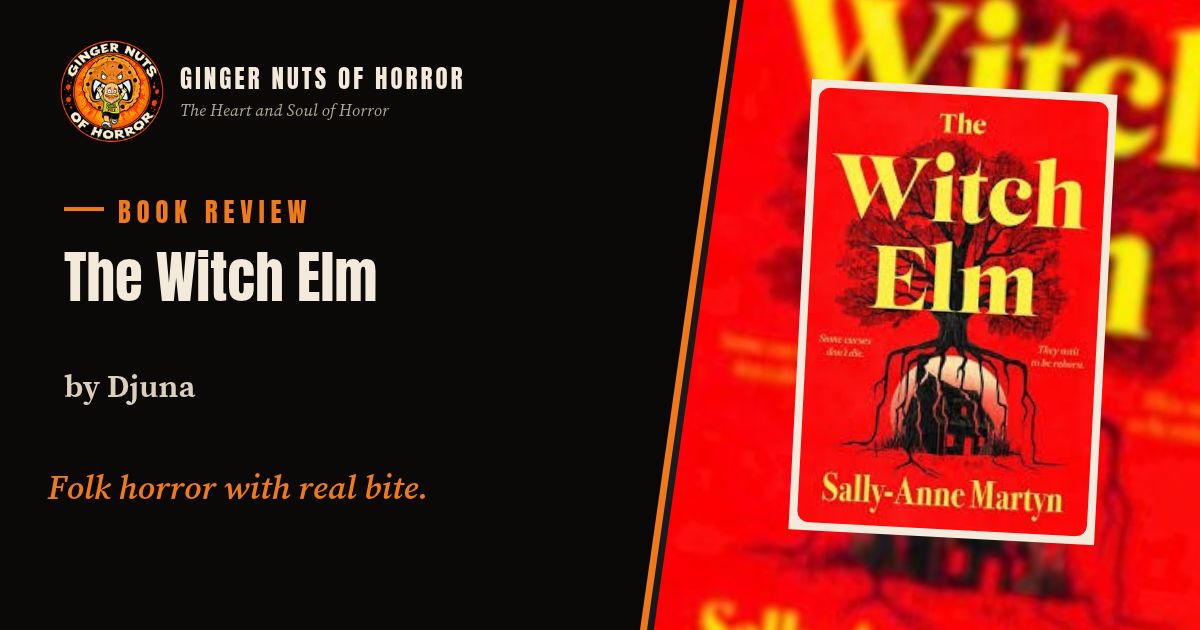
Twelve due dates, one ancient elm and a village with plans.
The Witch Elm Review | Sally-Anne Martyn | Boldwood Books | 9 October 2026 |
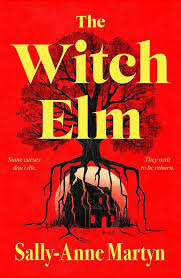
- Author Sally-Anne Martyn
- Publisher Boldwood Books
- Published 9 October 2026
- Pages 360
- Format Paperback, ebook, large print, audiobook
- ISBN 9781807951337
- Subgenre Folk horror
- Reviewed by Jim McLeod
A midwife running from her past takes a job in a too friendly village where twelve women are due at once. In 1656, on the same land, a young healer is drawn to a circus camped beneath an ancient elm.
The Witch Elm by Sally-Anne Martyn is the folk horror novel I did not know I was waiting for. Published by Boldwood Books, it runs two stories side by side. In the present, a midwife moves to a village that is far too keen to meet her. In 1656, a young cunning woman falls under the spell of a travelling circus. Both stories meet under the same old tree. Plenty of village horror has crossed the desk for our horror book reviews, but few books make the cake tin feel as dangerous as the ritual.
Martyn sets a modern midwife and a 1656 healer under the same elm and lets each story sharpen the other. Funny, cruel and fierce about who owns a woman’s body, The Witch Elm is a thriller writer finding her true ground in folk horror, and it earns every star.
The Witch Elm Review
Every village has a tree it will not let you cut. Most of the time it is just a tree. There is a bench under it, or a plaque for a councillor nobody remembers. But now and then the locals go quiet when you mention a saw. And you start to wonder what the roots have been fed.
That is the feeling Sally-Anne Martyn builds here, and she builds it with real patience.
Melissa Hendrix is a community midwife. She is twenty-seven. A hospital inquiry has cleared her over a death on the ward, but the guilt has not cleared with it. An ex called Ethan will not take no for an answer. So she takes a job in Heredge, a small village tucked among the hills, with one surgery, one pub and one very old elm across the lane from her new cottage. The welcome is warm. The fruit cake is heavy. And twelve women, in a village of two hundred, are all due to give birth within the same few weeks.
Then the book steps back almost four hundred years.
In 1656, on the same patch of land, Elizabeth Wade is twenty-three. She digs rotten turnips with her parents, Jed and Rachel, and minds the children up at Nether Hall for the Radcliffes. She is also a cunning woman, a healer who mixes salves and calming drinks in secret. Her mother warns her plainly, “Your gift is a sin in the reverend’s eyes.” The reverend is Samuel Moon, a Puritan who has banned dancing and Christmas, and who now has his eye on her. When a small circus rolls in by moonlight and camps under the elm, Elizabeth is thrilled. Moon is not.
Martyn swaps between the two stories chapter by chapter. It is a common shape, and plenty of books do it badly, with one half you love and one half you skim. Here the trick is that each half answers a question the other has raised. A bone figure turns up in one century and makes sense in the other. A stone with a hole through it sits on Melissa’s windowsill long before we learn why it matters. Nothing is explained twice, and nothing is wasted.
Why a Midwife Is the Perfect Folk Horror Heroine
The best idea in the book is the job. Melissa is not the mother at the heart of the plan. She is the professional who has to deliver it.
Think of Rosemary’s Baby told from the side of the bed. Melissa has access to every bump in the village. She reads the notes, checks the scans, and notices what is missing. The practice nurse offers a patient only girls’ names, though there is no scan to say what she is having. A young woman cries in clinic because she only had one chance, back in January, then vanishes from the system. The practice nurse barges in to take her away. Martyn knows the work, or has done her homework well. The Doppler, the blood pressure cuff and the stats on home births are all used as tools of dread.
The cult is called the Open Arms church, led by a man named Lucien. In one early service he dips his fingers in a bowl of red and marks the brow of each pregnant woman in turn. Then he grips Melissa’s shoulders and preaches over her head:
We will be reborn; we will find our strength from the bellies of femininity and the loins of men.
It is a grim line, and Martyn lets it sit. Nobody in the pews laughs. Some nod. Some weep. That is the real horror of Heredge. Everyone is so pleased.
And they are often very funny. This matters more than it might seem. The Wicker Man had Summerisle singing in the pub. Heredge has a WhatsApp group, a fundraising committee and a landlady trying out new pie fillings to the scorn of the regulars. Barbara, the welcome party, lists the gifts the village leaves for the straw figures by the road: “Food, flowers, the blood of slaughtered animals.” Then she goes very still. Then she laughs. Margaret, the surgery receptionist, gives the best advice in the book about the faithful: “You wouldn’t like them when they’re angry.” The jokes make the village real, and a real village is far more frightening than a cardboard one.
There is a sharp thread here about who gets believed. Melissa tells the police about Ethan, and a sergeant doubts that a stare can count as harassment. Her own parents come to stay, fall for Lucien’s charm, and start calling her paranoid. Watching Audrey and Keith kneel at the altar, with that red mark on their foreheads, is one of the coldest moments in the book. In 1656, Elizabeth faces the same wall, only hers is built from a pulpit and a market square full of neighbours. Both women know what they have seen. Both are told they are mad, or worse. Martyn never spells the link out. She trusts you to feel it.
Is The Witch Elm Scary?
Yes, though not in the way of a book that piles up bodies. The fear builds in small, cold steps. A crow trapped in the chimney. Eyes in the dark behind the plaster. A television that flicks through channels until every voice says the same name. A whisper in the attic: “He is coming.”
The 1656 chapters carry the sharper knives. A man who leers at Elizabeth in the market square gets a lesson that leaves his lip in two halves. It is shocking, and it is fun, and it is also the moment you start to worry about her.
Then there is the scene that lingers longest. (Mild spoiler for the middle of the 1656 story.) Elizabeth is caring for the newborn Anna, whose mother cannot feed her and cannot bear to hold her. The baby only calms in Elizabeth’s arms. Then Elizabeth’s own body starts to answer, though she has never been with a man:
She pulled down her dress, exposing her swollen breast. It felt as if it belonged to another, not part of her body but a monstrous growth spouting liquid.
Look at how plain that is. There is no gore and no big word. The first sentence is almost tender, the kind of thing you might read in a birth leaflet. Then the second sentence turns. “It felt as if it belonged to another.” That one short clause is the whole book in small. Elizabeth’s body is no longer hers. It has been claimed. Later, one of the circus folk says that “Anna belongs to no one other than the elm”, and you feel the same cold hand. Who owns a woman’s body? Who owns a child? Every thread in The Witch Elm comes back to those two questions, and this is where they first bite.
Martyn’s prose is not showy, and it does not need to be. Reading it is like walking a Peak District path in October. The stones underfoot are plain and solid. Then the wall drops away, and you see how far down the valley goes.
If I am hunting for a flaw, it is a small one. In the modern chapters Melissa leans on a few refrains, her therapist’s “Be rational” and her own wry “Note to self”, and once or twice they come round a beat too often. But even that tic pays off. It is a woman trying to talk herself out of what she knows. By the end, you understand why.
Martyn made her debut with The Clinic in 2022, a dark thriller set in an old asylum turned diet and beauty clinic. She has also written The Home and The Beauty Queen. You can feel a thriller writer’s sense of pace here. Chapters here end on a hook more often than not, and the plot never sags in the middle, which is where so much folk horror goes to sleep.
What is new is place. Martyn grew up in Hathersage in the Peak District, and her author note says the village she knew was steeped in strange old traditions. You can hear the echo in the name Heathersage. You can smell it in the snapdragon seed crowns, the rose queen and the straw figures on the walls. This is a thriller writer who has found her ground, and she has walked straight into horror with it. If this is the first of many for Boldwood, I want the rest.
It also sits well beside the books it will be shelved with. It shares the witch trial bones of Stacey Halls’ The Familiars, where women healers end up on the wrong side of a frightened court. It has the cut off community of We Are For The Dark by Gretchen McNeil, and the cult pull of Vervain Hollow by Catriona Silvey. It has some of Andrew Michael Hurley’s patience in Starve Acre, that sense of land that remembers. But the mix of birth, belief and a wicked sense of humour is its own.
The themes run deep without ever slowing the story. Women who heal are called witches by men who are scared of them. Villages keep the peace by deciding who does not count. Old families hand down houses and debts and darker things. And over all of it stands the elm, losing its leaves, counting down to something. Someone has carved the number seventy-four into its bark. You will want to know why. You will find out.
By the time the two timelines meet, by fire, in that cottage, the book has earned every flame. Heredge will take your cake tin, your blood pressure readings and, given half a chance, your firstborn. Let it have your evenings instead.
The Verdict: Is The Witch Elm Worth Reading?
The verdict
A clever, funny and cruel folk horror that sets a modern midwife and a 1656 healer under one elm, and makes each story cut deeper.
Read it if: you love village rituals, witch trial history, cults with a fundraising committee, and horror about who owns a woman’s body.
Skip it if: you want relentless gore, or you cannot face scenes of pregnancy, birth and harm to animals.
Keep reading on Ginger Nuts of Horror
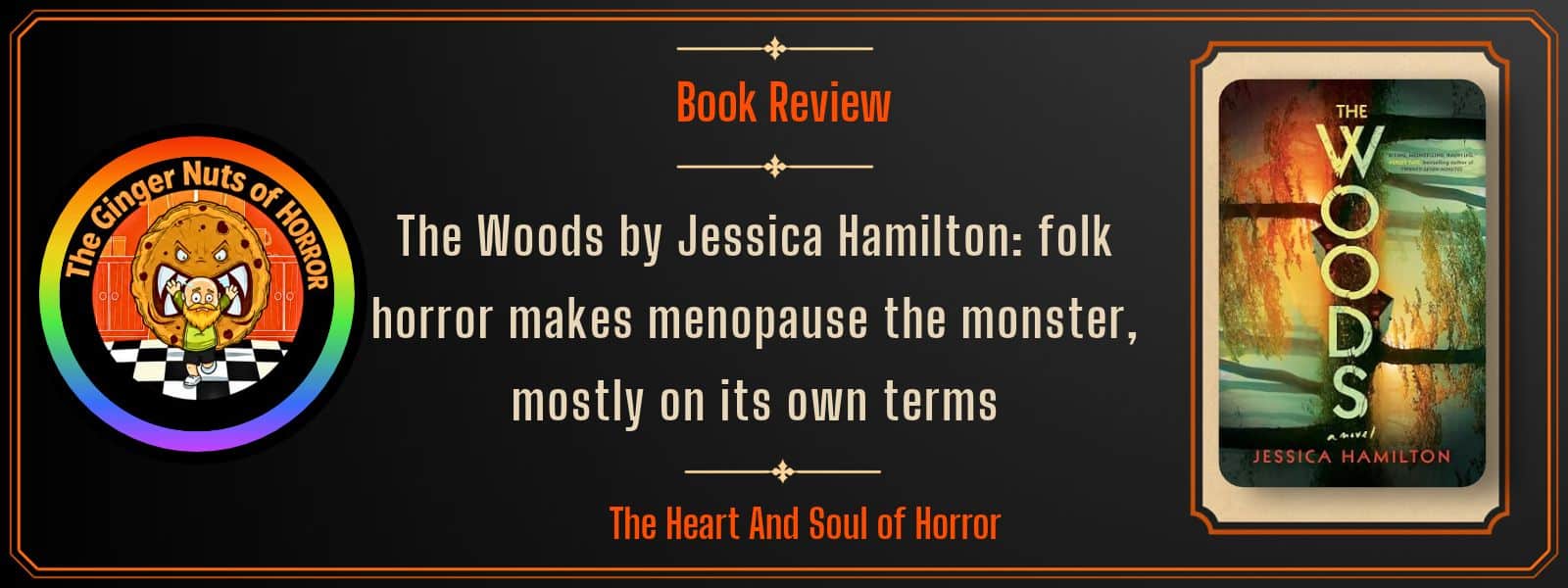 The Woods by Jessica Hamilton: folk horror makes menopause the monster, mostly on its own terms
 We Call Them Witches by India-Rose Bower: You Will Never Look at Anything the Same Way After This Novel
 The Crone in Horror: Witches, Folklore and Keith Rosson’s Crone
About Ginger Nuts of Horror
Ginger Nuts of Horror is an independent horror review and culture site based in Edinburgh, Scotland. Edited by British Fantasy Award nominee Jim McLeod, it publishes horror book reviews, film reviews, author interviews, features and cover reveals. Ginger Nuts of Horror won Best Inclusive Film & Book Review Platform at the SME News UK Enterprise Awards 2026.