
The portrait never ages. The woman who built it is not so lucky.
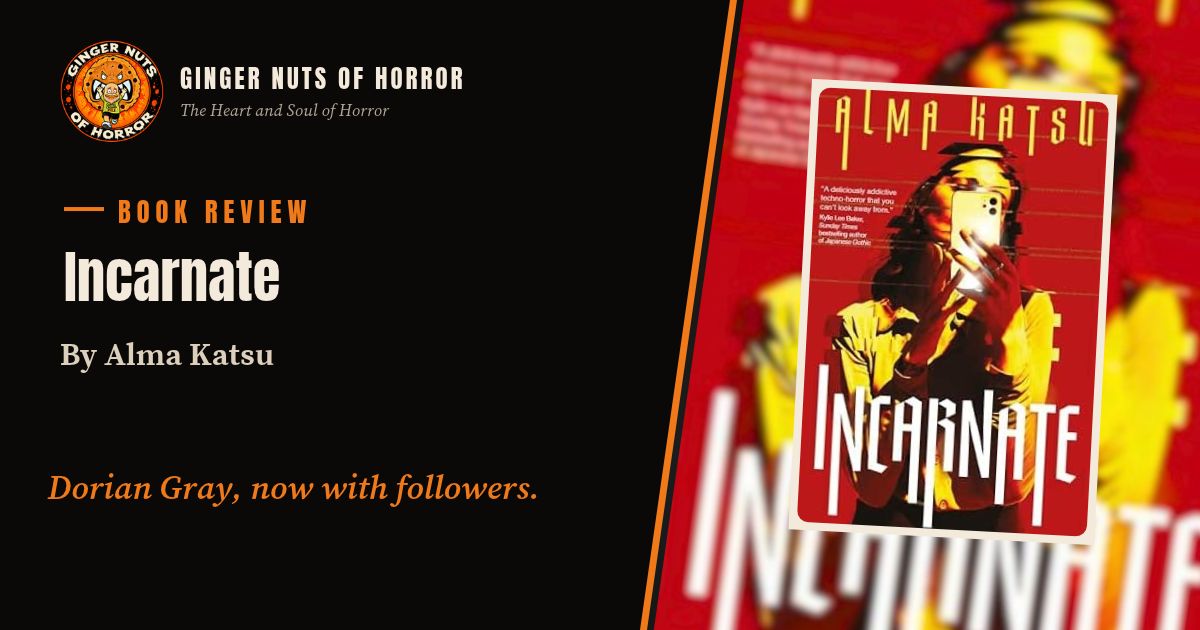
Incarnate | Alma Katsu | Titan Books | 6 October 2026 |
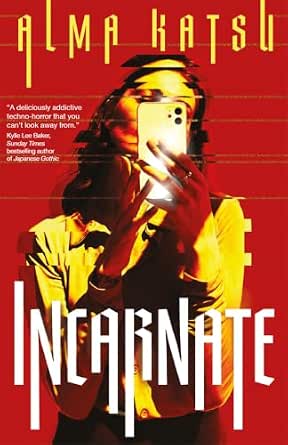
- Author Alma Katsu
- Publisher Titan Books
- Published 6 October 2026
- Pages 304
- Format Paperback, ebook
- ISBN 9781835419830
- Subgenre Techno horror
- Reviewed by Jim McLeod
A lonely deepfake artist builds the perfect online woman and watches her conquer social media. Then a stranger offers to take her further than any influencer has gone, for a price.
Incarnate by Alma Katsu takes The Picture of Dorian Gray and drags it, blinking, into the age of deepfakes, ring lights and follower counts. Out now in the UK from Titan Books, it follows Dorothy Wagner, a gifted effects artist who builds an online woman so flawless that millions fall for her. In this Incarnate review I look at how Katsu, the author of The Hunger and Fiend, turns fame into a bargain with something hungry. I also look at why her decades in intelligence work make the tech ring true, and where the book sits in the new wave of techno horror.
Incarnate rebuilds The Picture of Dorian Gray for the feed, and it is fast, cold and clever all the way down. Alma Katsu turns one lonely woman’s perfect fake into a deal with something hungry. Wilde fans will see the broad shape coming, and it does not matter one bit.
Incarnate Review: The Portrait Now Lives in Your Phone
Nobody grows old online. The face on the screen stays put, smoothed and lit and filtered, while the person behind it keeps ageing in the dark. Oscar Wilde saw that trade coming in 1890. He just hid the lie in an attic instead of an app.
Alma Katsu has moved the attic. In Incarnate the portrait is not oil on canvas. It is code, and it has followers.
Dorothy Wagner has spent her whole life on the edge of the frame. She was bullied as a child, and something in her past ended badly. She has grown into a gifted visual effects artist with a real eye for faces and no gift at all for being looked at. She heads to Los Angeles, sleeps on the couch of a family friend, and lands a job with Tomas Delgado, a coder whose small firm works at the sharp end of deepfake tech. By day she polishes real stars. By night, alone in the studio, she builds Isabella.
Isabella is all the things Dorothy is not. Lovely, warm, at ease in her own skin. She also does not exist. Dorothy gives her an Instagram account and the world does the rest. The followers come in their millions. Then the brands. Then an agent. Then a stranger online who seems to know far too much about Dorothy, and who offers to make Isabella bigger than anyone has ever been.
Katsu is very good on how that rise feels from the inside. Each new spike in the numbers lands like a drug. Each new deal pulls Dorothy a little further from her own life and a little deeper into Isabella’s. She works all night, sleeps when she can, and starts to treat her own face as the rough draft. None of it needs a monster yet. The hunger for attention does the work on its own, and Katsu lets you feel the pull of it before she shows you the hook.
You can see where this goes. Anyone who has read Wilde can. The joy of Incarnate is that Katsu knows you know, and she uses it against you.
Here is the clever bit. Wilde split his story across three men: Basil paints the picture, Lord Henry whispers in the ear, and Dorian pays the bill. Katsu folds two of those roles into one woman. Dorothy is the painter and the sitter both, the artist who makes the perfect face and the girl who longs to wear it.
The whisper comes from the stranger in her messages, a Lord Henry with no face and a very good grasp of the algorithm. It is a neat bit of surgery on a classic, and it might be read as the key to the whole book. The person who makes the mask is the one most at risk of being eaten by it.
When I reviewed Fiend, the dread came from something in the walls of a rich family’s penthouse. Incarnate has no walls to scratch. Its fear starts as social fear, the kind you feel in your stomach rather than your spine.
For the first half the tension is all about the lie. Can Dorothy keep Isabella real? Who will notice the sleepless nights in the studio, the odd gaps, the way she keeps her head down at work? There is a nasty, guilty fun in watching her wriggle out of each tight spot, and Katsu knows it. You end up rooting for a fraud. That is the first trap the book sets, and most readers will walk straight into it.
The best set piece in this stretch is a weekend away with a pack of real influencers. They are not villains. That is what makes it so grim. They have simply worn their faces so long that nobody is home behind them any more. Katsu writes these scenes with a cool, dry eye, and they make for squirming reading. If the rest of the book were only this, it would be a sharp satire.
It is not only this.
How Incarnate Compares to Fiend and The Hunger
Katsu has built a career on putting a dark thread through a story we think we know. The Hunger did it to the Donner Party. The Deep did it to the Titanic and her sister ship, the Britannic. The Fervor did it to the camps where Japanese Americans were held in the Second World War. Fiend was her first full step into the present day, with a demon in the boardroom. Incarnate keeps that method but swaps the source. The famous story this time is not a true one. It is a novel, and that frees her to play.
Her day job matters here too. Katsu spent more than thirty years as an intelligence analyst, and she now advises on new tech. It shows. The tools Dorothy uses are not a magic prompt box. Katsu sets the book in a slippery middle ground where Dorothy lays effects over real human models, which still takes skill and craft, while pure AI waits in the wings to make her whole team pointless.
It is a smart call. It makes Dorothy an artist rather than a button pusher, and it means the book will not date the day the next app launches. Katsu has said the field shifted under her while she was writing. You would never know it from the page.
In her Women in Horror Month interview with Carina Bissett for this site, Katsu said horror today is as much about empathy as it is about blood. Incarnate proves her point. For all its chill, the book never sneers at Dorothy. It understands her. It knows what it is like to want, more than anything, to be seen. That is why the horror lands.
The prose is brisk, clean and built for speed. Short scenes, clear lines, very little fat. Reading it feels like watching a render finish line by line: each pass adds a little more detail, the face on the screen gets a little more real, and you only notice it has stopped looking like a picture when it blinks.
Dorothy will split readers. Katsu has called her brilliant and morally grey, and that is fair. She is not someone to trust, and she is not always someone to like. But you cannot look away from her, which is rather the point. By the end, the reader has become just one more follower, scrolling, watching, wanting the next post. If there is a cost to keeping the camera so tight on Dorothy and Isabella, it is that the people round them get less room. Tomas and the rest of the studio are sketched more than painted. It is a small price, and it suits a book about a woman who cannot see anyone but herself.
There is a deeper question running under all this, and Katsu is wise enough not to answer it. Did the fake ruin Dorothy, or did it simply find her? The early hints of her past suggest a girl who was hurt and who may also have hurt back. The book lets both readings sit side by side. Is Isabella the thing that drags a damaged woman further down, or the mirror that finally shows her who she was all along? I lean towards the second. Katsu leaves the door open, and the book is richer for that draught.
Horror has always gone where the new tech goes. Frankenstein feared the lab. The eighties feared the arcade. Now the fear lives in the feed, and the last few years have been rich ones for it. Sarah Langan took on the trad wife influencer in Trad Wife. Chuck Tingle set AI loose on Hollywood in Bury Your Gays. Nicholas Binge gave us a polite AI that wants your soul in Abyss.
Incarnate stands apart from them in one key way. In Abyss, the machine is the predator. In Incarnate, the machine is just the brush. The hunger is human. Dorothy builds the fake herself, and she does it because she is lonely, and because the world keeps telling her that her real face is not enough. The thing that answers her call only takes what she has already offered.
That is a darker idea than any killer AI. It is also truer.
Wilde hid his portrait in the attic. Katsu has put hers in your pocket, and it is getting more likes than you.
The Verdict: Is Incarnate Worth Reading?
The verdict
Incarnate is Alma Katsu at her sharpest: a fast, cold and clever Dorian Gray for the deepfake age, and a book about the cost of being seen that earns every one of its five stars.
Read it if: you loved Fiend or The Hunger, or books like Trad Wife and Abyss where the screen bites back.
Skip it if: you need a lead you can like, or you want old school ghosts rather than slow, creeping dread.

Keep reading on Ginger Nuts of Horror
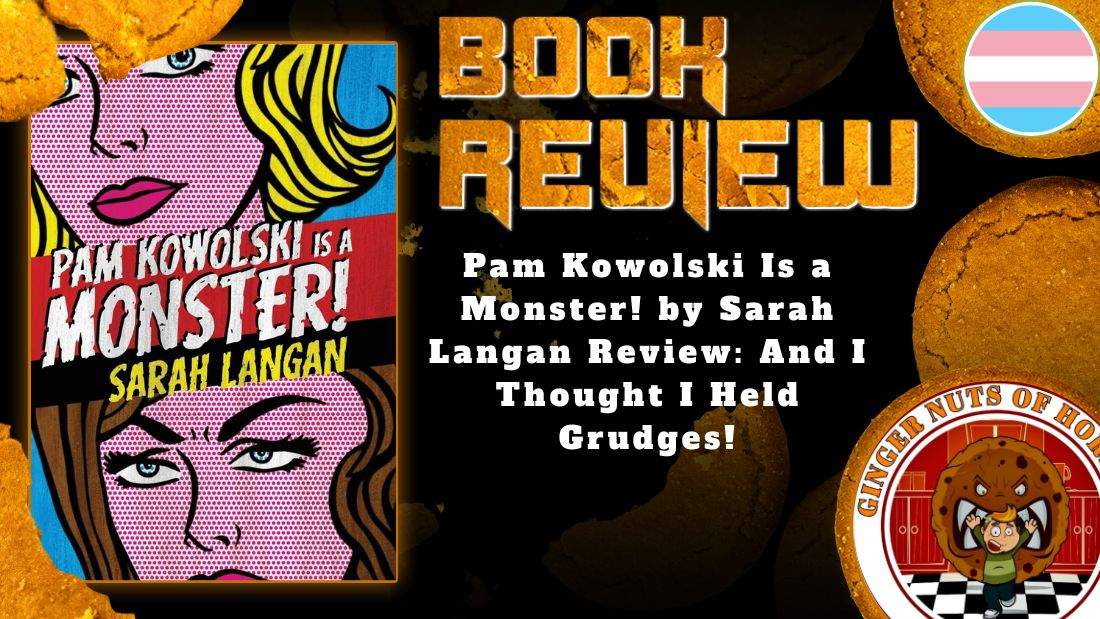 Pam Kowolski Is a Monster! by Sarah Langan Review: And I Thought I Held Grudges!
 Bodies of Work by Clay McLeod Chapman Review: Supernatural Revenge Horror Delivers Ghosts, Art, and Unease
 Japanese Gothic Review: Kylie Lee Baker’s Haunting Dual-Timeline Horror

About Ginger Nuts of Horror
Ginger Nuts of Horror is an independent horror review and culture site based in Edinburgh, Scotland. Edited by British Fantasy Award nominee Jim McLeod, it publishes horror book reviews, film reviews, author interviews, features and cover reveals. Ginger Nuts of Horror won Best Inclusive Film & Book Review Platform at the SME News UK Enterprise Awards 2026.