
He knows every horror rule. The lake knows his family’s secret.
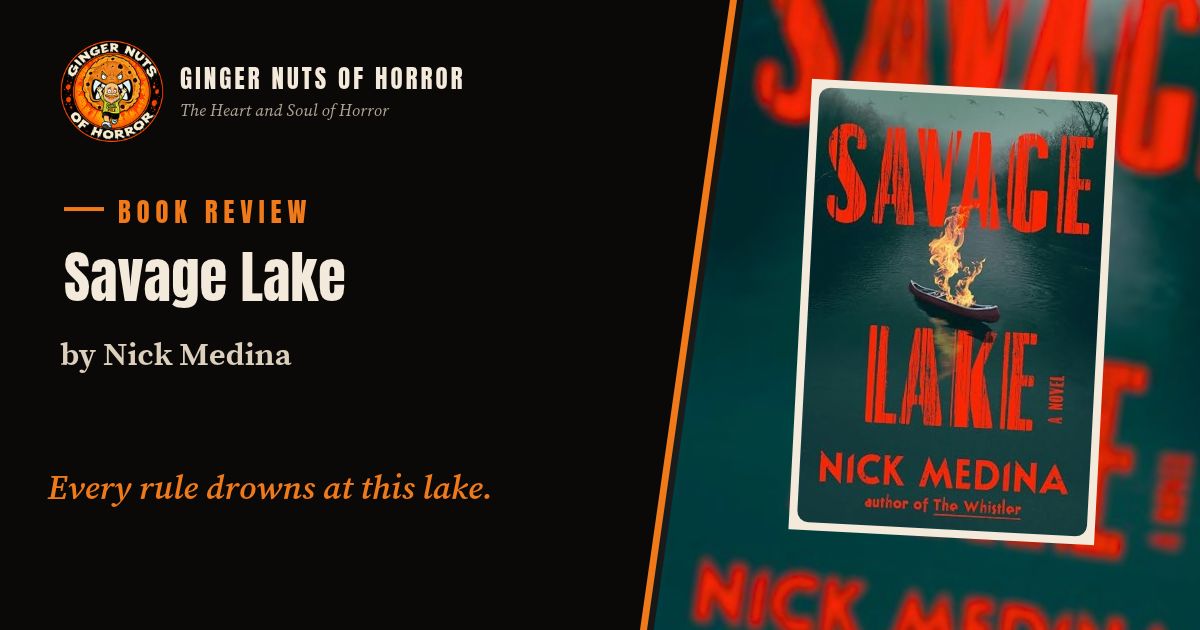
Savage Lake | Nick Medina | Berkley | 27 October 2026 |
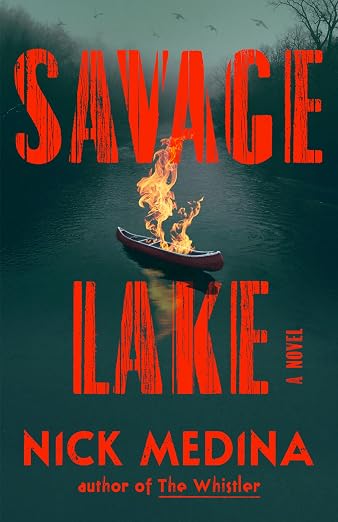
- Author Nick Medina
- Publisher Berkley
- Publishes 27 October 2026
- Pages 336
- Format Hardback, ebook, audiobook
- ISBN 9780593952177
- Subgenre Indigenous horror, cabin in the woods
- Reviewed by Jim McLeod
Nell swore she would never go back to the family cabin on Torchlight Lake. Her father’s death drags her there with her horror-mad son, Oscar, and a roadblock on Native land keeps them there.
Savage Lake by Nick Medina is out from Berkley on 27 October 2026, and it takes the Tunica-Biloxi author of Sisters of the Lost Nation out of Louisiana and up into the northern woods. A mother and her horror-mad teenage son go back to a family lake she swore she would never see again. Then a roadblock on Native land traps them there for weeks. This Indigenous horror novel mixes slasher tropes, Anishinaabe lore and a family secret buried since 1999. Here is my Savage Lake review, and why I think it is the best book Nick Medina has written so far.
Medina takes the cabin in the woods, the slasher rulebook and the Bigfoot hunt, and turns each one towards the horror none of those stories prepare you for. A measured start gives way to a novel of real grief and real nerve.
Savage Lake Review: A Boy Who Knows Every Rule
Everyone who grew up on horror films carries a rulebook. Don’t split up. Don’t go down to the cellar. Never, ever say you’ll be right back. We learn the rules young, from video shop shelves and late films on the telly, and we learn them for a reason. They make the dark feel as if it has edges.
Nick Medina’s fourth novel is about a boy who knows every rule, and a lake that has never read the book.
Oscar is a teenager with a head full of slashers. His mother, Nell, has been left the family cabin on Torchlight Lake, up in the Northwoods, after the death of the father she had not spoken to in years. The plan is simple. Clean the place out, fix it up, sell it, drive home and never come back. Then the roads that cross Native land are shut by the local Tribe, and a short job turns into a long summer. Oscar knows exactly how this goes. Cut off. No signal. Screams across the water at night. A shape in the trees that watches the cabin. He has seen this film a hundred times.
He is wrong about which film he is in.
Medina tells the story in two timelines. In the present, we see the lake through Oscar. In the summer of 1999, we see it through Nell at his age, the last summer her family was whole. She has stayed away for twenty-seven years, and the 1999 chapters show why. There is her brother Ben, a boy at war with their father, George. There is a mother who keeps her head down. There is a house where the father’s mood sets the weather for everyone. Nell spends that summer stuck between the two men she loves, watching her brother make the wrong choice again and again, and knowing she cannot stop it.
Nothing here goes beyond the set-up, so read on without fear. The question of what happened to Ben drives the book. How Medina answers it is for you to find.
Oscar’s fear is a casting call. He sorts people into victims and survivors, and he sorts himself into the safe pile. That is what knowing the rules gives you. It gives you a seat in the audience. And the last image is the clever one. Paper reapers on a city window, bought by his mum. Horror in this family is a game they share, almost a way of saying I love you. Nell gave her son his monsters. What she never gave him was the story of her own. The paper reaper is the safe kind of death. The lake keeps the other kind.
Medina’s prose is plain, and it moves. Reading him here is like rowing over deep water on a flat calm morning. The surface is easy, the oars barely make a sound, and you never once forget how far down the bottom is. He gives Oscar and young Nell two voices that never blur, which matters in a book that cuts between them so often. The two timelines work like two lines cast into the same water from opposite shores. For a long while they drift apart. Then you feel them slowly pulling towards the same snag.
There is slasher tension here, and when the book turns violent it does not look away. There is a ghost story too, of a kind. There is a Bigfoot hunt, as Oscar falls in with Tess, a girl set on proving something big walks these woods. There are footprints and plaster casts, and footsteps in the dark that keep coming closer. And there is a great old fish in the lake that everyone on its shores seems to want to land.
That is a lot of horror for one book, and some readers will say it is too much. I don’t agree. I think the pile-up is the point. Every one of those stories is a story outsiders bring to the woods. The masked killer at the summer camp. The beast in the trees.
The cursed water. They are the fears you pack in the car on the way up. Underneath them all sits the thing none of those genres prepared Oscar for, which is what people do to each other. The worst cruelty in Savage Lake has a human face, and a human excuse ready to go. Racism runs through the book. So does a family’s habit of looking the other way.
Watch what Medina does with the roadblock, too. In a slasher, the closed road is how the killing starts. Here the road is closed because a Tribe is asserting its say over its own land. Oscar reads it the only way he knows how, as the opening reel of a horror film.
The book quietly asks you to read it another way. The Tribe stays at the edge of the story, but it frames the whole thing, like the tree line round the lake. And then there is the title. The publisher’s copy calls it Torchlight Lake. The cover calls it something uglier. Savage was the word settlers used for the people whose land this was, and Medina puts it on the front and dares you to say it out loud.
The Sabe is the boldest move of all. Most of us would file the creature under Bigfoot. Medina reaches for the Sabe of Anishinaabe teaching instead, and a weaker writer would have made it a monster to hunt and shoot. In the Seven Grandfather Teachings, the Sabe stands for honesty. I would suggest that is the key to the whole novel. This is a story about a family that has lied to itself for twenty-seven years. Putting honesty out in the woods, just out of sight, is a very sly move.
How Savage Lake Compares to Medina’s Louisiana Novels
Medina’s first three novels all live in and around the same Native community in Louisiana. Sisters of the Lost Nation in 2023 followed a girl hunting for her missing sister. Indian Burial Ground in 2024 split its story between the present and 1986. The Whistler in 2025 put a would-be ghost hunter back on the reservation he grew up on, haunted in more ways than one. He also has a story in Never Whistle at Night, the anthology that did so much to put the current wave of Indigenous horror on the map.
When Ryan Tan reviewed his debut for this site, he praised the short chapters and simple prose and said he could not wait to see what Medina did next. Savage Lake is the answer. The split timeline is now his calling card, and it has never been as tight as it is here. The prose is still simple, but simple the way a well-made knife is simple. And leaving Louisiana has freed him. Away from the reservation, he can ask a sharper question: what happens when the outsiders on stolen land are the ones who think they belong?
On the shelf, the closest neighbour is Stephen Graham Jones’s My Heart Is a Chainsaw. Jones, who is on this year’s British Fantasy Awards horror novel shortlist, gave us Jade Daniels, a teenager who uses slasher lore as armour against a broken home. Oscar is a gentler kid, but the armour is the same, and it fails him in the same place.
There is a touch of Paul Tremblay’s The Cabin at the End of the World in the way a lakeside cabin becomes a trap for a family’s beliefs. Max Brooks’s Devolution made Bigfoot an apex predator, and Medina pointedly does something else with his giant. And of course the ghost of Friday the 13th hangs over every camp counsellor Oscar imagines. Medina knows Crystal Lake. He just wants to show you who was living round it before the cameras came.
This month also brought Mathilda Zeller’s It Looks Like You in the Dark, another Indigenous horror novel where old lore and a land grab collide. Read the two side by side and you can see how wide this field has grown. Zeller writes from inside the village. Medina writes from inside the car, looking out at land that was never this family’s to sell.
At its heart, Savage Lake is about grief, and the way a parent’s scars turn into the furniture of a child’s life. Nell has never told Oscar the truth about Ben. She thinks silence is a kind of shelter. The book shows it is more like a cellar door left shut for twenty-seven years, and you know the rule about cellars. Read the afterword when you finish, too. Medina explains why he chose this place and this story, and it makes the book land harder still.
Every horror fan knows you should never go back to the lake. Nick Medina’s gift is to show you why people always do.
The Verdict: Is Savage Lake Worth Reading?
The verdict
Nick Medina’s best novel yet, a cabin in the woods horror that uses every rule in the slasher book to show you what the rules were hiding.
Read it if: you loved My Heart Is a Chainsaw or Sisters of the Lost Nation, and you want your horror to carry real grief.
Skip it if: you need scares from the first page, or you want a creature feature with no family drama.

Keep reading on Ginger Nuts of Horror
 Sisters of the Lost Nation by Nick Medina -Book Review
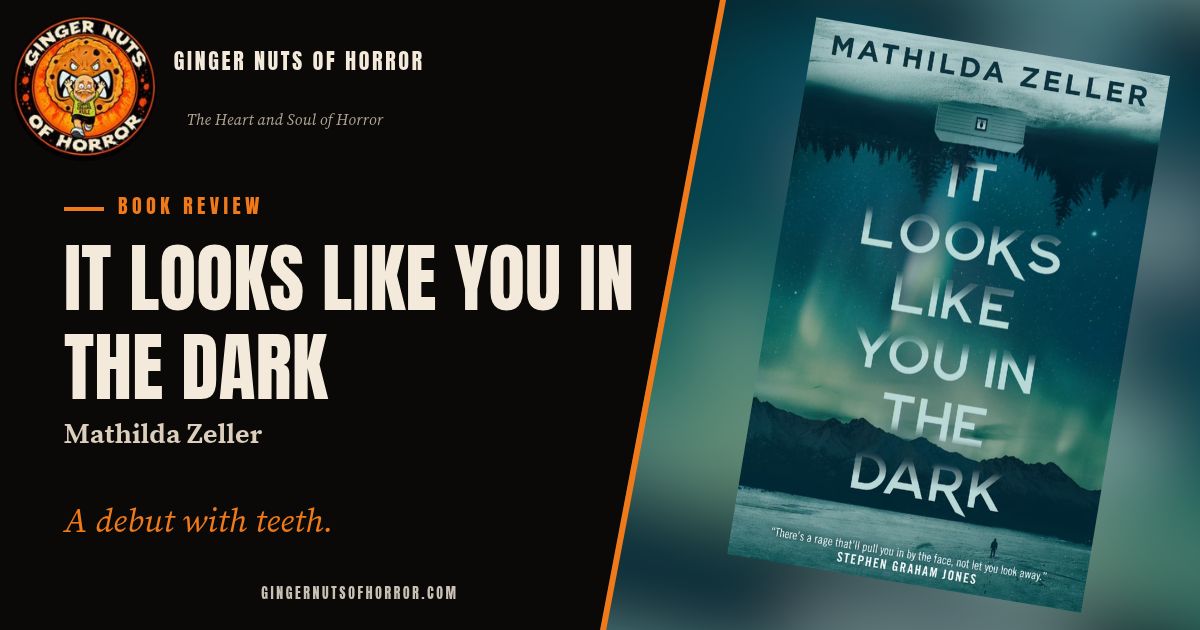 It Looks Like You in the Dark by Mathilda Zeller Review: A Debut With Teeth
 Don’t Leave Her Alone by Desirée de Fez Review: A Family Love That Bleeds
About Ginger Nuts of Horror
Ginger Nuts of Horror is an independent horror review and culture site based in Edinburgh, Scotland. Edited by British Fantasy Award nominee Jim McLeod, it publishes horror book reviews, film reviews, author interviews, features and cover reveals. Ginger Nuts of Horror won Best Inclusive Film & Book Review Platform at the SME News UK Enterprise Awards 2026.