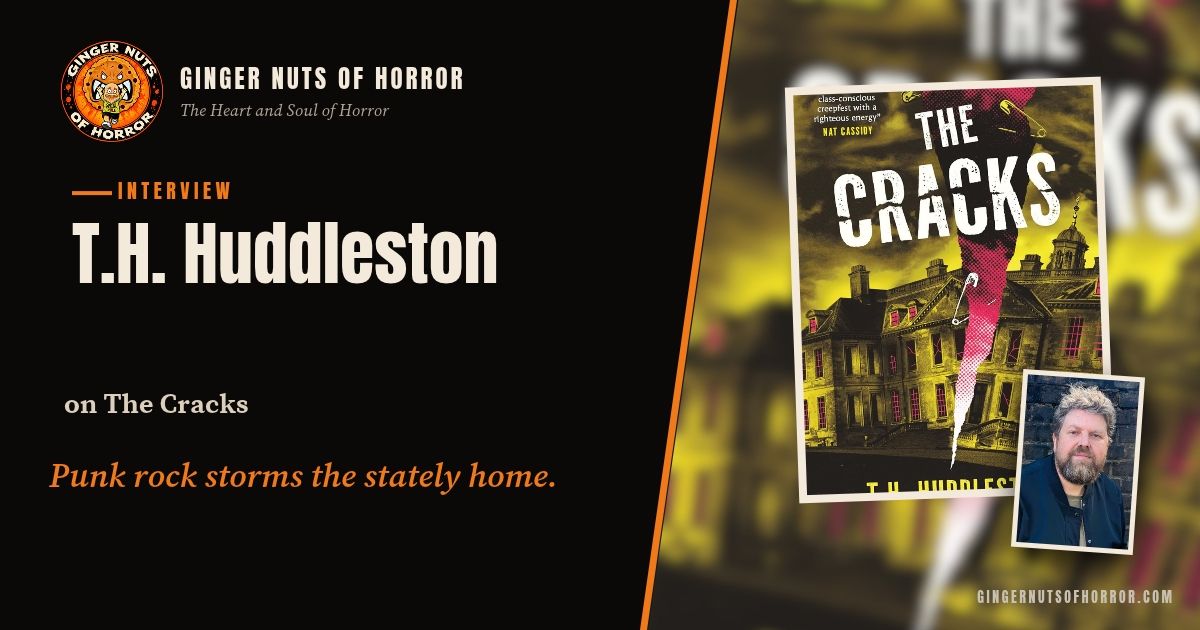
A punk song, a hungry house and a chef who cannot leave.
The Cracks | T.H. Huddleston | Titan Books
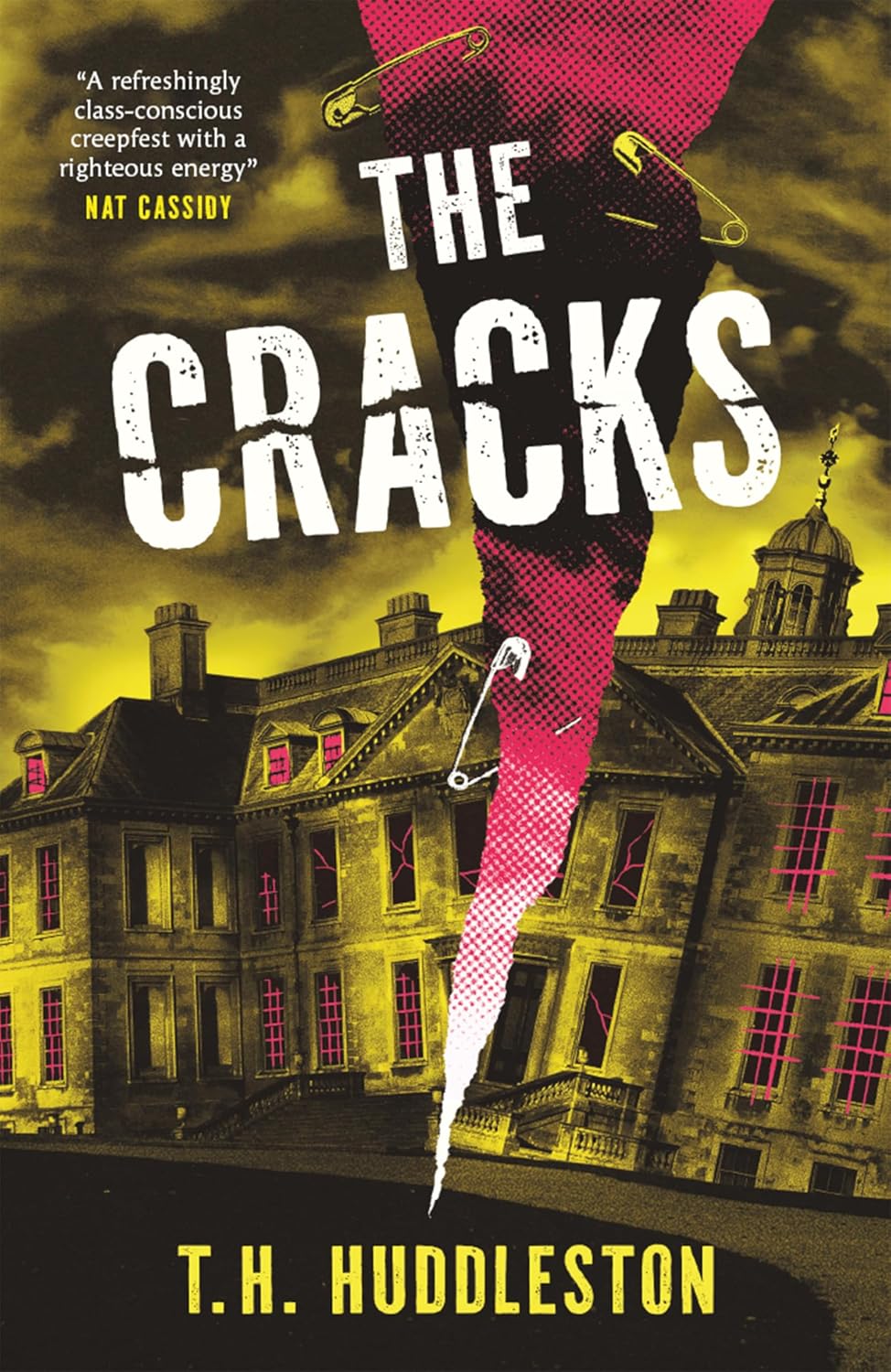
- Author T.H. Huddleston
- Publisher Titan Books
- Published 6 October 2026
- Pages 368
- Format Paperback, ebook
- ISBN 9781835413036
- Subgenre Gothic haunted house, class satire
Widowed, jobless and about to lose her home, chef Sandra Riley accepts an old university friend’s invitation to Hautmond Hall, a decaying stately home where the dreams, the mirrors and the cellar all seem to want something from her.
The Cracks, the satirical Gothic horror novel by T.H. Huddleston, sends a grieving chef into a stately home that wants her cooking for it forever. This T.H. Huddleston interview follows the book from a mediocre murder plot to a haunted house that swallows people whole, and asks why a man who sings in a folk-rock band built his novel around a punk song nobody can hear. Huddleston spent almost a decade on the Film desk at Time Out, and it shows in the films he grew up on: Dawn of the Dead, They Live, Society and The People Under the Stairs.
He talks about refusing the tired question of whether the heroine is losing her mind, about Gerry and the weak men who profit from a rotten system, and about the kitchen as a battlefield where one thank-you meal becomes three a day. He also explains why DC hardcore beat London punk, what John Cage is doing on the playlist, and why every stately home ought to be publicly owned. I gave the book five stars in my review of The Cracks, and he answers here like a man who meant every word of it.
T.H. Huddleston makes no apology for a blunt instrument. The aristocracy never bothered with subtlety, so The Cracks does not either, yet its real target is the system rather than the people trapped inside it, cook and toff alike. Punk, for him, was never the box set. It was getting up and making a noise.
The T.H. Huddleston Interview: Punk, Class and a House That Keeps You
You have said The Cracks began as a domestic thriller and class satire with a murder mystery in it, and that the haunted house only arrived as you developed it. A murder mystery promises that someone will be found guilty; a haunted house suggests the guilt belongs to everyone who ever lived there. What job was the corpse doing in those early drafts that the house took over, and what did you lose when the whodunnit went?
I wasn’t even really thinking in terms of meaning at that point, I just figured if you were writing a domestic thriller it needed to have a corpse in it. The idea was that the wealthy characters invited Sandra into their home in order to frame her for a murder they were already planning to commit. It was a deeply mediocre idea and I’m really glad I didn’t work on it for more than a couple of weeks before I realised it needed to change. So I didn’t lose anything, and I gained plenty when the haunted house came along.
The novel watches from above, roaming between Sandra, her hosts and the long past of Hautmond, rather than sitting tight inside one frightened head. A close third person on Sandra would have handed you the classic Gothic question of whether she is losing her mind. Why did you give that up for the wide view, and whose eyes do you think that narrator is really looking through: yours, the reader’s, or the house’s?
I’m so desperately bored of the ‘is this real or is she losing her mind’ trope (and it is almost always ‘she’). Don’t get me wrong, The Haunting of Hill House is one of my favourite books, and it can absolutely still work if done right. I just feel like its been absolutely beaten to death in recent years. There was never even a question in my mind that the haunting in The Cracks was going to be ‘real’, and that it was going to affect, and be witnessed by, more than one person.
For Sandra, the problem isn’t that she might be going crazy, it’s that she’s perfectly sane but still unable to escape. Because that’s how the class system works – however rational we think we are and however ridiculous that system seems, we’re still locked in, because it’s how the world is. I mean, the simple fact that there’s some guy who goes around calling himself our King – just a regular dude who eats and shits and worries like the rest of us – absolutely blows my mind when I think about it. But there’s nothing I can do.
As for whose perspective it is… Definitely not the house, the book is too sympathetic to Sandra. I guess it’s a bit me, a bit her plus whatever baggage the reader brings with them.
Gerry is the friend who offers a lifeline, a man who was once, briefly, more than a friend to Sandra, and he is not a villain. He simply cannot see what the house is doing, because it is doing it for him. Writing a decent man who benefits from something indecent is harder than writing a monster. How did you stop Gerry from becoming a target, and which of the two, Sandra or Gerry, did you find yourself defending more often at the desk?
Gerry was actually based to a large extent on a friend of mine, the first real-life public schoolboy that I met at uni, and someone I was extremely fond of (he was obviously just the spark of the character, the two diverged pretty early on). So with that in mind, Gerry was never going to be a straight-up villain. That said, I do think he’s more pathetic than sympathetic, and that if he truly wanted to resist the house’s malign influence he probably could. He’s just weak and lazy, and as you say the awful things that happen all benefit him. But that’s how this all works, isn’t it?
Sandra is a chef. Of all the trades you could have given her, you chose the one that lives below stairs in every country house there has ever been, and the one television has spent twenty years turning into celebrity. Hautmond wants her back at the range. What made the kitchen the right battlefield, and how much of the book’s class war is fought over who cooks and who gets fed?
A bunch of different things fed into the decision to make her a chef. She’s inspired to some extent by a friend of mine who’s a professional cook, plus I was watching a lot of Masterchef: The Professionals while writing. But yes, obviously it fit the story – her relationship with her hosts has to tip gradually from friendship into something more transactional, and cooking was the ideal way to explore that. Like, making someone a thank-you meal is a really normal thing to do, but if you find yourself doing it every day – let alone three times a day – that’s a whole different situation.
There is a fictional punk song at the heart of the book. You also sing in a folk-rock band, The No Sorrows, and when asked who the book is for, you named fans of 1980s Washington DC hardcore. Folk keeps tradition alive. Punk set out to burn it down. Hautmond is a house that wants tradition upheld at any cost. Where does the folk singer in you stand in that fight, and why DC hardcore rather than the London punk of 1976 for a book this English?
Well, my band isn’t folk in the traditional sense – we just play acoustic instruments and take a certain amount of inspiration from classic British folk-rock like Fairport Convention, so we call ourselves folk. Purists would absolutely take issue. I do think there’s overlap between folk and punk, though – both employ simple chord changes and inherited melodies, both deal with issues affecting real people. Three chords and the truth, and all that. Also, folk may be a music of tradition, but it’s absolutely not an aristocratic tradition, quite the opposite.
As for why I chose DC hardcore – for one thing, I think the politics of that music is generally purer, UK punks may have railed against the man but lots of them seemed more interested in just getting hammered and gobbing on people. And frankly, I just feel like there’s hardly an aspect of British punk that hasn’t become a cliche. The intention was incredible and still feels revolutionary, and of course much of the music is still great, but the iconography, the clothes, the haircuts, it’s all become corporatised. US punk is less overexposed, so it’s cooler.
Some early readers have found the gentry in The Cracks too monstrous and the class politics too blunt, and at least one review argued the book sneers at the townspeople as well as the toffs. I would argue the bluntness is the point. But I want your answer, not mine. Who can afford subtlety, and who pays for it? And where in the drafting did you feel the pull to soften a blow, and what made you land it anyway?
Sublety is overrated! Okay, I’m half joking, but I do love a blunt metaphor, particularly when it comes to horror. I grew up on Dawn of the Dead, on The Stuff, on They Live, on Society, on The People Under the Stairs, these were my bread and butter, and every one of them goes out of its way to whack you over the head. So yes, I don’t want to come off like Garth Marenghi, but the bluntness is absolutely the point.
Anyway, the aristocracy aren’t subtle, are they? There’s nothing subtle about a stately home, or a fox hunt, or the bloody Bullingdon club. So why do we have to be subtle and tasteful, while they get to throw their weight and their wealth around?
That said, I never wanted to sneer at the characters in my story, even the posh ones. As the book says repeatedly, many of them are victims too, they’re trapped in the same demeaning system, they just have a better time of it. The system is what’s at fault, the power of the house itself and all it represents.
And I totally refute the suggestion that the book sneers at the regular folk, that’s complete nonsense. Every one of those characters is either a direct lift from real life, or a composite of people I know. I’m sure there are plenty of things in this book that are imperfect or ripe for criticism, but that’s not one of them.
Your heroes have been moving down the social ladder for a decade. Aran in The Waking World was a local lord’s son who dreamed of adventure. Kara and Joe in FloodWorld scratch a living in the drowned ruins of a future London. Sandra has lost her husband, her job and very nearly her home. When did you first notice that slide, and what changed in you to pull your fiction down the stairs?
I first noticed it when you sent me this question! But it’s true – I wrote The Waking World when I was pretty young, and I did slightly regret putting so much focus on a privileged central characer. But a lot of that was to do with the inherent needs of the story, and the genre I was writing in. I guess what changed in me was just an increased awareness of reality. I’m reluctant to call it maturity.
You have spent years writing inside other people’s houses: Star Wars, Warhammer, worlds with their own rules and their own owners. That is honest, skilled work, but it is also a kind of service, keeping the place as the family likes it. The Cracks is entirely yours. What did a decade of writing to someone else’s specification teach you about Sandra’s position, and what was the first rule you broke once nobody was handing them down?
All writing is writing, and it all teaches you something. I don’t come from money, so I have absolutely no shame about taking whatever paid work comes my way (within reason), especially if it’s in a universe I have genuine affection for, like Star Wars. Obviously I prefer writing my own original material, though. As for the first rule I broke – well, there are eight f-words before the book even begins, so there’s that.
The haunted country house may be the most English setting in horror, from Sarah Waters’s The Little Stranger to Saltburn, and we keep returning to it. You did your homework on the real history of English stately homes before the draft that worked. How does a genre that loves the stately home this much ever truly stand against it, and what did you do to stop The Cracks selling the very fantasy it was written to puncture?
I don’t have an issue with stately homes, they’re gorgeous. I just think every one of them ought to be publicly owned and open to everyone to enjoy. I never thought there was any real risk of this book becoming wealth-porn, it’s obvious from Sandra’s first sight of the house – on the very first page of the story – that this is a bad place. But that doesn’t mean it can’t be beautiful, too.
Horror is having a loud moment about money and class, and British cinema has handled that subject for decades through social realism, Ken Loach and the kitchen sink. What can a ghost in a cellar say about inequality that a film like I, Daniel Blake cannot, and is there anything horror gets wrong when it turns the rich into literal monsters?
I think both approaches are equally valid – I love Ken Loach, I love his directness and his commitment. I think a film like I, Daniel Blake probably had a more direct impact on more people than ten satirical horror movies. But as a writer (and as a reader, to be fair), I’m way more into fantastical things and supernatural things, it’s just more my style. I also think you can reach people in a different way, get them thinking differently.
As for turning the rich into monsters… I don’t have a problem with that! As I said, I love the movie Society, which is literally just that. But hopefully I’ve also illustrated that it’s not necessarily the rich themselves but the system we all inhabit that is the real monster.
The book was sold to readers as both uproariously funny and delightfully scary. Those two moods pull against each other: a laugh lets the air out of a room that dread has spent pages filling. Where in The Cracks did a joke and a scare fight over the same scene, and how did you decide which one won? And which line that you loved ended up on the cutting room floor because it let the tension out?
I never thought The Cracks was funny when I was writing it, the characters just talk the way people I know talk, so it surprised me when some people told me it was funny (I’ve also seen a few reviewers saying ‘I thought this was meant to be funny, but it wasn’t!’ so it’s clearly not just me). Anyway, I do think horror and humour are perfectly appropriate bedfellows, and I don’t just mean graphic splat like Evil Dead 2 (which I adore).
Humour can actually serve to heighten tension, or to intensify emotion – there certainly weren’t any moments where I felt like I had to choose one over the other. If a funny line occurs to me during a scene of tragedy or horror, I’ll generally put it in there.
Your playlist for The Cracks runs to 21 tracks, part list of the songs the book mentions and part loose soundtrack to the story, and it is far from all noise. Minor Threat, Bad Brains and Fugazi sit alongside a baroque sonata by Élisabeth Jacquet de La Guerre, Purcell’s Dido’s Lament and Christy Moore singing The Raggle Taggle Gypsy, the old ballad of a lady who walks out of her lord’s house. Near the middle sits John Cage’s 4’33”. Which of those tracks belong to Sandra and which belong to Hautmond, and what are four and a half minutes of silence doing on the soundtrack to a book this loud?
Apart from the Cage track, they all belong to Sandra. Hautmond allows for no music at all, even polite baroque pieces like the De La Guerre would be anathema to it. I guess the classical pieces serve two functions: they make the playlist feel more varied and cinematic, and they give you an insight into how Sandra feels about the world she’s entering. Like, if I walk into a stately home, I hear baroque music even if there’s none playing. The two are inextricably linked in my mind, and I think Sandra would feel the same way.
Which brings me to your own silence. You have said you write in silence or to white noise, because anything with words makes it impossible. Yet this is a book soaked in very loud music, with a punk song at its centre that the reader can never actually hear. How do you write noise from inside silence? What did you do at the level of the sentence to make the music land on the page with its volume intact?
I always exercise before I write, with headphones on so I can blast noise into my brain while I do it, and drown out the tedium. So during The Cracks I listened to a lot of Husker Du and Minor Threat and Bad Brains before I started my day, so it was there in my bones when I got to work. As for how I translated that onto the page – I write pretty much instinctively, I have absolutely no idea how it works. If it did, that’s great!
Hautmond survives by swallowing people, putting them in their place and keeping them there for generations. Punk got swallowed too. Fifty years on it has become heritage, with anniversaries, exhibitions and deluxe box sets. If every rebellion eventually ends up hanging on the walls of the house it set out to burn down, what was Sandra’s song really for?
One of the big inspirations behind The Cracks was a place in Peckham called DIY Space, which was exactly what the name suggests – it was a venue where people could do their own thing, make art, make noise, whatever. My partner’s sister started a band, borrowed my bass guitar and within a fortnight they were on stage there, banging out these tunes they’d literally just written. And I’m sure a lot of what went on there was artistically questionable, but that’s not the point – people did it, they made it, they got up the courage and went up there and they created something.
And that’s punk to me, not the exhibitions or the fashion shows or any of that. I’m friends with a guy called Richard Boon, he put out the first Buzzcocks release, the Spiral Scratch EP, one of the first independently produced singles in this country. And he’s spent most of his life working as a librarian, but he’s more punk at 70-odd than fucking John Lydon with his butter ads and dubious politics. It’s about making things, broadcasting ideas, doing it yourself.
Making a glorious noise, and watching people jump up and down to it. Or writing a book, and reading reviews like yours that understand exactly what you’ve spent three years trying to express. So that’s what the song is for – it exists to bring joy to people, both the ones who sing it and the ones who hear it. That’s all it needs to be for.
Get the book
The Cracks by T.H. Huddleston is out now from Titan Books in paperback and ebook.
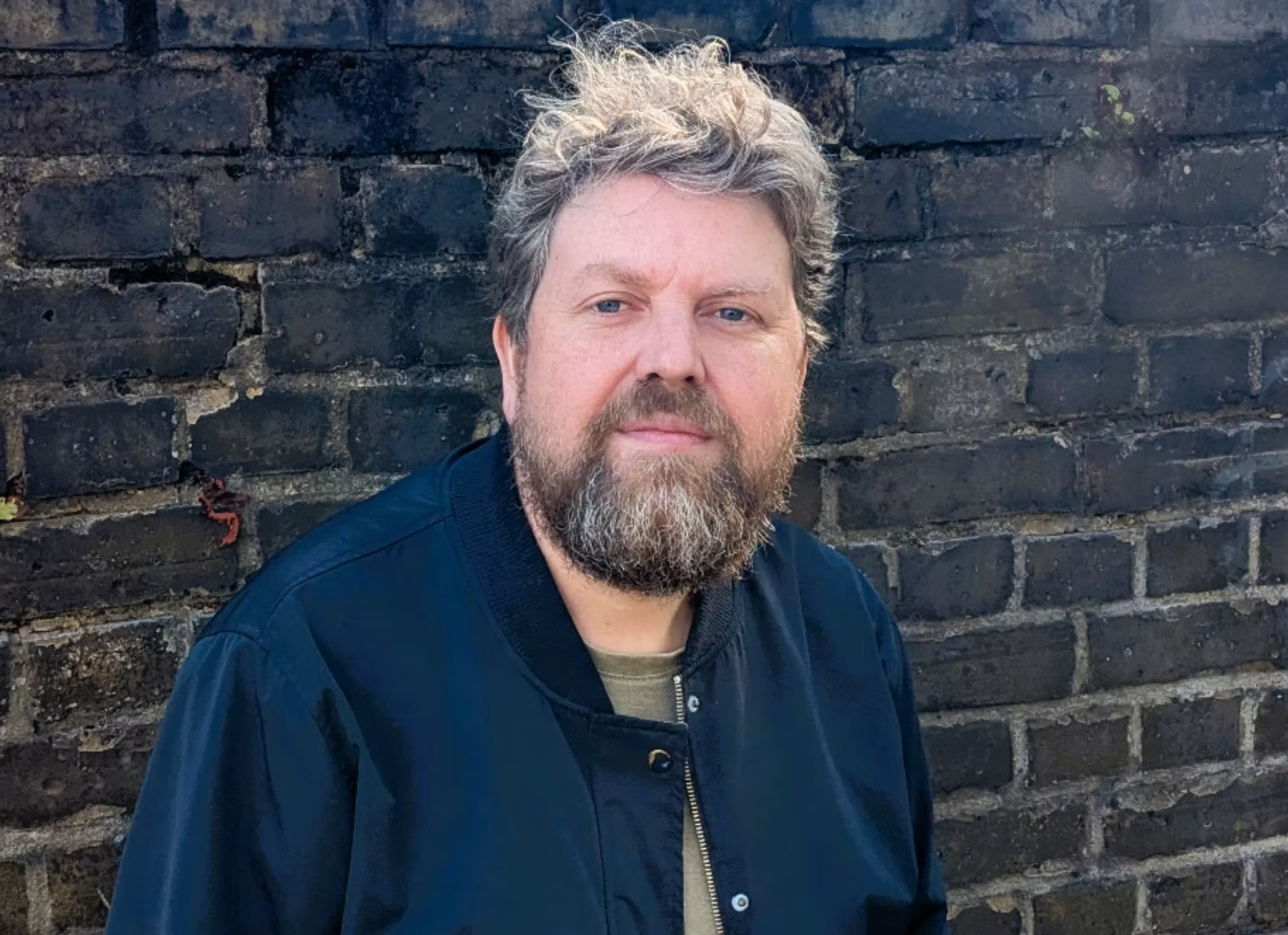
If this T.H. Huddleston interview has left you itching to nationalise the nearest stately home, start small: cook your hosts a thank-you dinner once, and only once. Then go and find more trouble in our horror interviews.
Keep reading on Ginger Nuts of Horror
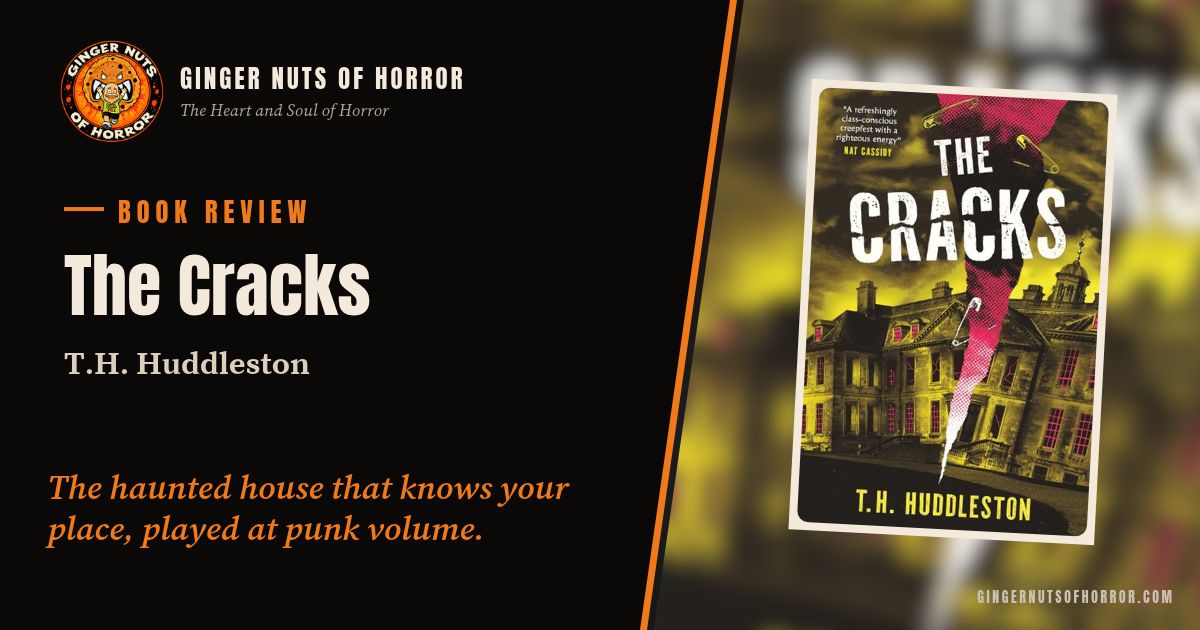 The Cracks by T.H. Huddleston Review: Punk Rock Versus the Stately Home
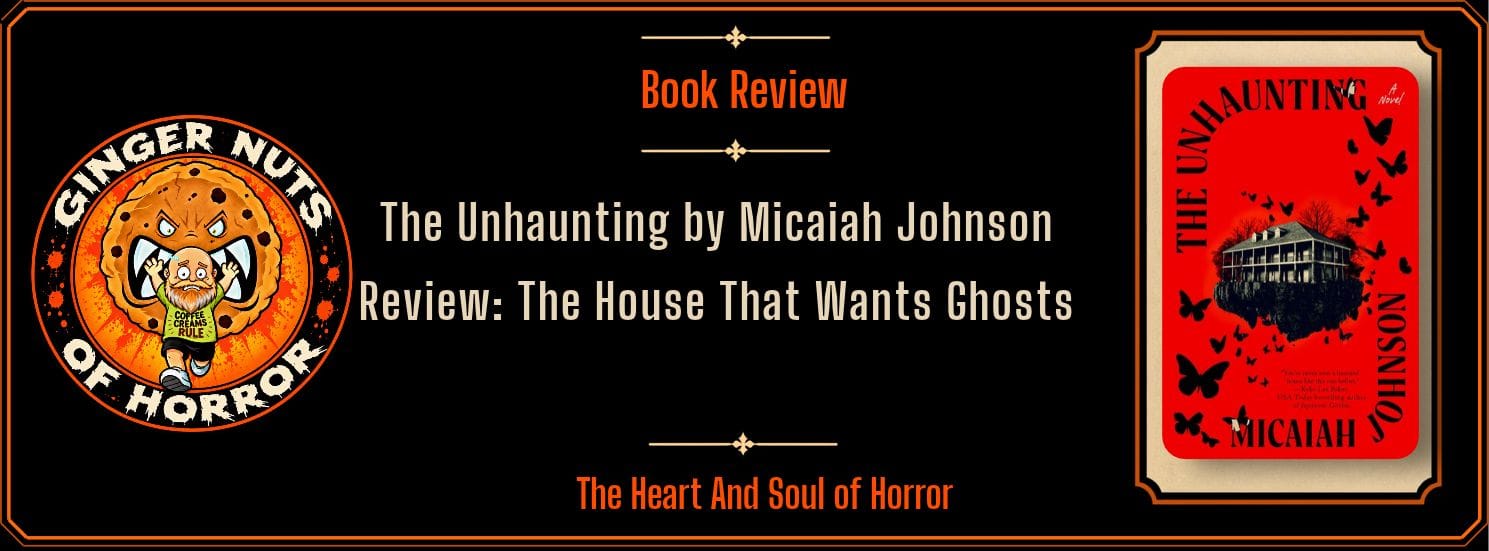 The Unhaunting by Micaiah Johnson Review: The House That Wants Ghosts
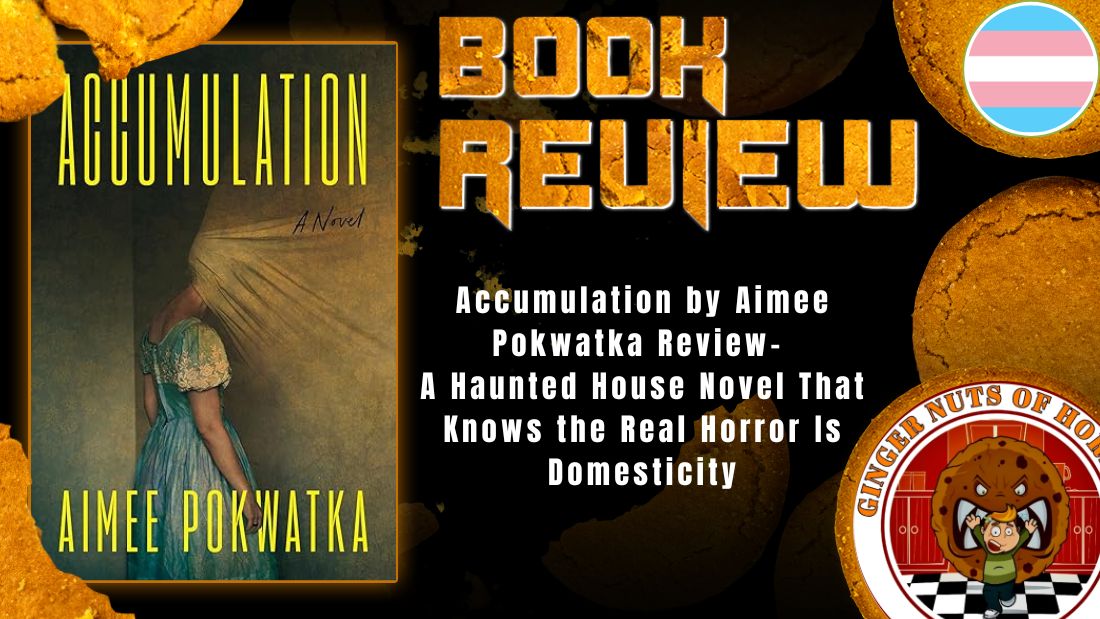 Accumulation by Aimee Pokwatka Review: A Haunted House Novel That Knows the Real Horror Is Domesticity
About Ginger Nuts of Horror
Ginger Nuts of Horror is an independent horror review and culture site based in Edinburgh, Scotland. Edited by British Fantasy Award nominee Jim McLeod, it publishes horror book reviews, film reviews, author interviews, features and cover reveals. Ginger Nuts of Horror won Best Inclusive Film & Book Review Platform at the SME News UK Enterprise Awards 2026.

Jim "The Don" McLeod has been reading horror for over 35 years and reviewing it for more than 16. He's the editor of Ginger Nuts of Horror, Europe's largest independent horror review and culture site, and a British Fantasy Award nominee for his work in the genre. When he's not busy inflicting his opinions on the horror community, he can be found annoying his family or getting thoroughly outwitted by his two dogs, Casper and Molly.