
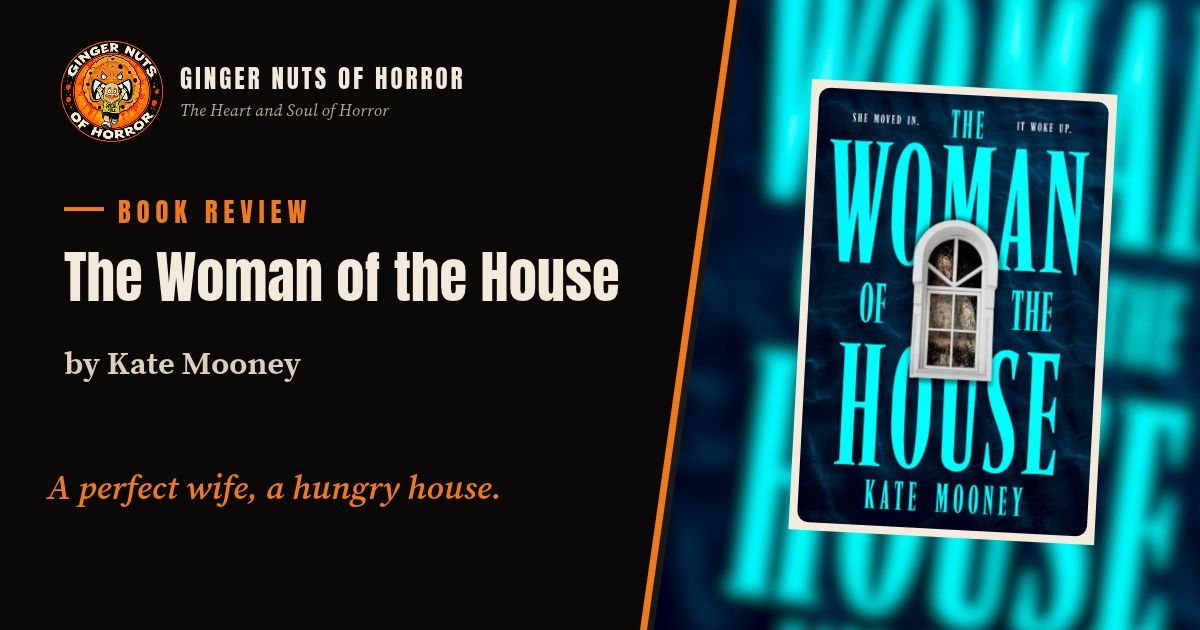
She built the perfect wife. The house wants the real one.
The Woman of the House | Kate Mooney | Berkley | 13 October 2026 |
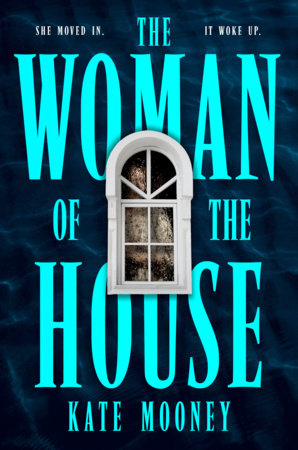
- Author Kate Mooney
- Publisher Berkley
- Published 13 October 2026
- Pages 336
- Format Hardback, ebook, audiobook
- ISBN 9798217189885
- Subgenre Supernatural thriller, domestic horror
- Reviewed by Jim McLeod
Rose Crawley has the lake house, the doting husband and a past she has buried deep. Then the house starts marking her skin, and she learns the last wife who lived there simply vanished.
The Woman of the House by Kate Mooney is a supernatural thriller about a new wife, a lake house and the woman who lived there before her. It is Mooney’s debut novel, out now from Berkley. Rose Crawley wakes with scratches on her arms and sees figures in the mirror that are not there. Then she finds out the last wife in the house went missing. In this The Woman of the House review I look at why the book works best as a study of a woman who has lied her whole life to stay safe.
Kate Mooney builds her haunted house out of a marriage that runs on a lie. The scares are good, but the real dread is a wife who has never once said what she feels. It plays its domestic suspense cards a little too safely, yet this is a sharp, well made debut.
The Woman of the House Review: A Marriage Built on a Lie
Every house listing is a small piece of fiction. Light-filled. Lake views. Period charm. A steal. Nobody writes “previous owner vanished” under the photo of the kitchen.
Kate Mooney knows this better than most. By day she writes ads for brands like BMW and Fiat. Her job is to make things look perfect. So it makes sense that her first novel is about a woman who has turned herself into a perfect product, and a house that will not let the act go on.
Rose Crawley is newly married to Brian. He is kind, steady and keen to start a family. They have left Chicago for a house by a lake, in a place where most of the neighbours only come up for the summer. Brian thinks he got a bargain. Rose thinks she got a fresh start. Both of them are wrong.
Here is the thing Brian does not know. Rose is not the woman he married. Or rather, she is exactly the woman he married, because she built that woman to his spec. She tells him what he wants to hear. She agrees. She smiles at his parents’ dinners. And she never, ever tells him about her mother.
Then the house starts in on her. She wakes with bloody scratches down her arms. She sees a shape in the mirror and turns to find the room empty. Footsteps cross the floor when nobody is there. At night the air feels thick, as if the walls are leaning in to listen. And when Rose learns that the last woman to live there, a wife and mother called Angela, went missing in strange circumstances, she cannot leave it alone. A nosy neighbour is happy to feed the habit.
That is the jacket copy, more or less, and I am not going past it. The book is built on its turns, and you should meet them cold.
What I can talk about is the voice, because Berkley put a long early chapter out in public, and it tells you most of what you need to know.
Mooney writes in the first person and in the present tense. It is a tight, close choice. You are stuck inside Rose’s head, and Rose’s head is not a restful place. Early on, Brian shows her a glass baby rattle his father once bought for his mother. He tells her he is ready for a child. Rose cries. Brian thinks they are happy tears. They are not.
She tells him she is excited too. Mooney then gives us the line that sums up the whole marriage: “The lie is tender, soft.” Four words. No fuss. You do not need a chapter of backstory after that. You know how this woman gets through a day.
Look at how plain that sentence is, and how much it carries. A lie is meant to be hard, sharp, a thing you hide. Rose’s lies are gentle. They are a gift she wraps for Brian. That is what makes them frightening. A woman who can lie that softly has had years of practice, and the book soon tells us where she learned.
Is The Woman of the House Scary?
Yes, though the house is not the scariest thing in it. The scariest thing in it is Rose’s mother.
In the same early chapter, Rose finds an old portrait of her mother tucked in a drawer. She thought she had thrown it away. The picture sends her back to a memory from when she was six or seven. A girl at school had asked her to a birthday party, the first invite she ever got. Her mother said no, then suddenly said yes, and called her into the kitchen to “do her hair”. Out came the clippers. By the time her mother was done, Rose was shaved down to stubble, and far too ashamed to go.
It is a cruel scene, and Mooney writes it without a single wasted word. There is no gore, and no ghost. There is only a mother enjoying her child’s pain, and a pile of hair left on the floor for the girl to stand in. That is horror of the oldest kind. It is also the key to the whole book.
Because now we know why Rose lies. Her mother taught her that a home is only safe if you stay quiet. Rose says so herself, and then she says this:
There have been no disagreements between us because I never say how I really feel.
Read that twice. On the first pass it sounds like a happy wife. On the second it sounds like a hostage. Rose has carried her mother’s kitchen into her marriage, and now she has carried both into a house that already has a missing woman in its walls.
She has even kept her mother’s best advice. Rose tells us her mother taught her one thing worth knowing:
That’s one thing I learned from Mother: don’t lie unless you’re sure you’ll be believed.
That line does a lot of work. It is funny, in a bleak way. It is also a warning to the reader. Rose is a good liar, and she is telling us this story. How much of it should we believe?
This is where the ghost story earns its keep. A woman who has spent her life hiding is now living in a house that will not stop showing her things. A mirror that holds a second face. Scratches she cannot explain to her husband. The house, in other words, does to Rose what she has never allowed anyone else to do. It makes her seen.
The other early pages show Rose as a watcher. In the chapters around the move, she is drawn to the neighbour’s place and the lives of the people around her. She admits that peering into someone else’s life is more interesting than living in your own. It is a throwaway line, but it sets up the hunt for Angela beautifully. Rose cannot look at her own past. So she looks at someone else’s.
How Kate Mooney’s Debut Compares to Rebecca and Hill House
Here is the one real reservation, and it is worth taking seriously.
The bones of this book are very familiar. A new wife. A lovely house. A woman who lived there first and is not quite gone. A neighbour who knows too much. Daphne du Maurier built Manderley on those bones in Rebecca, and the shelves have been full of new versions ever since. Vanessa Santos took the same plan to Scotland this month in In Your Heart a Devil, and swapped the first wife for the devil. Mooney swaps her for a missing mother and a mirror.
Berkley sells the book as a supernatural thriller, and shelves it with women’s fiction and suspense as well as the paranormal. That mix shows. On the evidence of the opening chapters, Mooney writes like a thriller writer first. The prose is clean and quick, and it keeps moving. And at times Rose tells us exactly what she feels and why, where a colder horror writer would leave a gap for us to fill. The line about her mother teaching her to stay quiet is a good line, but it explains a wound the clipper scene had already shown us.
So if you come to this wanting the slow, strange dread of Shirley Jackson, you will find something brisker and more direct. Jackson’s Hill House never quite tells you what it wants. Mooney’s house is louder about it. That is a choice, not a mistake, but it costs the book some of its chill.
What it gains in return is pace. Reading Mooney is like touring a show home with a very good estate agent. Every room is clean and well lit. Every drawer is opened for you. And there is one door at the end of the hall that she keeps walking you past, smiling, until you badly want to see behind it.
The Hill House link runs deeper than tone, too. Jackson’s Eleanor Vance arrives at Hill House after years spent caring for a hard, cold mother, and the house seems to know exactly where she is weakest. Rose arrives with the same baggage. Brian believes her mother is off doing church work overseas, because that is the story Rose has sold him. But her mother is in every room Rose walks into. Mooney knows her genre, and she knows which old wounds a haunted house likes to press on.
There is a smart thread about class and status here as well. Brian is quietly put out that the neighbour’s house is bigger. Rose fakes an interest in his family’s football team and their country club so they will not see her for what she is: an outsider. She is not just hiding her past from her husband. She is hiding her whole self from a family that seems to have everything. The house is a step up the ladder, and every step up means more to lose.
That puts the book in good company. T.H. Huddleston’s The Cracks is a loud, angry take on a house that keeps people in their place. Mooney’s book is quieter, set in a smart lakeside home rather than a stately pile, but it shares that interest in who belongs. If you want the long view of how we got here, Joshua Chaplinsky’s A Brief History of the Haunted House Novel is a fine map.
On the other side of the shelf, the blurb comes from Simone St. James, and the match makes sense. St. James writes ghost stories that are also mysteries, with a woman following an old trail into a dark place. The Woman of the House works in that lane. It is a ghost story you can solve, or think you can. Fans of Carissa Orlando’s The September House, with its house of horrors and its wife who will not leave, should find a lot to like too.
This is a debut, and for a first novel it is very sure of itself. Before this, Mooney had a short story, “Getting Warmer”, in the Sisters in Crime anthology Angel City Beat. You can see the crime writer in her plotting. You can see the ad writer in her sentences, which are short and land hard. And you can see someone with a real feel for how families wound each other in the scenes with Rose’s mother. That last skill is the rarest of the three, and it is the one that lifts the book.
The audiobook is read by Christine Lakin and runs to about ten and a half hours, if you would rather have Rose’s voice in your ear on a dark drive home.
What will stay with me is not the mirror or the scratches. It is the image of a little girl standing in a pile of her own hair, and the grown woman who still thinks that a quiet house is a safe one. Mooney’s house knows better. It is the first place Rose has ever lived that refuses to keep quiet for her.
Some houses are haunted by the dead. This one is haunted by every true word Rose never said.
The Verdict: Is The Woman of the House Worth Reading?
The verdict
A sharp, quick debut that hides a cruel story about a mother and a marriage inside a familiar haunted house, even if it plays the house a little safe.
Read it if: you like Simone St. James, Rebecca and haunted houses that come with a mystery to solve.
Skip it if: you want slow, strange literary horror, or you have read one too many new-wife-in-an-old-house stories.
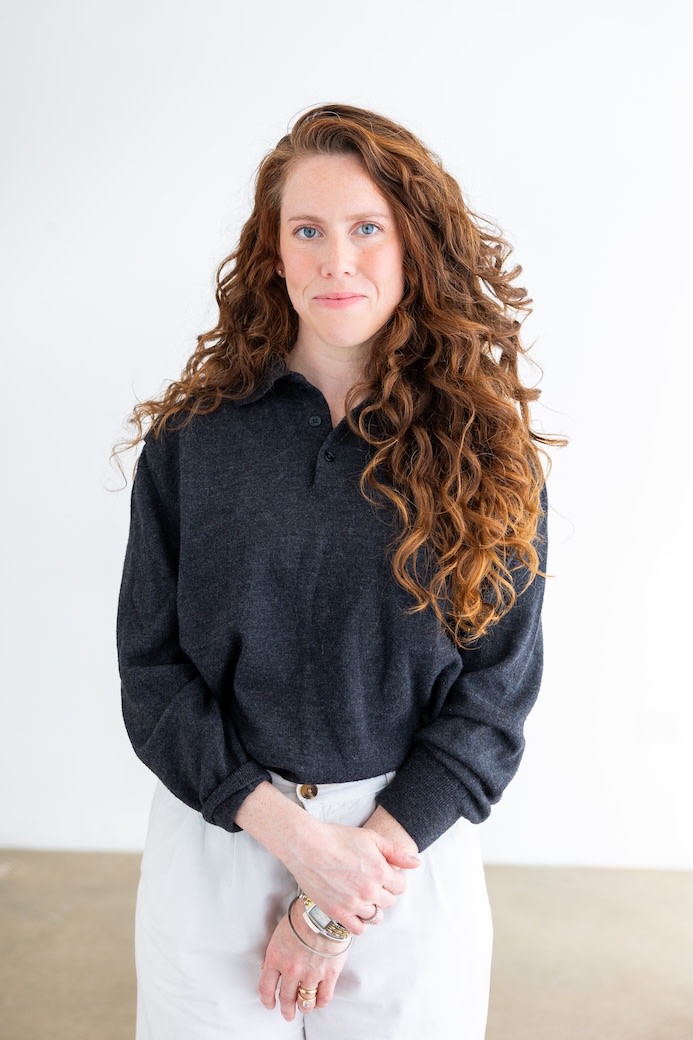
Keep reading on Ginger Nuts of Horror
 Accumulation by Aimee Pokwatka Review: A Haunted House Novel That Knows the Real Horror Is Domesticity
 The Unhaunting by Micaiah Johnson Review: The House That Wants Ghosts
 Don’t Leave Her Alone by Desirée de Fez Review: A Family Love That Bleeds

About Ginger Nuts of Horror
Ginger Nuts of Horror is an independent horror review and culture site based in Edinburgh, Scotland. Edited by British Fantasy Award nominee Jim McLeod, it publishes horror book reviews, film reviews, author interviews, features and cover reveals. Ginger Nuts of Horror won Best Inclusive Film & Book Review Platform at the SME News UK Enterprise Awards 2026.


